The Spark
August 2025
* Pages 1-548 refer to the Spark Issues #1 - 12, available at https://iitk.ac.in/dora/spark/
Editors: Anuradha Jagannathan, Aseem Shukla, Chilukuri K. Mohan, Shirish Joshi
Members/Contributors: Alok Kumar, Alpna Singh, Aman Kumar Singh, Amit Meena, Animesh Singh, Aparna Mohanty, Ashutosh Sharma, Ayush Goyal, Bhuwan Mohan Prasad, Chandra Vir Singh, Devendra Narain Singh, Dhani Sahai Mathur, Enakshi Jain, Eshan Chattopadhyay, Gaurav Kukreja, Girish Pant, Gopal Wattal, Gurumurthy Neelakantan, Harshita, Ishan Singh, Kanishk Goyal, Krishna Khetre, Kushagra Srivastava, Narendra Kumar, Nidhi Varma, Prasun Shrivastav, Raj Sehgal, Rakesh Pandey, Raman Bhatia, Rita Singh, Sachidananda Mohanty, Sakshi Gulati, Sanjeev Sharma, Satyajeet Ghosh, Shakti Chaturvedi, Shivang Sonker, Shruti Dalvi, Somya Garg, Somya Yadav, Sunraj Patel, Sweta Kumar
Special Thanks to Mrs. Dharma Rajaraman, Professors Lilavati Krishnan and Madhav Madhira, and DORA Amey Karkare for their help with this issue.
Views and opinions expressed in The Spark are those of the Editors and Contributors and not those of the Indian Institute of Technology Kanpur, unless specified otherwise.
550
Editorial
The Spark welcomes the incoming batch of 2025 to the IITK campus. You will define the IITK of the next few years, and we look forward to publishing your stories.
This issue is a celebration of today’s IITK, of the many rewards and accolades the Faculty, Alumni and Students have gathered over the past few months -- from a Padma Shri, a presentation at Apple, a first-place finish in an international competition, to the holy grail of Theoretical Computer Science, the Godel Prize. Raise a toast to IITK and let us keep this up!
Our previous issues have touched at length on the many academic innovations on campus, often for the first time in India. Starting in this issue, we take an in-depth look at yet another first-in-India innovation – the Counselling Service.
Early on, the institute recognized that for new students, coping with life on campus presented challenges that went beyond merely academic. New students, many of whom were away from home for the first time, had to handle many situations, also for the very first time, and some needed help. In 1963, the first attempt to provide assistance via a non-academic channel was born. It was called the Counselling Service. After initial teething issues, a formal organization was in place by 1965 with a faculty member as its head. This group included faculty, students and counsellors.
In this, and upcoming issues of the Spark, we hear firsthand from members of the CS from the late sixties, through today: what they did, the issues they addressed, and their learnings as they went along. We will also hear from Student guides who formed the CS front line, as well as students who received support.
This issue of the Spark pays tribute to two eminent and much-loved faculty who passed away in recent months. Professors Yudhbir and Raj Gupta were among the pillars of their departments, and their contributions continue to define what we are today.
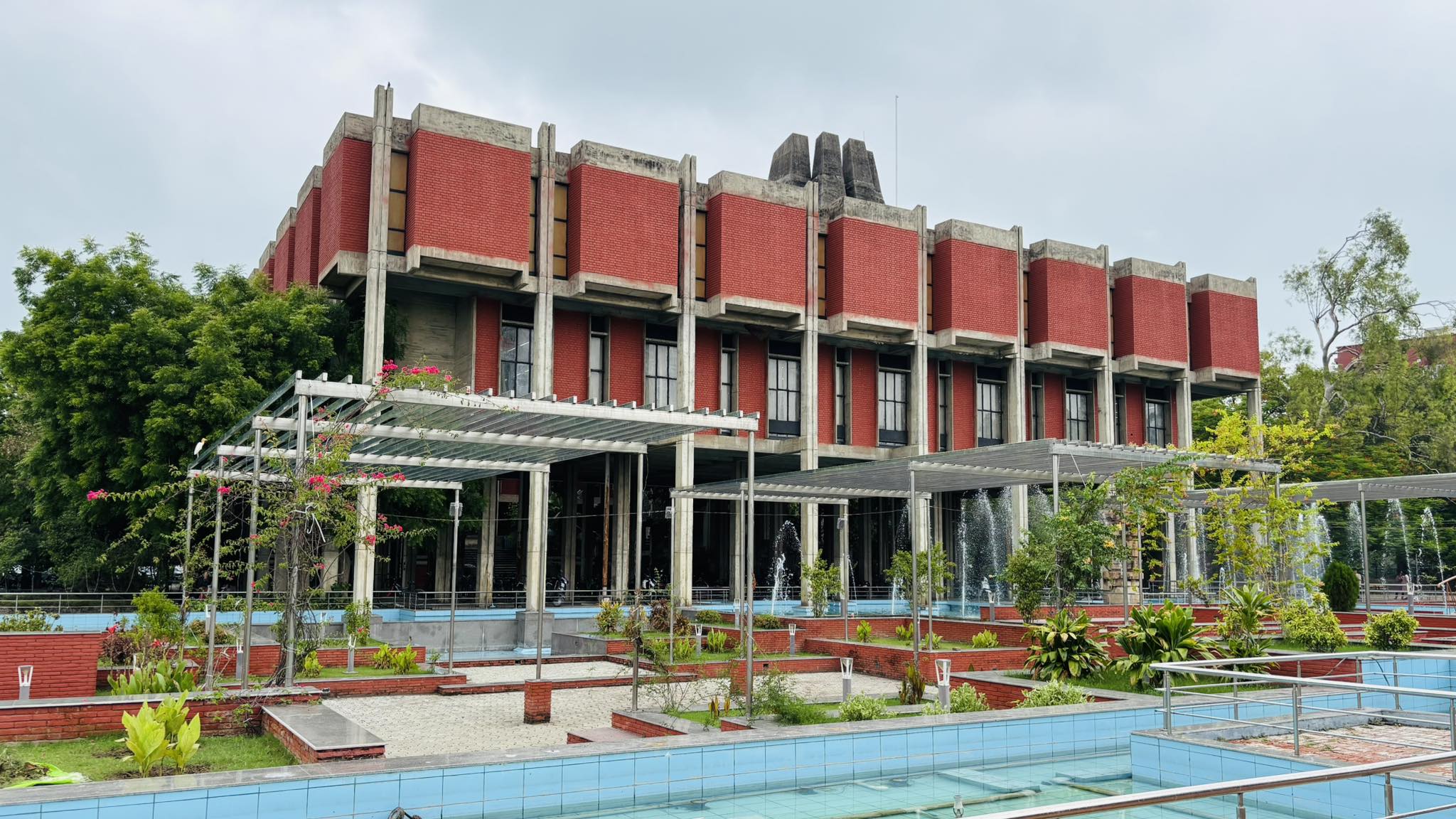
The PK Kelkar Library on Convocation Day… vibrant, fresh and full of energy
Picture: Aman Kumar Singh (BT-MT, CE, 2020-25)
551
Letters to the Editors
Please write to us at spark@iitk.ac.in. We love to hear back from you and will try to publish as many letters as possible.
Thank you for the Feedback
Thank you for the latest issue of the Spark.
I graduated from the first batch of IITK, sixty years ago. After graduating, I have been involved with the IITK Alumni Association, the IITK Foundation, and a number of IITK initiatives, with the common goal to support IITK in a multitude of ways.
The campus magazine, the Spark, was born when I was on the campus as a student. When I first saw the newest version, over three years ago, it was with a lot of pride that I read it cover to cover. With every new issue, covering topics as diverse as the Computer Center, the Airstrip, Festivals, and the latest issue about the Supporting Staff, I have developed a deep admiration for the sustained effort that has gone into making the Spark what it is. I also found the articles in issues of the Spark very helpful in creating the Pioneer Batch Golden Jubilee yearbook, covering the first five years of the history of IITK. It brought back old memories, and generated enthusiasm for IITK, for what it was and what it is today.
A number of graduates from my time and the newer batches have felt a resurgence, a great sense of belonging to those events and stories, and they have circulated the magazine among friends and relatives and the young folks who are only now, preparing to go to college. Almost without fail, we hear back – they had no idea of all of the great things and fun activities that happened, and continue to happen, at IITK.
Probably unknown to the Editorial team, the influence of the Spark has gone well beyond shared stories with faculty and alumni and is making a significant contribution to the growing popularity of IITK among young aspirants.
Thank you for what you are doing, and please keep it up!
Abhay Bhushan
BT, EE, 1960-65, Distinguished Alumnus 2006
Editor, the Spark, March-May 1965
Thank you for your very encouraging words, Abhay. You are right, we had no idea that the Spark was circulated outside the Alumni crowd, and it is truly gratifying to know that the Spark is doing its bit among young people aspiring to go to IITK.
We look forward to hearing from you about your experiences in those early years, when IITK was but a gleam in Dr. Kelkar’s eyes.
And a message to current students on campus: We think it is a great idea to forward these issues to your friends, especially those who are currently preparing for the JEE!
552
Thanks for sending this volume of SPARK; it is very interesting, as always.
I read about the RASET team and would like to learn more about them and decide on a donation to encourage their efforts. Please arrange for a team member to call my office, and that can be followed up with a zoom call with the other members to understand the team structure and the targets that they have set for themselves.
Warm regards.
Sunil Singhal
BT, ChE, 1966-71, Distinguished Alumnus 2012
President and CEO, Chemical Systems Technologies
Thank you, Sunil, for your immediate and generous support.
Support and contributions from our alumni go a long way towards encouraging the current students to apply their learnings outside the classroom, where they showcase IITK on the global stage. They have won significant recognition, keeping IITK tempo flying high!
It was such a great pleasure to read these beautiful write-ups. If possible, please convey my congratulations to the editorial team and authors.
Thanks, and regards,
Pradyumana Khokle
BT, ME, 1984-88
Professor, Organizational Behaviour, IIM Ahmedabad
Pradyumana, your words have been conveyed to the team, and we are very appreciative. You are also uniquely qualified to contribute to the Spark, especially after you read about the Counselling Service in this issue. We would love to get your perspective because you not only lived the student life, but also are now technically qualified to see it from an organizational viewpoint as well.
Thank you. Very interesting issue of SPARK, covering our memorable period on the campus. Keep up the good work.
Best wishes,
EC Subbarao
Professor MME, 1963-84, Institute Fellow, 2005
553
An excellent issue crafted by the team —heartfelt congratulations! I particularly appreciate this edition as it is more closely connected to the Chemistry Department, reflecting the enduring legacy of the stalwarts who have served the institute. Such articles not only evoke cherished memories but also inspire everyone to uphold that legacy and continue to keep the IITK flag flying high.
Best,
Basker Sundararaju, FRSC
Professor, Department of Chemistry, IIT Kanpur
Dear Basker, as you have noted, the Chemistry department at IITK was a legend unto itself. With so many greats teaching young minds, conducting research and establishing the reputation of the department, it has truly set a high standard.
Thank you for The Spark of May 2025, which had an extensive and enjoyable list of people and their stories and achievements- both from the days of the past, and the current ones. I particularly learnt about how The Spark, in this issue, played homage to the past ‘helpers’ such as the bus driver, the dhobi, the mess worker, the postman and the cobbler. These were truly touching.
As you perhaps know, I was a faculty member in the Chemistry department during 1966-1977 and enjoyed my life in every way -- learning to operate the digital computer from Prof. V Rajaraman and H N Mahabala, starting the IITK Music Circle, along with Dr. Borwankar, Hem Shankar Ray, and Manmohan Chaudhry, and the film club, called Le Montage. It was at IITK too that I found and married my wife, Shakti.
I left IITK in 1977 to join the newly started University of Hyderabad and afterwards became the Director of the Centre for Cellular and Molecular Biology, and after retiring from there, I am now a distinguished Scientist at this eye research institution. But my regard for IITK is still evergreen. And every issue of The Spark sparks my memory. Do keep sending it. Thank you and best wishes.
D. Balasubramanian
Professor, Chemistry, 1967-1977, Institute Fellow, 2015
Distinguished Scientist, L V Prasad Eye Institute
Dear Dr. Balu, it is great to hear from you. Some of us on the editorial team had the privilege of being taught by you in Chm 101 and 102. Your boundless energy and the capacity to make complex ideas understandable were unparalleled. It’s been many years since we sat in L-7 listening to your lectures, but the memory of the enthusiasm you brought to your class remains fresh.
554
The latest issue is a joy to read bringing several pleasant memories. It was great to go back in time and to relive our glorious stay at IITK. Looking at photos of eminent faculty who made IITK great for all time is a treat.
Please keep it up.
Madhav Madhira
Professor, CE, 1967-2002, Institute Fellow, 2019
Dear Dr. Madhav, we are happy that you enjoyed reading this issue, and hope you will enjoy this next one as well, which focuses on the Counselling Service, with which you have had a close association.
Thanks for sharing the May 2025 issue of The Spark.
This issue has done much more than bringing back very pleasant memories. It contains information that I would otherwise never know about.
I wonder how you managed to get all those photographs - wonderful!
I know you all will keep up this extraordinary work with the same enthusiasm and enrich all had-been-faculty-at-IITK.
Thank you!
Lilavati Krishnan
Professor, HSS (Psychology), 1978-2014
Dear Prof. LK, one of us on the editorial team was among the first to welcome you to IITK, when you were housed temporarily in the VH. We remember with great clarity your egalitarian approach to teaching Psychology… Another member from our team took your Intro to Psychology (PSY242) and Social Psychology (PSY336) classes! Thank you for writing back to us.
Thanks everyone for your feedback. It is much appreciated!
A number of people join together to make this happen, including the support of DORA Amey Karkare, as well as the staff on his team.
Kudos to them too.
Without them, it would be just another bunch of stories, unseen by anyone outside a small circle.
555
Remembering Shishupal
P. Shishupal (13/6/1924 – 14/7/1999) joined the Institute in 1960 and retired in 1984. After retirement, he continued to reside at the IITK campus till he passed away in 1999. He wore many hats. In addition to his role as an Institute Driver, he was a make-up artist and a supporting hand for student activities on campus, playing a critical role in the organization of Cultural Festivals.
We continue to receive tributes to Shishupal in response to our biographical post in the past issue (the Spark, Issue 12, pages 532-535). Some of these are published here.
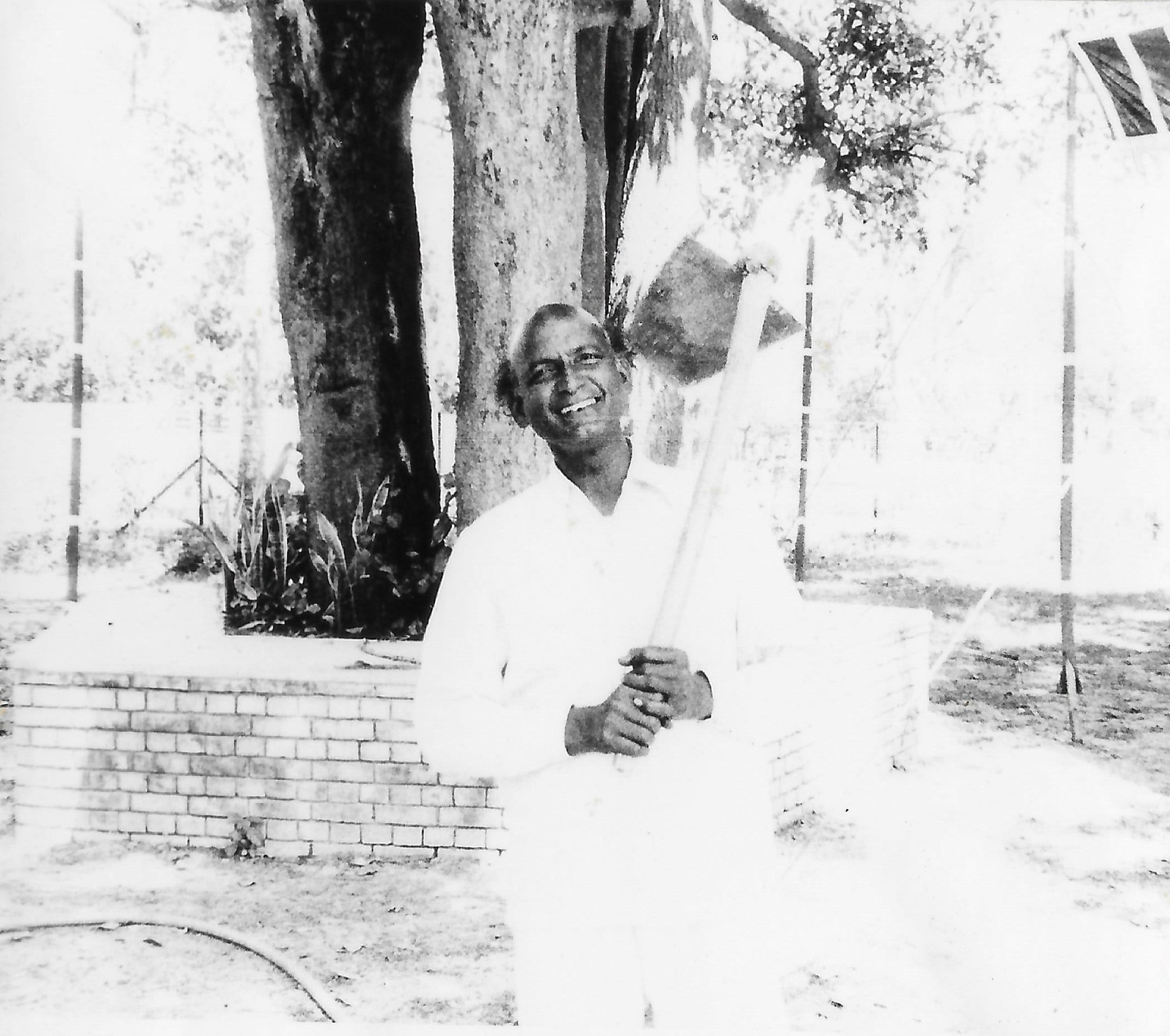
Picture: The Way We Were, 1979
Shishupal was a proud member of Netaji Subhas Chandra Bose's army
and lived as a respected pensioner. In 1978, he played a key role in helping
me organize the Ramlila at IIT Kanpur, showing great dedication and enthusiasm.
In the years that followed, he remained a deeply social and well-loved member
of the community. He had a special talent for makeup artistry, bringing characters
to life with his skill and creativity. His warmth, commitment, and artistic spirit
left a lasting impression on everyone who knew him.
Prabhu Narain Misra Dept of ME, 1967-99
His support in making the
Indian Music Club at old SAC in 1977 was just amazing. We had a number of musical instruments stored very systematically in wooden cupboards made in Central Workshop. Both of us used to regularly follow up and get them shifted to SAC. To run music classes would have been impossible without his support. He knew how to play several instruments himself.
During the Dance Workshop that we organised, he again showed his management skills. The best was his public relations. Always smiling and ready to support and find solutions to whatever problems one came across with a positive frame of mind.
I think he helped so many of us who knew him on how to overcome challenges in difficult situations. Pradip Parikh, BT, ME, 1975-80
He was such a wonderful and resourceful help for lighting during Culfest. The year when the pandal flew away in a hailstorm (1980) he organized the shifting of so many electrical items quickly so that rain would not destroy them.
Ashwini Nangia, MSc, Chemistry, 1978-83
556
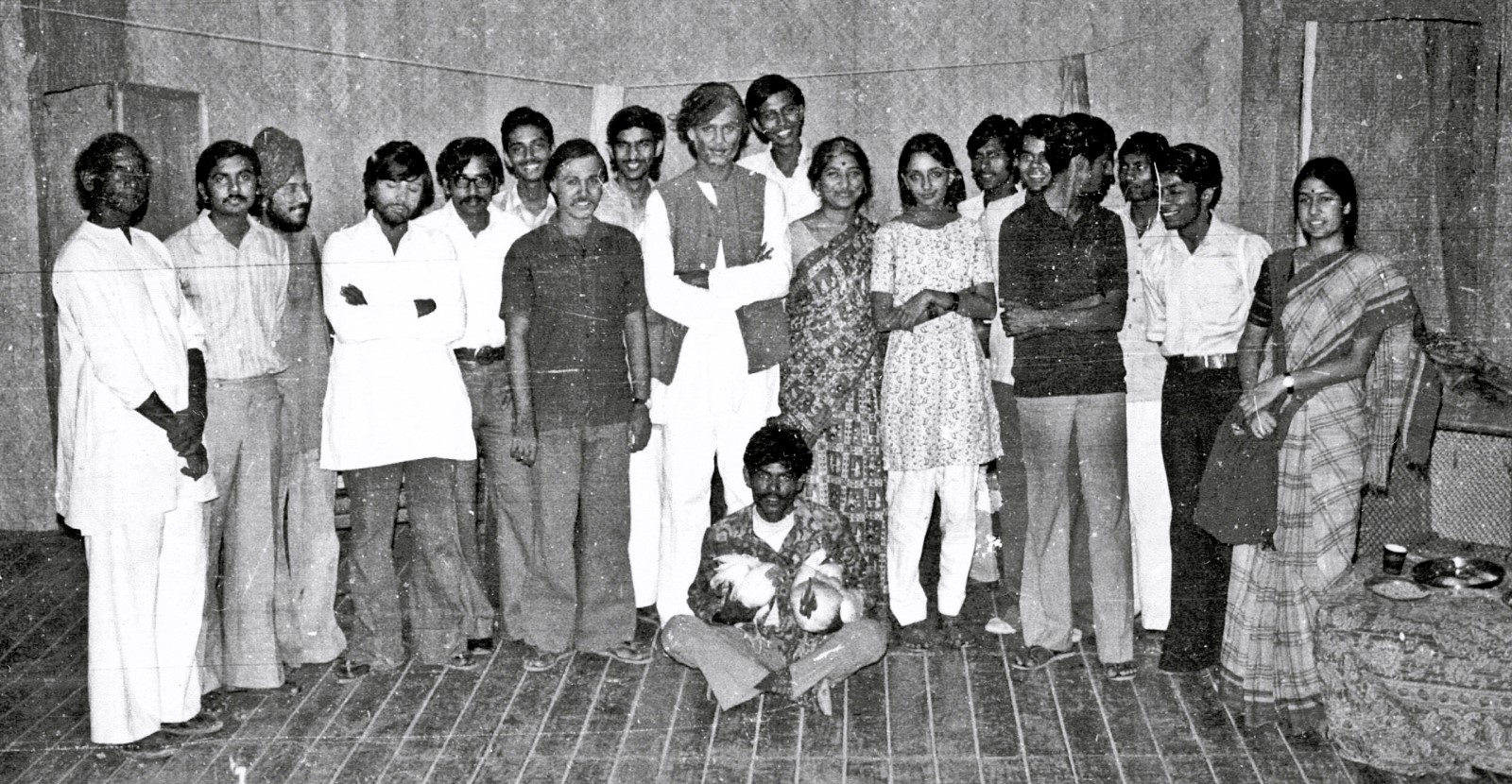
Shishupal (on the far left) with members of the Dramatics Club / Theatre Workshop after a play in L-7, Late 1970s. Picture Rakesh Pandey, BT, ME, 1973-78
He somehow became शिशुपाल (Shishupal), Krishna's enemy in Mahabharata. I am sure no parent would name their child after that character. As far as I know he was from Coorg and his birth name was शेषप्पा (Sheshappa). He was employed in IIT's transport section as a bus driver. All the rest he did was as a volunteer. In fact, even as a driver he often went above and beyond his duty to be helpful. HV Sahasrabuddhe, Professor, EE/CSE, 1964-84
Sometime during 1978/79, Shishupal ji helped find a place for a Gymkhana Students Library at the mezzanine in the SAC. At that time, it was functioning out of someone's room in Hall I. Within a few days after the problem was posed to him by me, he cleared the mezzanine floor from years of scrap storage, got some almirahs and shelves for the books from nowhere and helped establish the Library.
He was very very resourceful and supportive, a true facilitator.
Yadvendra Sahai, BT, MME, 1976-81
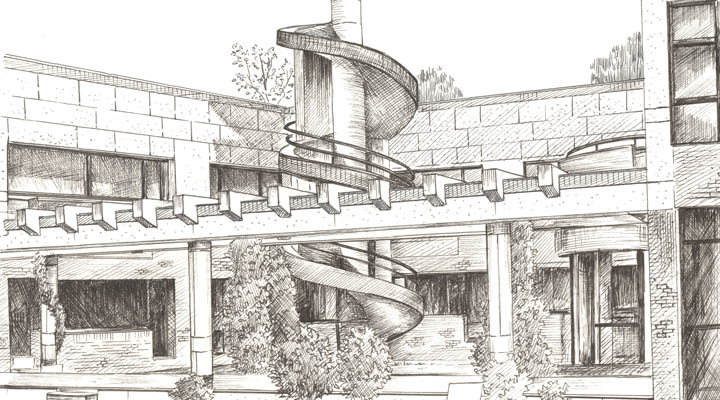
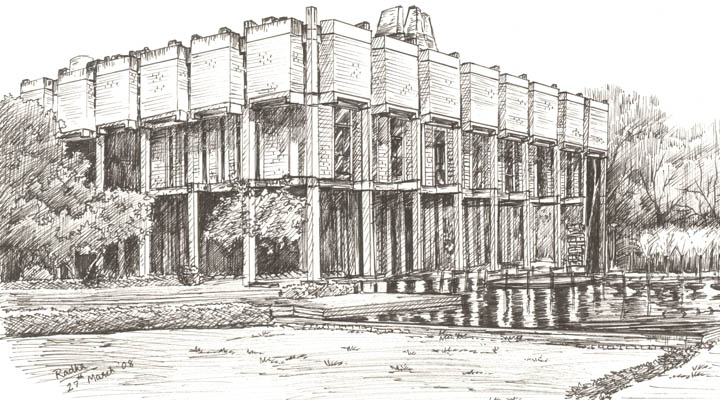
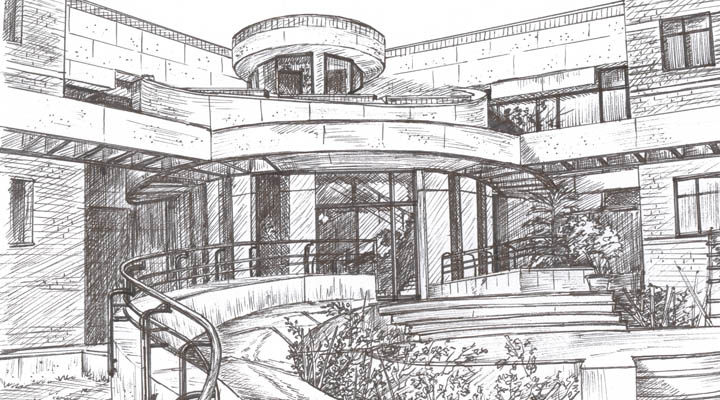
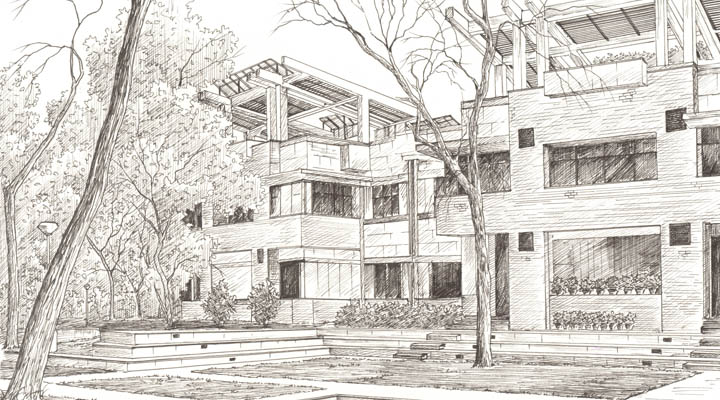
Sketches are from the archives of the Office of International Relations
557
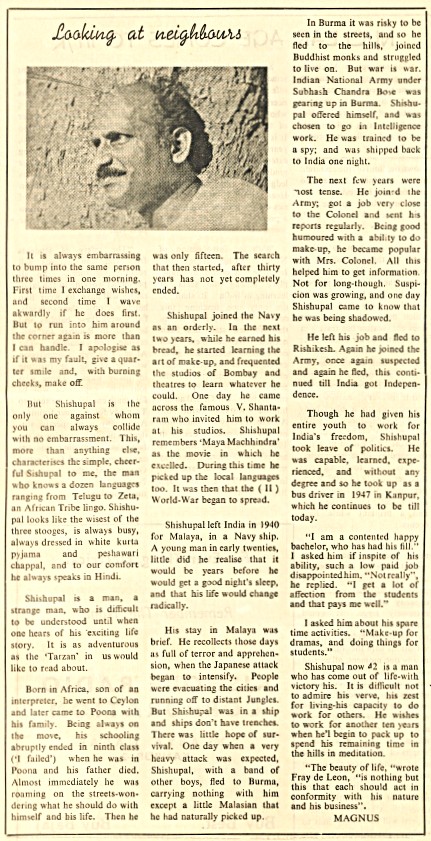
Reprinted from the Spark, Spring 1966. Our special thanks to Dhani Sahai Mathur (BT, ChE, 1961-66) for saving his copies of the Spark and sharing them with us.
558
An Exciting Update for All IIT Kanpur Alumni!
We are thrilled to share that the Kanpur Metro is now operational from Kanpur Railway Station to IIT Kanpur! This new connection makes it easier and more convenient than ever to visit the campus. Whether you’re returning for a reunion, visiting old friends, or simply reliving memories, your journey just got smoother. We look forward to welcoming you back to campus—now just a metro ride away!
Amey Karkare, DORA, IIT Kanpur, May 31, 2025From Vikram to Metro
Shakti Chaturvedi, Research Scholar, IME
Travelling from IIT Kanpur to Bada Chauraha or Kanpur Central used to mean changing two autos, taking up to 50 or more minutes. Now, with the extension of the Metro to Kanpur Central, IITK to Bada Chauraha is 24-27 minutes, and Kanpur Central is around 31-33 minutes. Fare for both is Rs 40 at this time.
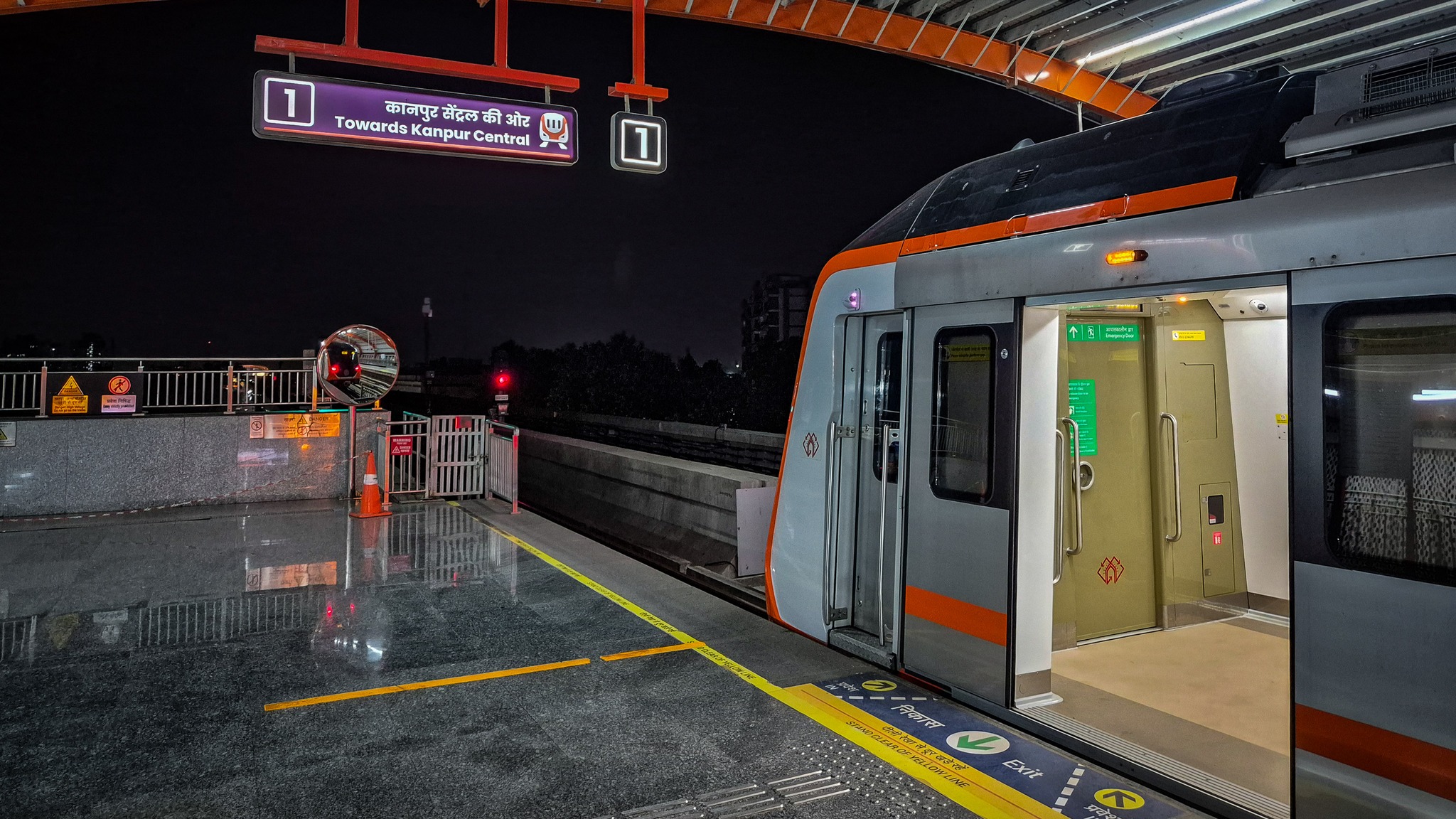
At the IIT Kanpur Station. Now serving Kanpur Central.
Trains run from 6 am to 10 pm and are direct from IITK. The station at Kanpur is on the Ghantaghar Side (aka Platform 9). The present route is IITK to Rawatpur, Bada Chauraha and Kanpur Central, and before the end of the year this Orange Line will expand further from Kanpur Central to Jhakarkatti, Bara Devi and Naubasta. For the alumni looking to return to campus, the old-fashioned way, the autos still ply, though many are now electric.
559
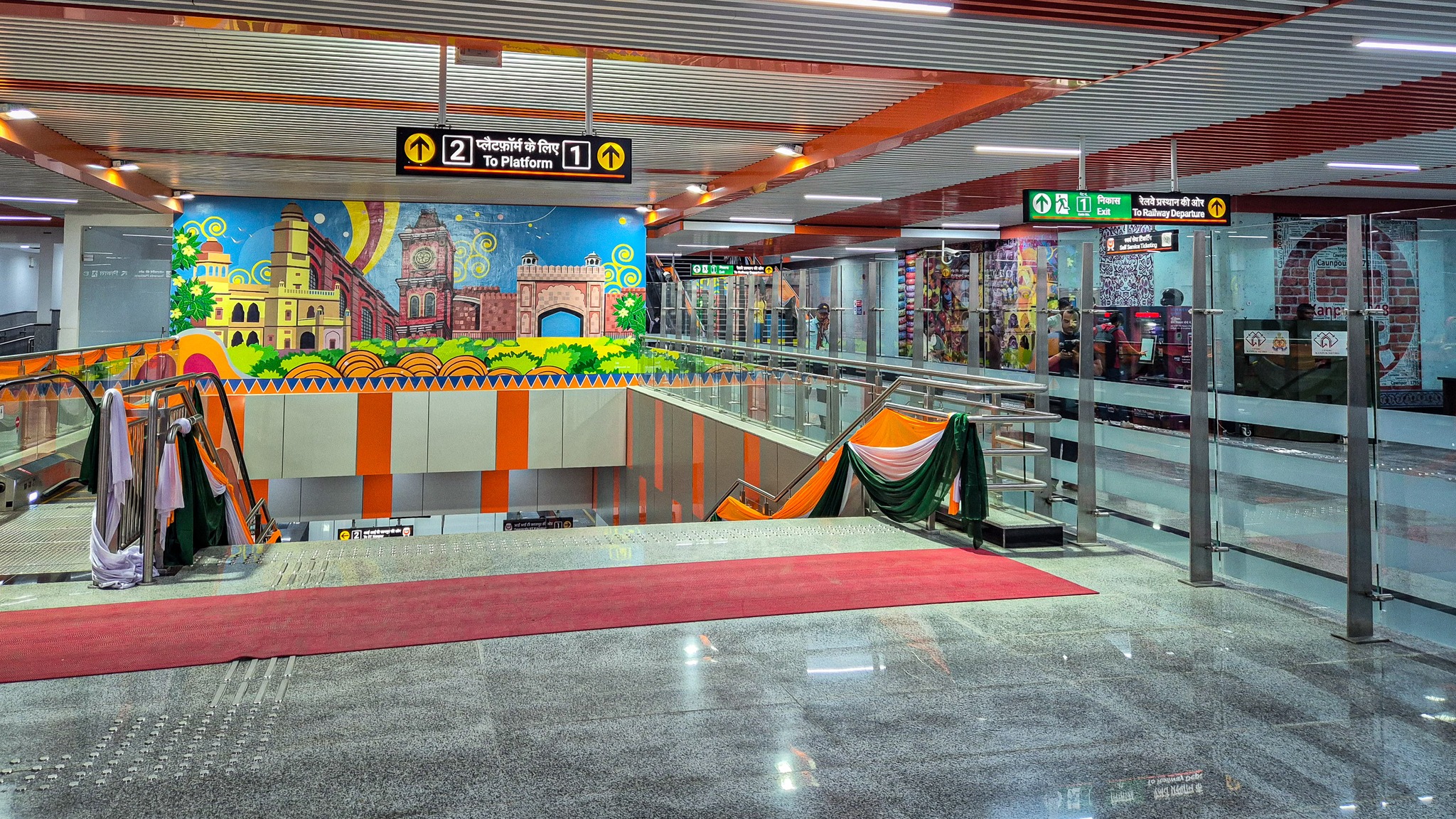
Concourse level, Kanpur Central. For now, only exit 1 is open, with the Ghantaghar side of the station undergoing major construction. While the underground stations have rather basic entrances at ground level, at the concourse level each station has murals unique to the location.
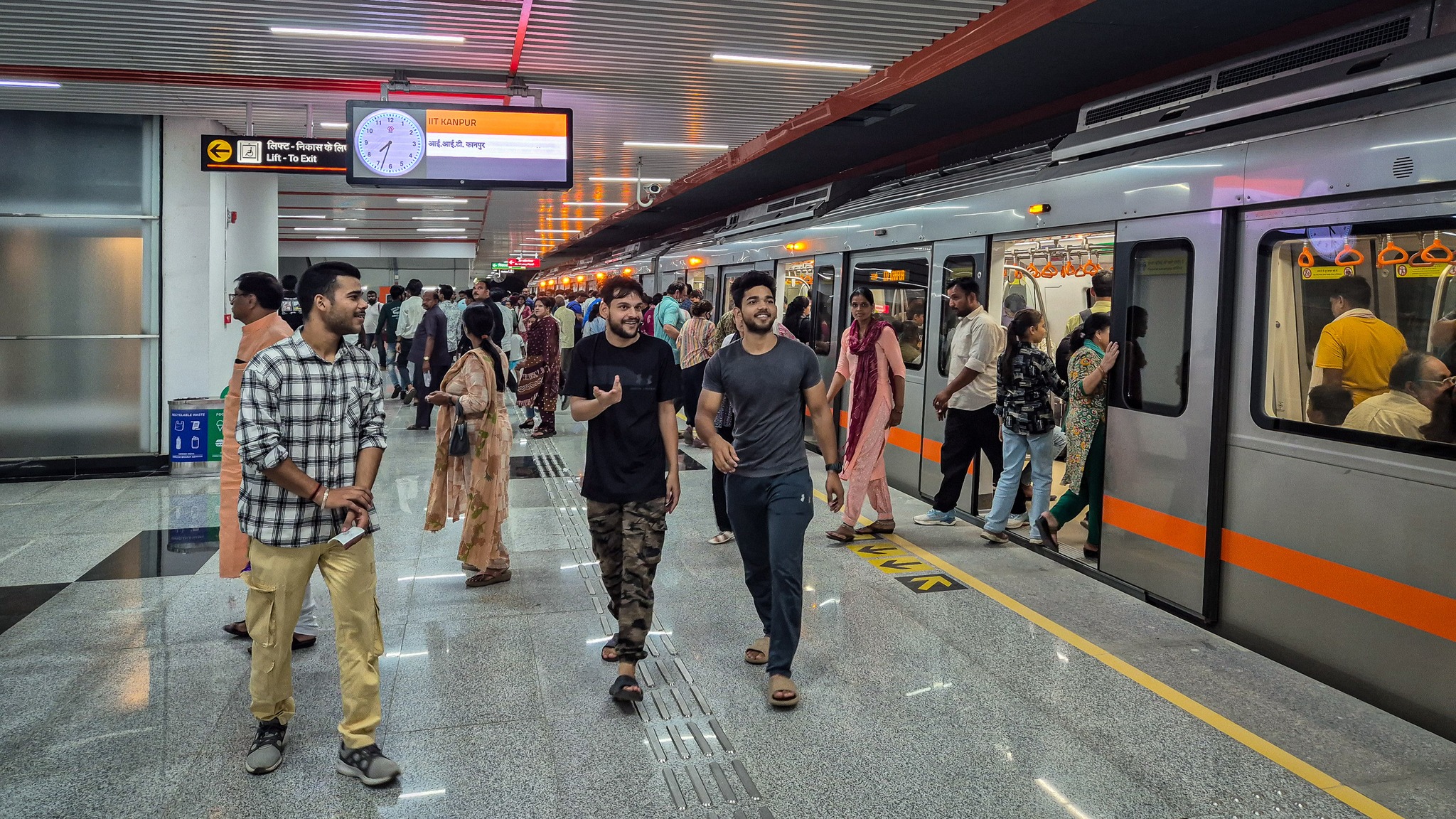
At Kanpur Central, with the Metro headed towards IITK
560
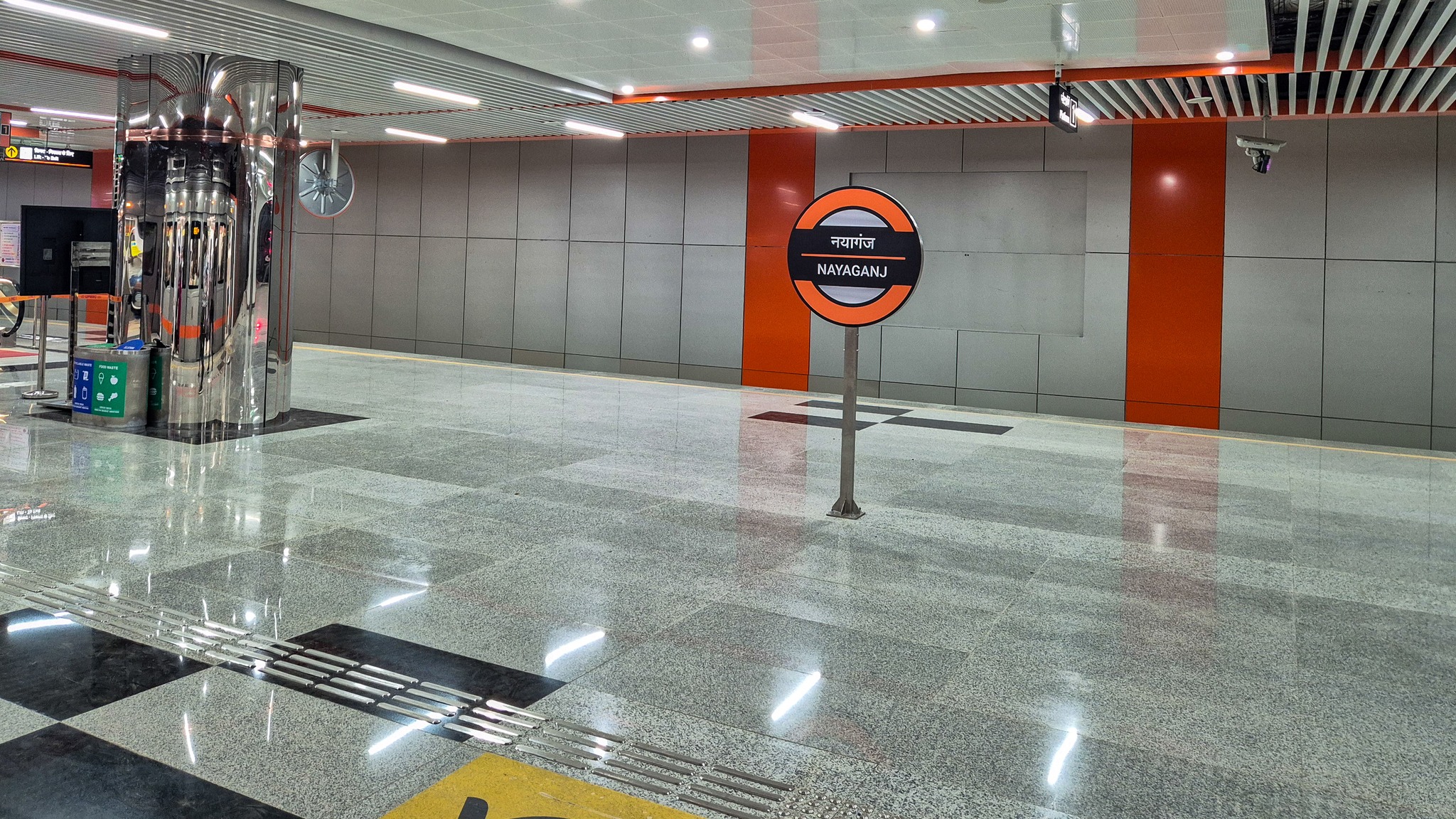
This station is called Nayaganj, but it actually is Mall Road. Phulbagh and the LIC Building are just 600m away, and Chung Fa is around the corner.
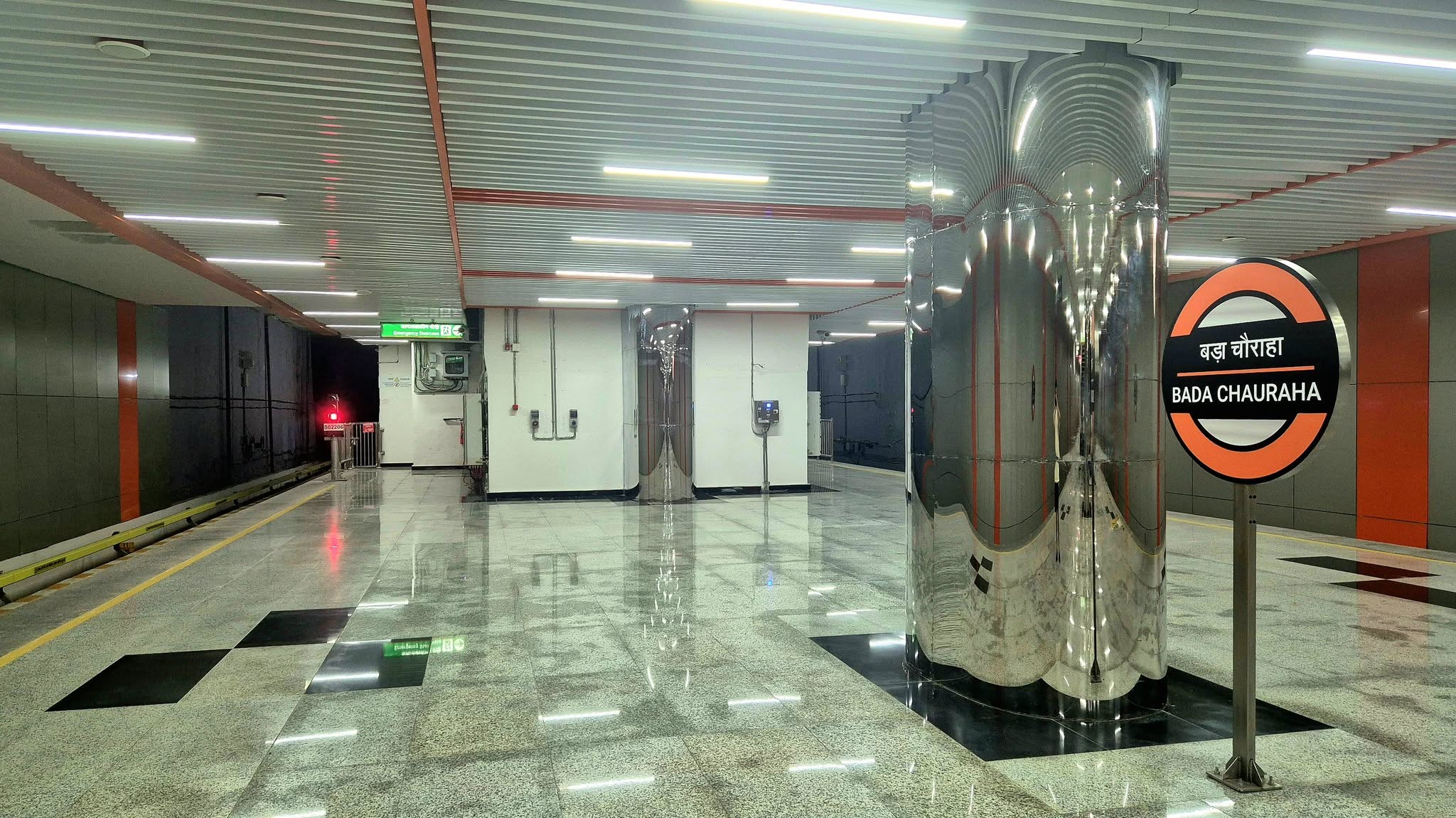
Bada Chauraha. In the earlier days, this would be the last stop of the ‘Ganesh’ Tempo, and further travel required taking a cycle-rickshaw to Kanpur Central Station. Today, this is also the stop for Z-Square, the largest shopping mall in the city and the main post office.
561
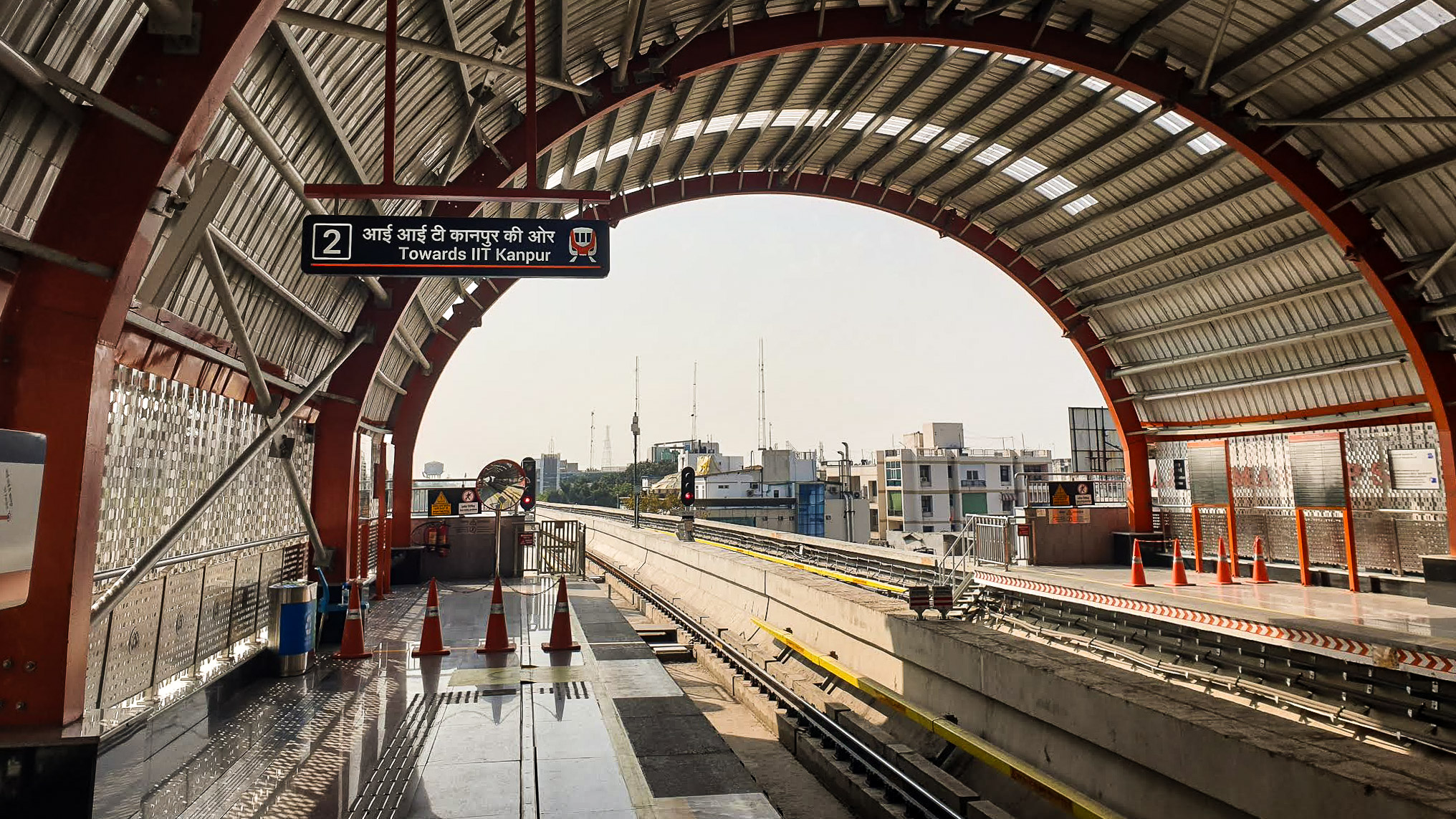
Moti Jheel, where the Metro emerges from underground. This would also be the access point for the JK Temple, and the Moti Jheel lawns and restaurants, the site for many a graduation party.
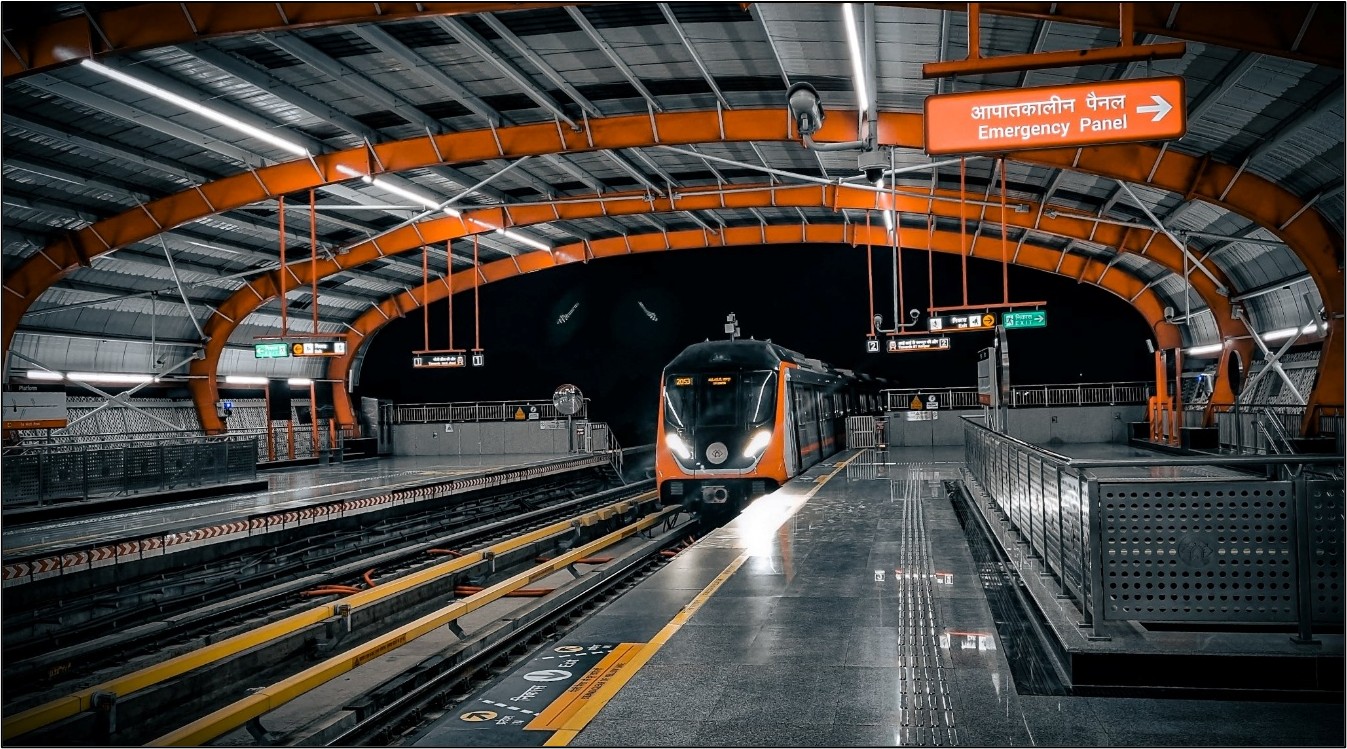
Rawatpur. The drop off point for a quick shopping trip. Today, the city extends well past Kalyanpur and the IITK Campus, with thriving markets and fast-food outlets around the main gate.
562
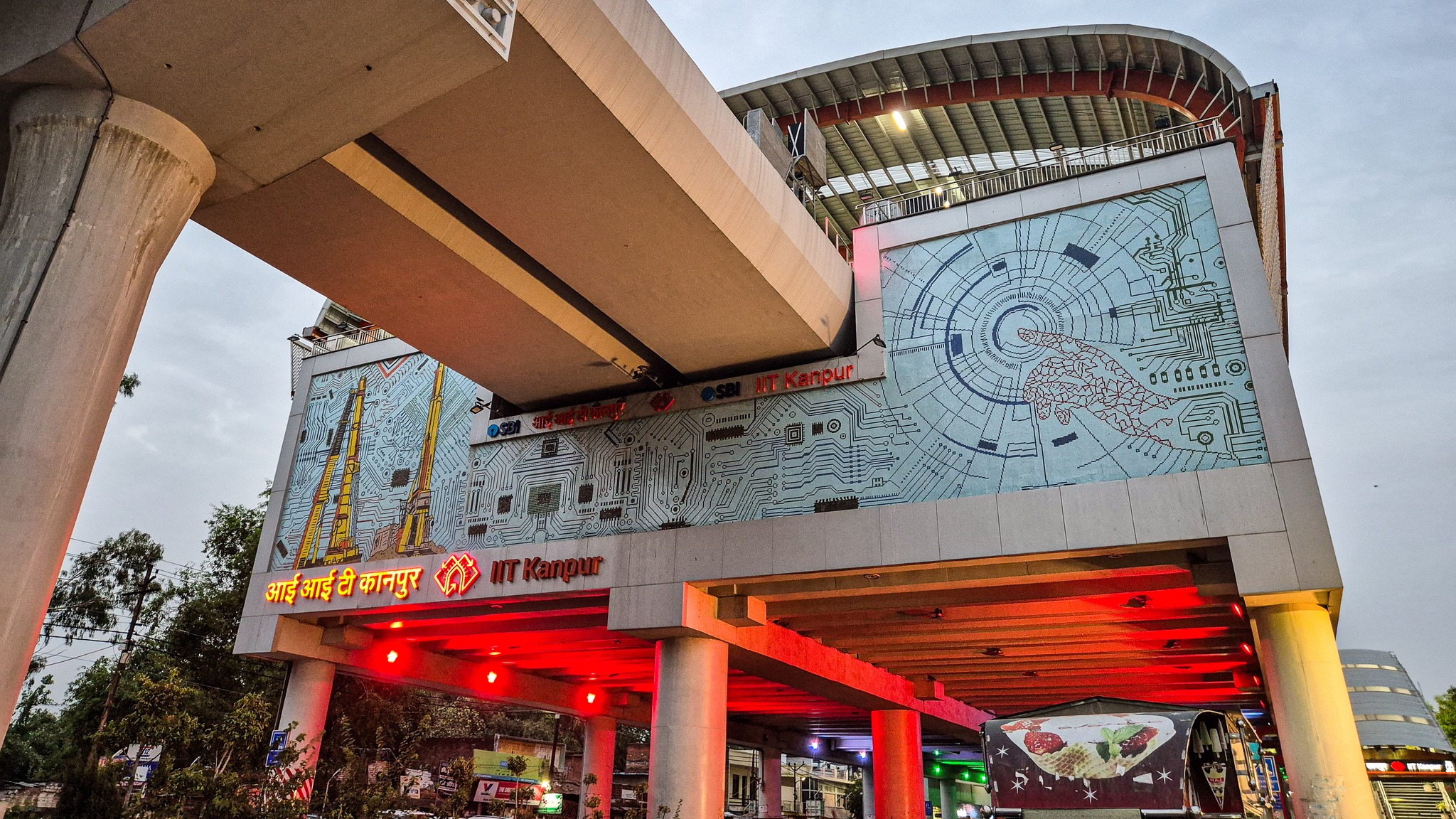
Our Stop. The IITK station and the walk home.
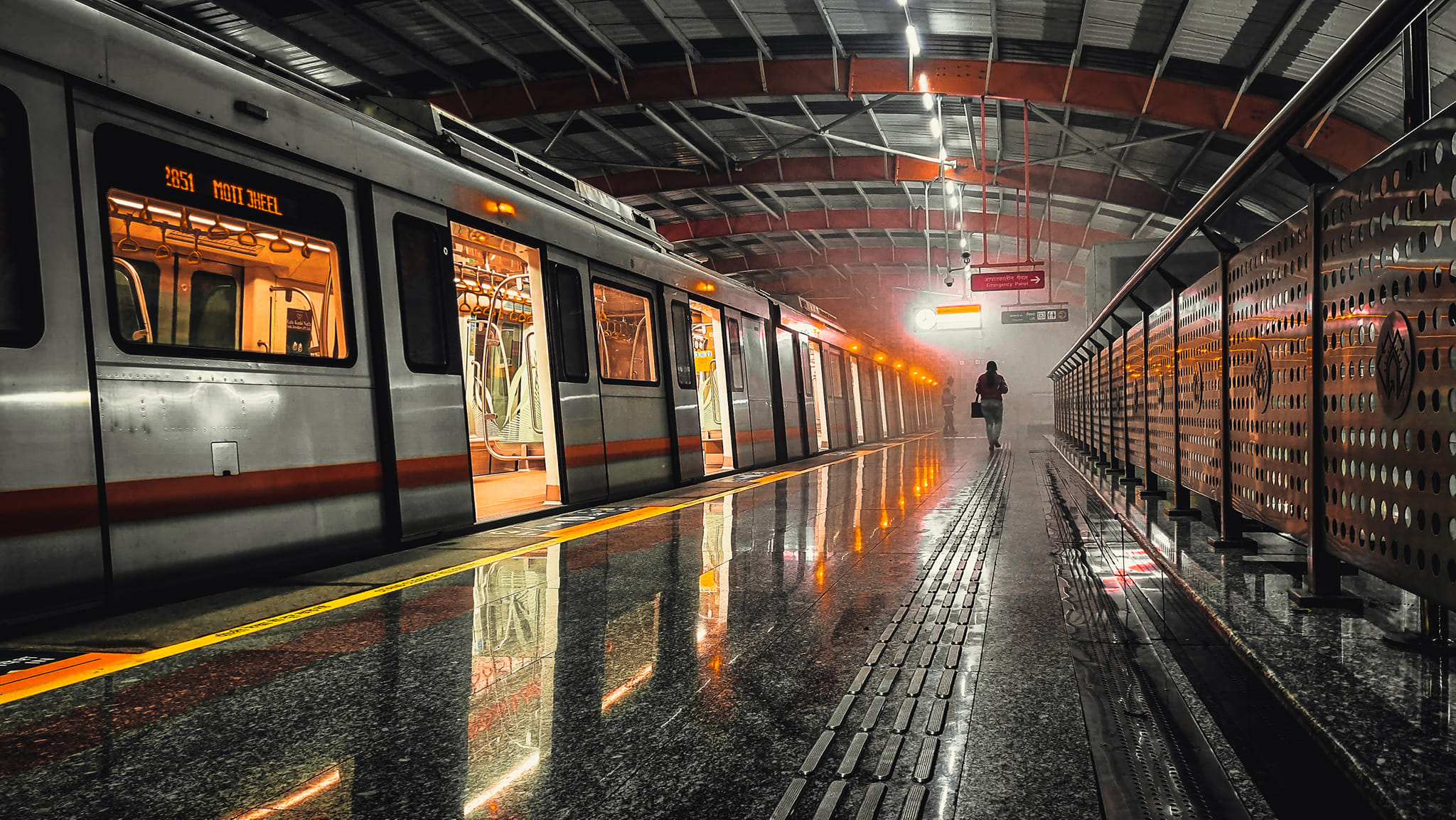
All pictures in the photo feature have been contributed by Shakti Chaturvedi
563
A Unique Offering
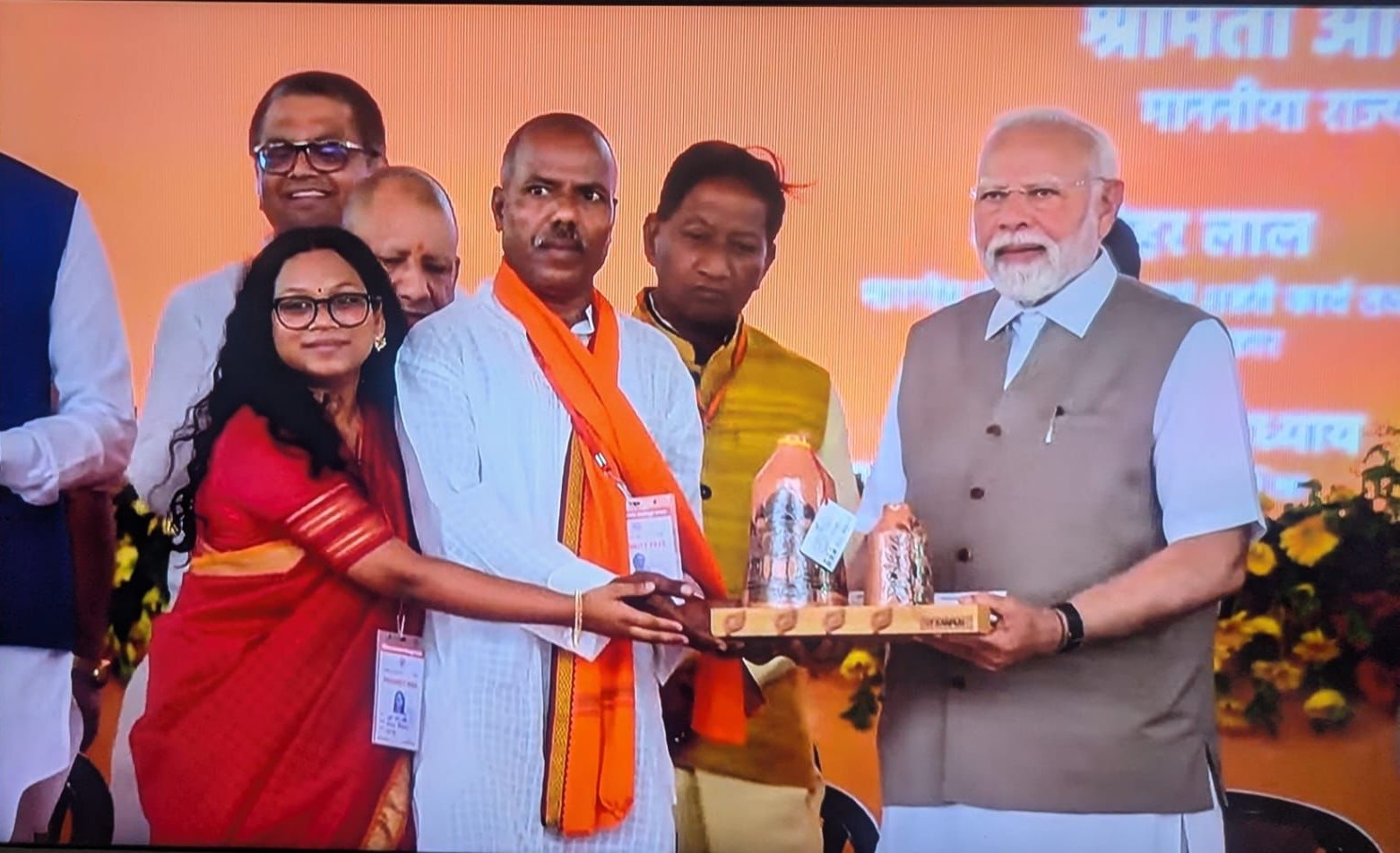
Shailly Sangal, along with potter Shankar Prajapati, presenting the vase to Prime Minister Modi.
The Prime Minister, Mr. Narendra Modi’s visit to Kanpur to launch the Metro service from Kanpur Central was celebrated with a unique gesture from the Ranjit Singh Rozi Shiksha Kendra (RSK), IIT Kanpur.
In a memorable moment, ceramic designer Ms. Shailly Sangal, along with potter Shri Shankar Prajapati, had the honour of presenting an exclusive handcrafted ceramic vase to Mr. Modi. The gift was designed and created under the guidance of Prof. Satyaki Roy, who beautifully blends traditional craftsmanship with contemporary design sensibilities at the RSK, IIT Kanpur.
The vases reflect the collaborative synergy between design expertise and artisanal skill, symbolize the spirit of innovation, and show the culturally rich Bithoor of the past treading into the future. While one vase has historic temples and Ganga Strotam engraved on it, the other one brings out the rich flora and indigenous variety of fruit trees of Ganga Katri area.
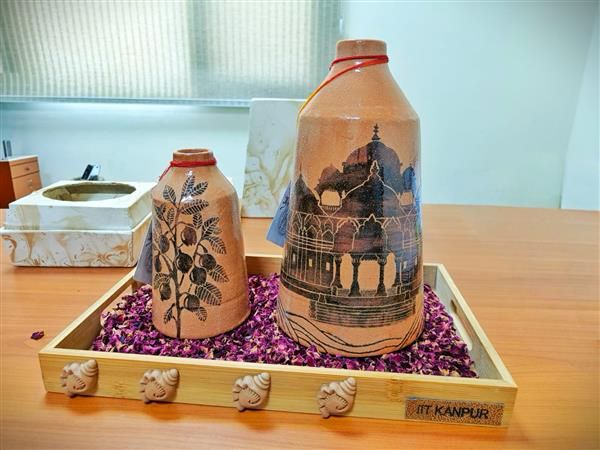
The pair of vases was crafted by Shanker Prajapati of the historical town of Purana Bithoor, the artwork was performed by Shailly Sangal, and the Ganga Strotam was engraved on the vases by Shanti Devi of Nankari village, a local calligrapher in Devanagari script. The vases were then packed using handmade paper, a languishing art form of Kalpi that RSK is working on reviving. A base decorated with beautifully carved conches sculpted by Shanu Prajapati went into a special designer box created by Faiqa with a quilted bag to hold the entire ensemble crafted by RSK trainees.
The Design Development Centre of RSK aims to work with local crafts and help artisans adopt improved techniques and sustainable craft practices that were once prevalent. RSK was represented by Prof. Sandeep Sangal (Principal Investigator), Mrs. Rita Singh (Project Executive Officer), and Dr. Monika Thakur (Senior Research Analyst) while the gift was handed to the Hon’ble PM.
564
RBI Governor Sanjay Malhotra Returns to Campus
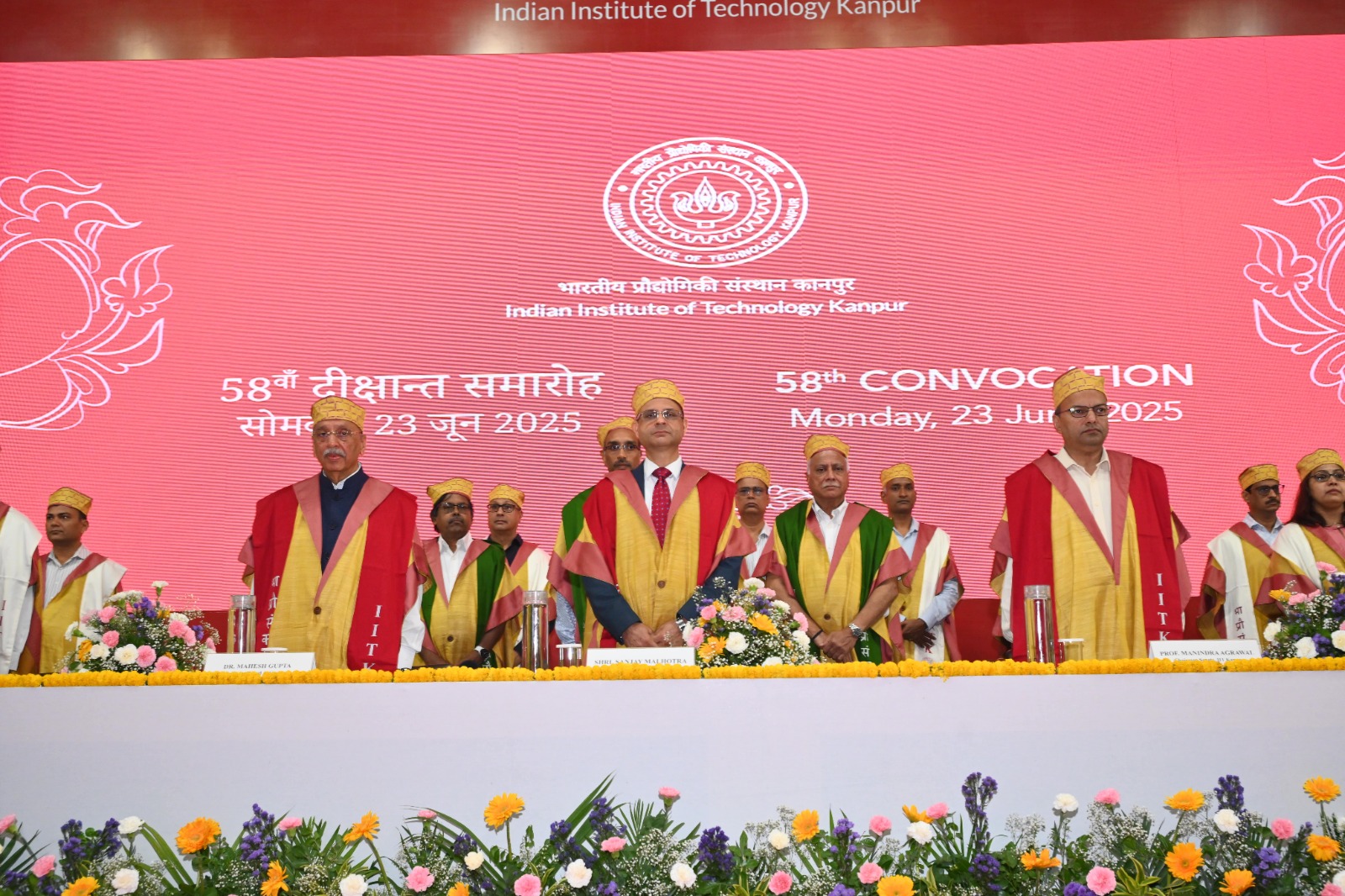
Dr. Mahesh Gupta (IITK BOG), RBI Governor Sanjay Malhotra, and Director Manindra Agrawal presiding over the Convocation Ceremony.
The institute celebrated its 58th Convocation Ceremony on June 23, 2025, conferring degrees upon 2,848 students across a diverse range of disciplines. The ceremony was graced by RBI Governor Sanjay Malhotra, a distinguished IITK alumnus, as the Chief Guest. Addressing the graduating batch, he inspired students with reflections from his journey, underscoring the power of integrity, adaptability, and lifelong learning.
Top honours, including the President’s Gold Medal, were awarded to high-achieving students, while 21 scholars received Outstanding PhD Thesis Awards for their research excellence. The event was not just a celebration of academic accomplishments, but also a tribute to IIT Kanpur’s values of ethical leadership, innovation, and interdisciplinary excellence.
As the next generation of changemakers steps out into the world, we wish them all success as they shape the future of technology, science, and society.
About Governor Sanjay Malhotra:
Sanjay Malhotra graduated with a B.Tech. in Computer Science from IITK in 1989 and subsequently obtained a Master’s degree in Public Policy from Princeton University. He is an IAS Officer of the 1990 Batch Rajasthan Cadre, and has served in various positions throughout his career, including: Secretary of Financial Services in the Ministry of Finance (Feb 2022 – Nov 2022), and Revenue Secretary of India (Dec 2022 – Dec 2024). On 11 December 2024, he was appointed Governor of the RBI.
565
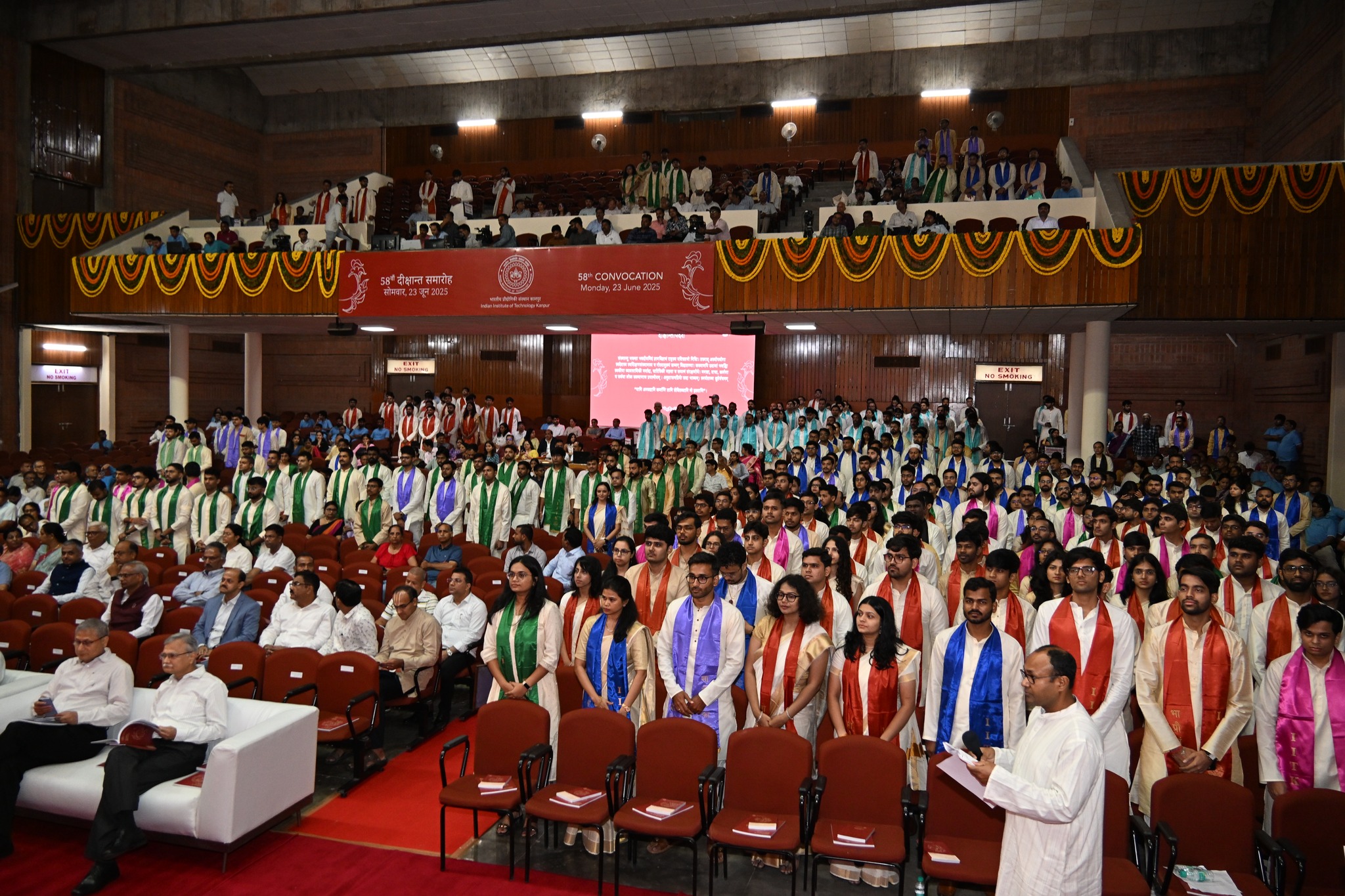
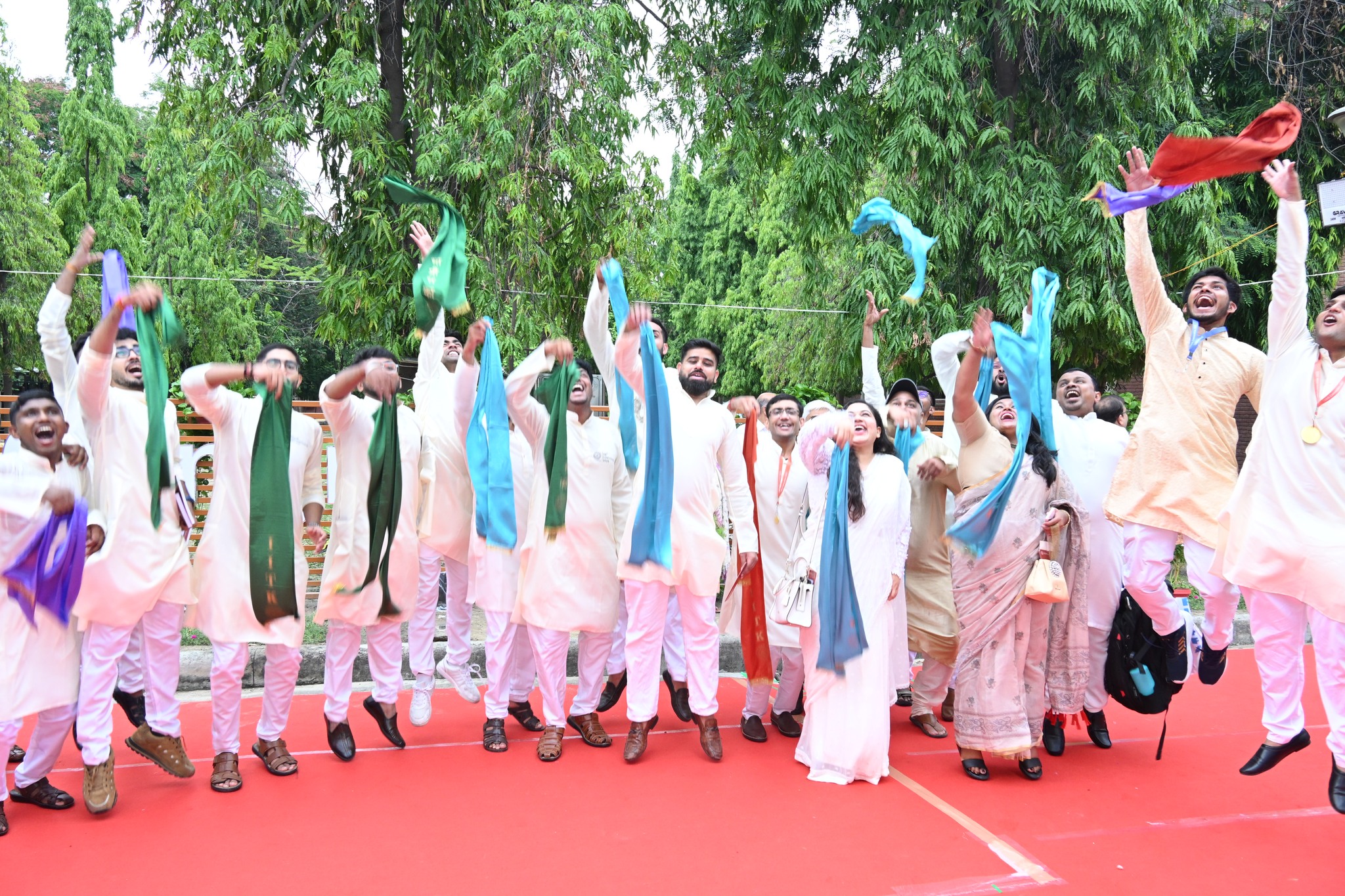
Convocation 2025, IITK. Celebrations inside, and outside, the auditorium!
566
Padma Shri for Prof. Ashutosh Sharma
Our congratulations to Prof. Ashutosh Sharma on being conferred with the Padma Shri! The entire IIT Kanpur community takes immense pride in this well-deserved honour, celebrating his outstanding contributions to science, engineering, and innovation.
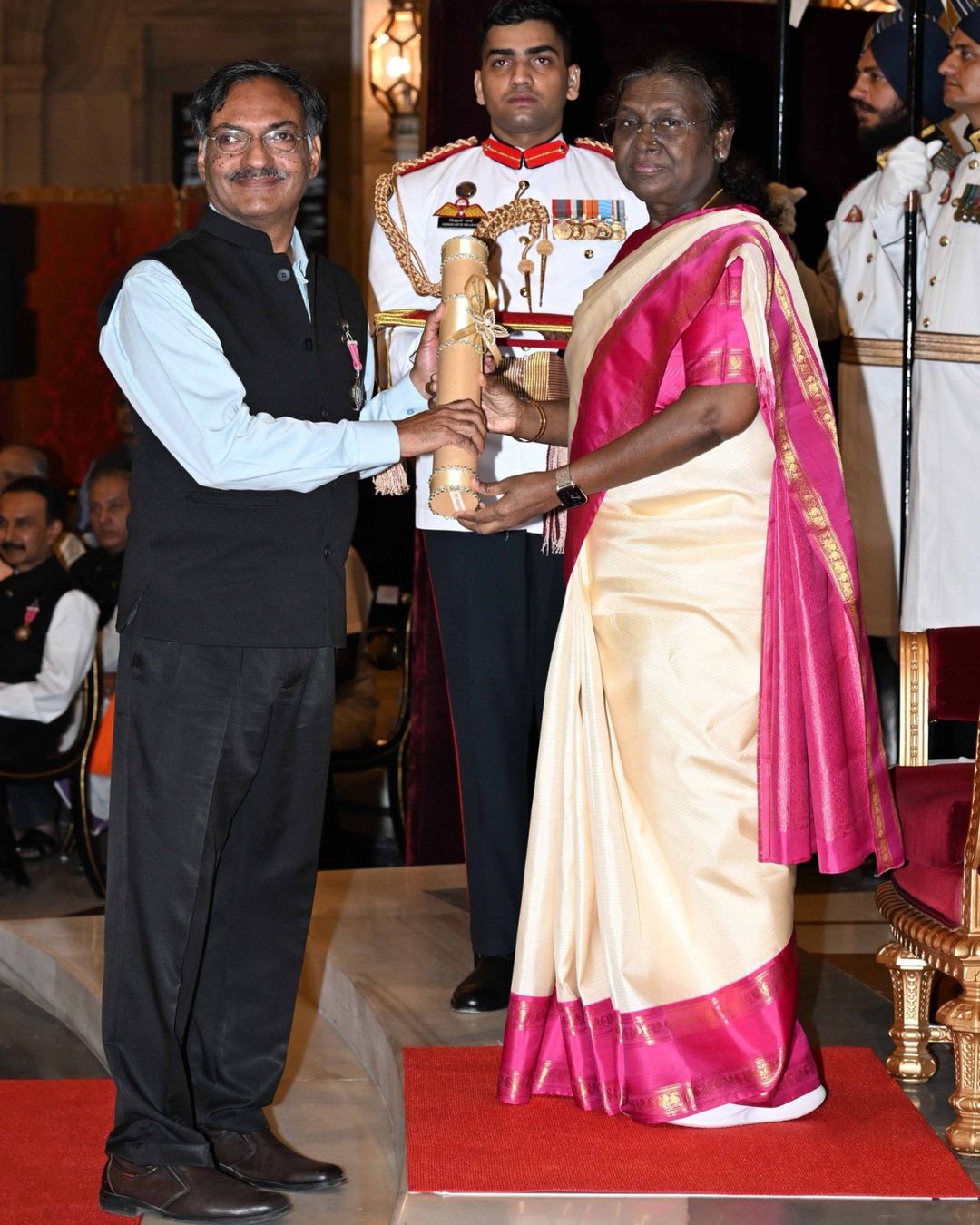
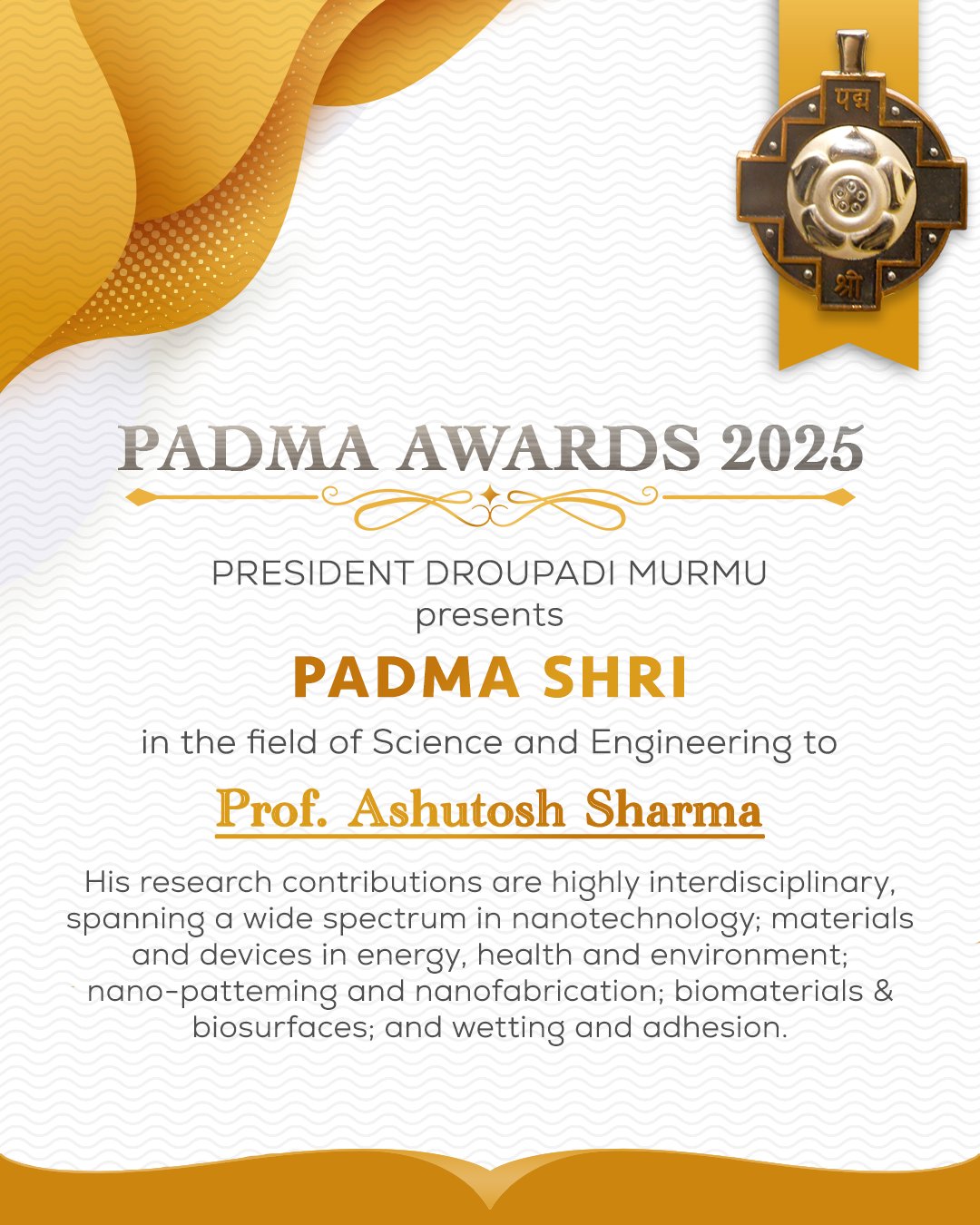
Ashutosh got his B.Tech degree in ChE from IITK in 1982. He graduated with a master's degree from Pennsylvania State University in 1984 and three years later obtained his Ph.D. in Chemical Engineering from the University at Buffalo.
Today, Ashutosh is an Institute Chair Professor and C V Seshadri Chair Professor in the Department of Chemical Engineering at IITK. He is the founding Coordinator of DST Thematic Unit of Excellence on Soft Nanofabrication and Chairman of Centre for Environmental Science and Engineering. He is best known for his pioneering research work in the areas of colloids, thin film, interfaces, adhesion, patterning and in the fabrication and application of self-assembled nano-structures.
Ashutosh was appointed as the Secretary, Department of Science and Technology, Government of India in January 2015 and served there till August 2021. He also served as President of Indian National Science Academy from 2023 till 2025. In 2002, he received the Shanti Swarup Bhatnagar award in engineering sciences and IIT Kanpur recognized him as a Distinguished Alumnus in 2007. He has received numerous other awards including the Distinguished Alumnus Award and an honorary doctorate from SUNY Buffalo, and the inaugural Infosys Prize in Engineering and Computer Science in 2010.
We went digging through our albums, looking for pictures of Ashutosh from his undergrad days and made some interesting discoveries.
567
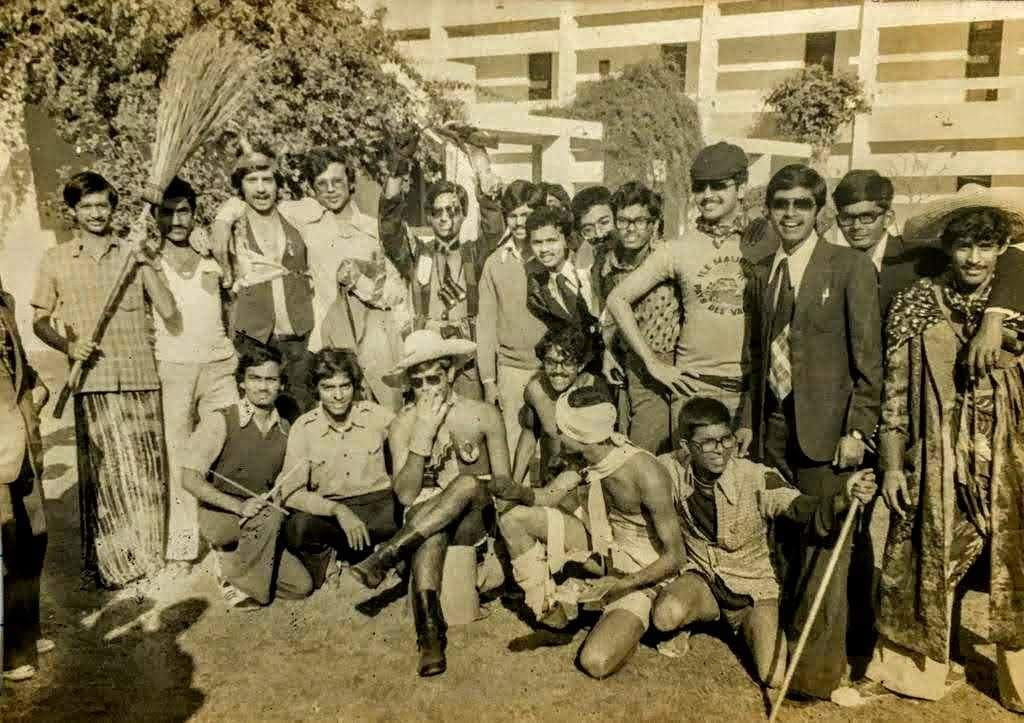
A motley crew on a Sunday Morning, c. 1979: We are not sure what this assorted bunch of characters were up to in the Hall III quad, or if they were up to anything at all! Standing in the centre of the group with the binoculars around his neck is Ashutosh Sharma, 1977-82.
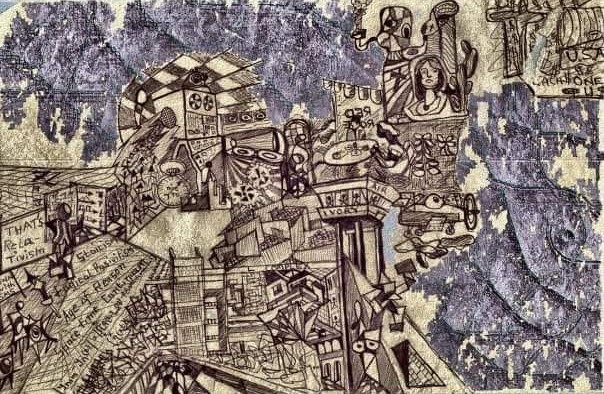
Linocut printing is a rather tedious and painstaking process which teaches and tests the value of advance planning and patience rather well. This is an image of a linograph made in 1979 or 1980 by Ashutosh on his life as an undergraduate in IIT Kanpur campus. Many iconic elements are recognizable here, including: the FB and its upper connecting walkway; the CC complete with computers and magnetic spool storage; mechanical gears; Red Rose restaurant with fine dining on a circular table; Striking Workers/students with slogans; the Overhead water tank near H3; a GH resident; the Control Tower with air borne gliders; and the general cubism of the campus buildings.
568
The Apple Presentation
Our congratulations to Gaurav Kukreja for being selected as one of 50 Distinguished Winners for Apple’s annual Swift Student Challenge, which included a trip to the Apple headquarters for the Worldwide Developers Conference (WWDC), June 7-11, 2025. He was one of just 11 participants invited to personally present his app to Tim Cook, Apple’s CEO.
The Swift Student Challenge is Apple’s competitive platform to inspire the world’s brightest young coders to showcase their creativity and problem-solving skills through original app playgrounds. This year, out of thousands of entrants worldwide, 350 students were named winners, with 50 earning the coveted title of Distinguished Winner. Gaurav was further honoured to be one of 11 winners selected to present their projects to Tim Cook, CEO of Apple Inc., during WWDC25. This once-in-a-lifetime opportunity recognised Gaurav’s outstanding technical achievement and offered him an exclusive audience with Apple’s top executives and a vibrant network of innovators from across the globe.
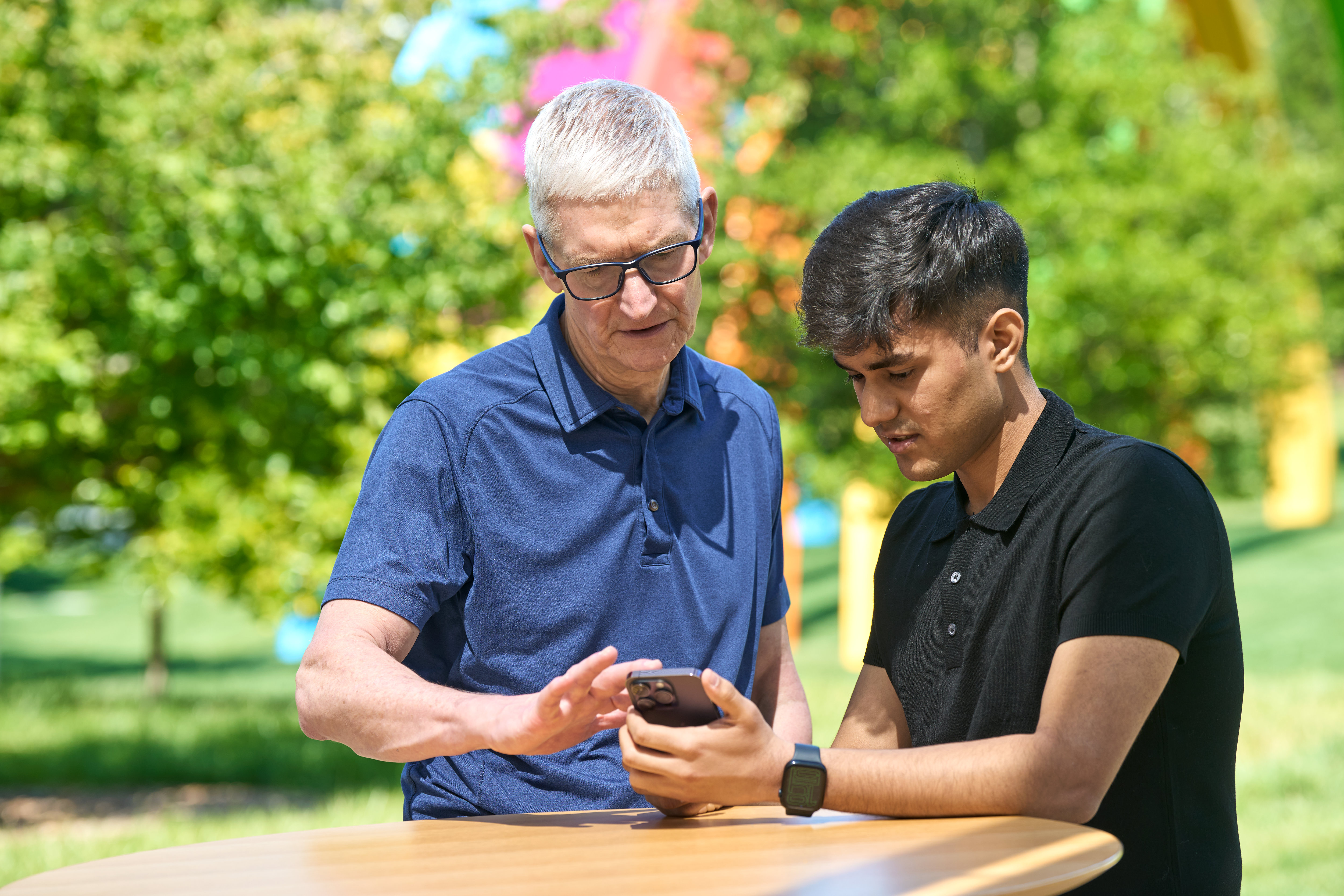
Gaurav with CEO Tim Cook at Apple Park, June 2025
At the heart of Gaurav’s achievement lies ‘ResQ,’ a comprehensive first aid app born through leveraging technology to address urgent healthcare needs. ResQ guides users through medical emergencies by offering clear, step-by-step instructions for various scenarios in a visually accessible, card-based format. After the presentation, Tim Cook remarked on the app’s impressive breadth of emergency scenarios.
Gaurav envisions augmenting ResQ in the future with advanced technologies—such as Apple’s new on-device AI implementation and Liquid Glass UI—for even richer user experiences and wider impact. His ultimate goal is to make urgent healthcare guidance as accessible and intuitive as possible, blending his interest in biology and medicine with expertise in technology.
569
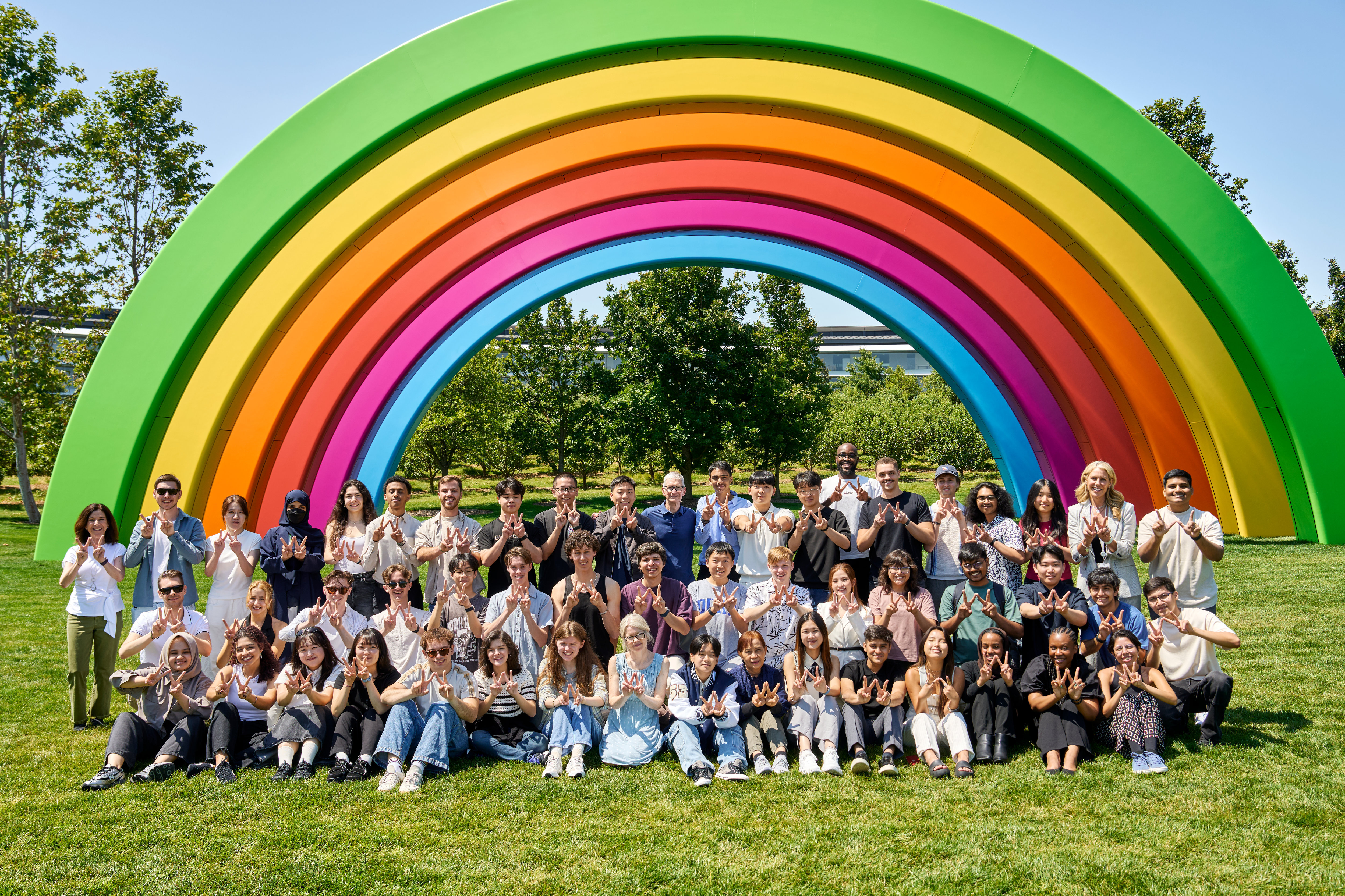
The SSG Distinguished Winners with Tim Cook at Apple Park
Gaurav’s immersive experience at WWDC25 included hands-on lab sessions with Apple’s engineers, direct interactions with platform experts, and peer networking. The visit exposed him to the latest advancements announced at WWDC—a powerful inspiration for young technologists striving to make a difference.
Gaurav (BT, BSBE, 2022-26) is from Faridabad, Haryana. At IITK, he resides in Hall II (obviously!) and is an active contributor to campus life. As a core team member and manager of the Outreach Cell, he has played a pivotal role in organizing alumni engagement, supporting institute-wide events, and strengthening the student-alumni network alongside the DORA team.
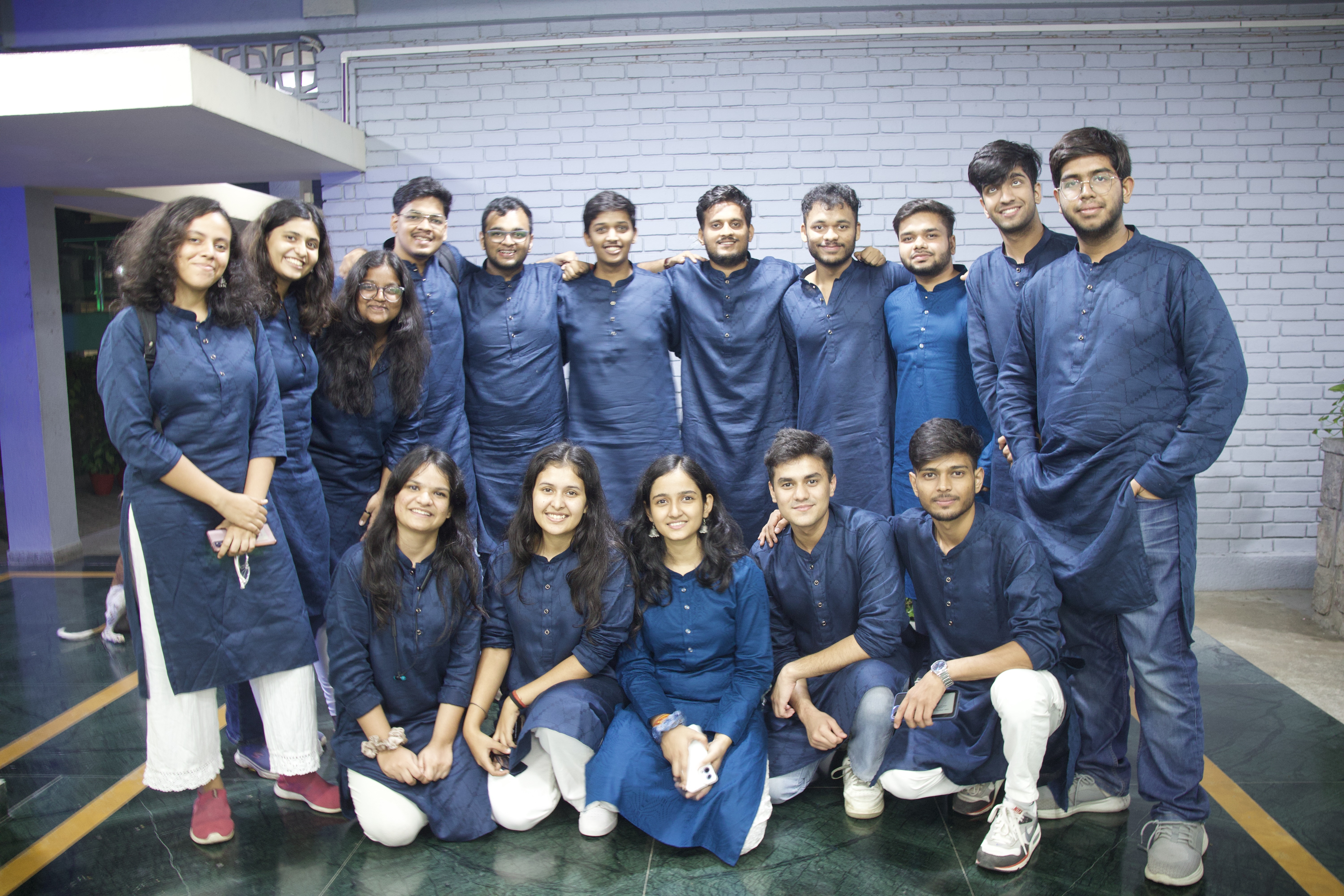
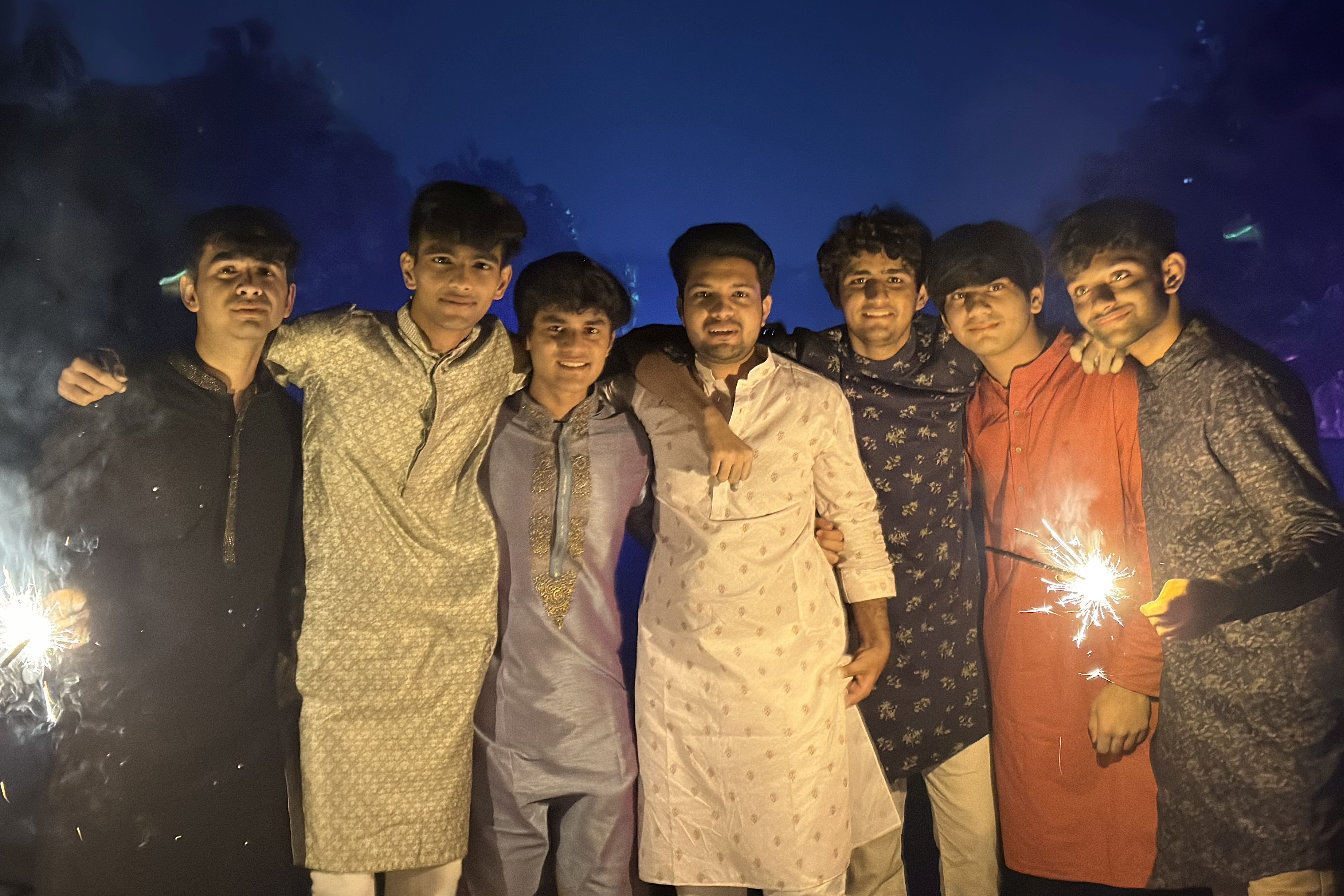
(L) The Outreach Cell team, 2025; (R) Celebrating Diwali with friends in Hall-II, 2024
570
Team Aerial Robotics made IITK proud by securing the first place at the finals of the student competition held during the International Conference on Unmanned Aircraft Systems (ICUAS) in Charlotte, NC, USA, in May 2025. In the second article in our series on student activities on campus, Aerial Robotics discusses its history, organization, current challenges, and recent accomplishments
Team Aerial Robotics, IIT Kanpur

“Defying Gravity, Crafting the Future, One Flight at a Time”
At Aerial Robotics, our mission is to promote a scientific culture and curiosity around Unmanned Aerial Vehicles (UAVs, or drones), while advancing UAV technology in our country. We are an undergraduate team established with the goal of raising awareness and showcasing the potential of UAVs. What began as an idea in 2017 has now grown into a passionate team that has represented IIT Kanpur in international arenas.
We have grown into a team of around 40 dedicated undergraduate members, actively participating in numerous Inter IIT Tech Meets and other prestigious competitions. While most of our team consists of second- and third-year undergraduates, senior undergraduates often guide the team in advisory roles. Staying true to our vision, our alumni have gone on to pursue higher studies and careers at renowned institutions such as ETH Zurich, Carnegie Mellon University, Georgia Tech, and KTH Royal Institute of Technology, with some even launching their own UAV ventures in India.
.jpg)
Team Aerial Robotics, 2025-26
571
We are currently advised by Prof. Ketan Rajawat (Department of Electrical Engineering), who has supported us tirelessly through every challenge, technical or logistical. His guidance has been instrumental in shaping our journey and achievements.
Organization
The team is structured into four major subsystems, each working closely with the others to ensure seamless integration and timely execution of our pipelines:
Hardware and Firmware: This subsystem designs and builds our drones from the ground up. They ensure that we maintain a fleet of reliable, flight-ready drones at all times for continuous testing (and failure).
Visual Processing and Algorithms: Focused on perception, this team works on object detection, segmentation, and tracking, enabling our drones to understand and draw inferences from our surroundings.
Controls: This group develops the custom logic that keeps our drones stable and responsive. For instance, during the Inter IIT Tech Meet 2024, we tackled the challenge of handling a single motor failure in a quadrotor, developing a robust fallback mechanism.
Path Planning and Localization: This team implements algorithms that allow our drones to move efficiently and accurately, ensuring agile and optimal navigation, even in complex environments.
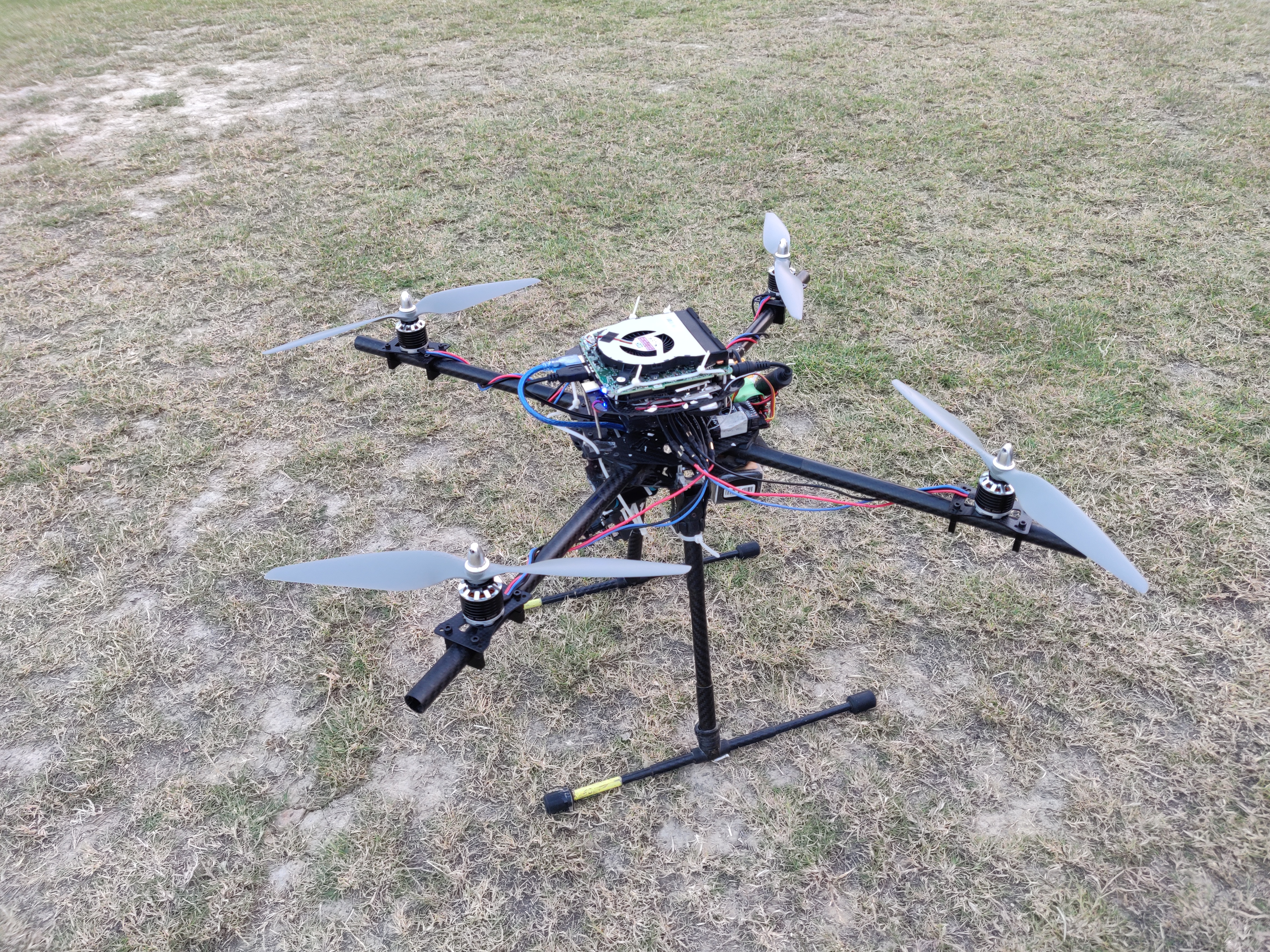
A compact UAV undergoing field tests for stability and flight performance
572
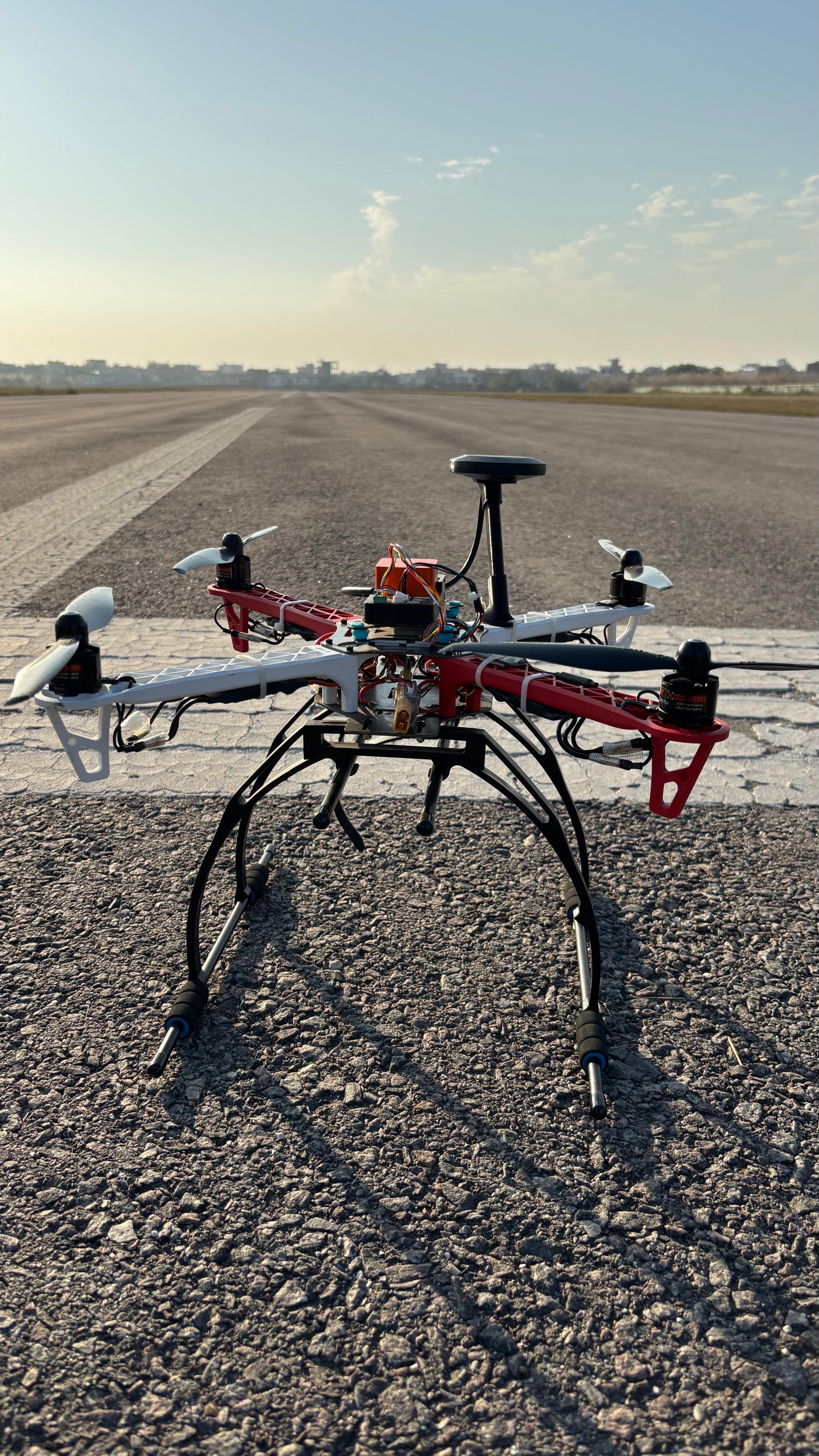
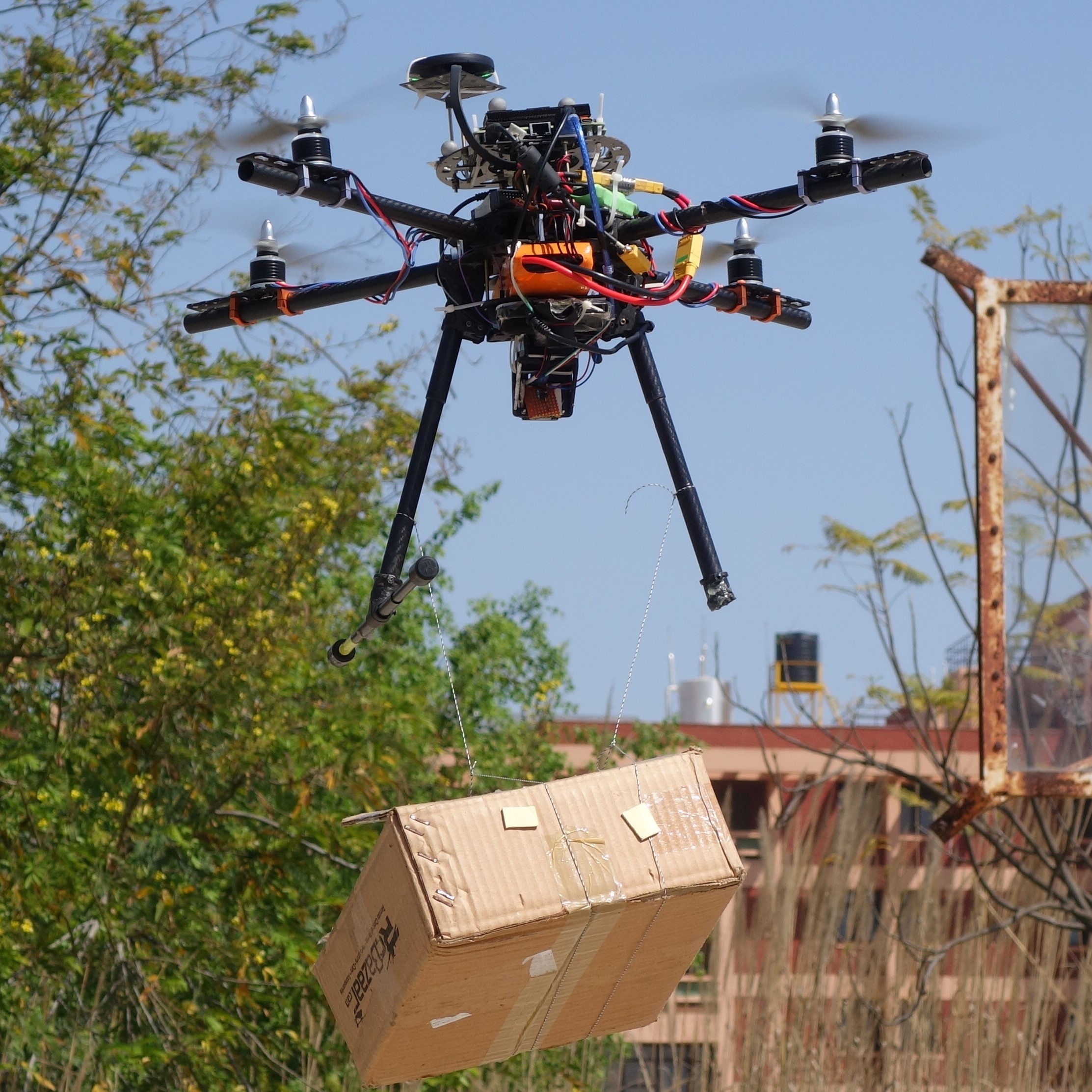
(Left) A GPS-Enabled UAV and (Right) a Heavy-Lift UAV, both designed by Team AR, IITK. These models allowed us to conduct trials for pick-up and delivery services.
Competitions
Over the years, we have taken part in several regional, national, and international competitions. We’re proud to represent IITK and India on such platforms. Some highlights include:
IMAV 2019, Spain: We were one of the top 10 student teams globally at the IMAV competition in Madrid.
IARC 2020 (AUVSI Foundation International Robotics Competition): Among the only two Indian teams selected, we competed alongside universities like Cornell University.
Inter IIT Tech Meets: The Inter IIT Tech meets are organised annually, inviting students from all 23 IITs to compete in problem statements running across various tech domains. We have successively achieved podium finishes in the Inter IIT tech meets held in the years 2018 to 2022 making IITK proud. We were the sole gold winner in Tech meet of 2019 with 400/400 points and received a special mention from DRDO.
Robofest Gujarat 3.0: Robofest Gujarat is a national-level competition organized by the Gujarat Council on Science and Technology (GUJCOST), aimed at promoting technological innovation and problem-solving in STEM education. We secured first place in the ideation phase and were awarded ₹1.5 lakh in funding by the Government of Gujarat. Following this, we were invited to present our prototype at the final event in Gujarat.
573
ICUAS 2025: Most recently, we secured first place in the student competition at ICUAS, The International Conference on Unmanned Aerial Systems, a premier global event focused on UAV research and innovation. Each year, ICUAS hosts a student competition alongside the main conference, challenging teams to solve real-world problems in autonomous navigation.
This year’s competition, held at UNC Charlotte, focused on the complex problem of Multiagent Connected Path Planning. It was a true honour to represent IIT Kanpur and India on such a prestigious international platform, competing against brilliant teams from Hong Kong, Armenia, Poland, and South Korea.
Our solution which we originally implemented in a simulation (where we were placed third globally), was successfully adapted and executed in the real-world finals, marking a major milestone for us as a team.
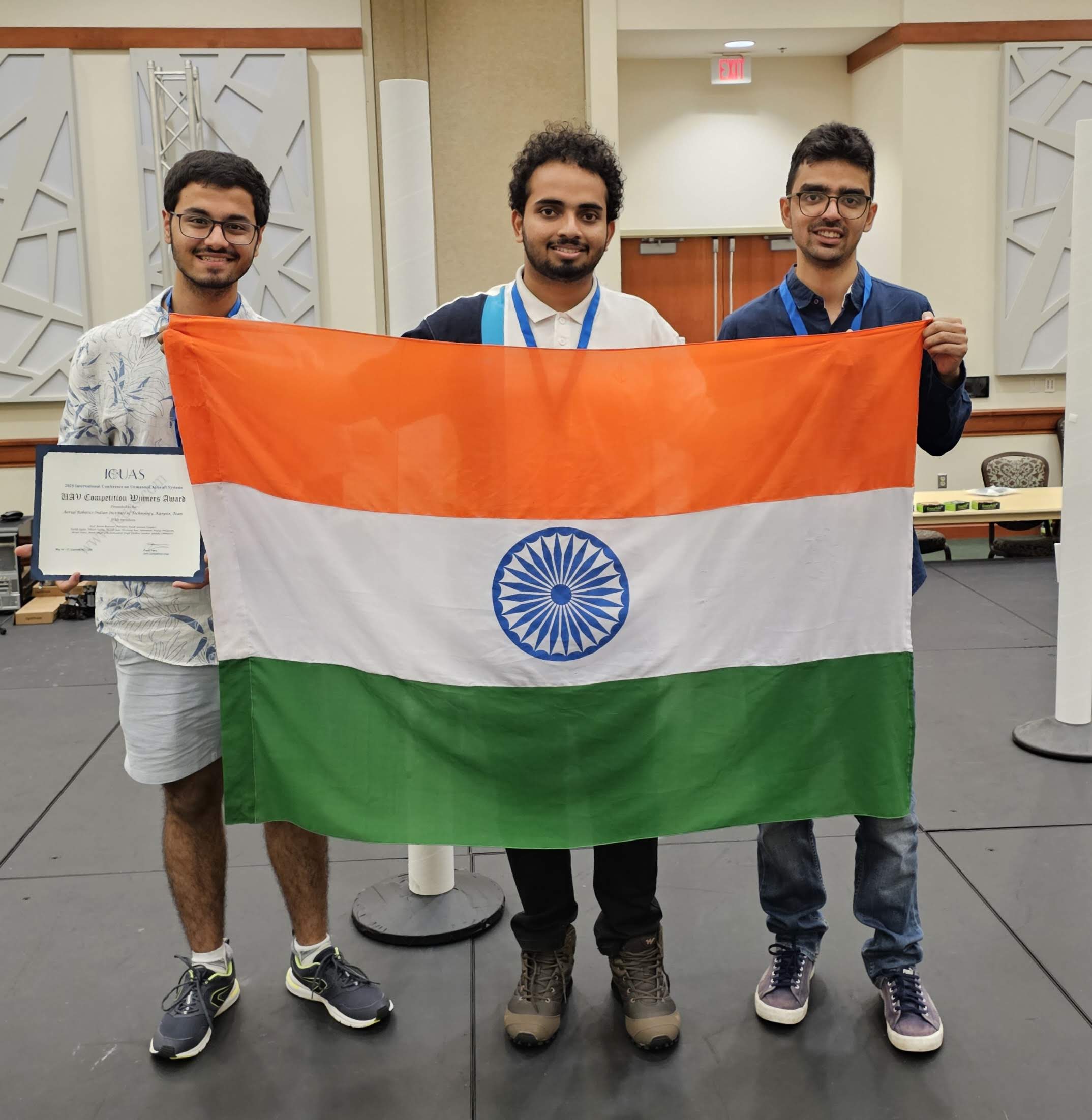
Team Members of Aerial Robotics waving the Indian Flag at ICUAS 25, North Carolina, USA after winning the competition. Left to Right: Vihaan Sapra, Varun Sappa and Pulak Gautam
We take great pride in the fact that we are the first student team under the Students’ Gymkhana at IIT Kanpur to win an international competition post Covid. This achievement has strengthened our resolve to take on new challenges and scale new heights in the years ahead.
574
Involvement with the Campus Community
We are deeply committed to giving back, not just to the campus community, but also to the open-source ecosystem. Much of what we’ve learned has come from the vast resources available online, and we strongly believe in paying it forward. All our work is made public through detailed documentation, and we regularly publish our codebases on along with a well-maintained to help anyone interested in starting their journey in aerial robotics and UAVs.
We’ve also actively showcased our projects at various institute events, including the Opportunity Open Source Conference 2024, Yuva Sangam 2024, and multiple alumni reunions. One of our most meaningful experiences was presenting our work to young students at the Opportunity School located within the IIT Kanpur campus, inspiring the next generation to dream big and challenge the limits of technology.
In recent years, our primary source of funding was a grant from the Director’s Fund in 2023. We also reinvest prize money earned from competitions to further enhance our capabilities. We are extremely grateful to the Dean of Resources and Alumni (DORA) and the Alumni Association Outer Delhi Chapter for funding our participation in ICUAS 2025. The funding made it possible for us to travel abroad and bring laurels to the institute.
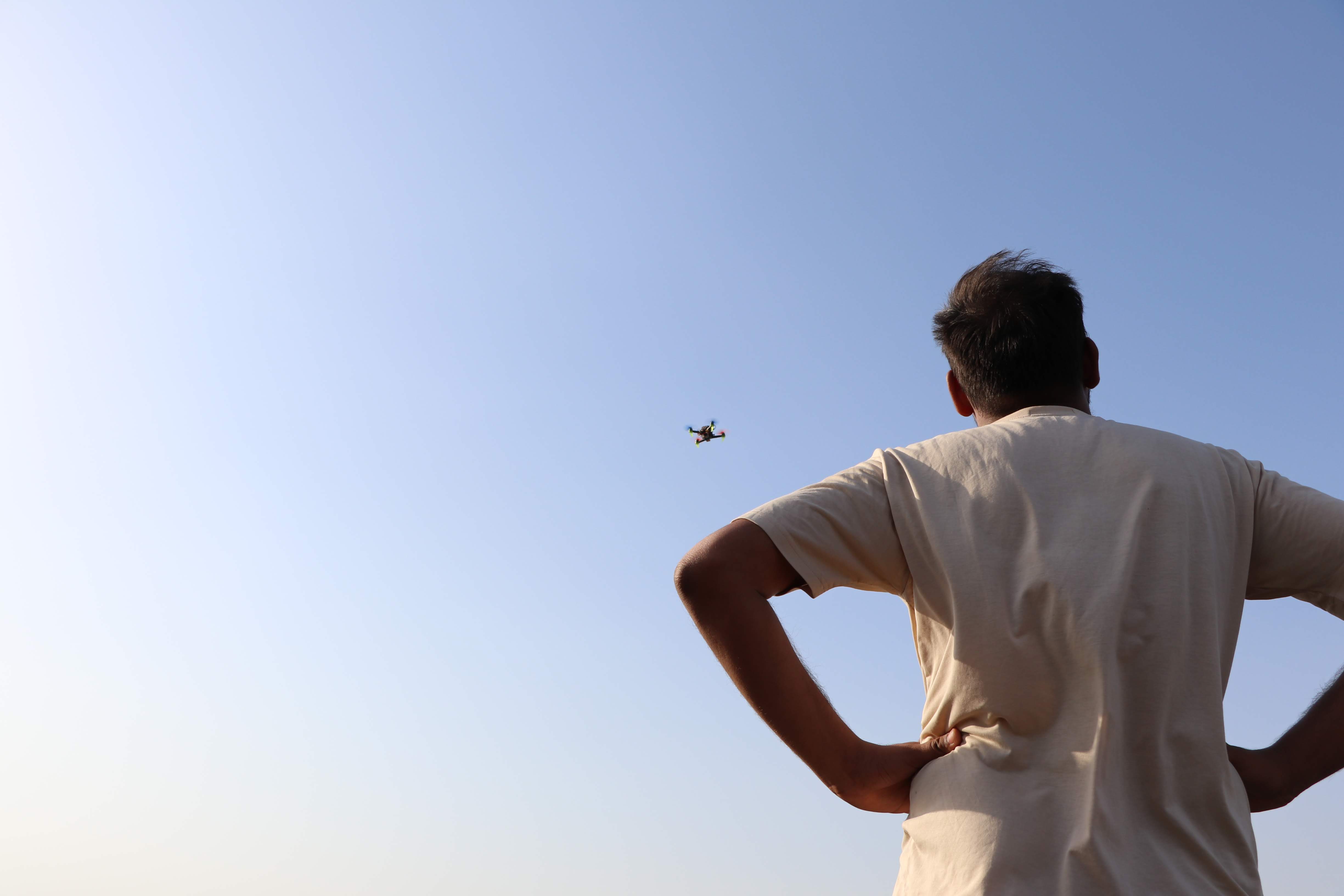
Defying Gravity, Crafting the Future, One Flight at a Time
Contributed by Shruti Dalvi (BT, MSE, 2022-2026) Team Head 2024-25, with assistance from: Prasun Shrivastav (BT, ME, 2023-2027), Ayush Goyal (Double Major, ECO-EE, 2023-2028), Shivang Sonker (BT, BSBE, 2023-2027), Somya Garg (BT, ME, 2023-2027), and Sunraj Patel (BT, MSE, 2023-2027)
575
A Conversation with Eshan Chattopadhyay
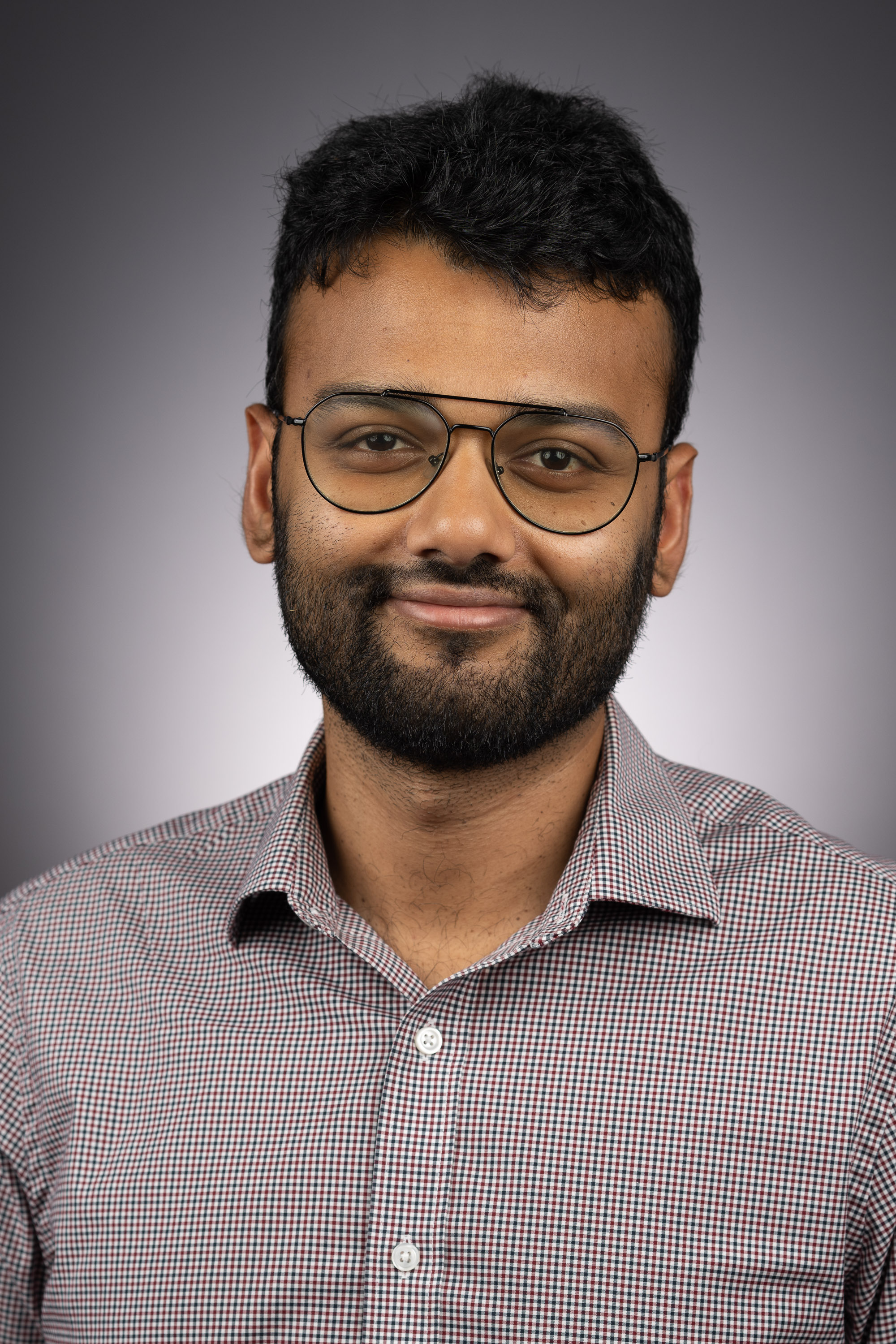
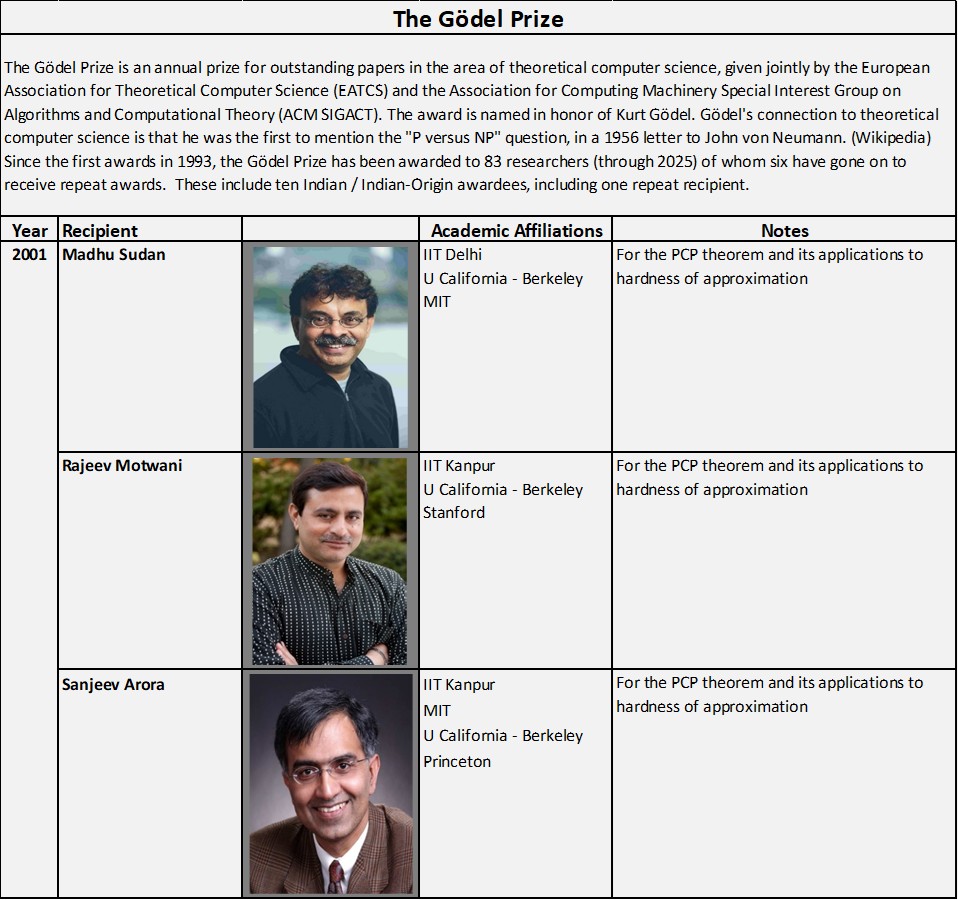
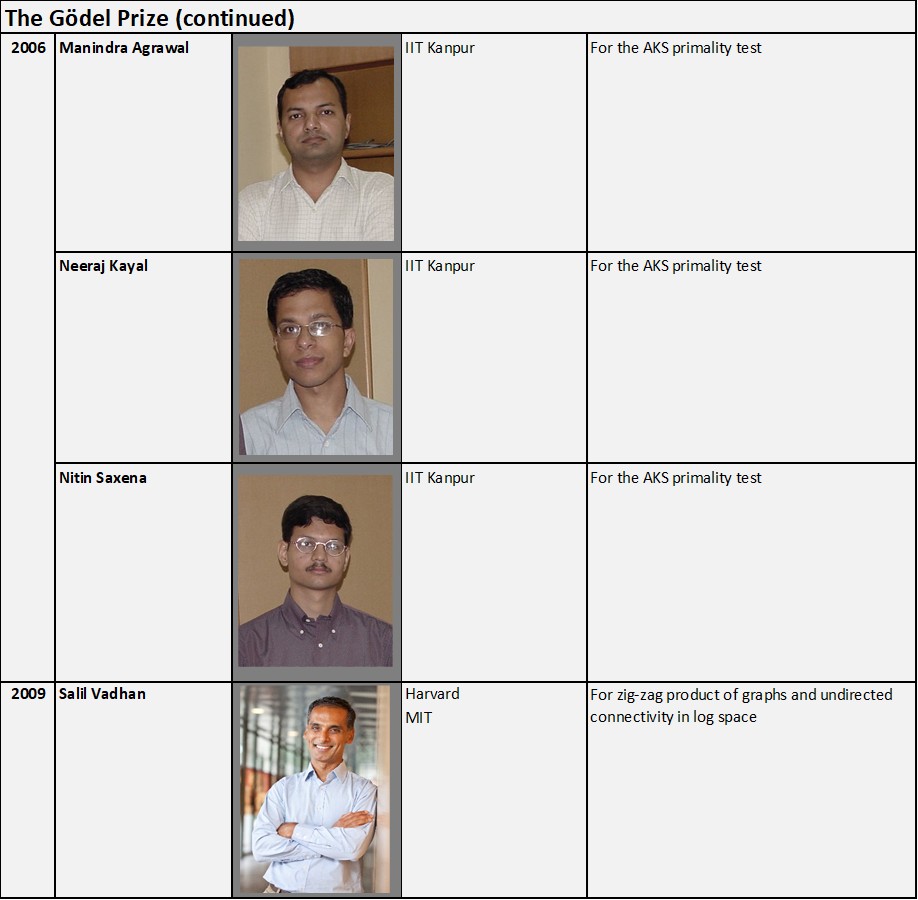
Eshan Chattopadhyay, an alumnus of IITK (BT, CSE, 2007-2011) and the University of Texas at Austin (PhD, CS, 2016), currently teaching at Cornell University, received the prestigious 2025 Gödel Prize awarded every year for outstanding papers in Theoretical Computer Science. Eshan’s award (with David Zuckerman) was for their work on "an explicit two-source with polylogarithmic min-entropy, resolving a central problem in the theory of computation that had been open for almost three decades."
An extractor is a function that generates random numbers efficiently and nearly perfectly, starting from biased or imperfect randomness found in the real world. Eshan’s work is not just an existence result, it shows how such extractors can be constructed, and hence has numerous important applications wherever random number generation is important, from machine learning algorithms and privacy protection to financial and macro-economic simulations.
The Spark interviewed Eshan in an online conversation in July 2025. This article summarizes the discussion, conducted on behalf of the Spark by CK Mohan (Professor, CS, Syracuse Univ.)
Spark: Hi Eshan! Congratulations again for winning the Gödel prize. Our readers will be very interested in learning about you and your work. First, please tell us about your background before IITK.
EC: I was born and raised in Vishakhapatnam; and attended Delhi Public School in Vishakhapatnam (Vizag), in Andhra Pradesh. I also underwent two years of JEE coaching in Hyderabad. I decided to attend IITK since due to its strong reputation — it was one of my top choices.
Spark: Glad that you chose IITK! Your studies and interactions there must have played a role in your later research. When you were at IITK, who did you work with, and on what?
EC: My thesis supervisor was Dr. Manindra Agrawal (Gödel prize, 2006). He introduced me to complexity theory and computability. My B.Tech. thesis topic was on the use of randomness in computation. Rajeev Motwani (Gödel prize, 2001) had pioneered the research area of Randomized Algorithms; Manindra and I were interested in the question of whether we need randomness — could non-randomized algorithms solve problems efficiently? I also worked with Prof. Somenath Biswas on Markov chain related problems, and Markov Chain Monte Carlo (MCMC) simulations. With Prof. Piyush Kurur, I had worked on graph isomorphism problems. PhD students such as Saptarishi Ramprasad helped me significantly in understanding research papers and beginning my own research.
576
IITK had an amazing atmosphere — lots of fun and amazing courses!
Spark: Yes, we had great mentors—I too had worked with Prof. Biswas. What were your interests, beyond academics? Any other experiences at IITK you’d like to share?
EC: I had lots of fun! I was an active member of the Electronics Club and remember building a tic-tac- toe game on a breadboard. I used to volunteer for events such as Antaragni and Techkriti. I had lived in Hall 3 and participated in intra-hall activities. I am still in touch with old classmates, several of whom are in the United States, particularly my room-mate Himanshu Jain.
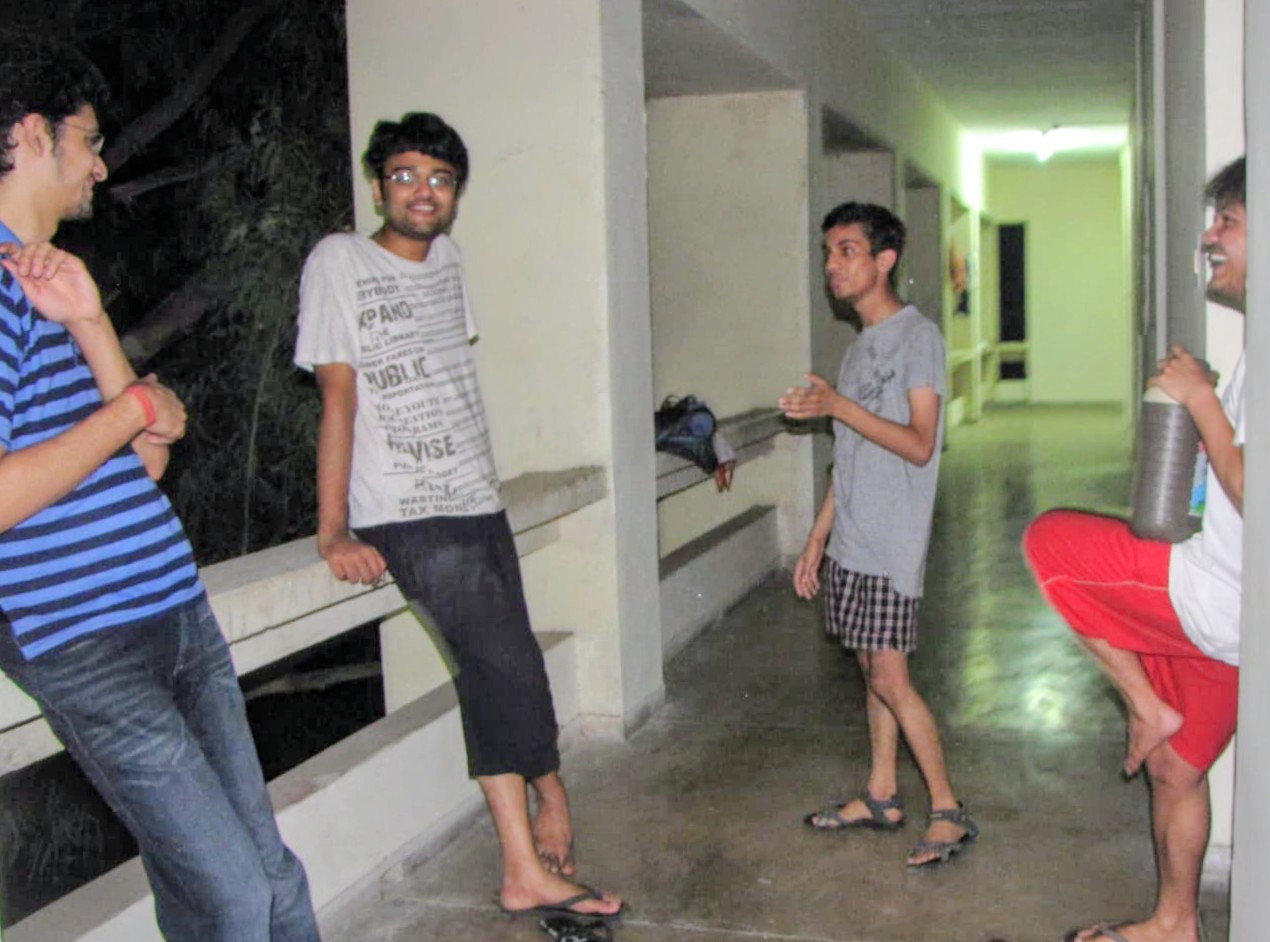
Hanging out with friends in Hall III, c. 2008
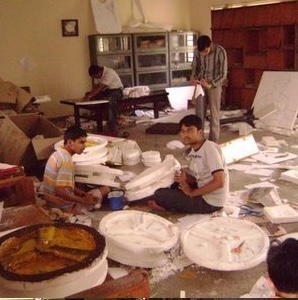
Preparing for Deepanjali / Diwali celebrations in Hall III
577
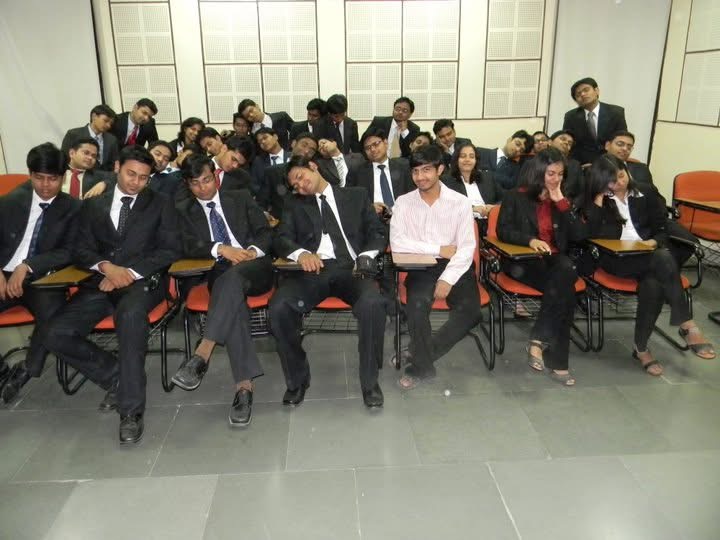
And the Professor droned on, blissfully unaware, while the class slept… Final year photo shoots, 2011
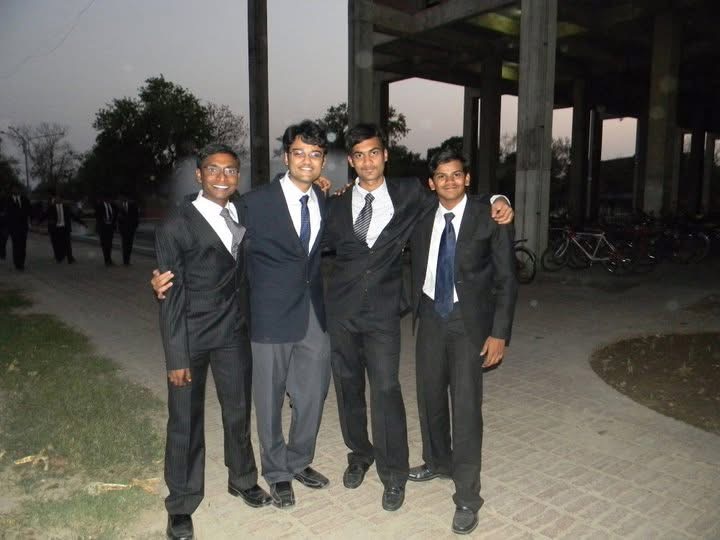
Getting close to graduation day (April 22, 2011). With friends, under the PK Kelkar Library.
L to R: Santhosh Kumar Vangapelli, Eshan Chattopadhyay, Pradeep Karuturi, and Sriraj Badam.
578
.png)
Spark: Your research could have proceeded in many different directions. What motivated you to work on the challenging problem for which your work won the Gödel Prize?
EC: My PhD Advisor David Zuckerman was very “hands off” in my first two years at UT Austin. My research capabilities developed over time, as I read and presented many interesting research papers; while presenting, I realized that I didn’t understand many concepts and needed to study more. Over time, I got better at reading papers, and by my second year I started having new ideas to try. Then, Prof. Zuckerman began to be more actively involved and worked closely with me; I appreciate that he gave me a lot of time to develop my research capabilities. He was very supportive of whatever I tried. I became interested in cryptography, exploring non-malleable codes and extractors.
The notion of non-malleable extractors is non-intuitive and beautiful. I worked on robust forms of extractors, which can survive adversarial attacks. We can start with imperfectly random sources, and generate new random bits that appear uniform even to an adversary, not yielding information about the sources. Privacy amplification is achieved, and it does not matter even if an adversary has partial information about agents communicating over a public channel. This was a challenging problem on which our work was accepted by the prestigious FOCS (Foundations of Computer Science) conference, which gave me a lot of confidence. I also worked with Vipul Goyal and Xin Li, solving the problems related to non-malleable extractors, with random outputs despite some input tampering by adversaries.
Spark: How did you go about your research? What was the process of discovery?
EC: I had spent a few years thinking about 2-source extractors, without success. Then I came up with the idea of using a new tool, i.e., non-malleable extractors. In 2-3 months of work, I faced lots of obstacles but was able to show that this approach could work. I felt that we needed to solve an old problem in distributed processing — resilient functions, wherein an adversary who controls a subset of participants cannot significantly affect the final result. Imagine many people collectively flipping coins, of whom some are corrupted by an adversary. Prior work relied on a probabilistic approach; we had to come up with a different probabilistic approach, then perform derandomization.
Spark: Looks like you have done great theoretical work. But why is this work important? What are the possible applications?
EC: Extractors are efficient and provide mathematically provable guarantees, which are important for cyber-security applications. 2-source extractors are the best you can hope for; it is impossible with one source. Whereas prior work assumed that one source is perfectly random, our work makes no such assumption. At one time, we used to think that computational time and space (with deterministic algorithms) are the most important concerns, then we realized that with randomness we can get better results; we learnt about sublinear algorithms on massive data, producing results without even seeing all the data.
579
In the field of cryptography, perfect randomness is crucial. The intriguing question is: how do you ensure randomness? Cryptocurrency markets have actually lost money due to incorrect random number generation. Monte Carlo simulations are widely used, e.g., in finance and weather forecasting applications. Many applications rely on stochastic and probabilistic algorithms, and they all assume access to perfect randomness. There is also an important connection to the problem of constructing “Ramsey graphs” in Graph Theory.
Spark: Great, there are really a lot of applications! I also remember struggling with a poor random number generator in my early research when I used to program in CommonLisp. You must have been doing other interesting things since the work on extractors. What else have you been working on, recently?
EC: I have been working on improving numerical bounds on various algorithms, and on other models of random sources. Another research topic has been cryptographic protocols and error correcting codes, dealing with unanticipated consequences, and transmitting with noisy codes. This work has applications in code complexity theory.
Spark: These sound like interesting topics with a lot of potential for major advances. Do you have any other specific ambitious research goals?
EC: I would like to explore the role of randomness in computation: when can we remove randomness? Can we do it without increasing memory requirements? I am also interested in exploring connections to spectral graph theory, quantum computation, and cryptography.
Spark: Wonderful! I hope you are planning to visit IITK again and share your ideas with students and faculty there; any plans to visit IITK in the near future?
EC: I’d love to. We have a two-year old, and traveling with a toddler can be challenging.
Spark: Thanks for sharing your research thoughts and plans. Let’s meet on your next travel though Syracuse. Any parting words for current IITK students?
EC: I had a wonderful time at IITK, immersing myself in the culture, and have spent many sleepless night-outs working on various activities or projects. I encourage students to be actively engaged and take advantage of what IITK provides.
580
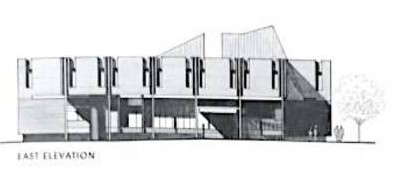
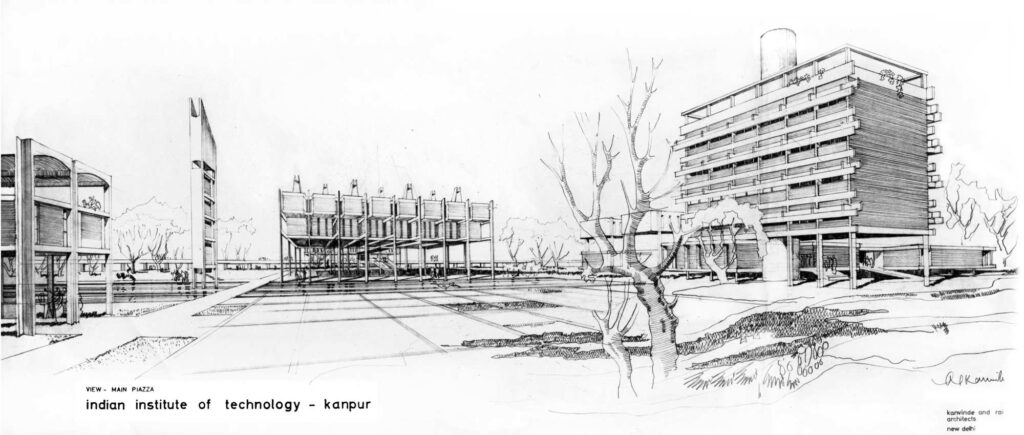
The IITK Computer Centre. Source: Kanvinde, Rai and Chowdhury archives
581
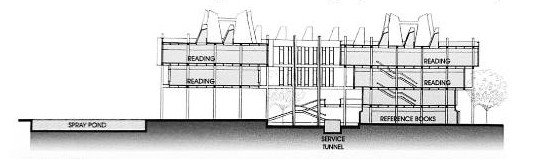
A schematic of the Library. Source: Kanvinde, Rai and Chowdhury archives
582
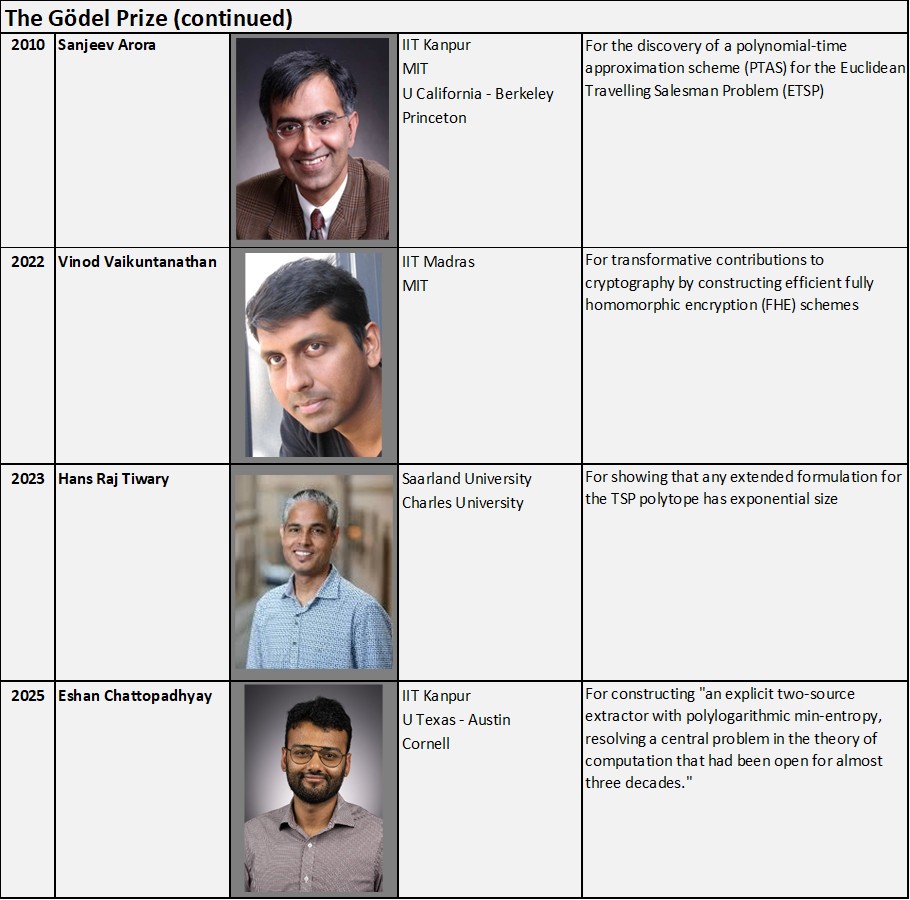
Over the past few years, the Spark has published the stories of the Gödel Prize winners with IITK connections. These are available in our archives as follows:
Rajeev Motwani: the Spark, Issue 3, April 2022, pg. 92-103, available atIssue 3
Sanjeev Arora: the Spark, Issue 6, April 2023, pg. 202-209, available at Issue 6
Manindra Agrawal, Neeraj Kayal and Nitin Saxena: the Spark, Issue 4, August 2022, pg. 128-135, available at Issue 4
A more comprehensive list of Indian-Origin awardees in Theoretical Computer Science, including winners of the Gödel, Fulkerson, Knuth, and IMU Abacus (Nevanlinna) Prizes appears in the Spark Issue 6, April 2023, pg. 210-214, available at Issue 6
583
The Counselling Service

The Counselling Service started in July 1963 as an effective way for students and faculty to know each other and to provide technical and personal assistance to students on problems, which were not apparent within the classroom. First, second- and third-year students were assigned to a counsellor-faculty member who followed their academic performance and progress. Students were expected to meet their counsellors frequently and discuss their problems with them or seek advice on matters, academic or otherwise.
The general objectives of the Institute Counselling Programme were:
To provide the student with the opportunity to come in contact with an individual, the counsellor, who is in a position to help and guide him during his first year at the Institute;
To assess the overall progress of the student and to keep in touch with his performance;
To provide the student the opportunity to discuss problems with someone who is interested in him as a person and would like to do anything that is reasonably possible to help in working out solutions for his difficulties. Problems need not be purely academic-they may be personal and even those unconnected with the Institute;
To help in the screening of students for financial help, for part-time employment, and the like on the basis of need, capacity to work and merit;
To advise the institute On-decisions regarding the ability of the student to profit from instructions;
To provide psychological counselling to needy students on a limited scale;
To maintain some liaison with the parents or guardians of students who, for special reasons, necessitate such contacts.
Students were required to meet their counsellors on the dates fixed.
During the period under report, about 12 students were assigned to a counsellor. Such students were required to meet the Counsellor formally three times each term: at the beginning of the term and after the first and second mid-term examinations. Students were, however, encouraged to see the Counsellor informally as often as it was necessary.
Annual Report of IIT Kanpur, 1963-64584
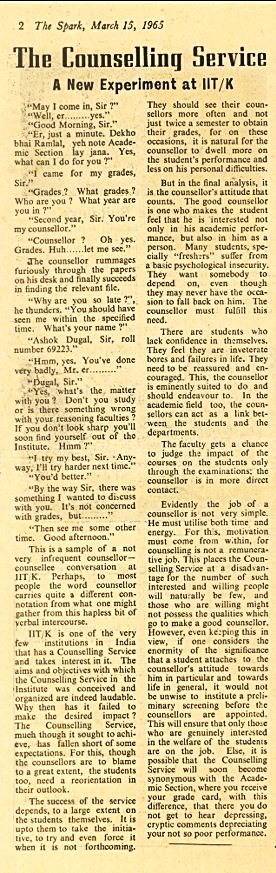
After its launch in 1963, with an informal setup of volunteer counsellors, the Counselling Service (CS) had mixed success. This Spark report from March 1965 is an immediate response to its performance. This was subsequently followed by the establishment of a formal setup for the CS, with a faculty head in 1965-66.
The Counselling Service: A New Experiment at IIT/K
The Spark, March 15, 1965
IIT/K is one of the very few institutions in India that has a Counselling Service and takes interest in it. The aims and objectives with which the Counselling Service in the lnstitute was conceived and organized are indeed laudable. Why then has it failed to make the desired impact? The Counselling Service, much though it sought to achieve, has fallen short of some expectations. For this, though the counsellors are to blame to a great extent, the students too, need a reorientation in their outlook.
The success of the service depends, to a large extent, on the students themselves. It is up to them to take the initiative, to try and even force it when it is not forthcoming. They should see their counsellors more often and not just twice a semester to obtain their grades, for on these occasions, it is natural for the counsellor to dwell more on the student's performance and less on his personal difficulties.
But in the final analysis, it is the counsellor's attitude that counts. The good counsellor is one who makes the student feel that he is interested not only in his academic performance, but also in him as a person. Many students, especially "freshers", suffer from a basic psychological insecurity. They want somebody to depend on, even though they may never have the occasion to fall back on him. The counsellor must fulfill this need.
There are students who lack confidence in themselves. They feel they are inveterate bores and failures in life. They need to be reassured and encouraged. This, the counsellor is eminently suited to do and should endeavour to do so. In the academic field too, the counsellors can act as a link between the students and the departments. The faculty gets a chance to judge the impact of the courses on the students only through the examinations; the counsellor is in more direct contact.
585
Evidently, the job of a counsellor is not very simple. He must utilize both 'time and energy’. For this, motivation must come from within, for counselling is not a remunerative job. This places the Counselling Service at a disadvantage for the number of such interested and willing people will naturally be few, and those who are willing might not possess the qualities which go to make a good counsellor. However, even keeping this in view, if one considers the significance that a student attaches to the counsellor's attitude towards him in particular and towards life in general, it would not be unwise to institute a preliminary screening before the counsellors are appointed. This will ensure that only those who are genuinely interested in the welfare of the students are on the job. Else, it is possible that the Counselling Service will soon become synonymous with the Academic Section, where you receive your grade card, with this difference, that in the academic section you do not get to hear depressing, cryptic comments deprecating your not-so-poor performance.
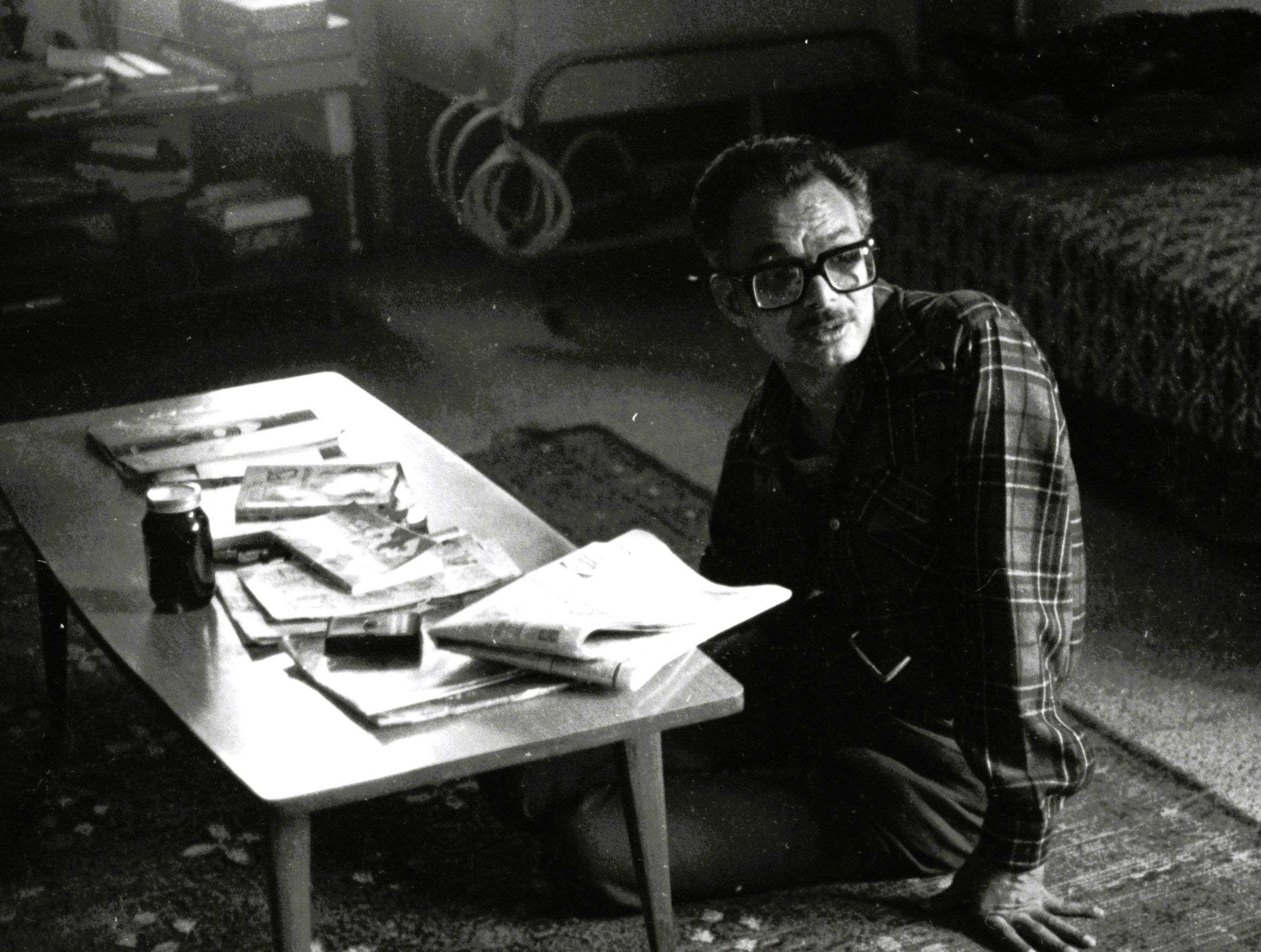
Prof. JD Borwankar served as the Head of the Counselling Service in the 1970s. Much loved by, and very accessible to the students, he is at his home, relaxing on the floor, in a casual conversation. Picture: Shirish Joshi
586
Counselling Service at IIT Kanpur - My Reminiscences
Dharma Rajaraman
I was invited by Dr. JD Borwankar, the then Head, CS, to join the service as Counsellor in the year 1978 (47 years ago when many of you readers would not have been born!). I told him that I am not a qualified counsellor and I would much prefer to talk to students at my residence. He was insistent about my joining as a part-time counsellor and to be physically present every day in the office in FB. He had already got the permission of the Director, Dr. Amitabha Bhattacharyya.
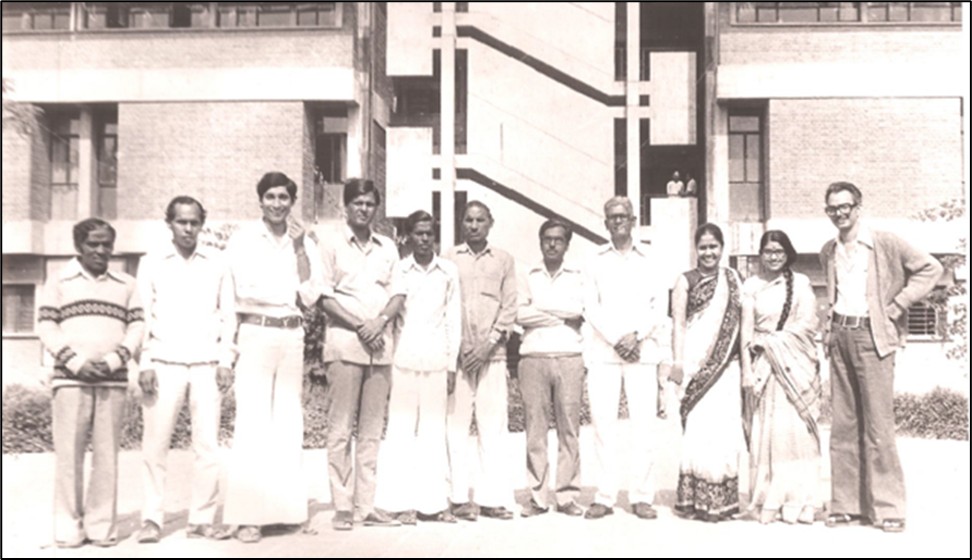
I joined the Counselling Service on 20th March 1978. Now came my trepidation. "Will I be able to fit into the system? With no experience in Counselling will I be able to fulfill the expectations of the Service?" JDB assured me that I would be able to do full justice. Most of the boys and girls in IITK came from affluent backgrounds and had excellent education and all comforts. ‘They had everything they needed’- I thought. But in due course of time, I found out they also had some difficulties, some adjustment issues, and different pressures from several angles.
I realized that the Counselling Service was already a well-organized setup and the atmosphere was very congenial. The Dean of Students, Dr. GK Lal and later Dr. NGR Iyengar, Head of Counselling Dr. JD Borwankar, and later Dr. MR Madhav, and senior experts in the field, Dr. Usha Kumar, Dr. Lila Krishnan ably supported me along with Mr. Ratnesh Srivastava, from the DOSA’s office. Faculty counsellors were also very receptive. The backbone of the system was student coordinators and student guides. The network of student guides was the link through which we could reach out to students who needed help.
587
At the time I joined CS some activities such as a Student Benefit Fund, a Slow-Paced Academic Program (with a six-year graduation plan), and a rudimentary criterion for room allotment were already in place.
Activities started by Counselling Service were in improving the criteria for room allotment (the basics of which have been described in Dr. Madhav’s article), proper procedure to select student guides, allotment of student guides, and an orientation program for new students. In addition, academic help was provided by starting conversational English classes, additional assistance to students admitted under special quotas, and a book bank from which students could borrow books for a semester as books were very expensive. Old students still talk about the benefits they derived from the book bank. In addition, financial help was given to needy students by giving short-term loans and grants. Counselling help was also extended to postgraduate students.
Training Programmes: The most important activity, in my view, which was unique and helped the counsellors was the training program organized by the service to improve the counselling skills of all team members, i.e.: the Head of the Counselling Service, Counsellors, Faculty Counsellors, and Student Guides. The first session was a training programme at Nur Manzil Psychiatric Centre, Lucknow. Dr. JD Borwankar, Dr. Lila Krishnan, three students, and I attended the two-day program. The lectures were given by Dr. Marjory Foyle, Clinical Director of Nur Manzil, and a well-known psychiatrist, and her team. As she was familiar with the IIT set up her lectures were very relevant. Even today I remember some points she made regarding the techniques of counselling.
588
Dr. Usha Kumar and Dr. Lila Krishnan were our local experts in psychology and contributed immensely. Faculty counsellors and student guides also participated. These workshops were extremely important in improving the counselling skills of the participants.
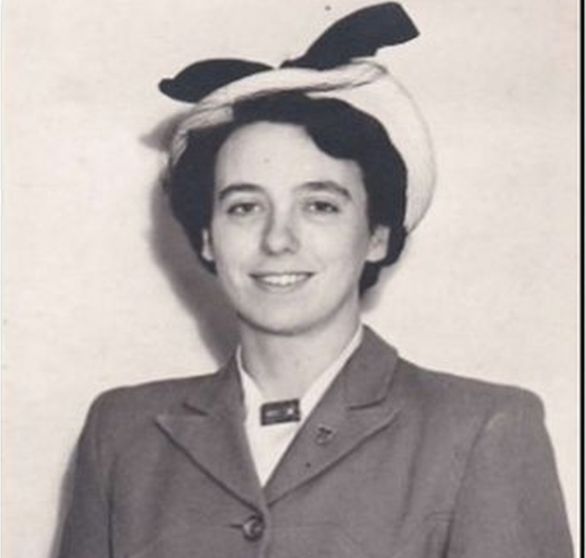
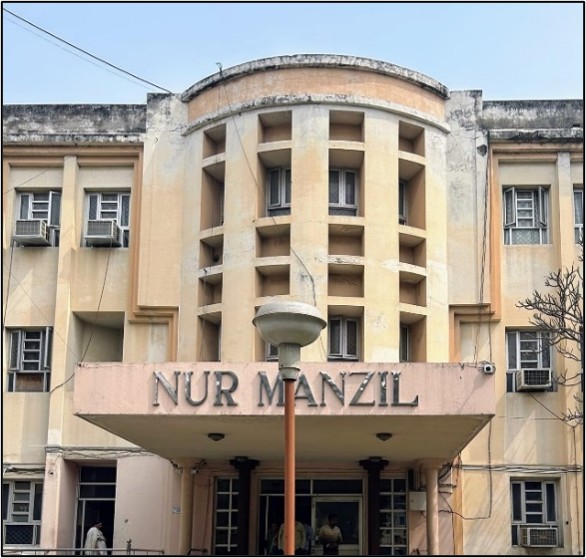
Images: (L) Dr Marjory Foyle, (R) Nur Manzil Psychiatric Centre, Lucknow
Counselling anecdotes
I would like to briefly mention some anecdotes during my service. I gained a lot from the Nur Manzil Lectures and the workshops. I realised that counselling involved personal attention and each counselee required individual care. Some problems were simple where the counselee required more time with the counsellor. In such situations time and privacy were the key factors. As I was present only for a short period at the office, students preferred to come to my residence and talk freely. My home was a “home away from home” for them. Once they could express themselves, they could navigate through their problems and find a solution too. In fact, some students used to address me as "Mami" as Madam was very formal.
For some others, problems originated from their families. Some parents were very strict disciplinarians and demanded too much from their wards. Some parents themselves were stressed due to peer pressure. Their wards could not stand the parental pressure which reflected in their behavior and drop in their academic performance. Sometimes, kind faculty counsellors would call me up and ask us to help the student. After talking to the students and getting their permission we would request the parents to come over and meet us, who generally responded promptly. Such discussions with parents did help. In a case I remember even now, when the student returned from his home after the mid semester break, his performance improved and he completed the program successfully.
In some other cases medical intervention became necessary. We would call the parents with the consent of the student. Parents would come to IIT. We would have a frank discussion with the student and his parents. In most cases, the parents were mature enough to understand the problems faced by the student and took him home and got proper psychological treatment. The student would come back, and complete his degree. Some visited me in Bangalore to convey their gratitude. It was so nice to see them well settled.
What I have written is just a glimpse of my experiences. In all these situations, the Head of Counseling, Dr. MR Madhav and Dr. Lila Krishnan played a significant role. Their involvement was vital. Meanwhile the wheels of time turned. In April 1982 I left the service as my husband decided to join the Indian Institute of Science.
My four-year stint as a student counsellor was memorable. There were shortcomings – there always are - but by and large, it was a smooth period. I have written about my experiences at the Counseling Service from 47 years ago. After that, there have been many advances in the field of counseling and mental health. With the proliferation of computers, speed in communication, and the availability of internet services many improvements have taken place in the diagnosis of problems, improvements in techniques, and so on. As in other fields, AI is becoming an essential part of counselling, therapy and mental health. But none of these advances can replace the human touch. The Counsellor-Counselee bond is sacred. The role of counsellors cannot be underestimated. It cannot be compromised. Machines cannot replace counsellors. I am happy that I was able to play the role of a counsellor in the IIT Kanpur Counselling service.
I want to express my heartfelt thanks to the many Faculty counsellors who were very understanding, and of course student coordinators and student guides. Some of them are still in touch with me. Mr. Ratnesh Kumar Srivastava has been closely associated with the Counselling Service. I appreciate his continuous cooperation and service.
589
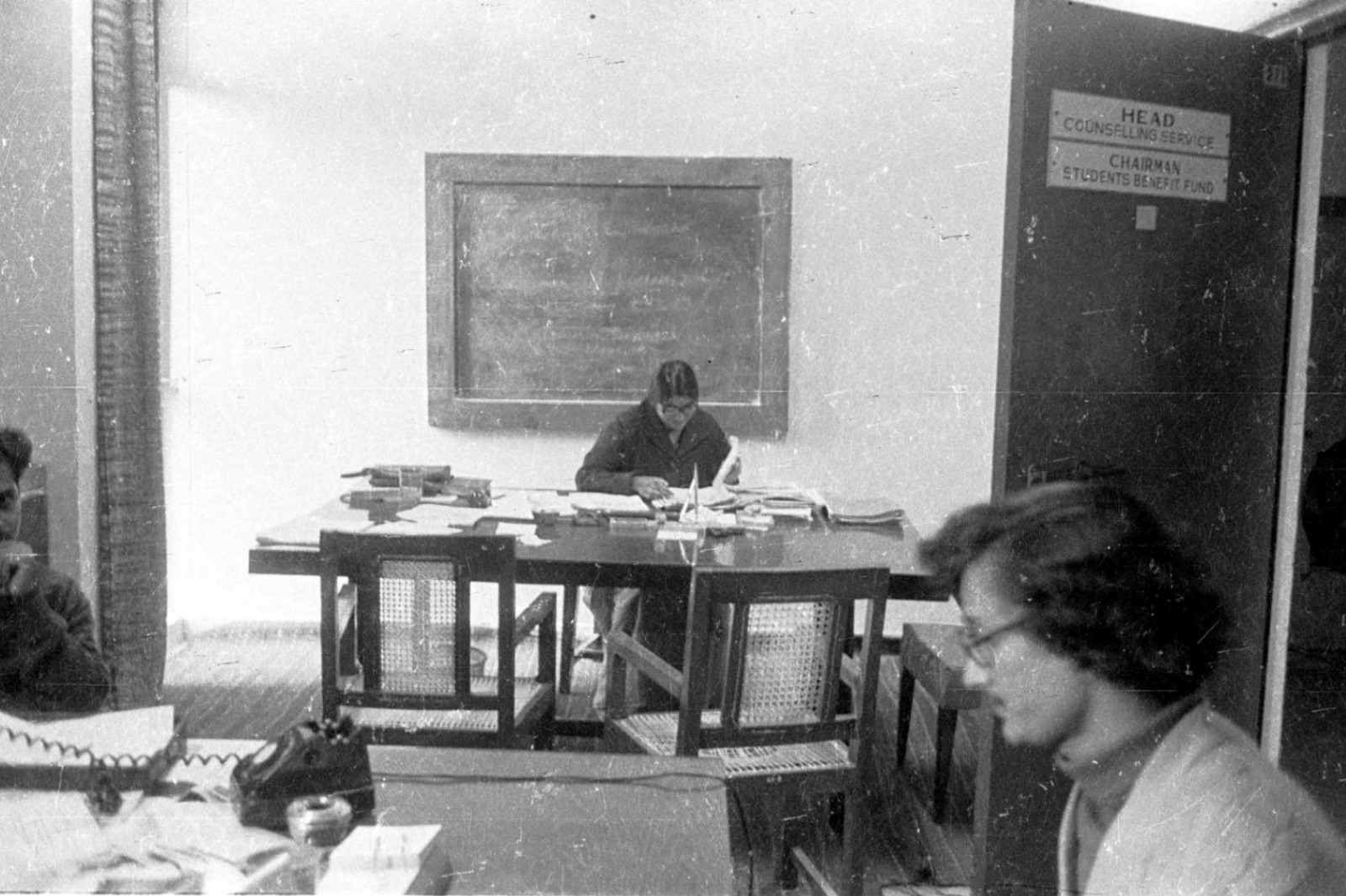
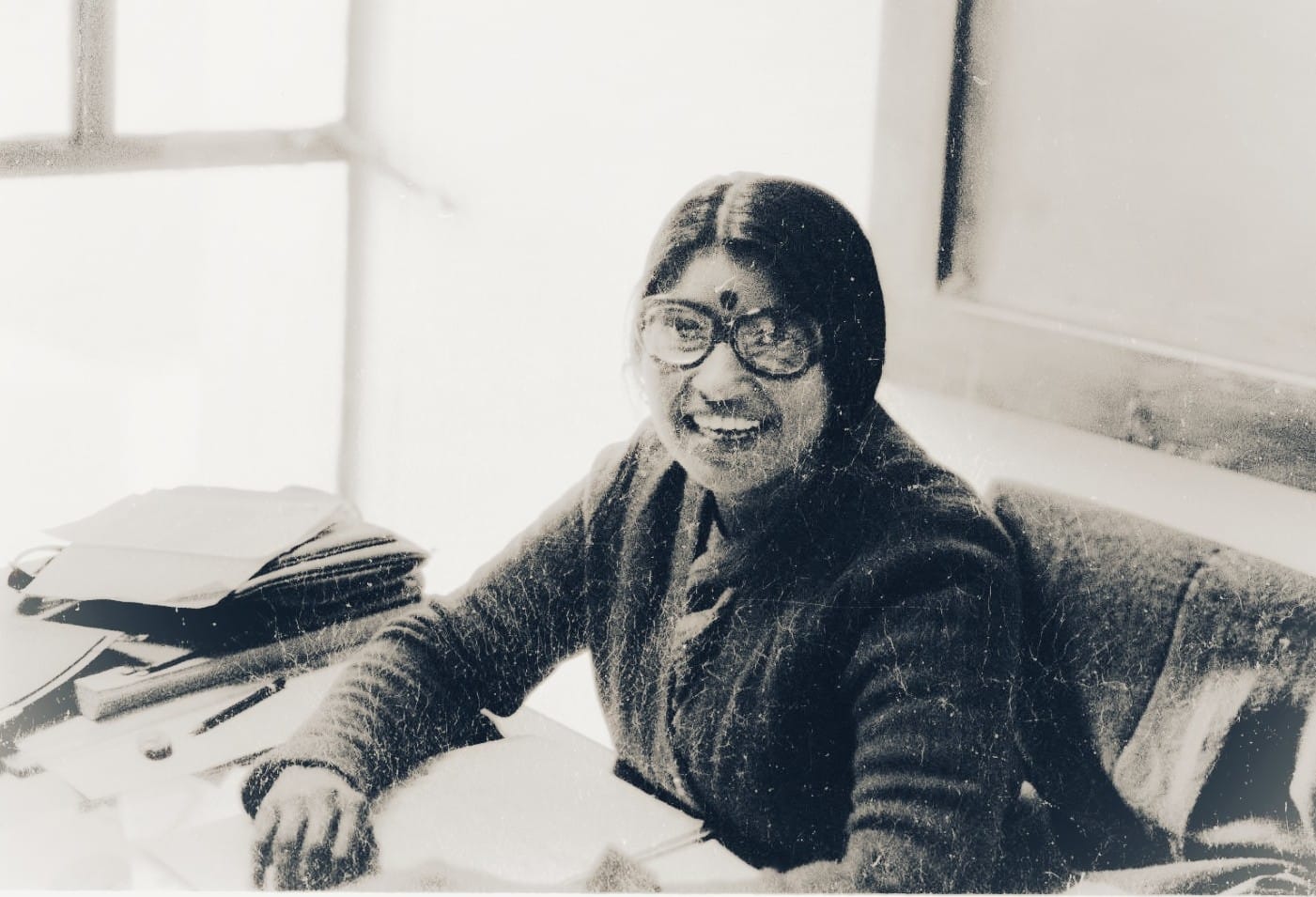
Mrs. Dharma Rajaraman at her desk in the Counselling Service office. Pictures: Shirish Joshi, 1978
Mrs. Dharma Rajaraman came to the IITK campus as the spouse of Dr V Rajaraman. While there, she was invited by Dr. J D Borwankar (Professor, Dept of Mathematics, and Head of the Counselling Service), to take on the role of Counsellor, which she performed admirably for many years before relocating to Bangalore.
Mrs. Rajaraman is the author of two books for young people, "Computer a Child's Play", and "Computer Primer", for high schoolers, which performed a perfect segue to her husband's books on computer education that started at the first-year college level. Her book “Computer, A Child’s Play” was translated into 4 languages: Kannada, Tamil, Hindi and Bengali. In addition to writing, she is known for her vocal talents in Carnatic music and her dedication to promoting and preserving this art form.
She has also learned Telugu to be able to sing Telugu compositions regularly, featuring in online Telugu festivals. She lives in Bengaluru with her husband and well-known author/educator, Dr V Rajaraman.
590
The IITK Counselling Service in the 1980s
M R Madhav (Head, CS, 1980-83)
IITK was known for many innovative initiatives in the 1960s, some of which were the semester system (the first in India), course-wise promotion, relative grading, student governance, and the subject of this article, the Counselling Service. Students came to IITK from all over the country, from metropolitan cities to remote villages, premier private schools to local village level ones, and diverse economic and cultural backgrounds, and there was a need for a support system (a counselling service) to help this diverse new student population into the highly competitive academic environment that was IITK.
The Start: The Counselling Service (CS) was started during the early sixties (as noted in the Annual report, 1963-64) and took a formal structure in the Academic Year 1965-66 with Prof. KK Singh, HSS, as the first Head. Dr Arvind Setlur followed him, and it was he who invited me to become a faculty Counsellor, in the year 1969-70. I enjoyed being a Faculty Counsellor almost every year since then till I became the Head, Counselling Service, in July 1980. Some of my predecessors were Mr. Jacob Tharu, Dr Usha Kumar, and Dr J. D. Borwankar. Mrs. Dharma Rajaraman and Dr Lilavati Krishnan were Counsellors and were the mainstay for the Service.
Who made up the CS: The counselling Service consisted of Faculty Counsellors and Student Guides. Student Guides (SG) were selected through a well-structured process and interviews at the end of each academic year. Each student guide had under his/her wing 7 to 8 freshers. A three-day orientation program before the start of the next academic year helped the new entrants familiarize themselves with the campus environment. Faculty Counsellors were invited by the respective SG.
Was it a trained team? Training of the newly recruited SGs was part of the CS. We had excellent workshops by several experts in the field apart from our very own Profs Usha Kumar and L. Krishnan. The format of the workshops was mostly role playing with various aspects of CS such as Counselling Techniques, Human Relations, Communication, Mental Health, Reaching In, Reaching Out and Reaching Together, etc. Interesting exercises such as Picture Completion, Meaningful Experiences, Role Playing kept the enthusiasm of the participants high. The very essential and important qualities expected of SGs, viz., Empathy, Sympathy and Helpfulness, Availability, Patience and Attentiveness, Warmth, Honesty and Sincerity, and Composure, Appreciative, Trustworthiness, and Maturity, were emphasized.
What issues did the CS deal with: In the early years, CS dealt with the initial adjustment problems of students who joined IITK. The number of UG students was small, allowing for close interaction. With time the Institute/CS recognized the need to handle a variety of academic, emotional, and financial problems. Thus, the role of CS gradually increased over the years especially since 1972–73 when for the first time SC and ST students were admitted into IITK.
Where else did the CS help? In addition to helping new entrants, the Counselling Service provided:
(i) academic help for those in need, (ii) special attention to students who joined IITK directly (not through the JEE) or on relaxed admission criteria, (iii) financial assistance, (iv) emotional support for those in need and later, (v) helping PG students as well.
Helping with initial adjustments: To alleviate some of the adjustment problems, CS would ensure suitable room partners for the new entrants, preferably from the same city, else from the same state or with a common language, minimal disparity in cultural or financial backgrounds of the families, and compatible interests. Each wing would then have students from different parts of India and from different departments for better integration. Special care was taken to distribute students with high JEE ranks all over the Hostel.
591
After the initial adjustments, where did CS help? Following the initial adjustment of the new entrants to the Campus, CS recognized the need to help some students who were facing academic and financial challenges. Coaching classes were conducted by highly motivated doctoral students. One name that comes to mind is Sri Shankar from Chemistry. First year students, terrified of Schrodinger equations (in the very first week of Chem. 101), would find great solace in Shankar’s classes in the evening!! In addition to the regular courses, classes were conducted to improve language proficiency. Lessons for teaching English were held for those students whose medium of education in school had been in vernacular languages, and Hindi lessons were offered to some foreign students as needed.
A Student Benefit Fund (SBF) helped the needy with ‘short’, ‘medium’ and ‘long’ term loans, but the last one was terminated as the recoveries were negligible once the student graduated and left the campus. A ‘Book Club’ was started c.1980 again for the needy. Students could borrow up to three books for the semester. It is to the credit of our SGs who organized and manned the Book Club very efficiently as it was very popular among the students.
The late 1970s and early 1980s were the periods when SC/ST students admitted in the first two years of the implementation of the new scheme needed special attention. It is to the credit of CS that except for those who left the program in the first few years, the remaining students graduated by 1983-84.
Counselling for Post Graduate Students: Initially, it was felt that PG students being mature and adults wouldn’t require any counselling. However, over time and with an increasing number of graduating doctoral students, it was realized that they too would need some support to handle emotional and work-related challenges, because doing independent doctoral research is very different from the course-based studies where the performance is evaluated through examinations. A PG Wing of the Counselling Service was established c. 1979 with a PG Student Coordinator and a few Assistant Coordinators. They also took on two-year MSc students admitted to the Science Departments.
Some outcomes: It is always a reassuring feeling if someone meets and greets a person upon arrival to a new place. Student guides fulfilled this role with aplomb and warm camaraderie, ensuring that ‘ragging’ in the traditional rough and intimidating format wasn’t practiced, and a more friendly intro’ ensured.
SGs were our eyes, ears and the soul of CS. Because of their camaraderie, they would notice even slight changes in behavior patterns in their counselees and inform the CS thus enabling timely intervention.
The CS thrived because of the excellent and well-motivated Student Guides who were the real service providers and the link with the large student body. It was an experience to meet the newly admitted students who were somewhat shy and reticent to meet the ‘Faculty members for the first time. Faculty counsellors hosted new students at their houses, which was the ice breaker as the home atmosphere would ease their reservations. Most of the faculty being relatively young (in the age group of early 30s), probably helped as the image created was of an older brother rather than that of a father figure.
Because of the results that the IITK counselling service was able to deliver, other IITs at Delhi and Madras invited the Head, CS, to help organize similar services at their respective IITs.
With inputs from Mrs. Dharma Rajaraman, Prof. Lilavati Krishnan and Sri Ratnesh Srivastava.
592
.jpg)
The Geotechnical Engineering Group at IITK, 1980s. Professor Madhav is visible standing third from left. Professor Yudhbir, whose obituary appears in this issue, is also visible, standing third from right.
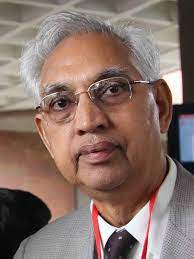
Prof. MR Madhav obtained his doctorate from IISc. In 1967, he joined IIT Kanpur, where he had a long and distinguished career, eventually retiring as a Professor of Civil Engineering in 2002. He currently is a Distinguished Visiting Professor at AICTE-INAE, a Visiting Professor at IIT, Hyderabad, a Professor Emeritus at JNTU, Hyderabad, a Resource Person at Rajiv Gandhi University of Knowledge Technology, and a Guest Faculty at Engineering Staff College. Prof. Madhav has served at several other universities abroad and was Formerly the Chairman of the Research Council, CSIR-CRRI. Prof. Madhav’s research interests spanned the whole gamut of Geotechnical Engineering and he established an imprint on modeling and numerical analysis. He is a Fellow of the Indian National academy of engineering, Fellow, Institution of Engineers, and Fellow, Indian Geotechnical Society. For his contributions, IIT Kanpur recognized him as an Institute Fellow in 2019.
593
Tribute: Prof. Yudhbir (1936 - 2025)
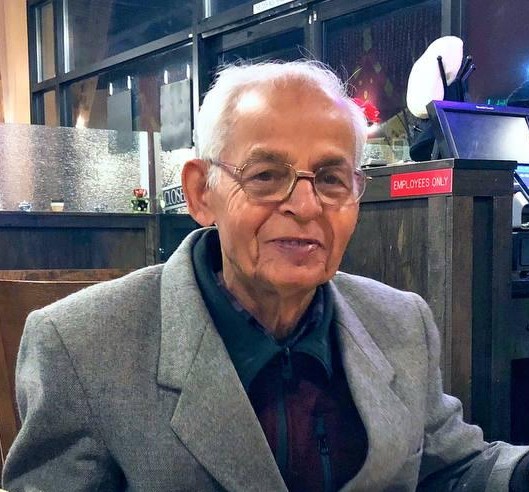
It is with deep sorrow that we report the passing away on March 16, 2025, of Prof. Yudhbir. He was a member of IITK’s Department of Civil Engineering from 1970 to 1997, serving as Head of Department in 1996-97. He will be remembered as a distinguished scholar, an inspiring teacher and a key figure in geotechnical engineering in India and abroad.
Prof. Yudhbir obtained his Ph.D. from Cornell University in 1969 after obtaining an M.Tech and working as a Lecturer in IIT Bombay and IIT Delhi. He joined IITK in 1970, where he was teaching and conducting research on soil engineering. He was not only a scholar but also a consultant on national committees. His expertise was notably sought on landslides, combining aspects of Engineering Geology, Soil Mechanics, and Geotechnical Engineering.
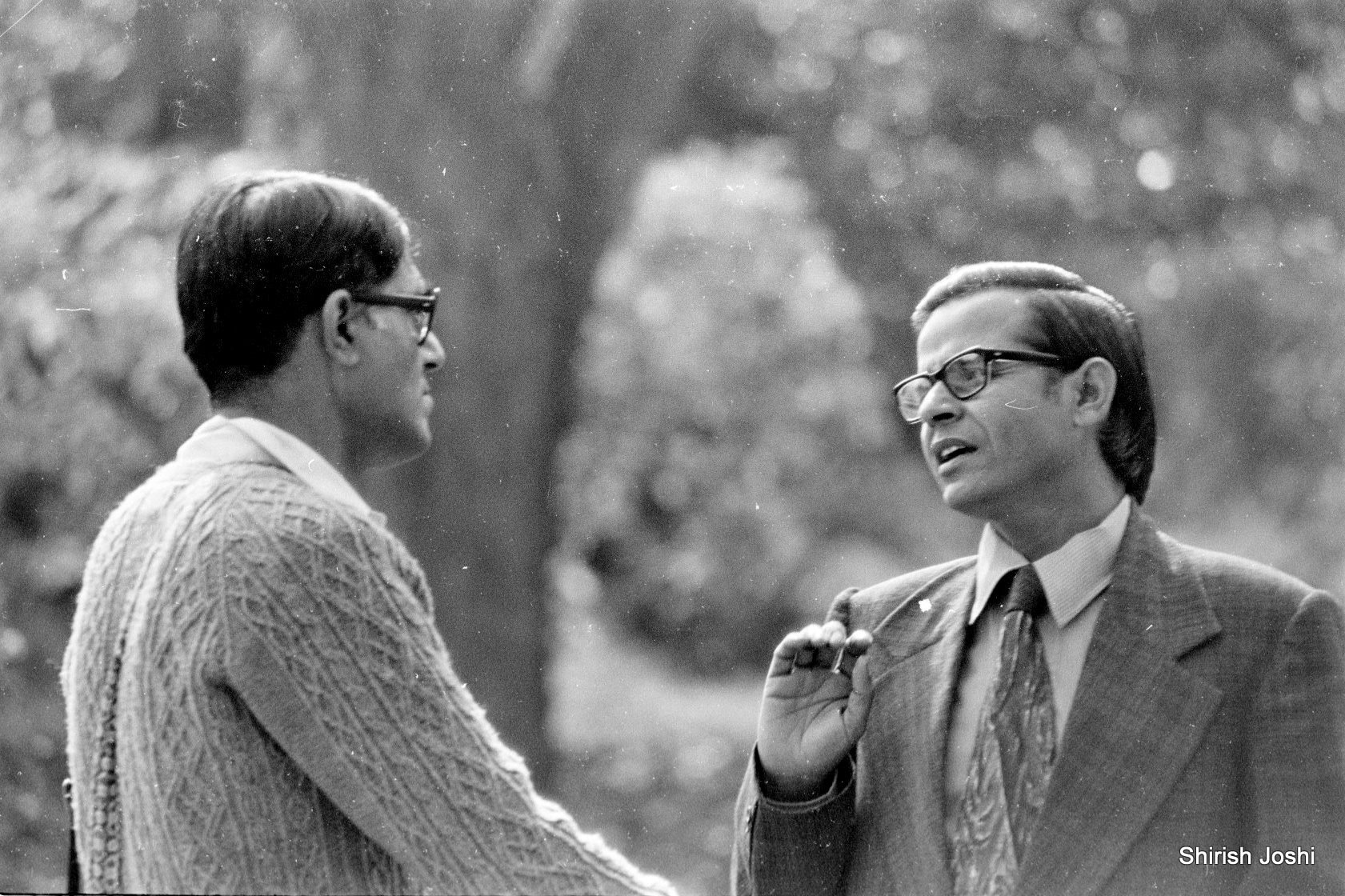
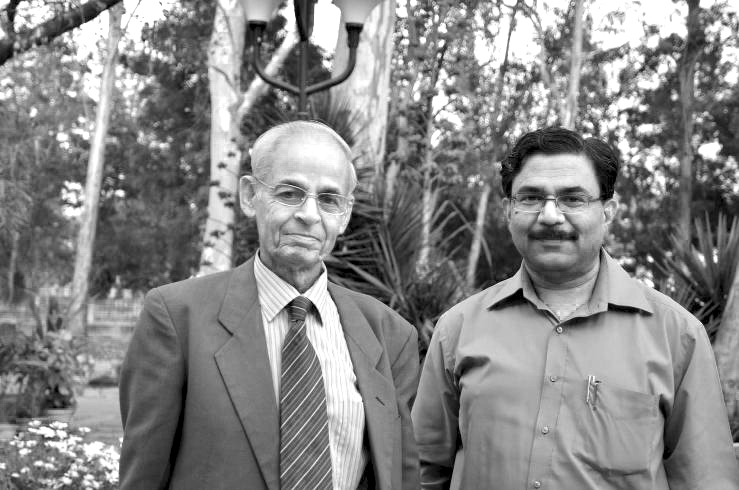
Professors SK Mullick and Yudhbir in a discussion at IITK, c. 1977. Picture: Shirish Joshi
594
Prof. Yudhbir with Devendra Narain Singh (DNS), one of his former students at IITK, c. 2006. DNS (BT-MT-PhD, CE, 1982-93) is now a Chair Professor in the Dept of Civil Engineering at IITB
Prof. Yudhbir served on multiple government committees, including the Project Management Committee of the Jai Vigyan Mission. His leadership extended beyond national boundaries, with his tenure as Vice President for Asia (1984–88) of the Association of Geosciences for International Development, in both the ISSMGE and AGID earning him international recognition for his efforts in advancing geotechnical engineering worldwide. He played a pivotal role as a geotechnical expert on several major developmental projects related to roads, railways, thermal energy, hydro-power, and human habitat. One of his guiding principles was to ensure that sound geotechnical principles and practices be properly integrated into national infrastructure planning and development.
He was a much-loved teacher and a steadfast colleague, and he was someone to go to when faced with puzzling research problems. As a teacher, he simplified complex concepts with remarkable clarity, shaping generations of geotechnical engineers. As a token of appreciation and giving back, the MAY award -- in the names of Prof. Yudhbir, along with Prof. Madhav and Prof. A.S.R. Sai – was funded by alumnus Satyajeet Ghosh (CE 1980). It is awarded “to any UG/PG students (individual/team) of the Civil Engineering Department with an objective to increase industry academia partnership and employment, increase the number of patents filed and for solving real world engineering problems”. We, of the extended IITK family, will miss him greatly.
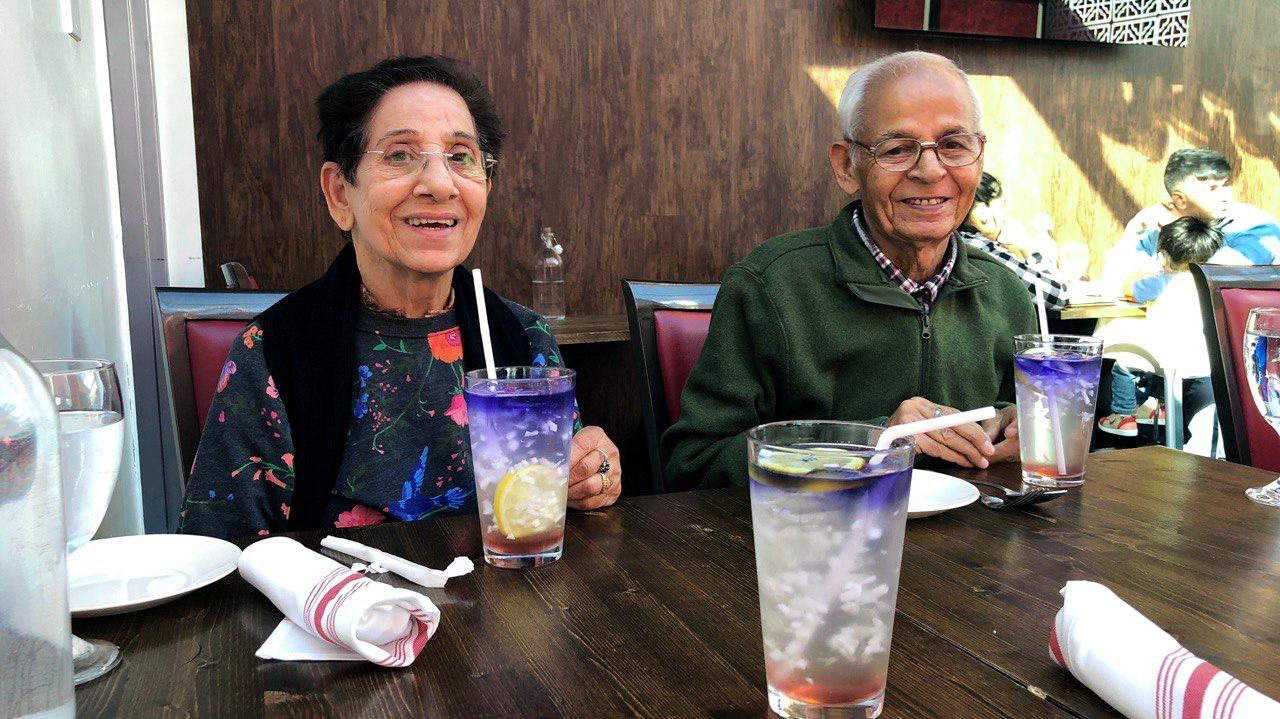
Prof. and Mrs. Yudhbir in a recent photo.
595
Tributes from colleagues and students:
Yudhbir had been our colleague, friend and sounding board for nearly 30 years at IITK. I always wondered why he chose IITK after his Ph.D. instead of returning to IITD from where he went to the US to pursue his doctorate. But that was a blessing for us at IITK. With Kameswara Rao, the three of us nurtured, built and established Geotechnical Engineering academically and professionally and was recognized as such nationally and internationally. Scores of students and research scholars were part of this endeavour. Yudhbir had been the driving force in this regard with his vision and persuasion powers.
Yudhbir had an uncanny ability to understand soil in all its facets. His insight into soil’s strength and its correlations with several other parameters including consistency limits was phenomenal. Whether it was Bangkok clay or Paravur clay which he managed to get to IIT Kanpur from Kerala, a great achievement in itself. Yudhbir would rattle their uniqueness. A true disciple of Henkel, a pioneer of shear strength and testing with Bishop, he carried the tradition of proper testing and interpretation of soils. Give him raw data and he would come out with a trend and a new way of understanding the material. The other strong felicity of Yudhbir has been the ‘stability of slopes’. Only he could give the course on Earth dams and Slope Stability at graduate level with perfection. He contributed to several other topics in Geotechnical Practice as well.
Yudhbir was not a prolific writer of professional papers but the ones he wrote are classic and landmarks such as the Keynote at the Asian Conference at Bangkok or the general Report at the Rio ISSMGE conference. Yudhbir has been a part of my professional journey and it is those years of travel I cherish. So many thoughts and feelings come tumbling down that it has become difficult to cull or sort them into clear or sequential events. He had been a rebel and a fighter all his life for the good of the profession, the Institute and the society. He reflected his spirit even in the last part of the recent journey. While Geotechnical Engineering has lost a great personality who shaped its course for more than 30 years, he left it with such beacons that future generations would always remember him for what he was, what he stood for and what he left for posterity.
M. R. Madhav, Professor,Dept. of Civil Engineering, IITK (1967-2002)
What intrigued me the most when I came in touch with Dr Yudhbir, was his single-worded name, simplicity and easy-going style of interacting with the students. He taught us Geotechnical Engineering and Soil Mechanics among other things. Needless to say we all loved his teaching method and style. In my 4th year I started interacting with him more and asked him if he could also write a recommendation letter. It did not come as a surprise to me that he agreed immediately, because of his nature and desire to help young students. My memories of him during my stay at Kanpur were of a very affable person and easy going. Although he was very well-known, we were never intimated by his background or personality. He was a great teacher, a gentleman and a humble man. His dedication and desire to help his students was unmatched.
Additional biographical notes and tributes are available at:
Professor Yudhbir
Our thanks to DN Singh for helping us locate the pictures in this tribute
596
Tribute: Prof. Raj Kumar Gupta (1936-2025)
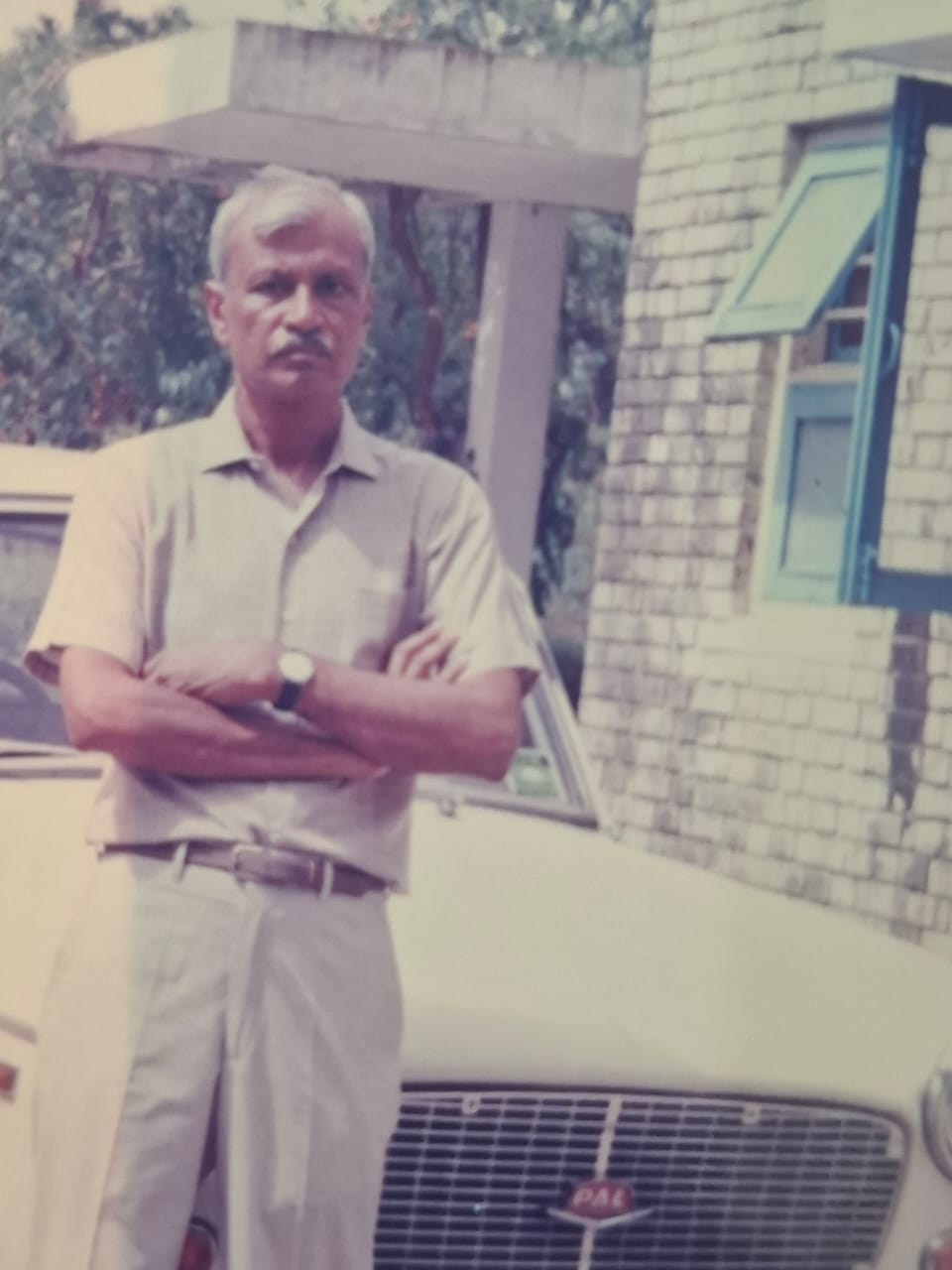
It is with a deep sense of grief that we share the news of the passing away of Dr. Raj Kumar Gupta, Retired Professor of English at IIT Kanpur, on 10 June 2025.
Prof. Gupta was a distinguished member of English Studies at the national and international level and was widely admired by a generation of students and scholars for his seminal critical work in English and American Literature. He had a distinguished career as an academic in the United States and later at IIT Kanpur, where he taught during the years 1965-1996.
His academic credentials were stellar, though he had a way of carrying his learning lightly. He measured his words and wrote insightfully with felicity and gusto. His work on Melville, Hawthorne and other nineteenth-century American writers was well-regarded internationally. Prof. Gupta often read these writers in dialogue with European thinkers Sigmund Freud, Karl Marx, and Arthur Schopenhauer. His work was interdisciplinary in an era when transgressing the disciplinary boundaries was unheard of. Though he retired in 1996, he continued to publish in top-tier literary journals and even attended major conferences in the country and overseas.
Prof. Gupta’s intellectual humility, dignified and courteous ways, and sense of propriety and integrity endeared him to many. A multifaceted personality with outstanding international awards and publications, he was modest to the core. He lived a life of quiet dignity and forbearance, free from a desire for public fame and recognition. Many of us who were trained under his rigorous and nurturing care have, in our own ways, sustained the legacy of his scholarship and academic integrity. Salute you, Prof. Gupta, for touching our lives, as those of many others who were fortunate to know you.
G Neelakantan, Professor, HSS (English), IIT Kanpur, with inputs from Sachidananda Mohanty
Prof. Neelakantan completed his dissertation on Saul Bellow under the guidance of Prof. RK Gupta in 1989. Picture shared by Nandini Gupta.
597
The Awk Professor
Sanjeev Sharma (PhD, English, 1984)
No, he wasn’t my guide—that was never meant to be. But that’s another story. Yet the man, the professor, the persona remained fascinating and enigmatic.
I remember arriving for my PhD interview: seniors spoke of RKG in reverent tones. "He’ll grill you," they warned. "His classes are phenomenal—profound knowledge, incisive analysis." After joining IIT Kanpur, I realized they were absolutely right.
Admittedly, I wasn’t impressed at first sight. To understand why, let me revisit my roots: Delhi University’s English Department. There, professors were often "Brown Sahibs"—suave, impeccably dressed in Scottish tweeds, hats, and scarves, enunciating with aspirated consonants. One Kashmiri gentleman teaching Dombey and Son would saunter in, beret and gloves in place, lean against the desk, and meticulously fill his mahogany pipe (public smoking wasn’t banned then). This ritual consumed seven precious minutes of class time. Girls watched in awed fascination; boys took mental notes on "How to Impress." It ended with a Pavlovian scramble when he asked, "Light, anyone?"
Then came IIT Kanpur. RKG stood at the opposite end of the spectrum—like a common man off to the corner store with a grocery list. How wrong first impressions can be! His lectures were transformative. On the 6th floor, he’d appear like the Cheshire Cat, avoiding eye contact and vanishing with a smile. He kept personal distance, treating everyone—good, bad, indifferent—with uniform detachment.
Yet as a professor? He was aged wine: richer with every interaction. In one-on-ones, he became charming, insightful. But he rarely asked personal questions. An invisible line—his Lakshman Rekha—remained, though he always seemed amiable, worthy of attention.
My devastation was profound when he declined to be my supervisor. "In fairness," he said, "I can’t take all three of you. The two ladies approached me yesterday—I’ve committed."
Somehow, I’d presumed an implicit "yes" all along—perhaps my DU moorings. I wanted to work with the best. I don’t think I was late, but the ladies were wiser and faster than me in approaching him. In hindsight, that "no" subconsciously triggered my "road-not-taken" moment. When the RBI came calling, I shifted tracks. Had I worked with RKG, I’d never have "sold my soul to the devil" (as my external examiner, Prof. C.D. Narasimhan, later quipped upon learning I was joining the Central Bank). Indirectly, I believe RKG steered my career from academia to central banking. That was his influence.
We students adored his marginal notes: "Awk" was his favourite critique. These were barometers of our written English—flags for awkward, clumsy, or illogical sentences (unbecoming of PhD candidates!). Not Gen Alpha slang, but a timeless corrective.
Once, he offered a course on Modern Literature featuring Catcher in the Rye and Night of January 16th. Undergrads flocked to enroll. He selected just one. "They come for Salinger and Rand—the cults. But I chose these for narrative structure, not popularity. They’d be disappointed," he explained.
598
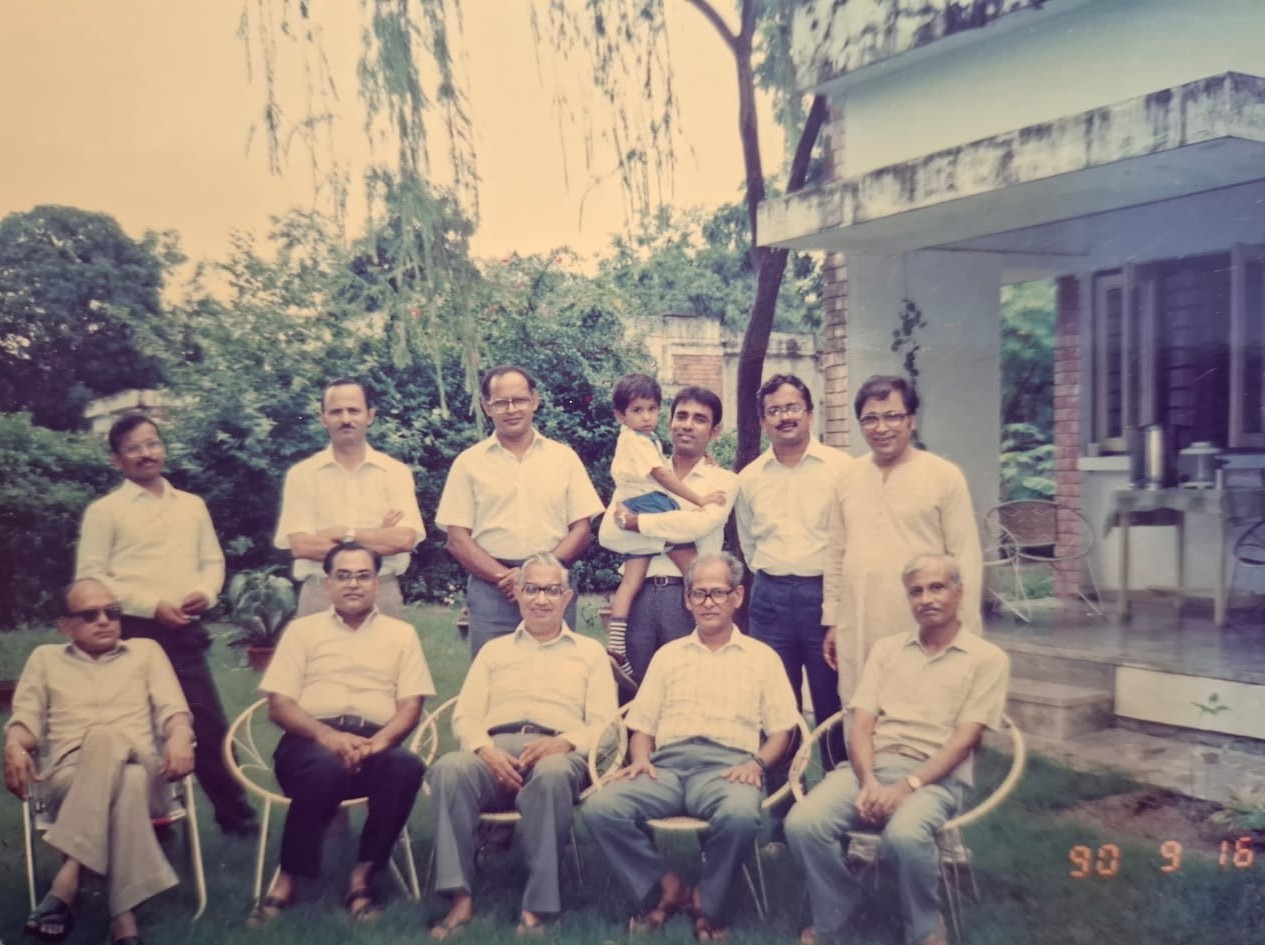
Professor RKG, seated on the far right, in a group photo from IITK, 1990. Picture: G Neelakantan.
Campus legends abounded: they swore RKG would gently ring his cycle bell to avoid startling crows. Or that he’d dismount at speed breakers. Such was his meticulous kindness. I wouldn’t be surprised if these were true. The crow story revealed his pathological gentleness (almost comical), while the speed breaker epitomized either physical caution or, metaphorically, his perfectionism. His authenticity, in sharp contrast to the DU professor’s theatrics, proved how legends crystallize a teacher’s legacy. Now, as I write, I feel that this isn't just a portrait of a professor anymore; it's a meditation on how educators shape lives through absence as much as presence. RKG would probably write "Awk?" in the margin of this comment - then smile elusively.
Years later, a chance Facebook post reconnected us. In October 2022, while teaching at IIM Lucknow, I met Prof. A.K. Sharma (Sociology), who added me on Facebook. RKG, his friend, saw my post quoting T.S. Eliot and recognized my style: "Sanjeev Sharma from IITK?" he commented. I replied, “Raj Gupta as in RKG?” (We’d never used first names at IITK). We became FB friends, exchanged updates—who was dead, alive, or where—sporadically, as neither was active. "I’ll message him tomorrow," I’d tell myself.
But tomorrows crept by, petty and unclaimed, as time often does...
"Tomorrow, and tomorrow, and tomorrow,
Creeps in this petty pace from day to day..."
About the author:
Dr Sanjeev Sharma, currently based in Gurgaon, earned his Ph.D. in English Literature from IIT Kanpur (1984), specializing in Post-War Native American Literature. He studied Modern Literature and Literary Criticism under Prof. Gupta. He retired as Chief General Manager RBI and also was Executive Director, National Housing Bank. Post retirement he transitioned to academia and is currently holding Visiting Faculty positions at IIM Ahmedabad, IIM Lucknow and ISB, where he teaches Written Analytical Communication.
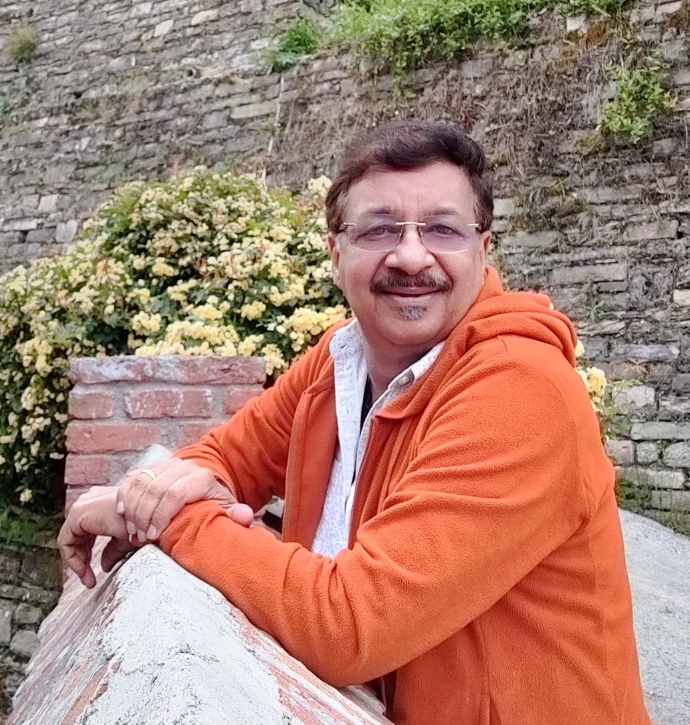
599
Memories of Prof. R.K. Gupta
Sachidananda Mohanty (PhD, English, 1987)
A Fateful Encounter
On a sultry day in 1986, I knocked gently on the door of Prof. R.K. Gupta’s study at IIT Kanpur, and nervously waited in the corridor of the Faculty Building.
I had joined the Ph.D. program in English [Humanities and Social Sciences] at IIT Kanpur in 1984. By 1986, I had completed the Course Work and the Comprehensive Examinations that followed the American pattern. While my batchmate, Neelakantan took up the ‘Fiction of Saul Bellow’ for research, I selected the ‘Later Fiction of D.H. Lawrence’. Both of us opted for Prof. R.K. Gupta (RKG) as our thesis supervisor, impressed by his dedicated teaching and quality publications.
Prof. R.K. Gupta turned out to be more severe than I had expected him to be. ‘Keep working on your chapter’, he had sternly advised, ‘Come back to me after a few months when you are ready with a draft’.
I thought I was now ready.
Back to the Present
‘Come in’, he said and I stepped into his office. It had a spartan look: a table, chair, a book-shelf and a glass of water.
‘Please sit down’, he said, as he took the draft from my hand, and began reading. I watched, nervous and expectant.
He glanced quickly at the first page; his gaze went down swiftly to the bottom; fixing his gaze at the footnote section. “Why have you put a comma when you should have used a semicolon?” -- he demanded.
I froze, distraught and dazed. I had never met such a teacher in my life. At Sri Aurobindo International Centre at Pondicherry and at the University of Hyderabad, I had encountered teachers who were strict, but most were kind and generous. Now I was in front of someone who appeared aloof, austere and forbidding. How was I to deal with such a supervisor for the next few years?
I returned from my reverie.
‘You call this work, Mr. Mohanty! Take it back and keep working; come back when it is absolutely perfect.’
600
He returned the chapter, impassive and taciturn. I picked up the draft and retraced my steps, crestfallen.
It took me a while to get over the shock and the grief. For the next fortnight or so, I worked hard and left nothing to chance. In due course, I submitted the chapter; this time I earned judicious praise from RKG. In the process, I learnt the first and lasting (academic) lesson of my life: ‘Be thorough; never compromise with the quality of your work down to a comma, full stop and semi-colon!’
Impressive Track Record
Born on 17 August 1936 at Kanpur, Prof R. K. Gupta received his M.A. from Agra University in 1957 (First Class); M.A. from the University of Rhode Island, USA in 1962, and Ph.D. from the University of Pittsburgh, USA, 1964.
He taught at Robertson College, Jabalpur, 1957-1961 (where he developed a life-long friendship with Prof. S. Nagarajan); University of Rhode Island, 1961-62; Hindu College, Delhi, 1964-65; Kurukshetra University, Jan.-July 1965 (where he mentored Prof. Amritjit Singh); Memphis State University 1969-70; and IIT Kanpur, 1965-1996. He had also worked as Senior Fulbright-Hays Fellow, University of Pennsylvania, 1977-78; Visiting Professor, University of Ibadan, Nigeria, 1983-84; and Visiting Fulbright Fellow, Yale University, Summer 1989.
RKG published two books, a monograph, and more than sixty research papers in journals in India, USA, England, Canada, Germany and Japan. His book, The Great Encounter: A Study of Indo-American Literary and Cultural Relations was published by Riverdale Company. USA, in 1987.
RKG was an absolutely dedicated teacher and a complete professional, in teaching, research, research supervision and publication. We admired his publications in American Literature and New England Quarterly.
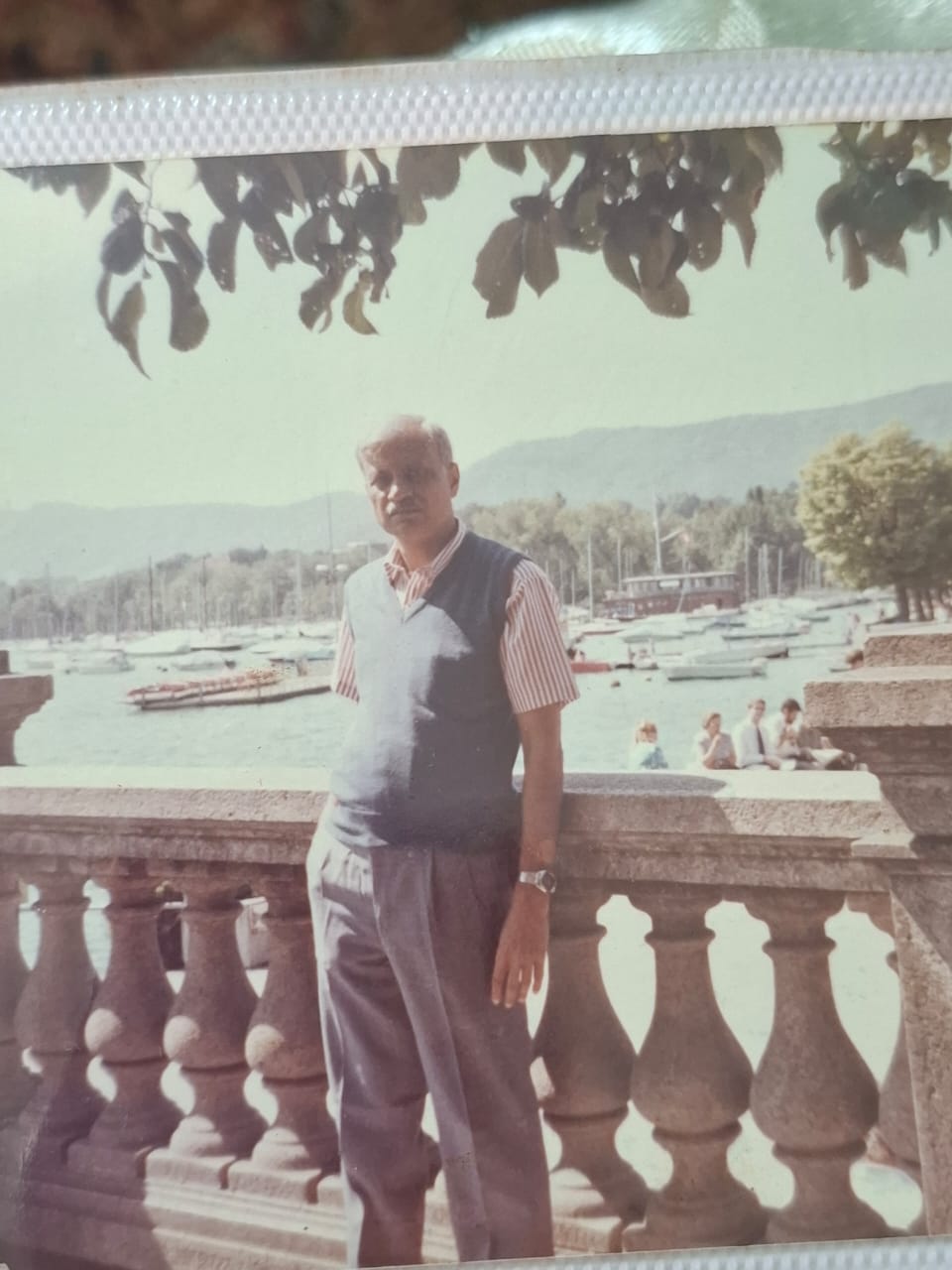
601
He was uniformly punctual and disciplined in his work habits. During the cold mornings of December, he came to the class, smartly dressed with a muffler tucked around hsis neck, army-style; he cycled down to the Faculty Building to lecture to our class on American Literature.
In course of time, I became acquainted with other aspects of RKG and his loving spouse, Mrs. Priyalakshmi Gupta, who taught English at PPN college, Kanpur and retired as the Head of the Department. I treasured my weekly trips to their residence, where Neelakantan and I were treated like family members.
Like Prof. S. Nagarajan who taught me how to write with care, attention and precision, RKG went through each line with meticulous care and rigor. He was against breezy and superficial writing. ‘No pomposity and no verbosity please!’ ‘Sentence must be short and memorable; each note leading to a final symphony.’ ‘No flowery language. Every para must be organically connected to other paras, and lead to a clinching end.’
Steadfast loyalty to Academic Values
In 1995, I came down to Kanpur from Delhi to seek his advice urgently. I was undecided about the inclusion of an essay in the Fulbright and Cultural Exchange volume I was editing, because an author-contributor happened to be a well-known Professor, and I was uncertain about the quality of his submission.
RKG was clear in his thinking: ‘Forget about the fact that it is me or Prof Nagarajan,’ he said, ‘make a decision solely based on objective, critical ground.’ I will always remember this advice.
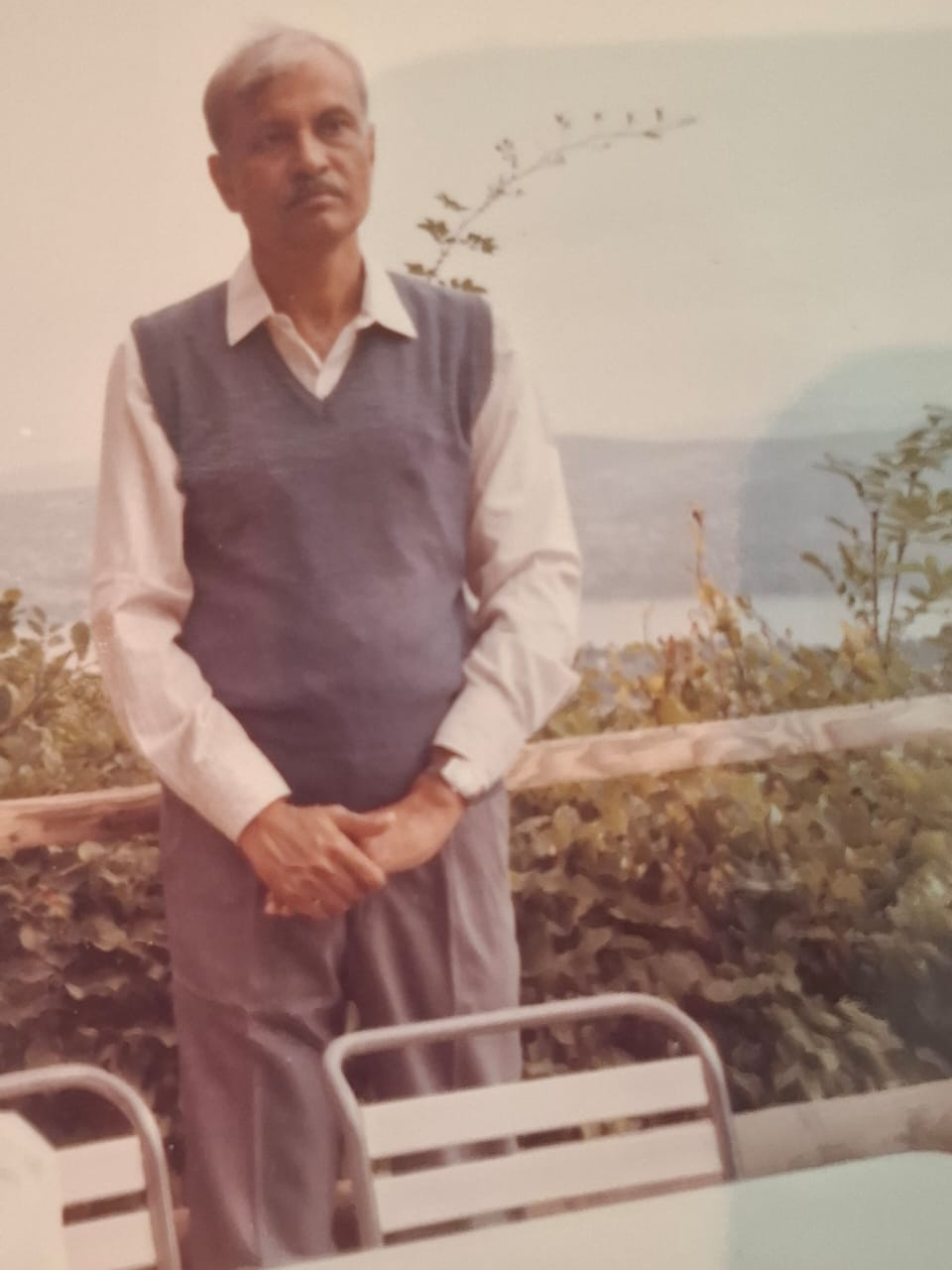
Similarly, he stood his ground on many occasions in his career. In the 1990s, for instance, when the Delhi University Vice Chancellor insisted that a particular candidate ought to be hired as English Professor, RKG firmly disagreed. ‘I am sorry,’ he replied, ‘there was more polemics and less criticism in the reply of the candidate, and I cannot recommend.’ That incident demonstrates RKG’s integrity: he did not care whether he was to be invited again for a selection committee in Delhi. Truth to power; nothing else mattered!
As I made progress on the ‘leadership fiction’ of D.H. Lawrence,’ RKG shared his joy. By the time the dissertation was completed in a record time of one and half years (one and half years for course work and comprehensive examinations aside), RKG and I had become close friends.
‘It’s your own work Sachi,’ he would say to me periodically.
‘You taught me how to write Sir,’ I would protest with a smile.
I have been taught by a galaxy of English teachers, the very best in the country; to this pantheon, I added the name of Prof. R.K. Gupta. During his visits to Bhubaneswar and Puri, meetings in his office or social visits, my teaching and headship at Hyderabad, and Vice-Chancellorship of Central University of Odisha at Koraput, my Fulbright assignments abroad, and other notable events, I shared my joy with RKG and received his blessings, good wishes and encouragement. He was a father figure indeed!
I learnt from RKG the need for professional and disciplinary rigor, the importance of objectivity in critical matters and the virtue of non-partisanship.
RKG believed that it is only the weak and insecure in all fields, including in academics, who believed in groupism and coterie activity. He was against all forms of superficial, trendy and dilettante activity. He disliked vanity and never courted favor from anyone. He was a stalwart in his field and yet did not care for any accolades.
RKG has given a lot to all those who were close to him including his family, Ravi, Nandini and their son. Sadly Mrs. Gupta passed away in 2014.
RKG lived the life of a recluse. But he was stoical and had a quiet dignity. I never found in him any trace of bitterness. Endowed with a razor-sharp memory and a fine wit and humor, he was a raconteur par excellence.
Conversations with him were most memorable; he was full of fatherly concern. ‘Is Sachi taking good care of you!’ he would tease my wife Simi from time to time. I felt proud that RKG was admired by academics at home and abroad. His books, including the study of the Indo-American literary cultural encounter, have remained classics in the field.
602
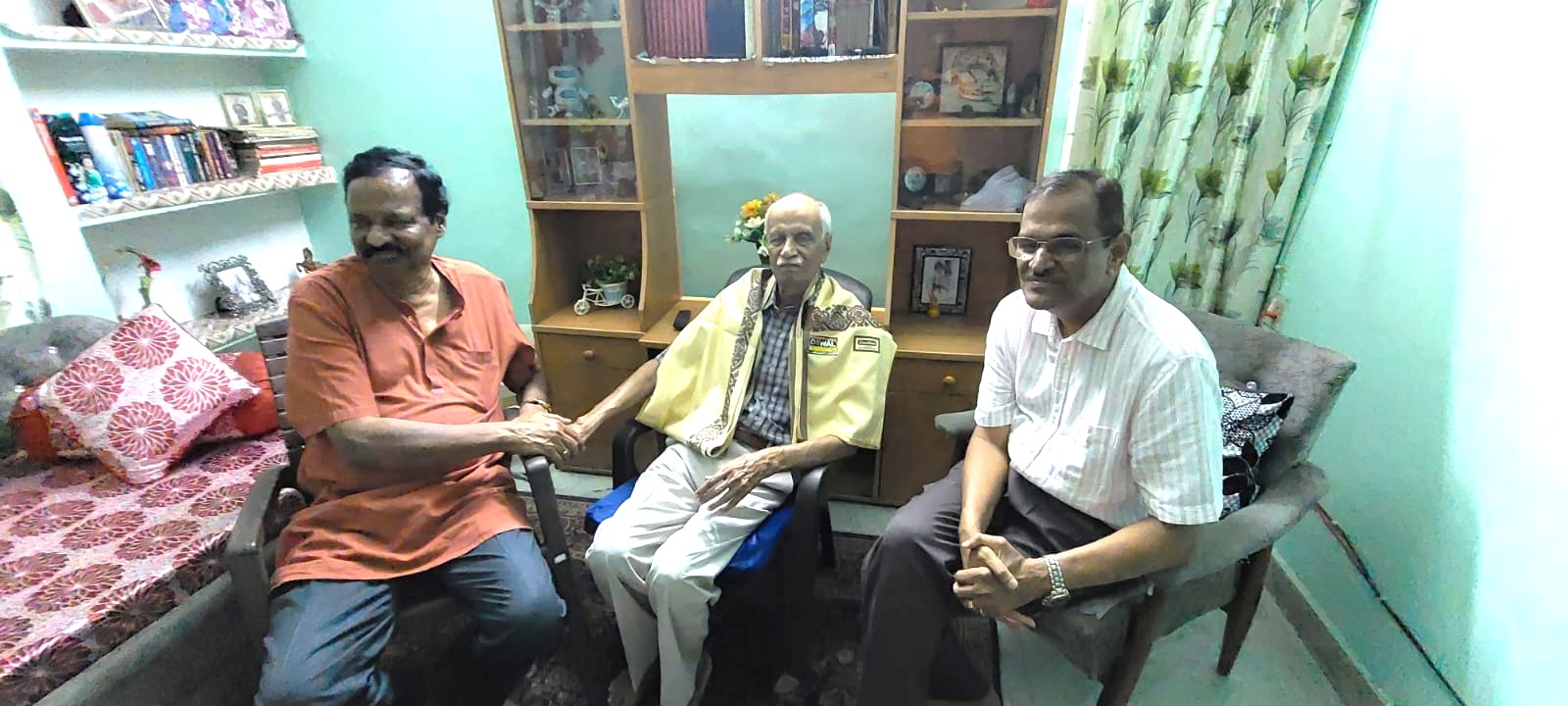
Professors Sachidananda (Left) and Neelakantan (Right) with their mentor Prof. RK Gupta at his home in Kanpur.
Lasting Memories
I remember Bollywood movies of yesteryears at IITK’s L-7 [Lecture Hall Complex]; Alu Parathas’, at midnight in the Halls of Residence, Cultural Festivals in the pandal complex, trips to dusty ‘Bara Chowraha’ and ‘Meston Road’ in the seven-seater tempos, watching ‘An Evening in Paris,’ after passing the Comprehensive Examinations. Most of all, I shall remember RKG for making a difference to my life, then and ever after!

About the author:
Prof. Sachidananda Mohanty completed his PhD from IITK under the guidance of Prof. RK Gupta in 1987. He then joined the faculty of the University of Hyderabad, where he went on to serve as Professor and Head of the Department of English.
Prof Sachidananda has served as Vice - Chancellor of the Central University of Odisha. He is a National Fellow at the Indian Institute of Advanced Study, Shimla and is a Member of the University Grants Commission.
Our thanks to Nandini Gupta for sharing the pictures of Prof. Raj Gupta from his IITK days.
603
A New Chapter for Halls 1, 2, and 3
Halls 1, 2, and 3 - which have housed generations of students, fostered lifelong friendships, and shaped countless memories have lived their age. These iconic halls have served us with distinction for over five decades, but after careful structural assessments and consultations, it is clear that they are no longer sustainable in their current form.
In the interest of safety, comfort, and the evolving needs of our students, we have taken the difficult but necessary decision to redevelop these halls from the ground up. The current structures will be decommissioned, and in their place, we will build state-of-the-art residential facilities designed to reflect the spirit of IIT Kanpur while embracing the needs of a modern campus.
Considering the deep emotional connection each of us shares with our Halls, I would like to assure you that we are committed to preserving the legacy by ensuring that the external facade is as close as possible to the original one.
Let us come together, once again, to build a future that honors our past.
Manindra Agrawal, Director IITK, May 2025
In March 1963, once two workshop buildings, Hall 1 and one row of Lecturer’s quarters were ready, it was decided that students should shift to the new campus. We moved to the Kalyanpur campus on 28th March, 1963. All three batches were accommodated in Hall #1. The First (Pioneer) Batch was allocated the Top Floor, the Second Batch was assigned the Middle Floor, and the Third Batch the Ground Floor. Apart from the undergraduates, postgraduates and PhD students were also accommodated in Hall 1.
Narendra Kumar (BT, ChE, 1961-66)
Perhaps no other batch got to know Hall 1 as well as the Fourth (Frontier) Batch, who arrived on the campus in July 1963, only to find that there were insufficient rooms available, and that they would have to share rooms designed for single-seated occupancy. Although Hall 2 became available the following year, most of this batch chose to spend all five years in Hall 1, presumably, the only batch to have done so.
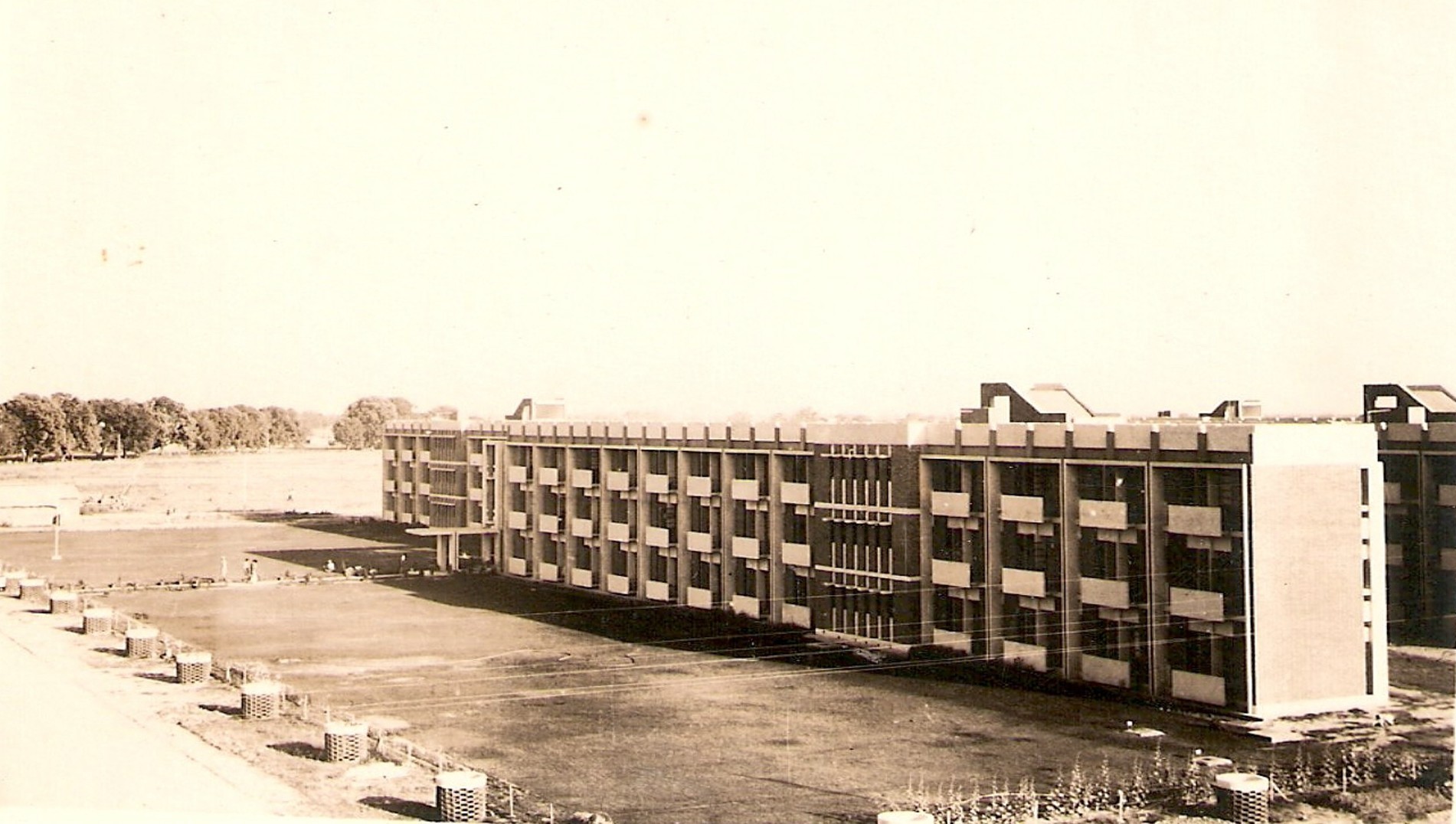
Hall 1, c. 1964.
Picture: The Second Batch Golden Jubilee Collection
604
Hall I, May – June 2025
.JPG)
.JPG)
Pictures: Girish Pant (Information Cell, IITK)
605
Hall II, May – June 2025
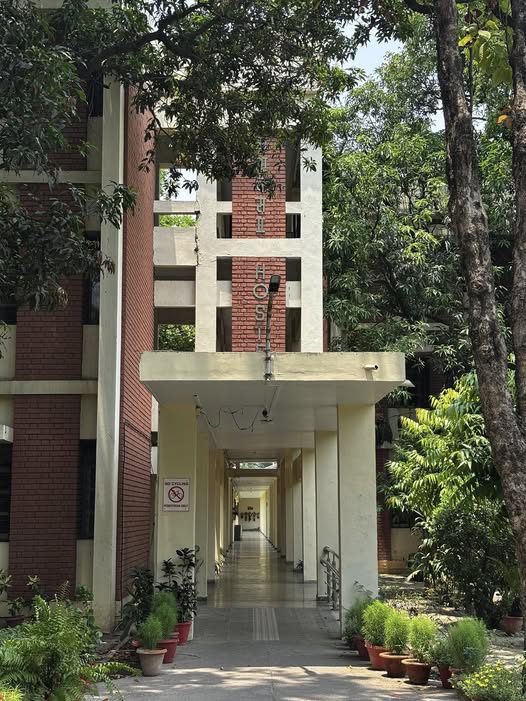
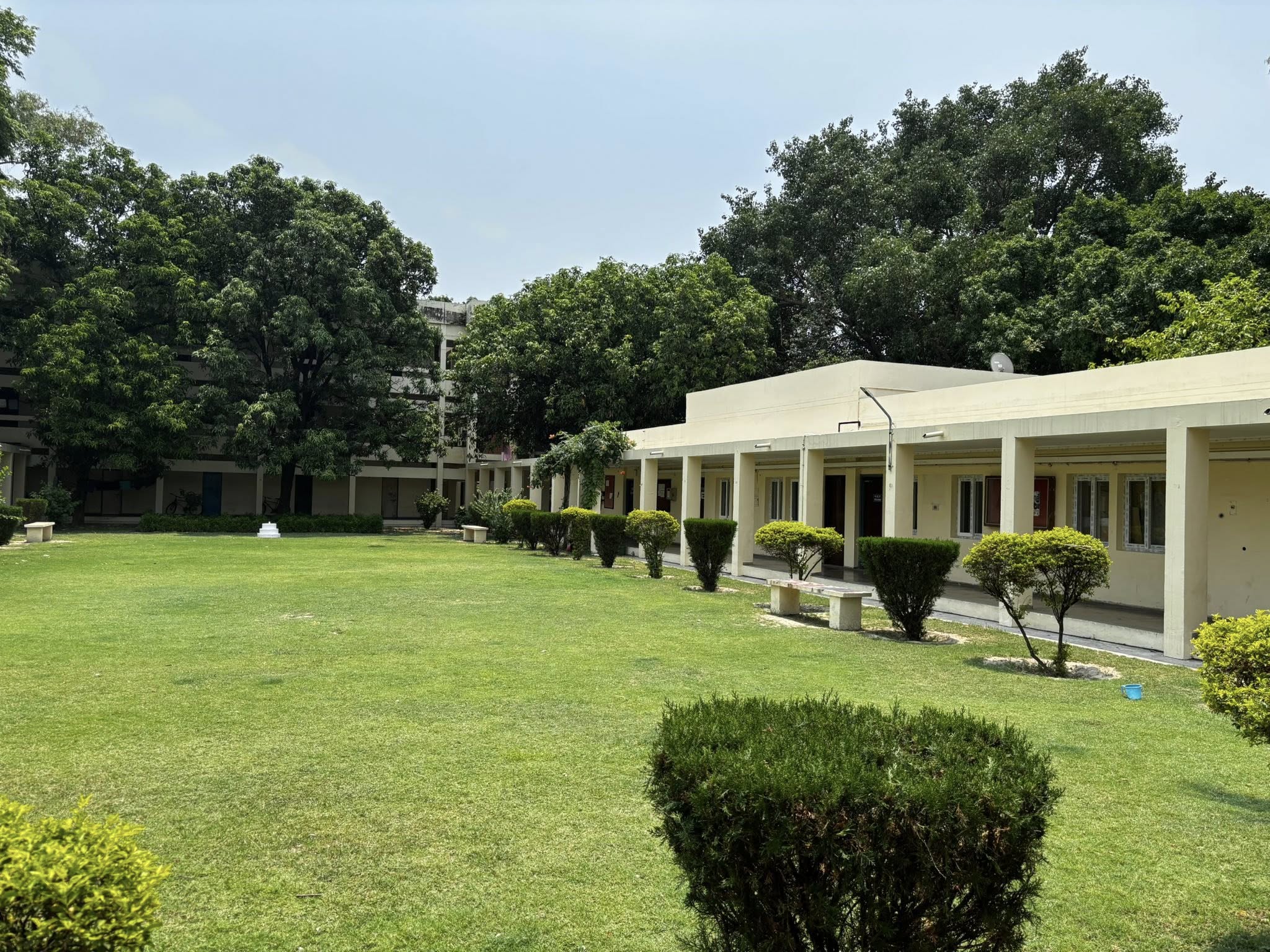
Pictures: Aman Kumar Singh (BT-MT, CE, 2020-25)
Hall II was completed in 1963-64 as a double seated hall, intended for undergraduates in the first three years of the 5-year programme. It soon developed a reputation for its extra-curricular activities. Host of the Soap Box events during the Cultural Festivals, it was also home to a Nudist Club (E-Top, 1970-71). More details on these stories to follow later.
606
Hall III, May – June 2025
.JPG)
.JPG)
Pictures: Girish Pant (Information Cell, IITK)
The completion of Hall III in 1964-65 as a second double seated hall for undergrads also led to the creation of IITK’s most fabled rivalry, across the tennis courts. Most of us recall what happened when the lights went out! Hall III was also the birthplace of the Cheshire Cat and has many stories to offer related to its adjoining water tower.
We would love to include your memories of Halls 1, 2 and 3 in our upcoming issues. Do write back to us, we will try to publish as many stories as possible. Special thanks to Aman Kumar Singh and Girish Pant who have provided us with a large stock of pictures to accompany this and future write-ups.
And a suggestion to the IITK Administration… Perhaps, the redeveloped Halls 1, 2 and 3 can be built without the boundary walls and the security guards, the way they were originally intended to be…
607
IITK – Then & Now
Raj Sehgal (BT, CSE, 1978-83)
Forty-two years is a long time — at least in human terms. But in the evolving temporal arc of a legendary institution like IIT Kanpur, it registers as little more than a youthful exhale.
In the spring of 1983, just weeks before graduation, Raj Sehgal wandered the IITK campus with a brand-new Yashica camera in hand. A final act of homage, perhaps — capturing the silhouettes of the buildings that had shaped his undergraduate years. Hostels, lecture halls, and the clean lines of the academic complex — all frozen in 35mm film.
Fast forward to January 2025: Raj returned to campus, retracing the angles of his youth, camera in hand once again. Some landmarks had changed; others had weathered the decades. But the heart of IITK — especially the academic core with its Bauhaus- and Kahn-inflected modernism — remained unmistakable: austere, geometric, enduring.
Here is a selection of pictures, clicked forty-two years apart, from those corresponding locations. Can you identify them on your own, without taking a peek at the captions below?
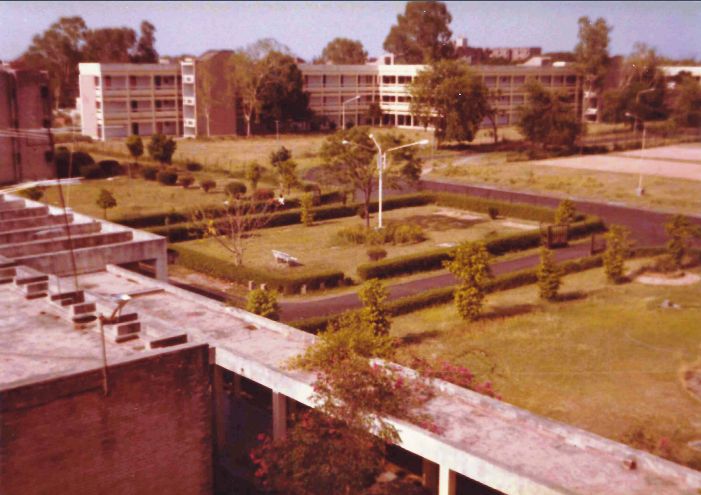
Hall II. Viewed from the Hall V Rooftop (B-wing), 1983
608
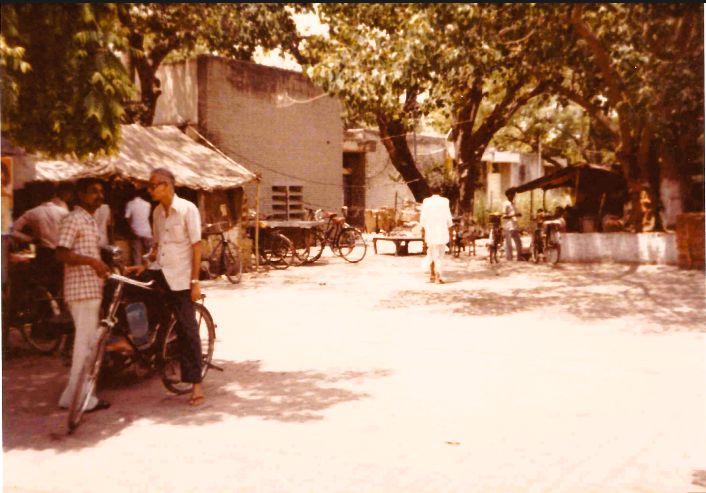
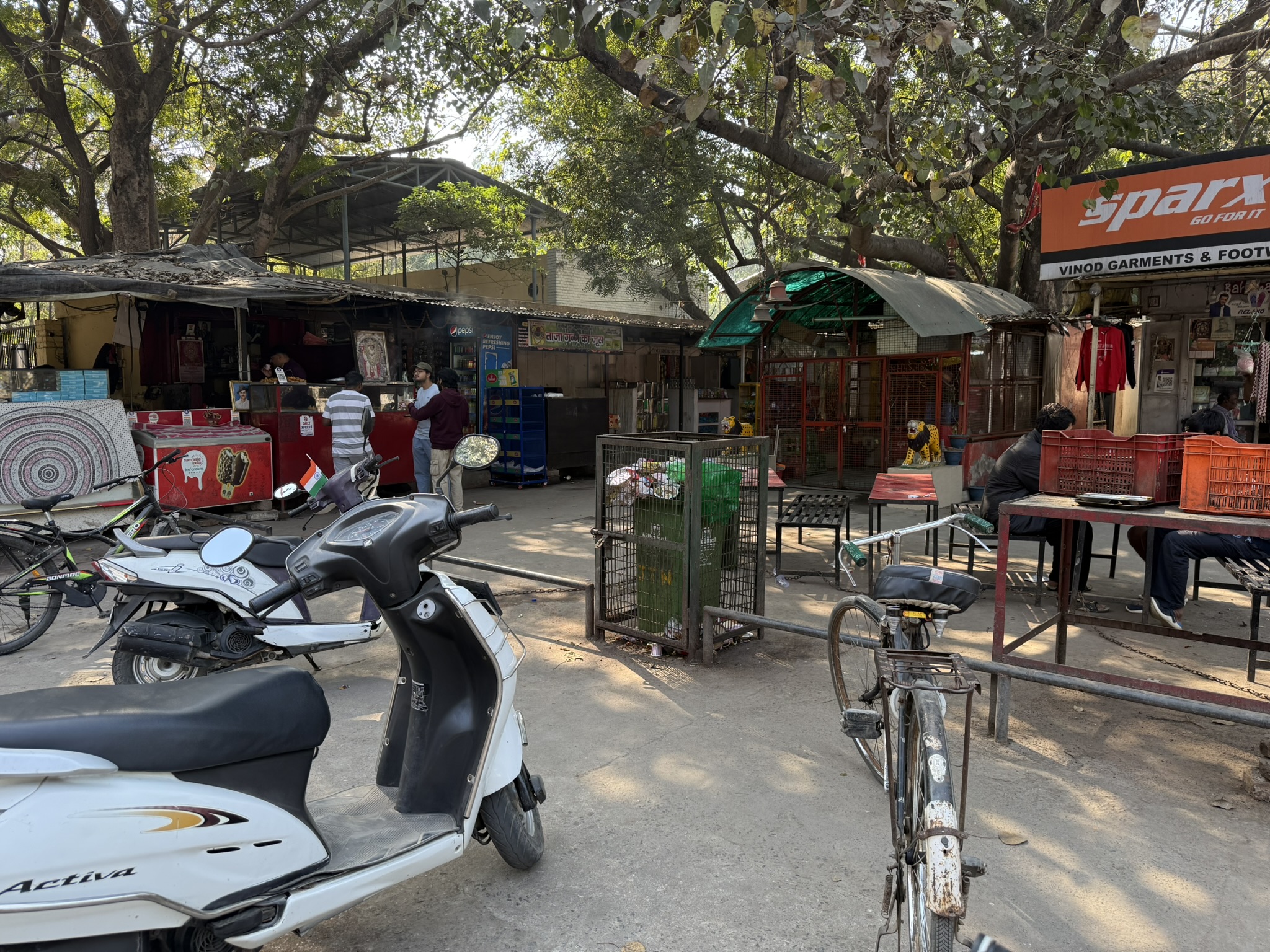
The Transport Section. Also referred to as the MT section or the Bus Stand. In a previous age, also the starting point for tempos commuting to the city. Still a great place for early morning samosas, jalebi and chai after a night out of bulla. And a clue for treasure hunters: Do Yah Teen Bas!
609
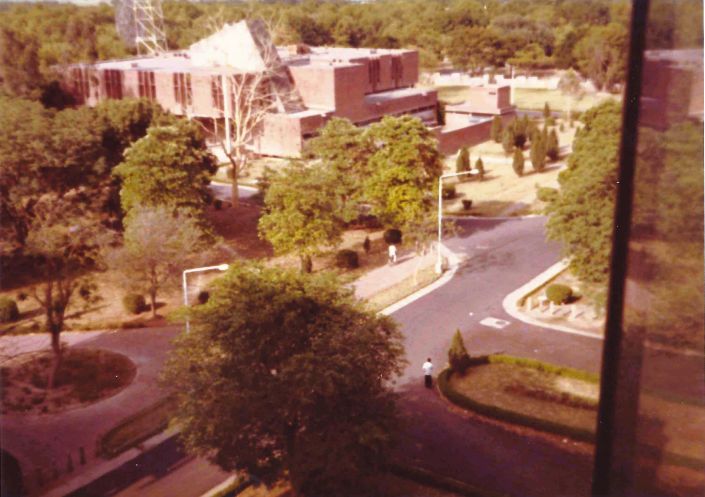
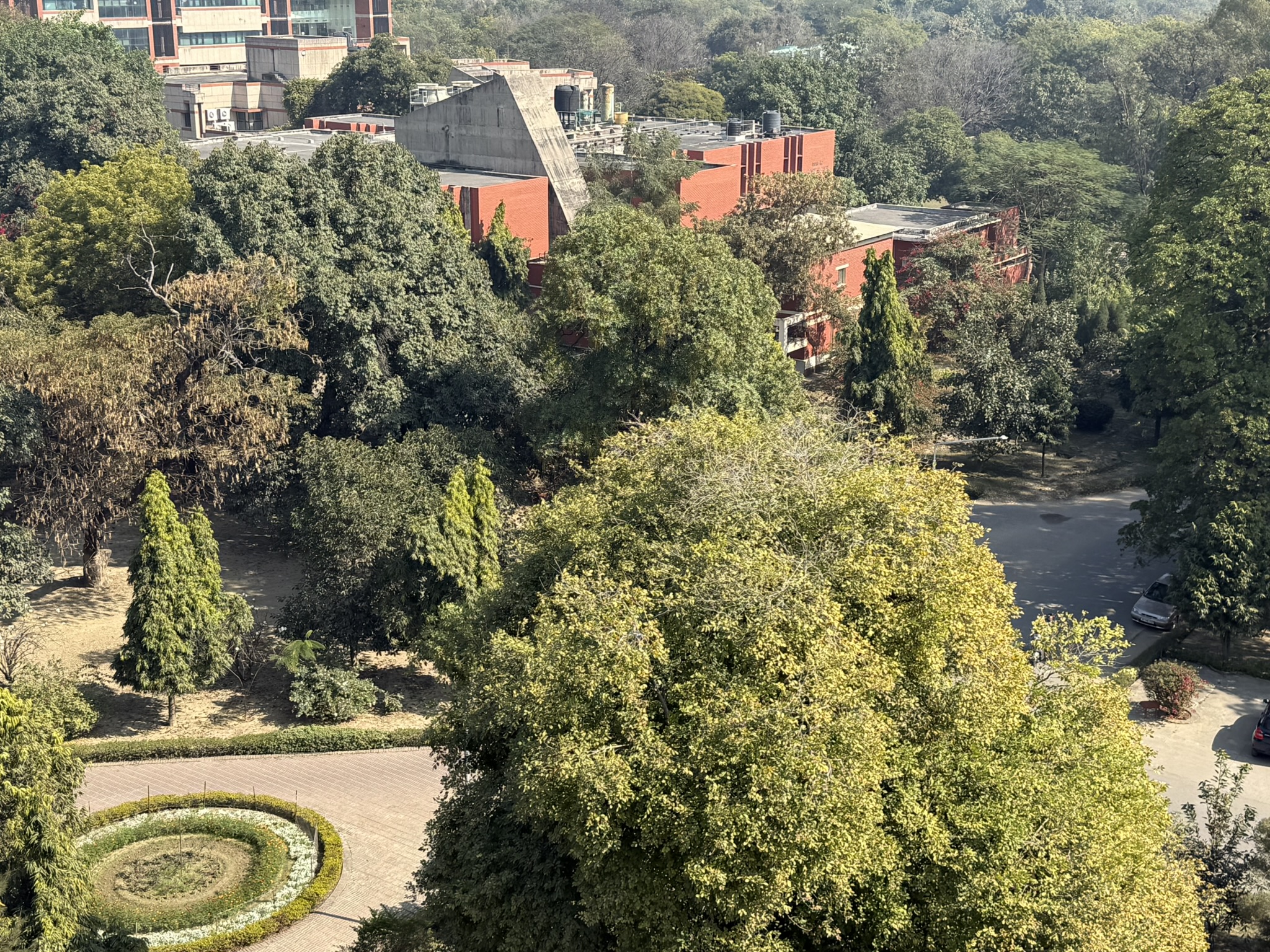
The Computer Centre, clicked from the Faculty Building. Cleaner, neater and a lot greener. Bits of the Wireless Tower (4 milliseconds to Nainital) are visible in the top picture. New buildings now fill this background.
610
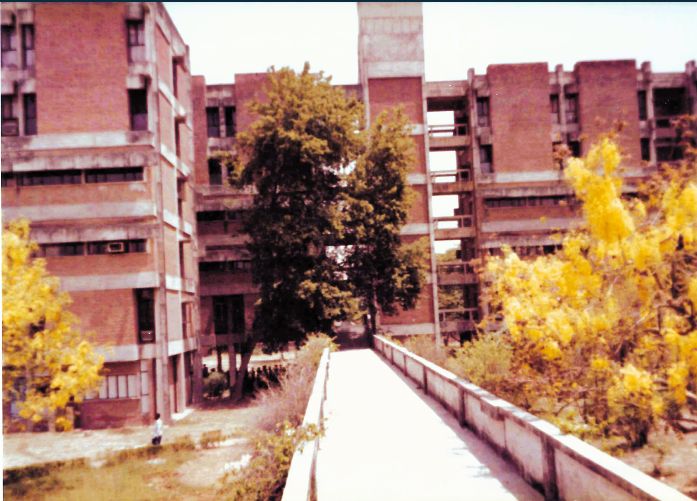
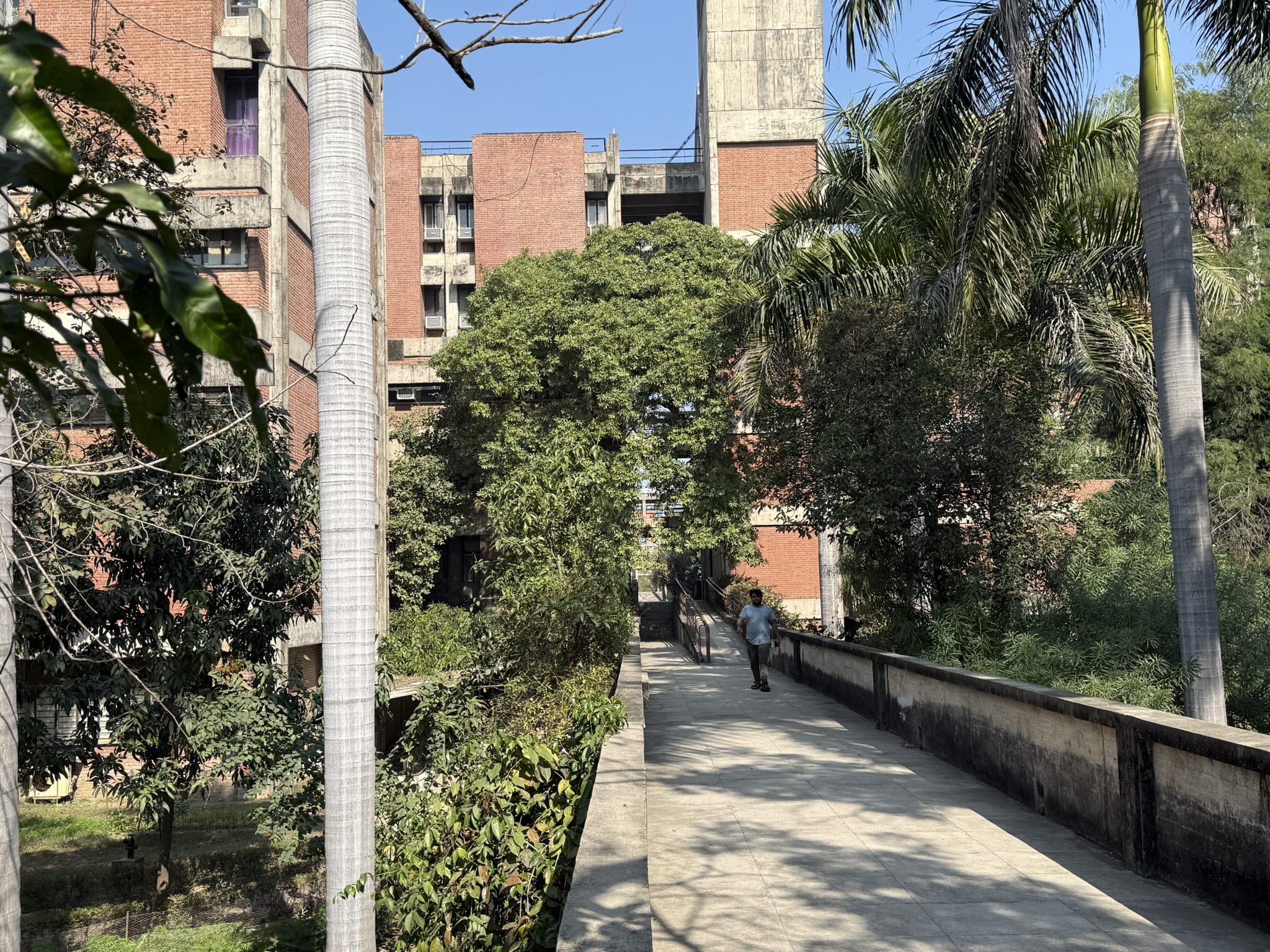
The Faculty Building from the walkway. The classic view of the crosswalks connecting the wings of FB, with the elevator shafts rising to the water tank and ‘Batman’s ears’.
611
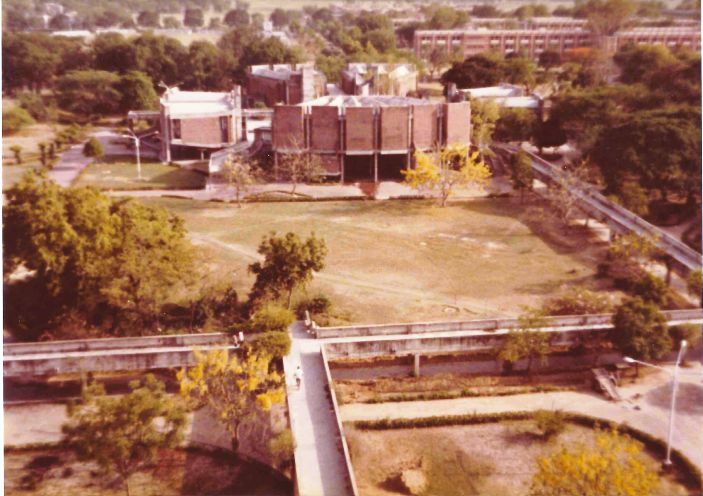
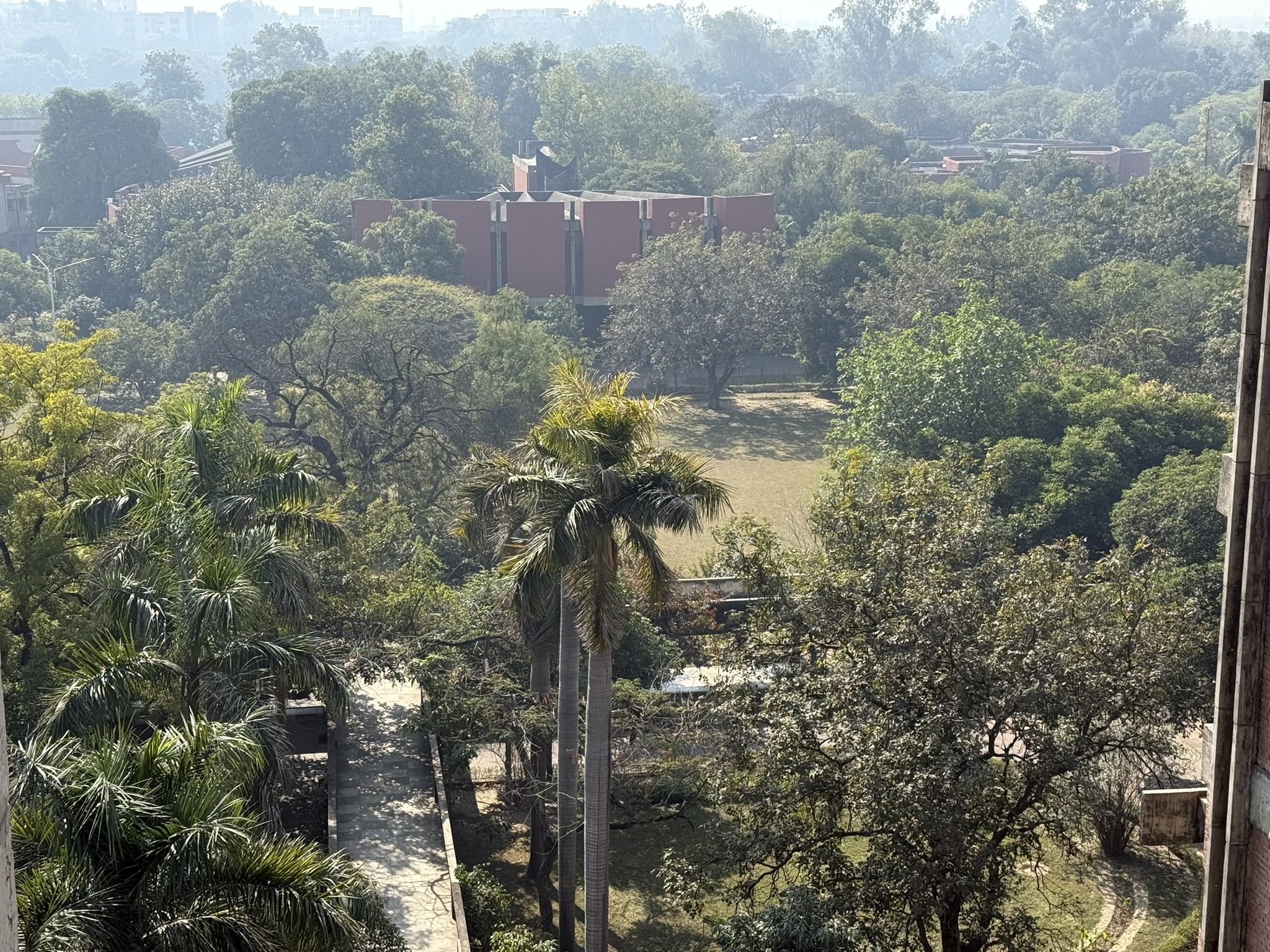
The Lecture Halls clicked from the top of FB. The top view, from Batman’s Ears above the water tank, has been clicked multiple times over the years by budding photographers. More recently, access here needs special permission. The changing background now includes the Tutorial Block on the right, with L-8 through L-20 extending on the left.
612
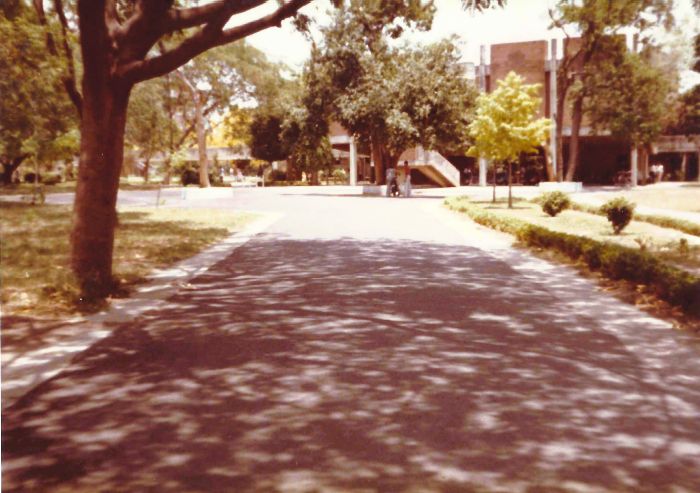
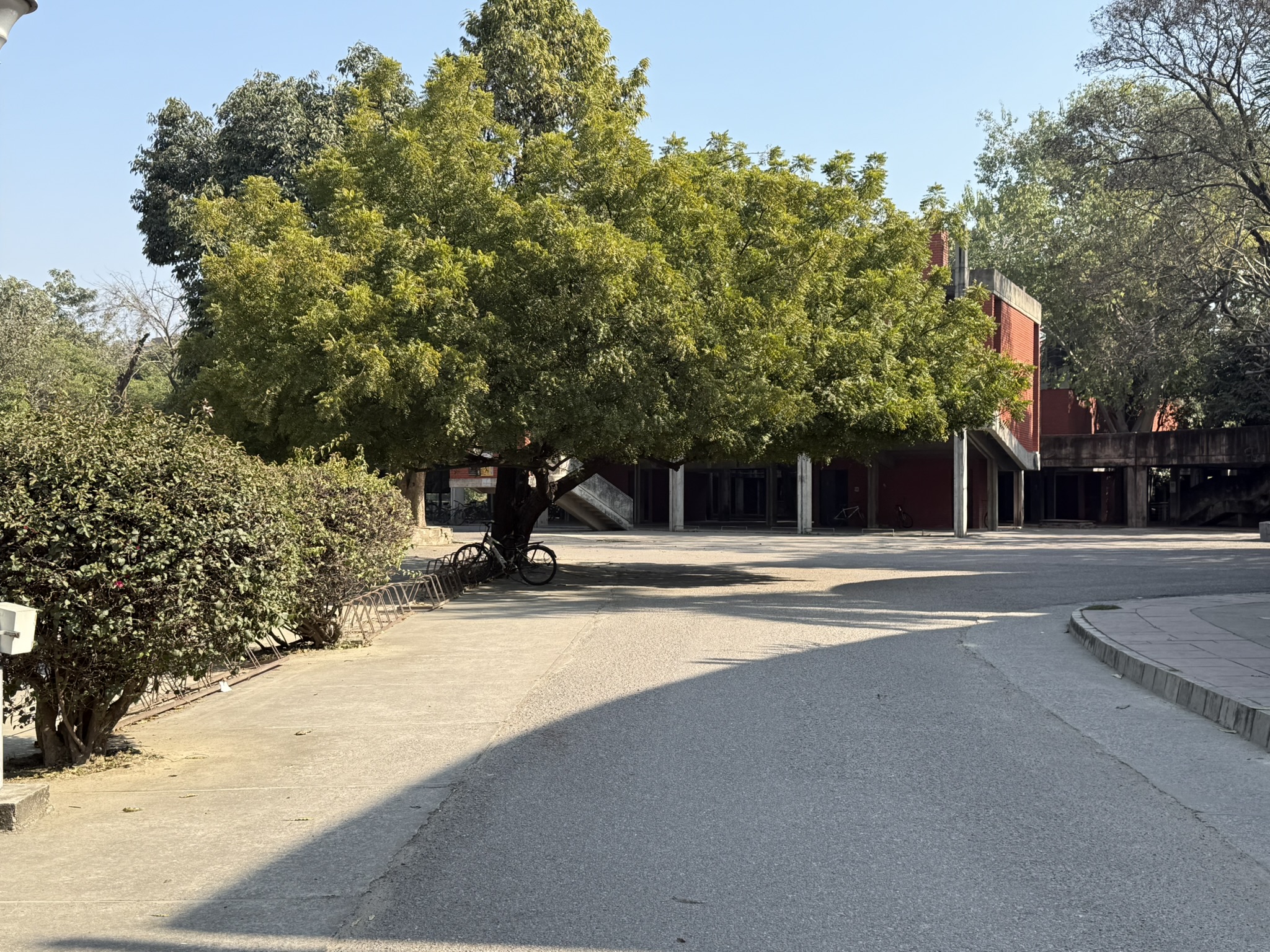
Academic Area entrance from Hall I. With the growing campus and widely spread residence halls, bikes are a necessity. There were days when a five-year stay in Halls 2 and then 1 meant a quick walk across the lawns, unprotected without the boundary walls. Today, students must bike over, from halls stretching all the way to the Panki Canal.
613
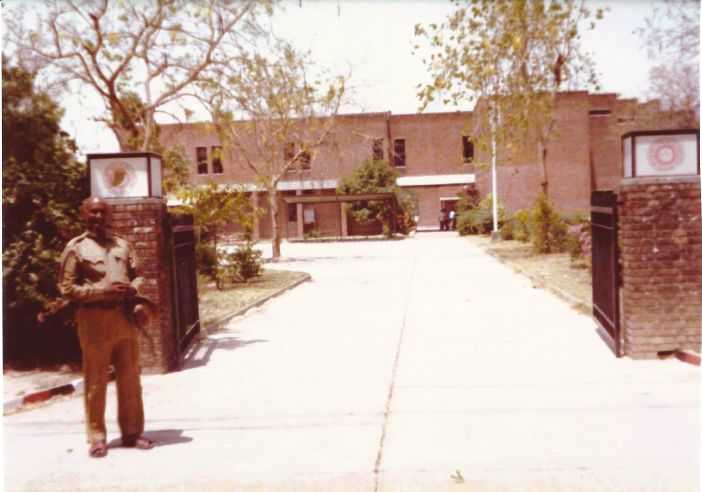
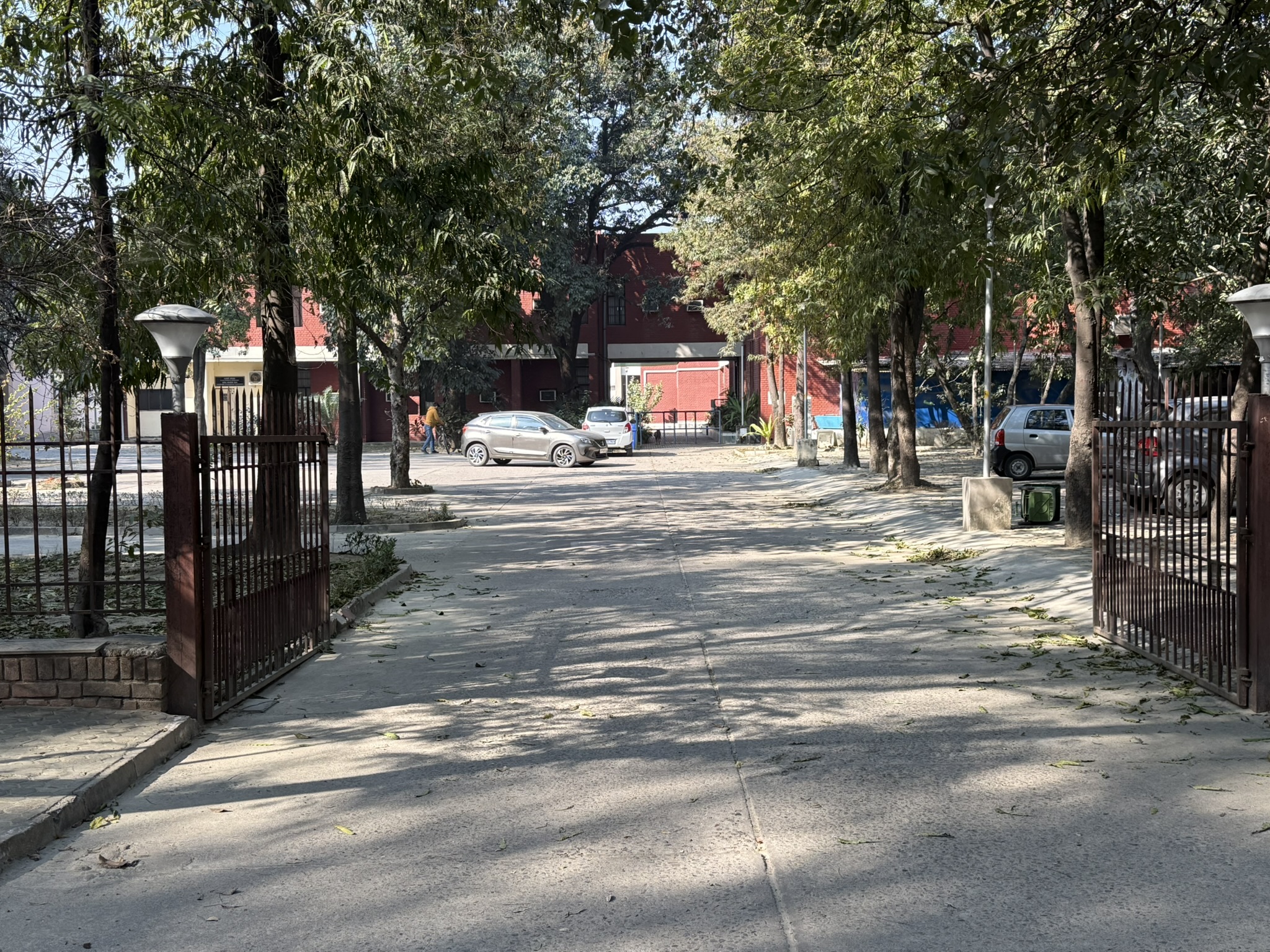
The Old SAC with Shishupal. Now, this building is home to offices and labs, with the New SAC relocated to the hub of student activities, near the Swimming Pool.
About the Contributor:
Raj Sehgal was a member of IITK’s pioneering undergraduate Computer Science batch. He went on to earn his MSCS at the University of Wisconsin–Madison and spent two transformative decades in the crucible of the Bay Area tech world, with a brief interlude at the Wharton School. Now based in Bellevue, Washington, he consults with technology ventures that value disruptive thinking, deep experience, and the long view.
Raj with his bike at the IITK VH, ready to go on a photo shoot around campus!
614
Meanwhile in the LHC…
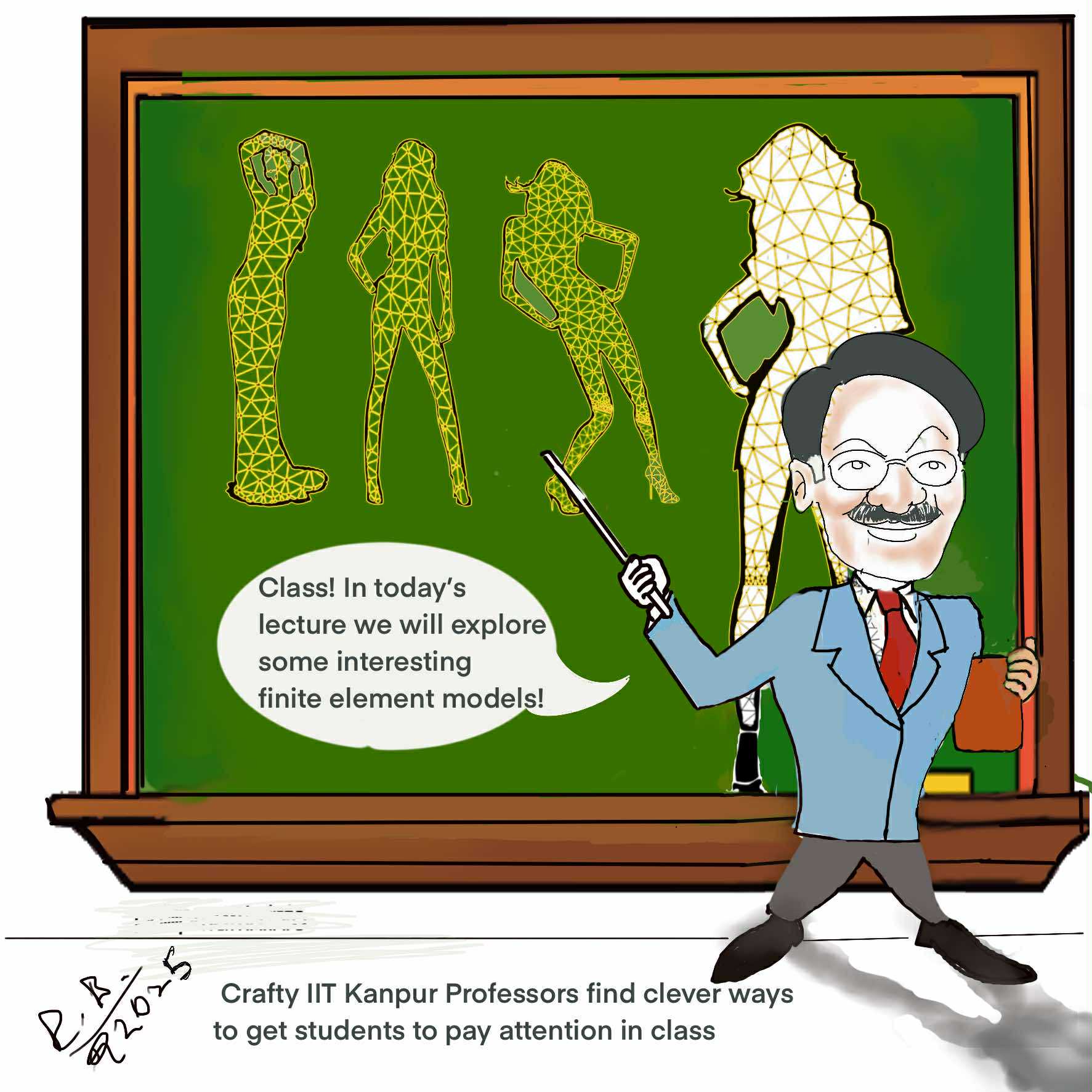
Credit: Raman Bhatia (BT, ME, 1977-82)
Cover Pictures: Our cover pictures for this issue feature the striking architecture of the Faculty Building.
Front: The iconic spiral staircase. Picture: Animesh Singh (BT, CE, 2019-23)
Back: A top-down look at the connecting walkways. Picture: Shirish Joshi, c. 1977-78
Cover Design: Enakshi Jain (Outreach Cell, IITK)
615