







Register Now

Applied Machine Learning and Agentic AI: Fundamentals to Next Generation Artificial Intelligence

Starts 1st December 2026 New: Agentic AI Build Track 50-Day Online Course 1st Dec 2026 – 19th Jan 2027

Go from Python fundamentals to building autonomous AI agents, taught live by IIT Kanpur faculty. Master machine learning, deep learning, LLMs, RAG and agentic systems through 15+ hands-on projects, and earn a certificate from one of India's premier technical institutes.

Indian Institute of Technology Kanpur Certified by IIT Kanpur
3
Cohort running
150+
Participants trained
40+
Institutes & companies
4.8/5
Participant rating

Course Overview

Comprehensive course designed by IIT Kanpur faculty

✅ Two cohorts successfully completed. 150+ participants trained since 2025

From Machine Learning Foundations to Autonomous AI Agents

This comprehensive course combines theoretical foundations with practical applications, preparing you for the next generation of AI challenges. Learn from distinguished faculty at IIT Kanpur and industry speakers.

Now in its third cohort and extended to seven weeks, the programme adds a dedicated Agentic AI build track, covering prompt engineering, retrieval-augmented generation, LangChain and the tooling behind AI agents, alongside the machine learning and deep learning foundations that earlier cohorts rated 4.8 out of 5.

🎓

IIT Kanpur Certification

Earn a prestigious certificate from one of India's premier technical institutes

🏢

Industry-Relevant Curriculum

Learn the latest AI technologies used in top tech companies worldwide

💼

Professional Development

Gain the practical skills and theoretical knowledge to begin and advance your career in AI

7
Core Modules
50
Days Duration
75+
Learning Hours
15+
Hands-on Projects
24/7
Access to pre recorded Content

Comprehensive Curriculum

Master AI and ML through hands-on projects and industry-relevant modules

Module 0: Python Fundamentals for AI & Machine Learning

Python is the language of modern AI, and this module takes you from a blank Google Colab notebook to writing clean, working code. You will cover core syntax, control flow and functions before moving to NumPy for numerical computing and Pandas for working with real datasets, finishing with AI-assisted development so you can use coding assistants well rather than blindly.

Google Colab Python basics Control flow & logic Functions NumPy Pandas AI-assisted coding

Module 1: Statistical Foundations & Data Analysis

Every dependable model starts with understanding the data. This module builds the exploratory data analysis and visualization skills that let you find patterns, test assumptions and spot problems before they reach a model, closing with a full case study taking one dataset from raw file to clear insight.

Exploratory Data Analysis Data visualization Model visualization Statistical foundations Case study

Module 2: Classical Machine Learning Algorithms

Classical algorithms remain the backbone of applied machine learning and the clearest way to learn how models actually work. You will build regression and classification models, work through tree-based methods, and cover both partitional and hierarchical clustering, with a case study tying prediction and evaluation together.

Linear regression Logistic regression Decision trees (CART) Clustering Hierarchical clustering Case study

Module 3: Advanced Machine Learning & Deep Learning Foundations

This module opens up the neural network. You will work through architecture and backpropagation, learn the optimization techniques that make training stable, then move to the convolutional and recurrent models behind computer vision and sequence learning, plus autoencoders for representation learning.

Neural networks Backpropagation Model optimization Convolutional Neural Networks (CNN) Recurrent Neural Networks (RNN) Autoencoders

Module 4: Next Generation AI: Transformers, LLMs & Generative AI

Transformers underpin almost everything in current AI. You will study the architecture in depth, see how it extends to vision and audio, then move into large language models and generative AI across text, image and video, finishing with the newest LLM designs including reasoning models and Mixture of Experts.

Transformer architecture Vision & audio transformers Large Language Models (LLM) Generative AI Reasoning models Mixture of Experts (MoE)

Module 5: MLOps, Model Deployment & LLM Infrastructure

A model only creates value once it runs in production. This module covers deploying models with Hugging Face and serving them efficiently with vLLM, working with LLM APIs and the parameters that shape their output, and analysing the cost and infrastructure trade-offs behind any real deployment.

Model deployment Hugging Face vLLM Ollama LLM APIs OpenAI SDK & REST APIs Inference parameters Tool use Cost & infrastructure analysis

Module 6: Agentic AI: Prompt Engineering, RAG & AI Agents New this cohort

The newest addition to the programme, and the reason for its new title. Agentic AI covers systems that reason, retrieve and act rather than simply generate text. You will learn practical prompt engineering, build retrieval-augmented generation knowledge systems over your own data with LangChain, and work with the tooling used to assemble AI agents, currently the fastest-growing skill area in applied AI.

Prompt engineering Retrieval-Augmented Generation (RAG) LangChain Knowledge systems AI agents Agent tooling

Note: Curriculum is tentative and subject to change when necessary or needed.

Program Schedule

Weekly schedule

Day
Time
Activity
Wednesday
6:00 PM - 7:30 PM
Live Lecture/Discussion
Thursday
6:00 PM - 7:30 PM
Guest Lecture (Industry/Academia)
Friday
6:00 PM - 7:30 PM
Live Lecture/Discussion
Saturday
6:00 PM - 7:30 PM
Doubt Solving

Note: Program schedule is tentative and subject to change when necessary or needed.

📚

Pre Recorded Lectures

Pre Recorded lectures will be uploaded regularly for your convenience.

Meet Our Instructors

Guest Speakers

Practitioners and researchers from leading institutes and industry labs join live through the programme to show how AI is applied in real work.

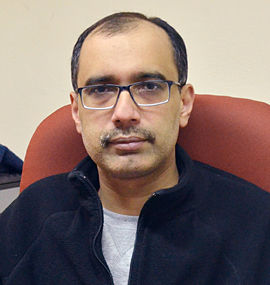
Tapan Kumar Gandhi
Tapan Kumar Gandhi
Professor
IIT Delhi
Tanaya Guha
Tanaya Guha
Professor
University of Glasgow
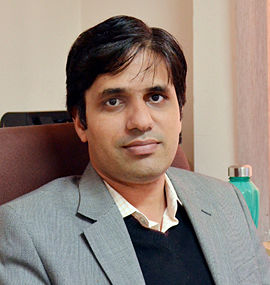
Sandeep Kumar
Sandeep Kumar
Associate Professor
IIT Delhi
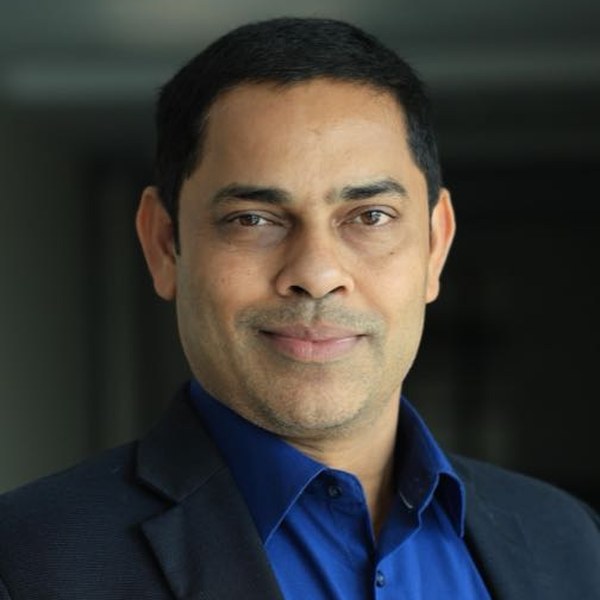
Prathosh A P
Prathosh A P
Assistant Professor, IISc Bengaluru
Co-Founder & Head of AI, LatentForce.ai
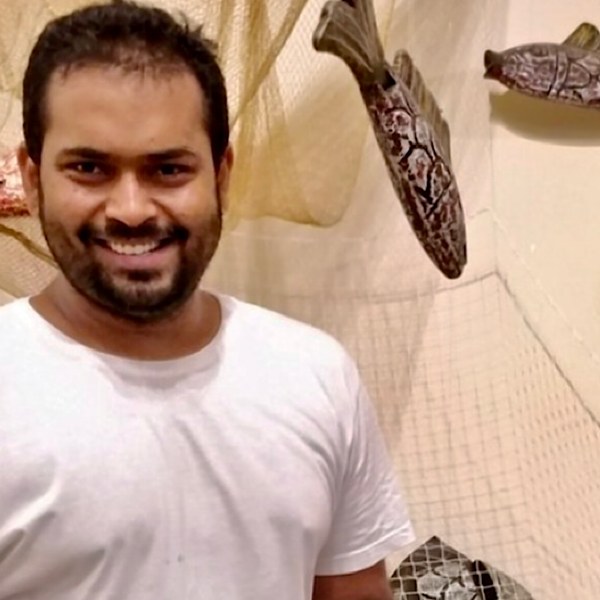
Raj Gohil
Raj Gohil
Senior Research Engineer
Sony Research India
Pranjali Kokhare
Pranjali Kokhare
Senior Software Engineer
Roblox, California, USA

Course Team

Dr. Deepali Kushwaha
Course Tutor
IIT Kanpur
Nikhil Misra
Nikhil Misra
Course Operations
IIT Kanpur

Course Projects

Sample hands-on projects you'll build during the course, along with many more exciting challenges in Applied Machine Learning and Agentic AI

😊
Facial Expression Recognition
Classify grayscale images of human faces into one of seven emotional categories: Angry, Disgust, Fear, Happy, Sad, Surprise, or Neutral. This is relevant for applications in human-computer interaction, mental health monitoring, and automated feedback systems.
🫁
Lung Cancer Detection
Detect and classify lung cancer types based on CT scan images into four categories: adenocarcinoma, large cell carcinoma, squamous cell carcinoma, and normal (non-cancerous) lung tissue. This supports early cancer detection and treatment planning.
🌍
Land Use Classification
Classify land use types into 21 categories based on aerial imagery, supporting research in urban planning, environmental monitoring, and resource management. The dataset includes categories such as agricultural, forest, freeway, river, and tennis court, among others.
🎤
Speech Emotion Recognition
Recognize emotions from speech audio files by analyzing vocal characteristics and patterns. This is useful in virtual assistants, emotion-aware systems, and therapeutic applications.
🎵
Music Genre Classification
Classify audio files into one of 10 music genres based on their audio features. This supports personalized music recommendations and content categorization.
🏗️
Concrete Compressive Strength Prediction
Predict concrete compressive strength using 8 input features related to mixture components and curing conditions. This is crucial for civil engineering applications, ensuring the safe and optimal use of materials in construction.
📚
Book Recommendation System
Analyze user preferences and book characteristics to recommend relevant and engaging books. This system aims to enhance user experience.
💼
Company Bankruptcy Prediction
Predict company bankruptcy using multiple business features, where bankruptcy is defined based on business regulations. This aids in financial risk assessment and economic stability analysis.
🧬
Yeast Protein Localization Sites Clustering
Cluster proteins into groups based on their attributes to identify localization patterns within cells. This task is essential for understanding protein functions and cellular organization.
📱
SMS Spam Detection
Classify SMS messages as either spam (unwanted) or ham (legitimate). This ensures efficient spam filtering and user convenience.
💭
Sentiment Analysis
Analyze movie reviews to classify their sentiment as either positive or negative. This assists in opinion mining and decision-making for consumer insights and market analysis.
🚀
And Many More Projects
Explore additional hands-on projects covering advanced topics like computer vision, natural language processing, time series analysis, and real-world industry applications. Each project is designed to build practical skills and portfolio-worthy experience.

What Our Participants Say

Hear from our past participants about their learning experience

Dr. Aakanksha Bedi
Dr. Aakanksha Bedi
Assistant Professor, Computer Science & Engineering
Tula's University, Dehradun
★★★★★

This course helped me build a strong foundation in data science, statistical analysis, and emerging AI and machine learning technologies. The curriculum was thoughtfully designed, complemented by regular doubt-clearing sessions and insightful guest lectures. One of its greatest strengths was the well-structured Google Colab notebooks for every module, which significantly enhanced practical learning. The capstone project notebooks provided excellent exposure to solving real-world problems using data-driven approaches. The dedication, guidance, and continuous support from the professors, teaching assistants, and tutors were truly commendable, which actually motivated me to stay focused, consistent, and confident throughout the learning journey while strengthening analytical problem-solving skills.

About Dr. Aakanksha Bedi

Dr. Aakanksha Bedi is an Assistant Professor in the Department of Computer Science & Engineering at Tula's University, Dehradun, Uttarakhand. She is an emerging technology enthusiast with research interests in Artificial Intelligence, Blockchain, Smart Grid, Energy Trading and Cybersecurity. Her work focuses on developing secure, intelligent, and innovative solutions to address real-world technological challenges.

Sourav Das Biswas
Sourav Das Biswas
Senior FastTrack Solution Architect
Microsoft
★★★★★

This course is one of the most well-rounded programs I have attended on Data Science and Generative AI. It combines strong conceptual learning with practical, hands-on implementation, making every topic immediately applicable. I particularly appreciated the structured approach, covering everything from exploratory data analysis (EDA) to model development and performance evaluation. The guest lectures offered valuable industry and academic perspectives, and the faculty's willingness to include emerging topics like Agentic AI made the course even more relevant. I highly recommend this course to anyone looking to build practical expertise in Data Science, Machine Learning, and Generative AI.

About Sourav Das Biswas

Sourav Das Biswas is a Senior FastTrack Solution Architect at Microsoft, where he works on the Dynamics 365 Customer Engagement (CE) product engineering team. He specialises in architecting enterprise-scale AI solutions, including Agentic AI, Copilot, Retrieval-Augmented Generation (RAG), and intelligent automation using Azure AI Foundry and Copilot Studio. With over 20 years of experience in enterprise software and solution architecture, Sourav is passionate about bridging business challenges with practical AI solutions and helping organisations accelerate AI adoption through scalable, production-ready architectures.

Course Fee Structure

Third cohort begins 1st December 2026. Early Bird closes on 30th September 2026, and the first 25 registrations receive a further 10% off. The fee rises at each stage after that.

Stage 1 · Open now
Early Bird
Until 30 September 2026
From ₹19,600
Lowest fee
Stage 2 · From 1 Oct
Regular
Opens when Early Bird closes
From ₹25,600
₹6,000 more
Stage 3 · Final
Late
Closes when the cohort fills
From ₹33,600
₹14,000 more
Early Bird closes in
--Days
:
--Hours
:
--Minutes
:
--Seconds
and the extra 10% ends once the 25th seat is taken
Discounted seats remaining
25/25
Updated regularly
Category
First 25 seats Extra 10% off
Early Bird Until 30 Sept
Regular From 1 Oct
Late Final window
Non IITK Students
₹20,815 ₹17,640 + 18% GST
₹23,128 ₹19,600 + 18% GST
₹30,208 ₹25,600 + 18% GST
₹39,648 ₹33,600 + 18% GST
Non IITK Faculty
₹29,311 ₹24,840 + 18% GST
₹32,568 ₹27,600 + 18% GST
₹42,008 ₹35,600 + 18% GST
₹54,988 ₹46,600 + 18% GST
Personnel from Industries / R&D Organizations
₹29,311 ₹24,840 + 18% GST
₹32,568 ₹27,600 + 18% GST
₹42,008 ₹35,600 + 18% GST
₹54,988 ₹46,600 + 18% GST
IITK Faculty
₹24,840 GST exempt
₹27,600 GST exempt
₹35,600 GST exempt
₹46,600 GST exempt
IITK Students
₹17,640 GST exempt
₹19,600 GST exempt
₹25,600 GST exempt
₹33,600 GST exempt
International Participant
USD 405 + GST if applicable
USD 450 + GST if applicable
USD 600 + GST if applicable
USD 800 + GST if applicable
First 25 seats receive 10% off the course fee, with 18% GST applied to the discounted amount. The bonus ends once the 25th seat is taken. IITK faculty and students are GST exempt. Secure this fee →
📅
Course Duration: 1st December 2026 – 19th January 2027 (7-Week Intensive Programme)
🐦
First 25 seats: the first 25 registrations in the Early Bird window receive an additional 10% off, applied to every category
🎓
IITK Students/Faculty: Special rates available for current IIT Kanpur students and faculty, exempt from GST
🌍
International Participants: USD pricing, with GST added where applicable
🏦
Course Account No.: IITK/OOA/2026-27/049. Quote this reference on every payment

Note: The fee paid upon completion of registration is non-refundable. However, in exceptional cases, fees may be refundable as per the Refund & Cancellation Policy.

Registration Covers the Following:

Comprehensive learning experience with industry-leading resources and support

🎥

Video Lectures & Notebooks

Access to all video lectures and comprehensive learning notebooks

💻

Hands-on Sessions

End-to-end machine learning implementations with practical coding

🏆

IIT Kanpur Course Certificate

Participation certificate from IIT Kanpur upon course completion

👨‍🏫

Expert Guest Lectures

Distinguished lectures by industry and academic speakers

📜

Project Certificate

Awarded by the instructor upon successful project completion

🤝

Python Mentoring

Project mentoring and coding assistance by IIT Kanpur Tutors

🎁

Registration Kit

Complete kit for all participants by postal mail

🎒

IIT Kanpur Merchandise

Exclusive IIT Kanpur merchandise/goodies for all participants by postal mail

Registration Process

Follow these 3 simple steps to complete your registration for this course

1

Note Course Details & Make Payment

Record the course information and determine your category and fees from the pricing table above.

2

Follow Payment Instructions

Download and follow the detailed payment instructions provided in the PDF document

3

Complete Registration Form

After successful payment, download your payment receipt and fill out the registration form

Note: After completing all three steps, you will receive a confirmation email within 7 working days confirming your registration for the course.

Frequently Asked Questions

Have Questions?

We've compiled a comprehensive list of frequently asked questions to help you understand our course better.

Click the button below to view all FAQs in a detailed document.

Contact Information

📞
📍
Address:
ACES 204 Dept. of Electrical Engg.
IIT Kanpur, India