Giving India a New Model for Healthcare
Gangwal School of Medical Sciences and Technology
The Gangwal School of Medical Sciences and Technology brings medicine, engineering and science together to advance affordable, clinically grounded healthcare innovation.
The Gangwal School of Medical Sciences and Technology represents one of IIT Kanpur’s boldest institutional ideas: bringing medicine, engineering and science together within one connected academic and clinical ecosystem.
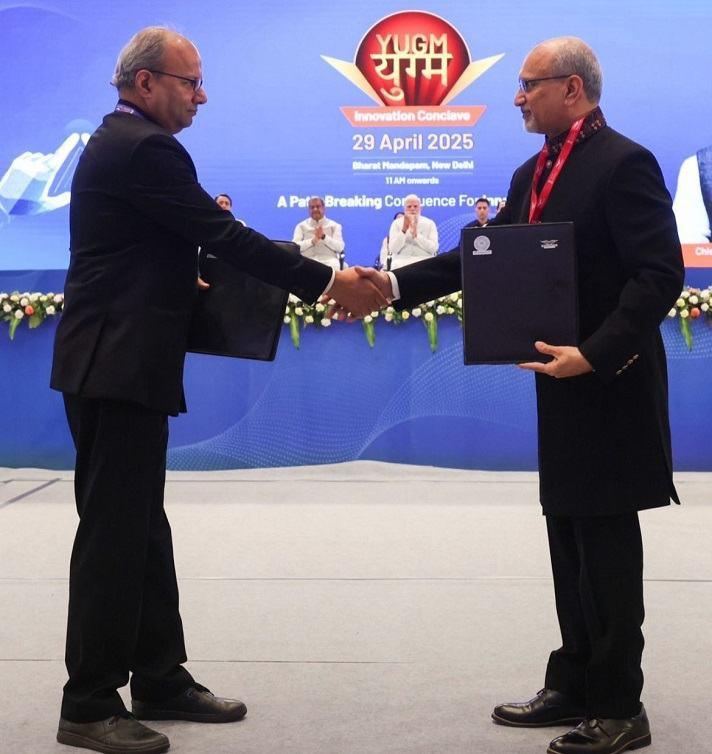
The School was shaped through the collective commitment of distinguished alumnus Rakesh Gangwal and Founder’s Circle members Muktesh Pant, Dr. Dev Joneja, Hemant Jalan and Anil Bansal, whose early support helped transform an ambitious vision into a new institution for healthcare education, research and innovation.
Healthcare Problems Do Not Belong to One Discipline
The most difficult healthcare challenges rarely fit within a single field.
A clinician may recognise an unmet need. An engineer may know how to improve a device. A scientist may understand the underlying biological mechanism, while a data specialist may identify patterns that support diagnosis or treatment. Healthcare advances most powerfully when these perspectives shape the same solution from the beginning.
GSMST was created around this convergence. Its ambition is not simply to establish a conventional medical school, but to build an environment where medical education, patient care, engineering and research operate as one connected ecosystem.


An Institution Founded Through Collective Belief
Transformative institutions often begin with people willing to support an idea before its full scale is visible.
Muktesh Pant, Dr. Dev Joneja, Hemant Jalan and Anil Bansal are recognised as members of the School’s Founder’s Circle. Their early contributions created confidence and momentum around IIT Kanpur’s vision.
In April 2022, Rakesh Gangwal, a 1975 Mechanical Engineering alumnus, formalised a landmark ₹100 crore contribution towards establishing the School. It was subsequently named in recognition of his catalytic support.
Together, these founding donors helped move GSMST from aspiration towards institution.
Sustainability Is a Systems Challenge
Climate change affects far more than the environment. Extreme heat influences health and productivity. Water scarcity affects agriculture, industry and migration. Cleaner energy reshapes infrastructure, employment and national competitiveness.
No single technology or discipline can address these challenges alone. Solar energy also requires storage, grid integration and financing. Sustainable cities depend on mobility, waste management, buildings, policy and citizen participation working together.
The Kotak School was created around this understanding. Launched in December 2023, it is positioned as India’s first fully integrated interdisciplinary school dedicated to sustainability.
Beginning With the Clinical Need
Too much healthcare innovation begins with a technology searching for an application.
GSMST creates the possibility of beginning instead with the patient, clinician or caregiver: identifying what makes an existing solution inadequate, where cost restricts access and which problems technology has not yet addressed.
IIT Kanpur’s capabilities in artificial intelligence, robotics, imaging, computation, materials science, sensors and medical devices can then be directed towards clearly understood clinical needs.
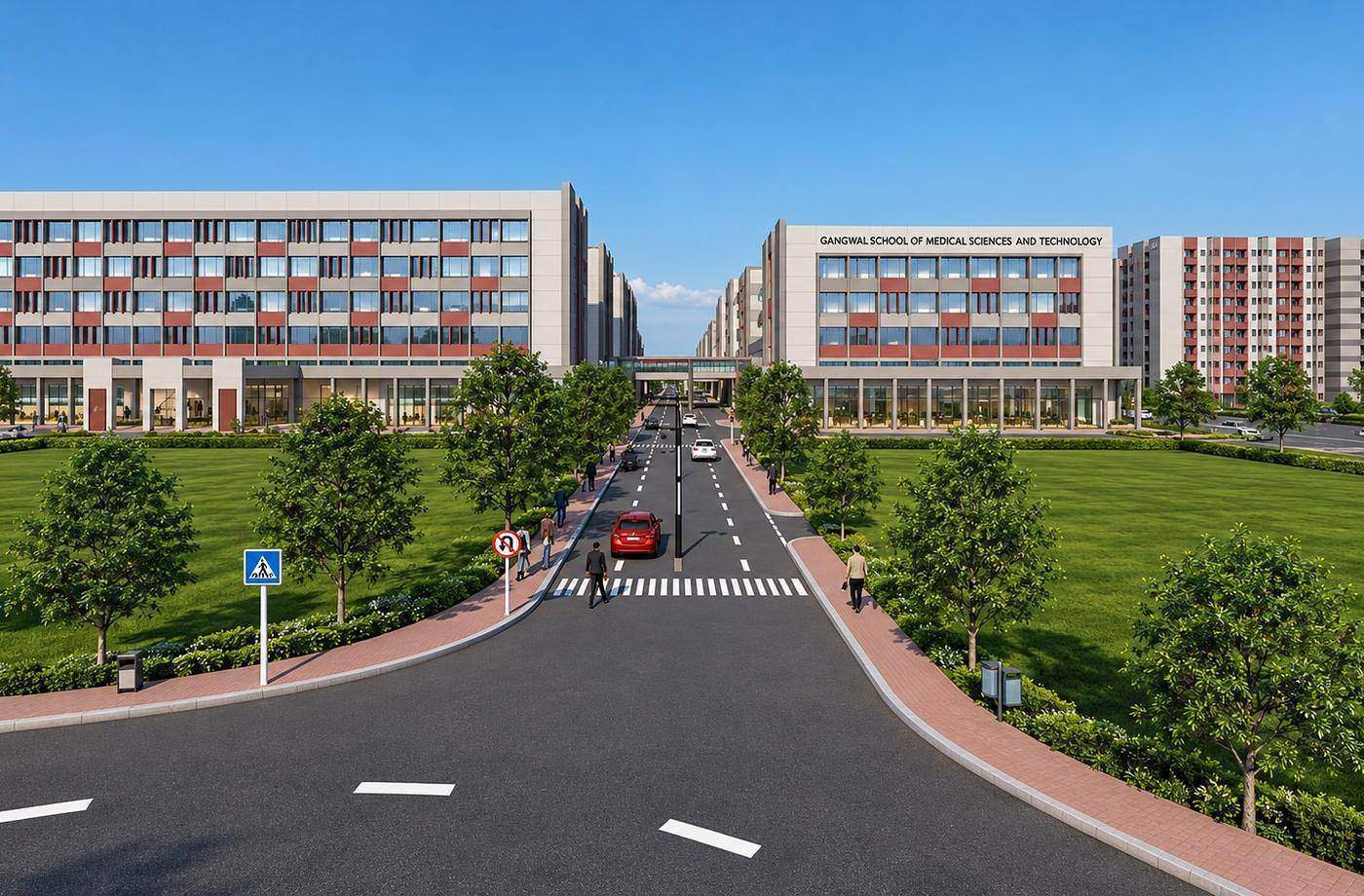
The adjoining super-specialty hospital will provide the clinical environment required to connect research with patients and medical practice.
Building for Affordable Healthcare Innovation
India requires technologies that are not only advanced, but also usable, scalable and affordable.
GSMST is intended to develop solutions shaped by India’s healthcare realities. Cost, accessibility, maintainability and clinical usefulness will be treated as essential design requirements rather than later considerations.
A New Institutional Idea for India
The School’s founding contributions created the platform from which a larger ecosystem can grow—bringing together clinicians, engineers, scientists, students, industry and public institutions.
Its success will be measured not only by students trained or research produced, but by whether disciplines begin solving problems together and whether ideas move responsibly from laboratories towards patient care.
The founding supporters helped turn a bold idea into an institution. What emerges from it may shape a much larger future for healthcare in India.