
Distinguished Speakers
Plenary Lecture
Date: 14 March 2026 | Time: 10:20 AM | Venue: L-18
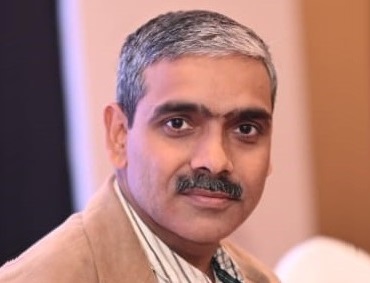
Dr. Siddhartha Misra
Chief Process Research, TATA STEEL
Jamshedpur, Jharkhand, India
LinkedIn: Click here
Biosketch
Dr. Siddhartha Misra holds a B. Tech. in Materials and Metallurgical Engineering from IIT Kanpur and a MS and Ph D in Materials Science and Engineering from Carnegie Mellon University, Pittsburgh. With over 20 years of professional experience, he is currently working as Chief Process Research at TATA Steel R&D in Jamshedpur. There he is responsible for steering research initiatives in the various facets of iron and steelmaking process. This include utilization of low grade raw materials, advances in coal and coke making and research efforts in the area of sustainability including steel decarbonization, and waste water treatment. His other significant research areas worth mentioning are valorization of steel plant waste. He has also worked in the area of product development, looking at steel grade design, innovative coatings of steel and metal joining and welding. Before moving to R&D, he has worked in various roles focusing on Plant Operations, Quality Assurance and Process Optimization. Prior to shifting bases to India, Dr Misra worked at U. S. Steel Research & Technology Centre in Pittsburgh in the area of steelmaking. An author of over 33 technical papers and book chapters and 10 granted patents, he is the recipient of AIST's Charles H Herty Award, AIST's Hunt-Kelly Outstanding Paper Award and Indian Institute of Metal's Essar Gold Medal and O P Jindal Gold Medal to name a few.
Keynote Lecture I
Date: 15 March 2026 | Time: 9:20 AM | Venue: L-18
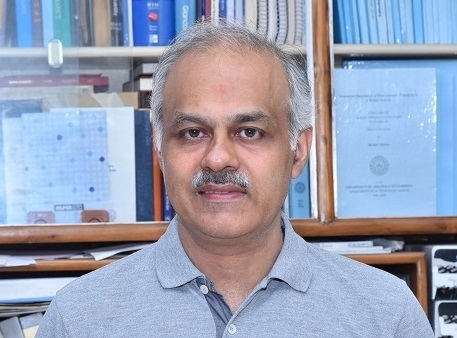
Prof. Sanjay Mittal
Professor, Aerospace Engieering, Indian Institute of Technology Kanpur, India
Website: Click here
Title of Talk: Sustainable Space Exploration: Air Intakes of Reusable Launch Vehicles
Abstract
The talk begins with the need for space exploration and the players in the game. Hybrid propulsion systems offer sustainable options for space missions. One such design is to employ a scramjet engine at a certain stage in the flight. Air intakes form a vital component of an airbreathing engine of a aerospace vehicle. We investigate the performance of a mixed-compression intake using stabilized finite element methods implemented on parallel computing platforms. In the sub-critical regime, the normal shock is pushed in the convergent part of the intake leading to the "buzz" instability and "unstart". It adversely affects the mass flow entering the engine and may lead to combustion instability, engine surge and flame out. Little buzz arises due to shear layer instabilities in the intake. Big buzz occurs due to pressure pulses from the subsonic portion of the intake. Flow control techniques such as boundary layer bleed to increase the operational boundaries of these engines are explored. Similar instabilities in intakes of high speed single-engine aircrafts are discussed.
Biosketch
Prof. Sanjay Mittal received his undergraduate education in Aeronautical Engineering at the Indian Institute of Technology Kanpur, India. He went to the University of Minnesota, Minneapolis, USA for his graduate education. Presently, he is a Professor in the Department of Aerospace Engineering at Indian Institute of Technology Kanpur, India. His research interests include air-intakes, fluid-structure interactions, flow-induced vibration, bluff body flows, aerodynamic shape optimization, shock-boundary layer interactions, high performance computing, modeling of traffic flow, sports aerodynamics and low speed wind-tunnel testing. He is passionate about teaching, and received the Excellence-in- Teaching Award and the Gopal Das Bhandari Distinguished Teacher Award from his Institute. He is a Fellow of the Indian National Academy of Engineering, Indian National Science Academy, Indian Academy of Sciences and National Academy of Sciences. He received the Shanti Swarup Bhatnagar Prize in Engineering Sciences in 2006.
Keynote Lecture II
Date: 15 March 2026 | Time: 2:15 PM | Venue: L-18
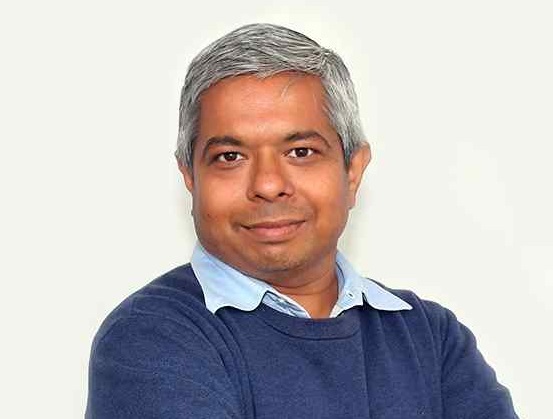
Prof. Vivek Verma
Professor, Materials Science and Engineering, Indian Institute of Technology Kanpur, India
Website: Click here
Title of Talk: Agar and Cellulose based Dressings for Faster Blood Clotting
Abstract
Uncontrolled bleeding from traumatic events such as gunshot wounds, traffic accidents, or war casualties is still one of the primary causes of mortality worldwide. In such an emergency, fast and effective bleeding management is vital to save patient's life. To address this, we have developed an agar-based hemostatic wound cryogels with oxidized cellulose and polydopamine to rapidly arrest bleeding while promoting initial wound stabilization and healing. The cryogel were fabricated using biocompatible and biodegradable polymers offering a porous architecture to support rapid blood absorption, platelet aggregation, and localized coagulation. With a 4200% swelling degree, a quicker clotting time (within 60 s), and a 4.77 kPa compressive strength, the developed hemostatic sponges showed superabsorbent hemostatic activity. In in vitro tests, the cryogels demonstrated outstanding cytocompatibility and hemocompatibility. The developed hemostatic materials exhibited exceptional in vivo hemostatic efficacy in in vivo models attaining blood clotting times of 64 s and 35 s in rat tail amputation and liver puncture models respectively. These findings suggest that the developed hemostatic materials hold strong potential for use in emergency trauma care and battlefield applications, offering a rapid, effective, and scalable solution for hemorrhage control.
Biosketch
Dr. Vivek Verma is a faculty of Materials Science and Engineering (MSE) department at IIT Kanpur. He did his B. Tech. in Metallurgical Engineering from IIT Madras and PhD from Pennsylvania State University. His research interests include developing materials for sustainable packaging and wound dressing. His group focusses on physical and chemical modification of polymers. Development of seaweed-based packaging solutions for FMCG products, dressings for chronic wounds, and hemostatic materials for faster blood clotting are few of his contributions. He has filed several patents on packaging and wound care materials. He has been awarded STE Green Excellence Award, Shri Ram Arora Award and American Academy of Mechanics, Founders' Prize and Grant.