
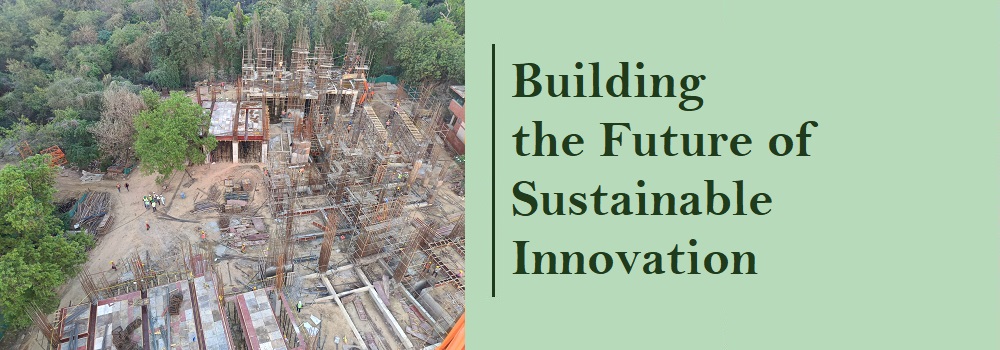
The proposed development follows LEED-aligned green building principles, integrating site planning, material selection, and energy-efficient systems to enable low-impact, high-performance infrastructure.
- Greenfield development with provisions for habitat protection and restoration
- Proximity to public transit (metro within 800 m)
- Short- and long-term bicycle parking infrastructure
- Dedicated electric vehicle (EV) parking
- Use of sustainable materials including bamboo, hemcrete, mycelium-based composites, and agricultural fibre materials (e.g., adobe, engineered wood)
- High-performance insulation systems: cavity walls, air curtains, DGU (double-glazed units), and air-lock entry systems
- HVAC systems using environment-friendly refrigerants
- Materials with Environmental Product Declarations (EPDs), including low-carbon glass, aluminium, zinc, mineral fibre ceiling, vitrified tiles, and calcium silicate
- Segregation systems for safe handling of toxic and non-toxic waste streams
- Landscape & Material Integration
- The design emphasises continuity between existing and proposed built environments through the use of natural materials and landscape-sensitive planning:
- Retention of existing Silver Oak trees with integrated activity zones
- Use of bamboo in built and landscape elements
- Central open plaza with eco-friendly materials
- Pedestrian bridges across water features
- Outdoor meeting spaces, including bamboo gazebos
- Laboratory Area: 3540 sqm (Research Labs: 25)
- Office Area: 3003 sqm
- Faculty Offices: 60
- Staff Offices: 8
- PhD Scholars: 145
- Postdoctoral Researchers: 65
- REO Cabins: 15
- HoD Offices: 6
- Dean Office: 1
- Interactive Area: 935 sqm
- Seminar Halls: 3
- Conference Rooms: 3
- Lounge and reception spaces
- Service Area: 2917 sqm