The group of Professor Gadre is actively engaged in research in Quantum Chemistry. The research areas are as follows (with those of active current interest are highlighted):
• Electron density in momentum space
• Information Entropy in Quantum Chemistry
• Rigorous inequalities in Quantum Chemistry
• Molecular Electrostatic Potential (MESP) and its Applications to Chemistry
• Development of Parallel ab initio Codes
• Molecular Clusters
The use of the scalar field of molecular electrostatic potential (MESP) offers understanding of molecular reactivity and binding patterns for weak intermolecular interactions. Some basic theorems on topographical characteristics of MESP were proven in the group. This was followed by application of MESP and its critical points (CP) to a variety of chemical phenomena such as π facial selectivity, Hammett constants, Markovnikov's reaction, Clar's theory of aromatic sextets etc. Recently, MESP CPs have been employed for defining molecular recognition and lone pairs. Further, the lock-and-key features of MESP have been used for building up of large molecular clusters.
Development of parallel computing programs in quantum chemistry has been a long term interest of the group. The group has had long association with the Centre for Development of Advanced Computing (C-DAC) Pune.
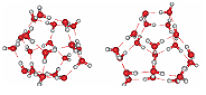
The latest software development includes Molecular tailoring approach (MTA) for ab initio treatment of large molecules at high level of theory, which is difficult to carry out by employing standard packages. The current version of MTA enables electronic energy estimation, geometry optimization, evaluation of energy gradients and Hessian etc. A recent development includes a Molecular Cluster Builder for generating structures of large clusters from smaller ones by adding a monomer.
A related parallel package for many body interaction energy analysis of molecular clusters (MBAC) allows systematic analysis of clusters. Earlier efforts include development of parallel quantum chemistry codes INDMOL, INDPROP and electrostatics based model (EPIC) to study weak intermolecular interactions. Members of the group with computer science background have developed excellent visualization softwares (UNIVIS) and MeTA Studio. MeTA Studio also facilitates fragmentation of molecules needed for running MTA jobs.
 New Office Automation (Pingala)