


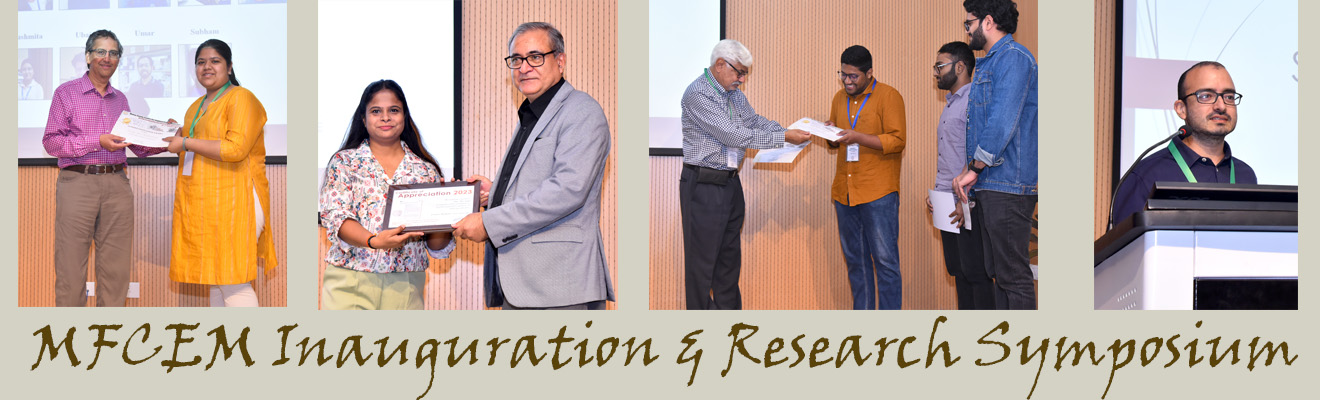
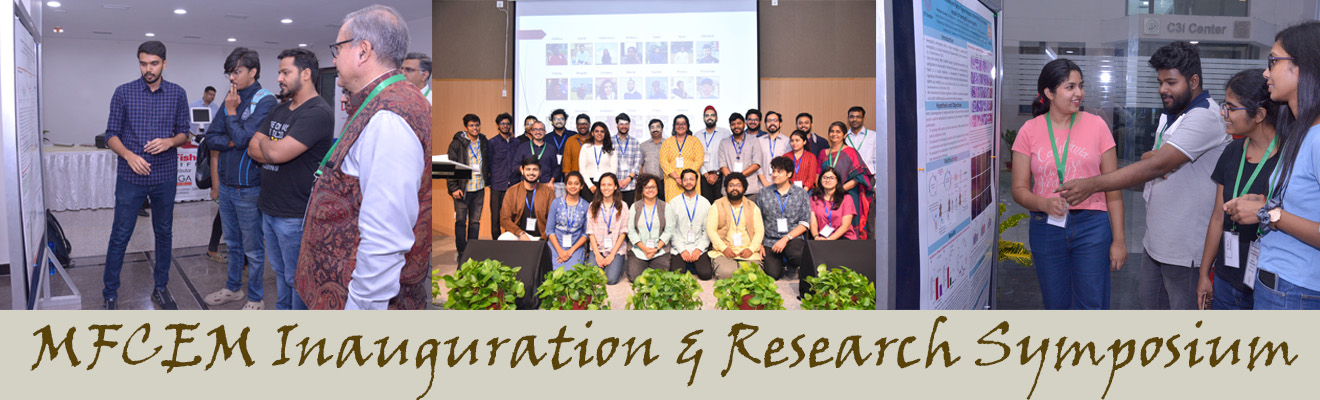
MFCEM@IITK
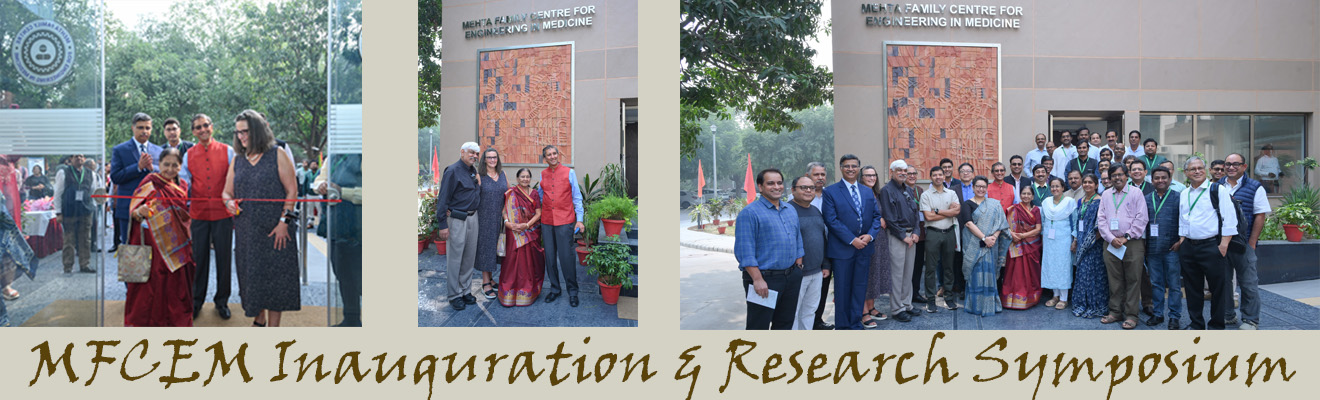
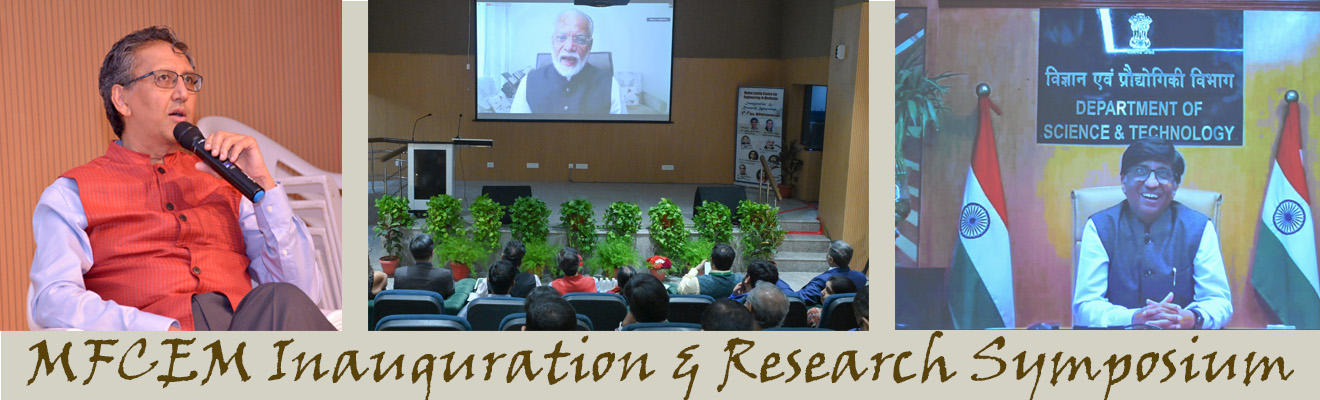
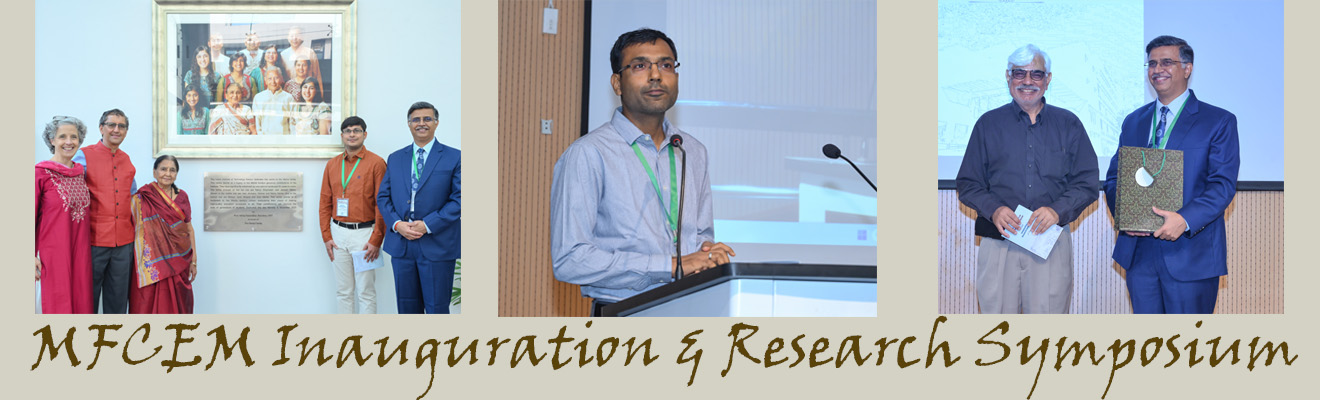
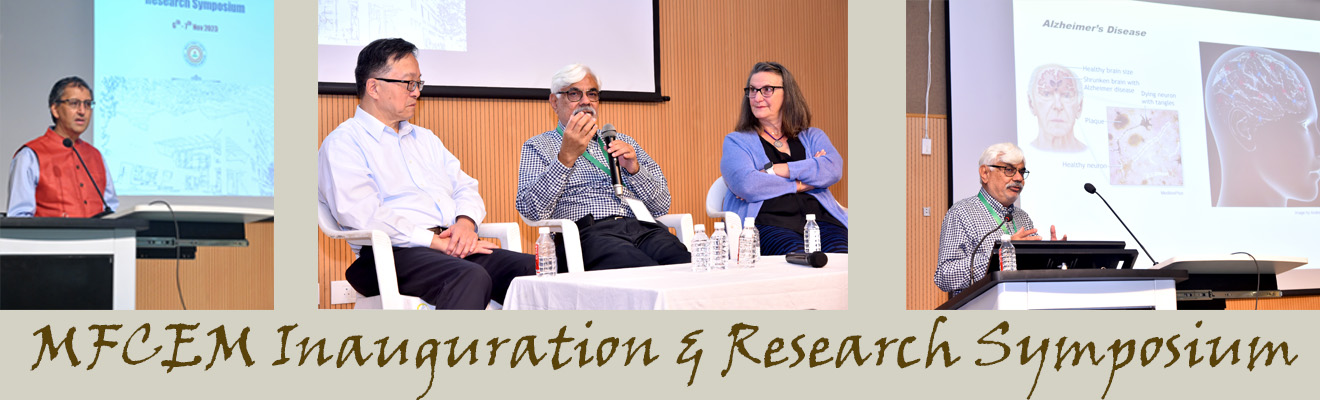
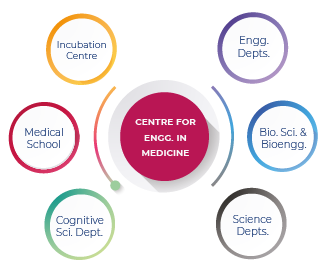 The next generation of healthcare innovation lies at the interface of multiple disciplines involving engineering and medicine. The Mehta Family Centre for Engineering in Medicine at IIT Kanpur strives to act as a catalyst for biomedical researchers and engineers to work together on challenging medical problems.

Rahul Mehta
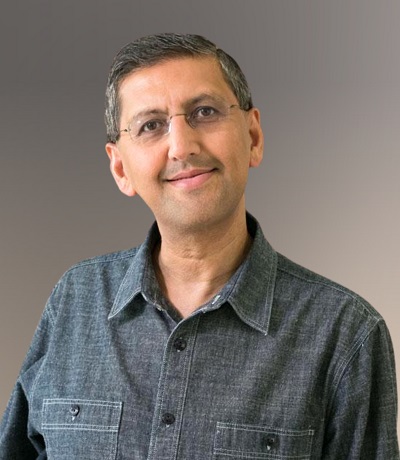
Originally from Mumbai, India, Rahul Mehta is the Founder and Chairman of the Board of the Bhupat & Jyoti Mehta Family Foundation. He established the Foundation in 1996 after successfully exiting his first startup and has since dedicated himself to advancing higher education and building research ecosystems around the world.
Rahul's entrepreneurial journey began at the University of Houston, where a class project sparked his first venture. At 23, with just ten dollars to his name, he launched a company that solved critical challenges for multinational corporations. He went on to build and sell four companies, all self-funded, to Platinum Technology, HP, Veritas, and Brocade, before stepping away from the for-profit world in 2006 to focus entirely on philanthropy.
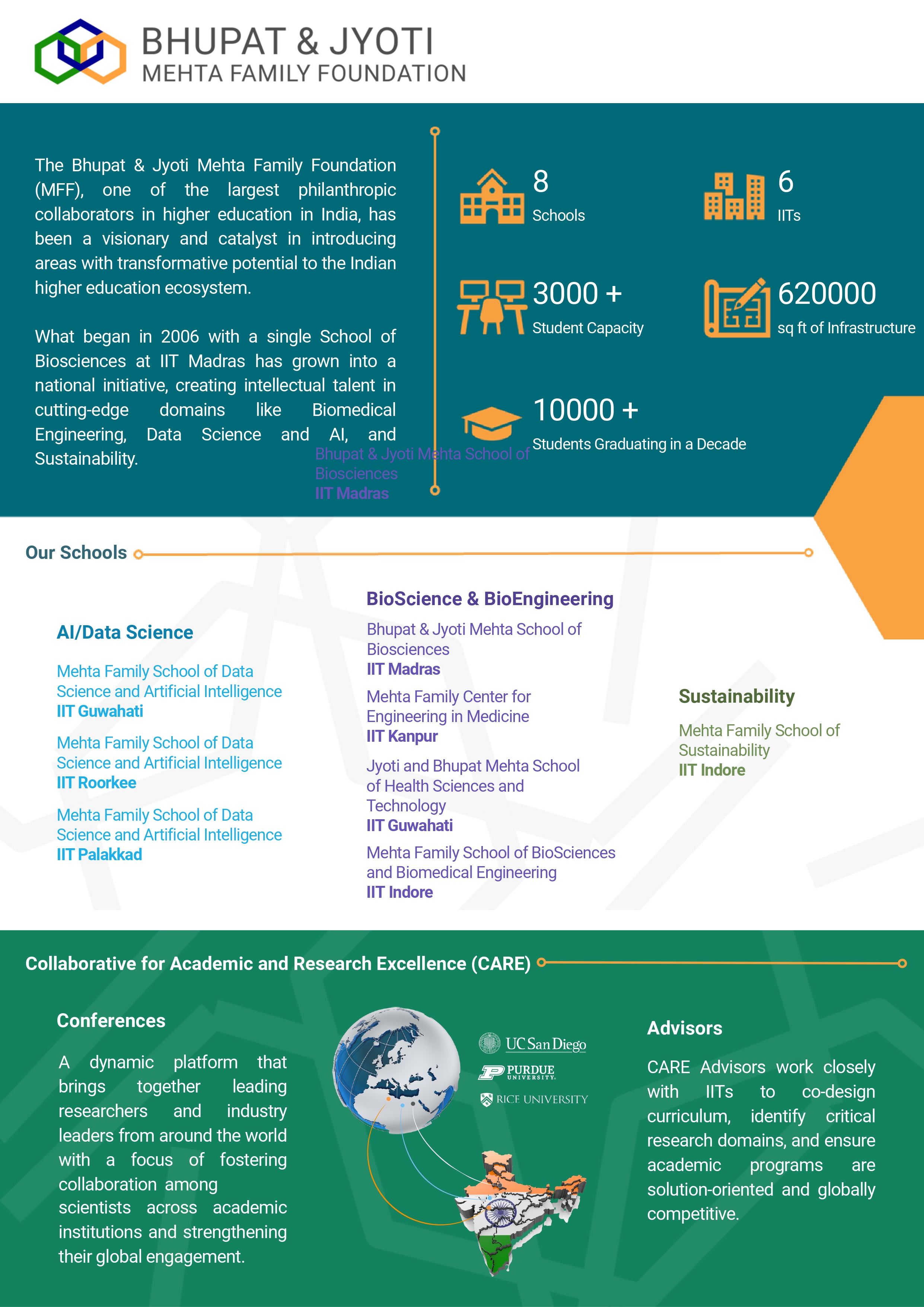
Under Rahul's leadership, the Mehta Family Foundation is guided by the belief that investment in science drives economic prosperity. This vision has led to the establishment of eight schools across six prestigious Indian Institutes of Technology (IIT) in India, spanning bioscience and bioengineering, data science and artificial intelligence, and sustainability. Together, these programs have created a capacity for more than 3,000 students across 620,000 square feet of infrastructure. The Foundation has also funded more than 100 nonprofits/NGOs, created the Mehta Rice Engineering Scholarship program with Rice University, and supported numerous initiatives at the University of Houston.
Rahul has served on the boards of several Houston-area nonprofits, including DePelchin Children's Center, Ronald McDonald House, Bo's Place, American Leadership Forum, Krist Samaritan Center, and Houston Methodist Hospital. A lifelong learner, he is a 2021 Stanford Distinguished Careers Institute Fellow and a 2024 Oxford Next Horizons Scholar. He has completed executive education programs at Stanford, Wharton, Harvard, the University of Chicago, and Rice. An avid traveler who has explored every continent, Rahul remains devoted to the development of humanity and endeavors that his lifelong commitment will leave a meaningful legacy in the lives of others.
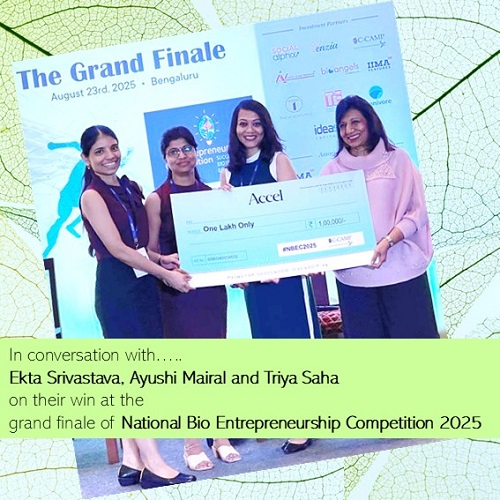
In conversation with....
Ekta Srivastava, Ayushi Mairal and Triya Saha
on their win at the grand finale of National Bio Entrepreneurship Competition 2025
MFCEM: Ekta, Ayushi and Triya a big congratulations to you and your mentor Prof. Ashok Kumar. It must feel good to come out as winners from around 750 entries. Could you briefly tell us about the innovation/technology for which you were recognized. How do you intend to take the innovation forward from here?
Ekta/ Ayushi/Triya: Thank you so much! We feel truly honoured and humbled to be selected from among 750 outstanding entries. We received this award for our entrepreneurship venture Regenacure, which is focused on providing tissue engineering-based solutions for spinal cord injury. We are extremely grateful to our mentor Prof. Ashok Kumar who motivated us to participate in the competition and under his guidance, we emerged as winner team.
Our core innovation, called Electrogel, is an aligned, reduced graphene oxide-functionalized cryogel scaffold. It is designed to mimic the native nerve architecture and conduct bioelectric signals, which are critical for neural regeneration. Electrogel supports axonal guidance and reconnection in spinal cord injuries. Importantly, when paired with intraoperative electrical stimulation, it has shown promising results in preclinical models, facilitating neural growth and enabling functional motor recovery in both compression and transection injury models in rats. Going forward, we are now in phase of translating this innovation into a clinically viable therapy. Our immediate focus is on scaling up manufacturing, conducting advanced preclinical validations. Ultimately, our vision is to bridge the gap between laboratory innovation and patient care by offering a first-in-class regenerative solution for spinal cord injury patients
MFCEM: Each of you are pursuing a distinct research topic for your individual Ph.D. degrees how did you converge as a team to pitch a common idea? How did you work out a meeting point?
Ekta/ Ayushi/Triya: Each of us is pursuing a distinct research problem for our Ph.D. degrees, Ekta’s Ph.D. work focuses on spinal cord injury, Ayushi focuses on inflammatory bowel disease regimens and Triya’s work include therapeutic solutions for chronic liver disease. At first glance, these areas may look very different, but the common thread is our shared expertise in biomaterial-based therapeutics. This became our meeting point. We as a team realized that by integrating our platforms, we could offer novel, targeted, and scientifically validated solutions for some of the most challenging chronic diseases.
Together, we developed an integrated innovation pipeline:
- Electrogel for spinal cord injury repair using a bioelectric and structurally aligned cryogel scaffold
- TofaMucoHeal for IBD using a mucoadhesive, thermo-responsive drug delivery hydrogel
- BioNano Spray for liver regeneration through photo-crosslinkable, exosome-loaded hydrogels
All three technologies are supported by strong scientific data, patents, and preclinical validation and supported by government funding agency ICMR. However, while building our venture for this National BioEntreprenurship Competition, we had to identify a single lead product to take forward first. We chose Electrogel, because it has CTRI registration and ethical clearance for human trials, which positions it closest to translation and clinical impact. The other two platforms are a strong part of our pipeline and long-term vision for Regenacure, being in the process of receiving the approvals. Starting with Electrogel allows us to establish a clinical footprint and demonstrate real-world patient outcomes and paves the way for the liver and IBD solutions.
MFCEM: How does this recognition help you? Does it make transition from a Bioengineer to a BioEntrepreneur a little easier? What are your thoughts on the current Bioentrepreneur ecosystem in India, would you encourage other researchers to explore translation potential of their research findings?
Ekta/ Ayushi/Triya: This recognition is a tremendous encouragement as it validates the translational potential of our work and gives us visibility beyond academia, which has always been Ashok sir’s vision. It certainly makes the transition from Bioengineer to BioEntrepreneur a little easier by opening doors to mentorship, networking, and investor connect opportunities that are critical for moving innovations from lab to clinic. The bioentrepreneurship ecosystem in India is steadily growing with strong support from several initiatives by Government of India, still challenges in long-term funding and regulatory pathways remain a bottle neck. We would definitely encourage fellow researchers to think beyond publications and explore the translational potential of their research as lab innovations can create a significant impact when transformed into patient-centered solutions.
MFCEM: Thank you Ekta, Ayushi and Triya for sharing your thoughts. Wishing you all the best for your future endeavors.
We thank MFCEM for the opportunity and motivating us with this gesture!
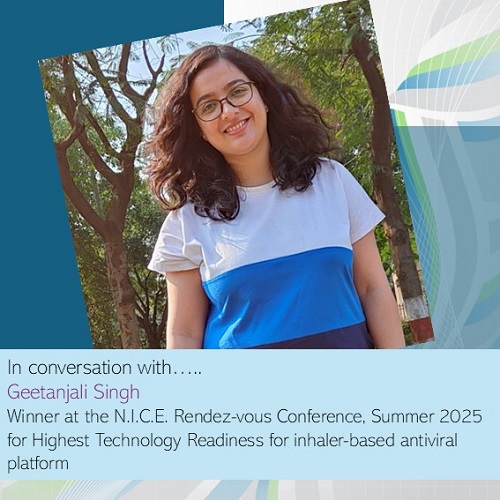
In conversation with....
Geetanjali Singh
Winner: Highest Technology Readiness Level N.I.C.E. Rendez-vous Conference, Summer 2025.
MFCEM: Hi Geetanjali, hearty congratulations to you and your mentors Profs. Sandeep Verma and Adam Mechler, on your win at the N.I.C.E. Rendez-vous Conference. Could you briefly tell us about this recognition and the innovation /technology for which you were recognized. How do you intend to take this technology forward from here?
Geetanjali Singh: Thank you very much for the kind words and encouragement!
This recognition was for our work on developing an inhaler-based antiviral platform aimed at providing an early line of defense against respiratory viral infections. During the COVID-19 pandemic, working with live virus posed significant biosafety challenges. To overcome this, we collaborated with researchers at NUS Singapore to create virus-like particles (VLPs) — non-infectious mimics of SARS-CoV-2 that retain its structural and surface properties.
Using Quartz Crystal Microbalance (QCM) and Dynamic Light Scattering (DLS), we studied how antimicrobial peptides (AMPs) such as Aurein 1.2 and Citropin 1.1 interact with these particles. The peptides showed strong and irreversible binding, suggesting their potential to block or neutralize the virus.
Building on this, we are now working toward translating this into a peptide-based inhaler therapy that can deliver these molecules directly to the lungs — with the goal of neutralizing the virus at its entry point. Our next steps involve optimizing the formulation for delivery efficiency and testing its efficacy in relevant biological models.
MFCEM: How do you and the team intend to take this technology forward from here?
Geetanjali Singh: Moving forward, we aim to translate this proof-of-concept into a deployable inhaler-based antiviral therapy. Each of our collaborating institutions brings unique strengths that will be crucial in advancing the technology.
At IIT Kanpur, we are focusing on peptide design, formulation, and biochemical characterization, leveraging our expertise in medicinal chemistry and molecular design to enhance the peptides’ stability and delivery efficiency. La Trobe University provides advanced biophysical and materials characterization facilities, which are essential for understanding peptide–membrane interactions and optimizing the delivery mechanism. Meanwhile, our collaborators at NUS Singapore continue to support the virus-like particle (VLP) platform, which allows us to test antiviral activity safely and accurately under controlled conditions.
Together, this tri-institutional collaboration enables a comprehensive pipeline — from molecular innovation to biophysical validation and translational development. Our next goal is to evaluate the optimized formulations in preclinical models and explore their potential as broad-spectrum, lung-targeted antiviral therapies.
MFCEM: I understand that you are a joint Ph.D. scholar between IIT Kanpur, India and La Trobe University, Melbourne. How has being part of two vibrant research ecosystems helped you with your research and innovation.
Geetanjali Singh: Being a joint Ph.D. scholar between IIT Kanpur and La Trobe University has been a transformative experience, both scientifically and personally. The two institutions offer complementary strengths that have greatly enriched my research and innovation journey.
At IIT Kanpur, the environment fosters interdisciplinary collaboration and problem-driven innovation, providing a strong foundation in molecular design and translational science. La Trobe University complements this with state-of-the-art biophysical and materials characterization facilities, and a culture that emphasizes translational and applied research. Working across both ecosystems has allowed me to connect fundamental chemistry with real-world biomedical applications.
I am deeply grateful to my supervisors, Prof. Sandeep Verma (IIT Kanpur) and Prof. Adam Mechler (La Trobe University), for their mentorship and for giving me the opportunity to work at this intersection of disciplines. Their vision and guidance have inspired our collaborative efforts toward developing technologies that could help us better prepare for the next pandemic.
MFCEM: Thank you Geetanjali for speaking to us and wishing you success in taking this technology forward.
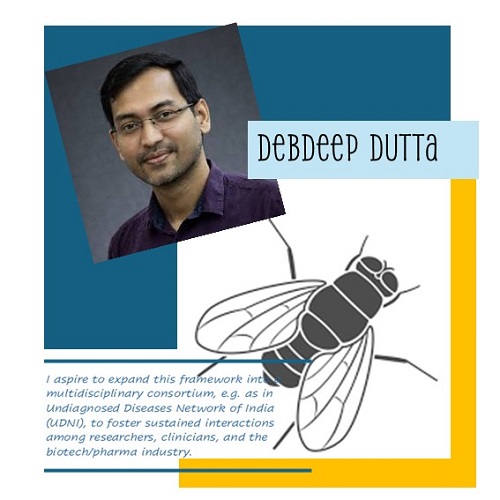
In conversation with....
Dr. Debdeep Dutta
Assistant Professor Department of Biological Sciences and Bioengineering and the Mehta Family Centre for Engineering in Medicine.
Research Interest: Genetics, Cell signaling, Mitochondria, Rare diseases, Neurological disorders
MFCEM: Hello Dr Dutta, welcome to IIT Kanpur, it is great to have you here. A major focus of your research program is to understand rare/undiagnosed genetic diseases using 'humanized' fruit flies as a model system —what drew you to take up this rather challenging area of research?
Dr. Debdeep Dutta: Thank you. My interest in genetic diseases began during my master’s program, where I majored in molecular and human genetics. During that time and later in my PhD, I learned how to use fruit flies (Drosophila melanogaster), the "queen of genetics", to uncover the intricacies of cellular and developmental biology. Subsequently, during my postdoctoral tenure at Baylor College of Medicine, I had the opportunity to integrate my training in both fly and human genetics to address one of the most pressing challenges in modern medicine: undiagnosed genetic diseases.
Globally, over 350 million people are affected by genetic disorders, with at least 70 million in India alone. Around 60% of these individuals remain undiagnosed for years, sometimes for their entire lives. While working with multiple patient families affected by these conditions, I witnessed their prolonged emotional, psychological, and financial sufferings that come from living in diagnostic uncertainty. A major challenge in diagnosing these cases is to confirm whether a suspected gene variant is truly disease-causing.
This is where ‘humanized’ fruit flies offer a quick and cost-effective solution. By engineering flies to carry patient-derived gene variants, we can test their functional impact, providing a timely diagnosis.
….Globally, over 350 million people are affected by genetic disorders, with at least 70 million in India alone. Around 60% of these individuals remain undiagnosed for years……..
From a scientific standpoint, this field is a goldmine for geneticists and biomedical researchers, as most of the rare/undiagnosed disease-causing genes are poorly characterized. Increasing evidence suggests that many of them are potentially linked to other common diseases. It is this combination of scientific curiosity and the potential to make a real difference in people’s lives that drew me to this challenging but rewarding area of research.
MFCEM: How do you hope to create a mark in the global and national research fraternity dedicated to tackling rare genetic disorders?
Dr. Debdeep Dutta: Collaboration is the key to solving the complex medical mysteries posed by rare genetic disorders. These complex conditions require the collective expertise of clinicians, medical geneticists, bioinformaticians, and model organism researchers. I look forward to building strong, interdisciplinary collaborations both nationally and globally to tackle these challenges together. Matchmaking platforms like ‘GeneMatcher’ and ‘ModelMatcher’ play a crucial role in connecting clinicians and researchers with complementary expertise and shared interests. I engage with these networks. In India, I have been in contact with clinicians who are experts in the field of rare genetic diseases and are working on unresolved cases. Hopefully, through collaboration and research innovation, I could make a meaningful contribution in the global and national rare disease research community.
MFCEM: The need to forge meaningful interdisciplinary collaborations—particularly in Biomedical sciences—among basic biologists, data scientists, clinicians, and the biotech/pharma industry has resulted in a tectonic shift in our approach to finding solutions to medical problems. How do you foresee building a diverse research team, could you share some of your long- and short-term research goals?
Dr. Debdeep Dutta: Advancing translational research, especially in the context of genetic diseases, requires the integration of expertise from diverse fields such as basic biology, clinical medicine, engineering, data science, and the biotech/pharma industry. I envision building a research team that brings together experts with complementary skills and shared commitment to solving medical challenges. Also, I am driven to mentor young researchers across disciplines and foster an inclusive research environment.
I aspire to expand this framework into a multidisciplinary consortium, e.g. as in Undiagnosed Diseases Network of India (UDNI), to foster sustained interactions among researchers, clinicians, and the biotech/pharma industry.
In the short term, my goal is to establish a strong collaborative network with Indian clinicians and medical geneticists to access patient data and biological samples. At the same time, I aim to team up with data scientists and bioinformaticians to analyse genomic datasets and prioritize candidate variants.
In the lab, we plan to use fruit flies and cellular models to functionally validate patient-derived gene variants and investigate the molecular mechanisms of disease pathogenesis. By integrating computational predictions with experimental validation, we hope to shift how genetic diseases are approached, bridging the gap between discovery and clinical application.
In the long term, I aspire to expand this framework into a multidisciplinary consortium, e.g. as in Undiagnosed Diseases Network of India (UDNI), to foster sustained interactions among researchers, clinicians, and the biotech/pharma industry. One of our major goals is to explore drug repurposing strategies for managing these genetic conditions. Drug repurposing offers a relatively fast and impactful solution, especially in resource-limited countries like India. Using ‘humanized’ fruit flies and patient-derived cells, we aim to perform high-throughput drug screening to identify potential and personalized therapeutic candidates. Additionally, we will investigate the broader implications of rare disease-causing genes in more common diseases.
MFCEM: How does being part of IIT Kanpur at large, and the Mehta family school of Engineering in Medicine in particular help accelerating your research and broaden the translation possibilities of your research outcomes?
Dr. Debdeep Dutta: I am truly excited to be part of IIT Kanpur (IITK), an institution renowned for its academic excellence, interdisciplinary research, and state-of-the-art infrastructure. The collaborative culture across departments in IITK offers a unique opportunity to engage with experts from both basic science and engineering disciplines. Notably, the Gangwal School of Medical Sciences and Technology (GSMST) at IITK, is expected to accelerate my research in disease biology by promoting integration between clinical and biomedical sciences.
My association with the Department of Biological Sciences and Bioengineering (BSBE) and the Mehta Family Center for Engineering in Medicine (MFCEM) enables me to bridge the gap between fundamental research and real-world applications. The Center’s focus on integrating engineering and medicine, e.g. in the areas like molecular medicine, aligns well with my research interest. Access to cutting-edge core facilities, advanced research technologies, and a vibrant research community here provides a fertile ground for the growth of my research program. Altogether, the research ecosystem potentially enhances the translational impact of my research and enables me to contribute more effectively to national and global efforts in addressing genetic diseases.
MFCEM: Thank you Dr. Debdeep for sharing your thoughts with us, and wishing you success in your research.
The Bhupat & Jyoti Mehta Family Foundation
MFCEM at the Indian Institute of Technology Kanpur is generously supported by the Mehta Family Foundation.