

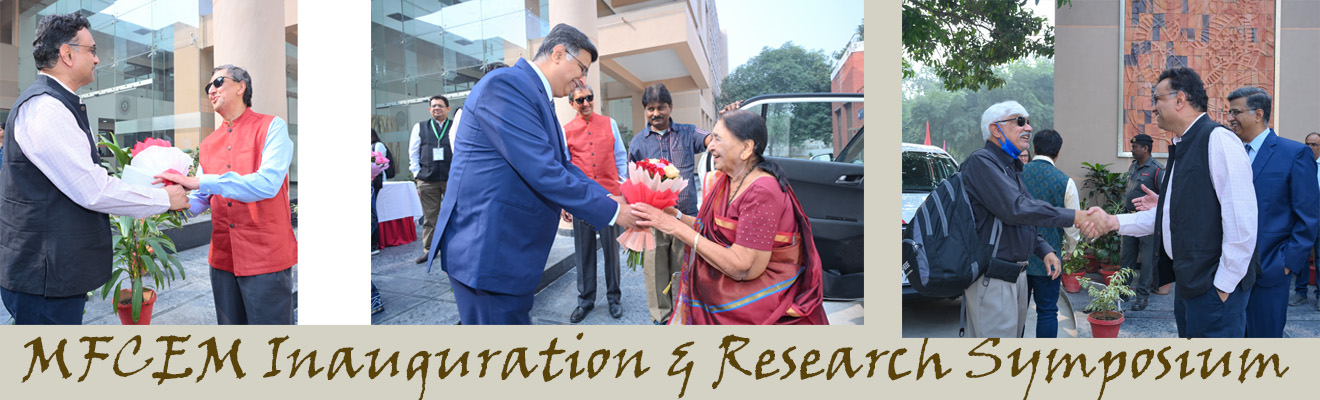
The Mehta Family Centre for Engineering in Medicine

Indian Institute of Technology Kanpur

Slide background
Slide background
Slide background
Slide background
Slide background
Slide background
Slide background
Slide background
Slide background
Slide background
Slide background
Slide background
Slide background
Slide background
Slide background
Slide background
Slide background
In conversation with first author, Abhishekh Gupta
Mosquito Olfactory Response Ensemble enables pattern discovery by curating a behavioral and electrophysiological response database.

Gupta Abhishek, Swikriti S. Singh, Aarush M. Mittal, Pranjul Singh, Shefali Goyal, Karthikeyan R. Kannan, Arjit K. Gupta, and Nitin Gupta.

iScience. 2022 Feb 17;25(3):103938.

Congratulations Abhishek to you and all authors of the study. What was the motivation behind the study?
Abhishek Gupta: Mosquitoes spread many deadliest diseases such as Malaria, Dengue, Zika virus, Chikungunya virus, etc. Olfaction plays a prominent role in the detection of hosts. Mosquitoes detect the odors released by hosts with the help of the sensory organs, which harbors sensory neurons. Over the past several decades, hundreds of studies have been conducted on mosquitoes' olfaction. Researchers have employed several behavioral paradigms to quantify the behavior of mosquitoes towards a large set of odors. Alongside, various electrophysiological techniques have been used to quantify the activity of sensory neurons.
The data generated from these studies was scattered across hundreds of research articles in an unformatted way. The primary motivation behind our research was that if we have this data in a structured format, that could enable us some new insights that cannot be seen in the individual studies.

We understand that the study aimed to bring together experimental data from varied sources onto a common platform. What was the major challenge?
Abhishek Gupta: In this study, we have overcome several challenges involved in curating this dataset. For example, in most articles, the data were reported in text or plots rather than spreadsheets and thus had to be extracted manually.Moreover, different studies used different metrics to report the experimental results, which made it difficult to make a comparison across them. Here, we converted the data into a standard format, which allowed direct comparison.

MFCEM: Ultimately, how accessible is MORE (Mosquito Olfactory Response Ensemble), would it be constantly updated?
Abhishek Gupta: Yes, we will maintain the database and update it annually with new data.

MFCEM: Olfactory behavior of mosquitoes is of immense interest because of its relevance to diseases. Would you like to share any interesting insight that this meta-analysis facilitated?
Abhishek Gupta:Understanding the responses of odorant receptors (chemoreceptors responsible for detecting odorants) to different odorant molecules can help design a better mosquito repellent. In MORE, we have shown that the odorant receptors are tuned to specific ranges of several physicochemical properties of odor molecules, such as molecular volume, molecular weight, odorant-water partition coefficient, etc. Furthermore, we have conducted several comparisons across different behavioral and electrophysiological experimental approaches, which could help the researchers build the exemplary assay for their experiments.

In conversation with first author, Narender Reddy
Designing BH3-mimetic peptide inhibitors for the viral Bcl-2 homologs A179L and BHRF1: Importance of long-range electrostatic interactions.

Reddy CN, Sankararamakrishnan R.

ACS Omega. 2021 Oct 4;6(41):26976-26989.

How would you describe the major breakthrough of this study?
Narender Reddy: In this study, we succeeded in delivering two therapeutic agents [an antioxidant, pyrrolidine dithiocarbamate (PDTC) and an anti-VEGF agent, triamcinolone acetonide (TA)] simultaneously to anterior (lens) and posterior (retina) ocular tissues using polymeric core-shell nanoparticles (NPs). Further, controlled release of entrapped drugs (burst followed by sustained release of PDTC, whereas, a slow and sustained release of TA) was achieved using the fabricated delivery system. As a consequence, the developed drug delivery/therapeutic strategy minimized diabetes associated cataract and retinopathy in diabetic retinopathy rats.

What was the most challenging part of the study?
Narender Reddy: There are multiple experiments that were challenging, which include fabrication of NPs, generation of diabetic retinopathy rat model and characterization of pathological markers in ocular tissues. However, the most challenging part that I felt was the fabrication of nanoparticles and optimization of drug loading in nanoparticles so as to achieve sequential drug release.

How did the collaboration with NIN facilitate the study?
Narender Reddy: Our collaboration with NIN Hyderabad accelerated progress of the in vivo study. NIN offered state-of-the-art facilities for animal studies i.e., housing of animals, generation of diabetic retinopathy animal model, characterization of oxidative stress and neovascularization markers in lens and retinal tissues.

In conversation with the first author, Aman Nikhil
Evaluating potential of tissue-engineered cryogels and chondrocyte derived exosomes in articular cartilage repair.

Nikhil Aman and Kumar Ashok.

Biotechnol Bioeng. 2021 Nov 1.

What gap does your study addresses?
Aman Nikhil: Cartilage repair still faces limitations like phenotype instability and poor integration with surrounding tissue. In our study, we utilized chondrocyte exosomes as paracrine signaling molecules which will help to maintain the phenotype of formed cartilage. Further, these exosomes were utilized in combination with chondroitin sulfate releasing cryogel which was shown to act as exosome delivery system and due to its properties of high compressibility and elasticity, it will integrate well on swelling with the defect area.

What was the most challenging part of the study?
Aman Nikhil: In this study we strived to utilize chondrocyte exosomes as a cell free therapy and designing different cryogel scaffolds to better mimic the architecture and constituents of the cartilage and subchondral bone. So, we proposed the combinatorial approach of exosome laden cryogels for cartilage regeneration. Further, to overcome the problem of delamination of bi-layered cryogel, the two layers were joined in single cross-linking reaction with gelatin as a common polymer in both layers.

How do you evaluate the translation potential of this study?
Aman Nikhil: To evaluate the translation potential, animal experimentation is required where the potential of these exosome laden cryogels can be evaluated. For cartilage, higher animal models like goat, sheep or horse are preferred because of the similarity of their stifle joint to humans. Although preliminary studies can be performed in rabbit (Gupta et al., 2017) where the biocompatibility and regeneration potential can be tested.

Where do you see the application of this study, particularly in the Indian context?
Aman Nikhil: Indian population is prone to osteoarthritis (OA) which is musculoskeletal joint disorder affecting cartilage having prevalence of 22% to 39%. Approximately, 45% of women over the age of 65 have OA related symptoms (Cui et al., 2020). In addition, trauma injuries (accidents, sports injuries) also cause damage to knee cartilage and subchondral bone. So, tissue engineering strategy mentioned in this study has application for treatment of such osteochondral defects.

Cui A, Li H, Wang D, Zhong J, Chen Y, Lu H. 2020. Global, regional prevalence, incidence and risk factors of knee osteoarthritis in population-based studies. EClinicalMedicine 29:100587.
Gupta A, Bhat S, Chaudhari BP, Gupta KC, Tägil M, Zheng MH, Kumar A, Lidgren L. 2017. Cell factory‐derived bioactive molecules with polymeric cryogel scaffold enhance the repair of subchondral cartilage defect in rabbits. J. Tissue Eng. Regen. Med. 11:1689–1700. https://doi.org/10.1002/term.2063.

Development of a Self-Adjuvanting, Cross-Protective, Stable Intranasal Recombinant Vaccine for Shigellosis.

Baruah N, Ahamad N, Maiti S, Howlader DR, Bhaumik U, Patil VV, Chakrabarti MK, Koley H, Katti DS.

ACS Infect Dis. 2021 Dec 10;7(12):3182-3196.

Many infectious diseases continue to pose a major threat due to unavailability of vaccines. One such that pose a risk of breaking into epidemics is Shigellosis which causes fatal diarrheal disease and is notorious to acquire antibiotic resistance. Thus far no vaccines have been developed due to low immunogenicity as well as serotype specificity. Prof Dhirendra Katti’s group in collaboration with Prof. Hemant Koley at ICMR-National Institute of Cholera & Enteric Diseases, have developed a stable intranasal Vaccines against Shigella dysenteria. They took a rational approach to develop a vaccine wherein, conserved protein Sd1 from Shigella dysenteria and conserved immunogenic protein, IpaC were used. Using a detergent-based technology to stabilize the heterogenous complex of the two proteins, it was found to evoke a robust immune response when administered orally in BALB/c mice. The authors further displayed that the vaccine conferred protection not only against S. dysenteriae but also heterologous Shigella flexneri.


In conversation with the first author, Srinivasarao
Simultaneous amelioration of diabetic ocular complications in lens and retinal tissues using a non-invasive drug delivery system.

Srinivasarao DA, Sreenivasa Reddy S, Bhanuprakash Reddy G, Katti DS.

Int J Pharm. 2021 Oct 25; 608:121045.

How would you describe the major breakthrough of this study?
Srinivasarao:In this study, we succeeded in delivering two therapeutic agents [an antioxidant, pyrrolidine dithiocarbamate (PDTC) and an anti-VEGF agent, triamcinolone acetonide (TA)] simultaneously to anterior (lens) and posterior (retina) ocular tissues using polymeric core-shell nanoparticles (NPs). Further, controlled release of entrapped drugs (burst followed by sustained release of PDTC, whereas, a slow and sustained release of TA) was achieved using the fabricated delivery system. As a consequence, the developed drug delivery/therapeutic strategy minimized diabetes associated cataract and retinopathy in diabetic retinopathy rats.

What was the most challenging part of the study?
Srinivasarao:There are multiple experiments that were challenging, which include fabrication of NPs, generation of diabetic retinopathy rat model and characterization of pathological markers in ocular tissues. However, the most challenging part that I felt was the fabrication of nanoparticles and optimization of drug loading in nanoparticles so as to achieve sequential drug release.

How did the collaboration with NIN facilitate the study?
Srinivasarao:Our collaboration with NIN Hyderabad accelerated progress of the in vivo study. NIN offered state-of-the-art facilities for animal studies i.e., housing of animals, generation of diabetic retinopathy animal model, characterization of oxidative stress and neovascularization markers in lens and retinal tissues.

The Bhupat & Jyoti Mehta Family Foundation

MFCEM at the Indian Institute of Technology Kanpur is generously supported by the Mehta Family Foundation.

Visit Website... About Rahul Mehta...