



- Admissions 2026-27 Semester-I Announcements New
- Admission Notice under Joint PhD with University of Melbourne in Quantum communications New
- IIT Kanpur Certificate Program on PYTHON for Artificial Intelligence Machine Learning and Deep Learning, 15th June to 15th July 2026 New
- Applied Data Science & Machine Intelligence: Fundamentals to Next Generation AI: 1st June to 15th July 2026 New
- IIT Kanpur Certificate Program on Python QISKIT for Data Science, Data Analytics, Machine Learning (ML) and Quantum Computing, 1st March to 27th March 2026 New
- Notice for Spot PhD Admissions
- The IEEE DEIS Summer School 2025 on the theme of 'Insulating and Multifunctional Dielectrics' was hosted for the first time in India, at IIT Kanpur, from 20th to 25th September.
- IIT KANPUR Certificate Program on PYTHON + MATLAB/ OCTAVE-Based Simulation and Design of 5G/ 6G Wireless Technologies, 1st September to 26th September 2025
- Dr. Meena Mishra, DRDO graced us as the Guest of Honour for the 58th Convocation.
- Farewell to the class of 2025 organized by EEA on 22nd April 2025
- Workshop on "Metamaterial Antennas and Applications" was successfully conducted from April 18-20 2025, coordinated by Prof. Raghvendra Kumar Chaudhary and Prof. Kumar Vaibhav Srivastava
- Invited Lecture by Prof. Akhilesh Jaiswal (University of Wisconsin-Madison, USA) titled "Unconventional Computing Paradigms from Extreme-Edge to Extreme-Scale" was successfully conducted on 15th April 2025
- EMI/EMC (Electromagnetic Interference and Compatibility) and Electrical Safety Test Facility, accredited by National Accreditation for Testing and Calibration Laboratories (NABL) was launched on 5 April, 2025 at IIT Kanpur under the leadership of Prof. M. Jaleel Akhtar
- Happy Hours for UG students organized by EEA on 24th March 2025
- Invited Lecture by Prof. Souvik Mahapatra (IIT Bombay) titled “A Device (TCAD) to Circuit (SPICE) Framework for BTI and HCD Aging” was successfully conducted on 24th February 2025
- Lecture by Prof. Saurabh Lodha (IIT Bombay) titled “Engineering the strain and neuromorphic performance of 2D-TMD transistors” was successfully conducted on 25th February 2025
- Invited Lecture by Mr. Milind Dhighrasker, Senior Director, ON Semiconductors titled “Overview of Design Challenges for SiC-based Traction Inverters” on 31st January 2025
- Invited Lecture by Prof. William G. Whittow, Wolfson School of Mechanical, Electrical and Manufacturing Engineering (WSMEME) at Loughborough University titled “Recent Advances in Reconfigurable RF Frontend Systems” was successfully conducted on 6th January 2025
- Bonfire Evening - Relive the Joys of College Days organized by EEA on 4th January 2025
- Invited Lecture by Prof. Srabanti Chowdhury (Stanford university) titled “Unleashing the Potential of Wideband Gap Materials” was successfully conducted on 2nd January 2025
Admissions 2026-27 Semester-I Announcements Read More...
 Welcome to the Department of Electrical Engineering (EE) at IIT Kanpur. The EE department is one of the oldest departments at IIT Kanpur. It was one of the first five departments with which IIT Kanpur started in 1960. Subsequently, the Advanced Centre for Electronics Systems (ACES) came into existence in early 1970 by a grant from the Ministry of Defence to undertake manpower training and to carry out research and development related to defense. Subsequently, several sponsored projects in many subject areas with large interdisciplinary content were handled through ACES. ACES is now an integral part of the EE department and houses the majority of EE laboratories and facilities. The department is currently the largest multidisciplinary department at IIT Kanpur. It covers practically all sub-disciplines in Electrical and Communication Engineering including Power Systems, Power Electronics, Microwaves, RF techniques, Microelectronics, VLSI, Photonics, Control Systems, Robotics, Speech, and Audio Processing, Computer Vision, Artificial Intelligence, Machine Learning, Wireless Communication, Computer Networks, Future wireless networks like 5G/6G, Wireless sensor networks, and IoT networks. Read more
Welcome to the Signal Processing, Communications and Networking Group in the Department of Electrical Engineering IIT Kanpur. The stream offers M.Tech., dual-degree and PhD programs. The stream has always aimed at imparting technical education and equip the students with the latest technologies.
The research interests of the faculty members include application based modern areas like Image, Video and Speech processing, Signal processing for Wireless Communication, Tomography, Biomedical Imaging, Data Mining, Computer Vision, Cooperative Spectrum Sensing, Video Compression And Decompression, Development of live lecture delivery system over Internet, Cognitive Radio, Information Theory, Scalable Video Coding based Wireless Video Transmission, Several ongoing projects are coordinated by the faculty along with active participation of the students, which are being funded by various Government and private agencies.
 Computer vision is the science and technology of machines that can see. As a scientific discipline, computer vision is concerned with the theory behind artificial systems that extract information from images. The image data can take many forms, such as video sequences, views from multiple cameras, or multi-dimensional data from a medical scanner. As a technological discipline, computer vision seeks to apply its theories and models to the construction of computer vision systems. Various reseach areas includes: Applications in Display Technology, Computer Vision for Navigation, Metrology, High Level Video Analysis, and Human Computer Interfaces. Pharmaceutical biomathematical modeling, Signal and System theory.
Hardware and software facilities includes following:
- Cameras:121 mp Canon EOS 5D,1 Canon EOS 10D, 1 Sony DCR TRV328 Handycam, 1 3-CCD PDX-10P Camcorder, 4 Sony SNC R Z30 PTZ Cameras, 1 Silicon Video 5MP industrial camera, 1 Basler 0.24MP 120fps monochrome Camera
- Illumination sources, Sensors and setup:10 Illumination sources at 850 and 950nm, 1 2kLm DLP projector, Various portable and non portable illuminators, 1m and 5m range IR sensors, 3-side chroma keying setup.
- One locally fabricated 3-wheeled robot with n-pi rotating platform and Zigby wireless interface, 2 LEGO Mindstrom robot kits, one calibrated 2-axis platform.
- Digital Video Stabilization through curve warping techniques:For digital video stabilization, sufficient number of frames are extracted from the video. For each frame, a signature is provided by integral projection method (summing up the pixel values of each row and each column) generating two characteristic curves for each frame as depicted in Fig.1. By matching between two curves we calculate global motion vector. Under fast varying illumination conditions and in presence of large moving objects Dynamic Curve Warping method provides more robust solution for such complex scenes. The validity of algorithm will be tested by integral projection error, block matching error and dynamic time warping error under various conditions like: large moving objects, fast changing illumination and other required conditions.
- Automatic Target Detection and tracking for thermal image sequences:Automatic target detection and tracking is to extract and track targets of interest and remove undesirable clutter from an image sequence automatically using image processing techniques. Thermal Imagers found the application under the circumstances (e.g., in nights or bad weathers), where sensing in visible spectrum becomes infeasible or severely impaired. Thermal imaging extends our vision beyond the visible regions of the EM spectrum into the infra-red (IR) region (0.7 to 10000m). Thermal imaging allows us to see in complete darkness. ATDT for thermal image sequences is a very challenging task due to the high variability of targets and background clutter and the low spatial resolution. Also there is not enough contrast between targets and background. Following steps are involved: 1.Shot Detection 2.Then within each shot, different frames are decomposed into background foreground. 3. Images are compared with the already learned background models and detection of foreground is done.
- Human Activity analysis based on pose detection:Proposed method is to obtain foreground information. Then estimate pose for each frame followed by regularization of noisy pose estimates. Next temporal collection centroid and orientation of parts is used as raw features. These raw features are further converted into equal length feature vector. Finally a classifier is trained by feeding these feature vectors. Datasets used are froma.)http://www.ics.uci.edu/~dramanan/papers/parse/index.htmlb.)http://www.wisdom.weizmann.ac.il/~vision/SpaceTimeActions.htmlResults of Pose Estimation are shown in the figure below:
- Action Recognition in VideosThe proposed approach is a. obtain foreground blob for each frame b.Extract tracking box centered on actor c.Create shape representation per frame d.Calculate average over magnitude of moving-window Fourier spectrum of temporally varying shapes e. Train a classifier for supervised learning of action representation f.obtain modes/clusters for unsupervised learning. Datasets used were: Wiezmann dataset: 10 actions are: bend, jack , jump, pjump , run , side, skip, walk,wave1, wave2, 9 actors, Static camera, KTH Human action consists of 6 actions which are: Walk, jog,run, box, wave, clap. 25 actors Static camera,in/outdoor.
- Multiple objects tracking using multiple cameras:We applied region-feature based approach for tracking humans through partial occlusions. We implement a part based paradigm that employs both color and edge information to accurately localize different parts of a human target. A method is proposed to segment automatically, using projection histograms, any human target into three parts namely, head, torso and legs. Using their non-parametric color probability density estimates, these parts are tracked individually through mean shift. Following the mean shift convergence, the strong local edges present in the mean shift window are matched iteratively with those of the initially learnt edge template. The robust edge matching validates and refines the estimates of the mean shift procedure. The same approach is extended for tracking multiple objects. Finally we make use of multiple cameras to track the persons efficiently. Some of the results are shown below:
- Camera placement and network surveillanceProblem statement: Given a floor plan, place the cameras so as to cover the whole floor plan. Need to decide the location of the cameras place on the boundary of the floor plan as well their orientation and direction. Must ensure to get the minimum number of cameras so as to cover the whole floor area. Greedy Algorithm is used. A greedy algorithm repeatedly executes a procedure which tries to maximize the return based on examining local conditions. It employs simple strategies that are simple to implement and require minimal amount of resources. The floor plan given as an input should have black obstacles. The free spaces are white. Each camera subtends a cone depending upon its location and orientation. The area covered by any camera is colored as green and that is Ac. The area occluded by the camera is colored as blue as that is Ao.
- Analysis and annotation of cricket videos.Video can be treated as a sequence of frames, shots, event sequences or stories at different levels of abstraction. Video Shot Detection and Classification is a fundamental step for efficient accessing, retrieval, browsing, highlight generation etc. Summarization of a large amount of video data is one of the popular fields of video research in very recent times. Sports videos in particular have a clear domain knowledge that depends on the particular sport, which helps mainly in shot classification. The aim of the present work is to analyze the cricket videos from the annotation point of view, and to use this analysis in shot classification to automatically classify shots into various semantic categories, and hence generate annotation cues for them. The features used in shot segmentation step are color histograms. We use in shot classification; both color histograms and mean shot energy as features. In addition to automatic shot classification, the work also deals with one of the popular application of sports video annotation, highlights generation by detecting the slow motion replay shots
- Foreground extraction and object tracking.Real-time segmentation of moving regions in image sequences is a fundamental step in many vision systems such as automated visual surveillance. Objects that temporally occlude near-static parts of the scene (called the background) are extracted as the foreground by background subtraction algorithms. This process consists of different stages: pre-processing, color space selection, feature extraction, model based learning and segmentation. Our proposed contributions are in the pre processing and feature extraction stages. We propose a novel pre-processing technique for background subtraction that comprises representing the image in multiple scales. We also propose that the co-linearity statistic can be used as the feature to work with. We show that this combination gives the best results. Then we focus on background subtraction for Pan-Tilt Cameras. Here we propose a suitable technique for mosaicing the background model. Next we develop a target tracking system (DynaTracker).
- Human activity representation, analysis, and recognition.Human Activity Recognition is an active area of research in computer vision with wide scale applications in video surveillance, motion analysis, virtual reality interfaces, robot navigation and recognition, video indexing, browsing, HCI, choreography, sports video analysis etc. It consists of analyzing the characteristic features of various human actions and classifying them. The system consists of following stages: Background subtraction, tracking, feature extraction and classification. We build a motion decomposition approach to analyze the periodicity inhuman actions. We further propose a novel video compression idea to compress these extracted periodic activities from the videos. Our method exploits the correlation between the frames over longer length of time, of the order of the period of the activity, as compared to the traditional video compression algorithms which use correlation between a few neighboring frames for motion prediction and compensation. We also consider the problem of silhouette normalization for activity analysis. Keywords: Activity recognition, Principal component analysis, Object based compression, Combination classifier.
- Multi Camera Pan-Tilt Surveillance Networks:With the advent of cheaper cameras and faster computing facilities, multi camera surveillance systems are becoming increasingly popular for wide area surveillance. In this thesis, the challenges of multi-person, multi-camera tracking on a network of collaborating cameras is addressed. Each camera is modeled to be a smart entity, capable of performing certain basic surveillance tasks independently. PTZ cameras have been chosen in order to reduce the coverage cost. A novel auto-calibration strategy is proposed that forms the backbone for assimilating the multiple marginal fields of view of a PTZ camera into one global mosaic. This approach is further extended during the implementation of surveillance algorithms for online adaptive background modeling on active cameras and target localization followed by tracking in a dynamic background. Later these smart entities are grouped together in a hierarchical manner, so as to form a plug and play system. A set theoretic approach to finding spatial correspondences between pair wise cameras in a supervised manner is proposed for a practical 2d manifold and its implication in a 3D environment are studied. Keywords: Multi Camera, Pan-Tilt, Surveillance, Image Processing.
- Unsupervised Object Categorization from Surveillance Videos:Appearance descriptors computed over the complete animacy of an object forms a powerful tool for scene analysis with object discovery in mind. This thesis proposes the means of obtaining such descriptors in an unsupervised manner from the tracking algorithm output. During its scene presence, an object presents itself in many poses with differing frequencies, thus generating multiple modes in the appearance feature space. For each object, we focus on its unoccluded intervals and obtain time-indexed vectors from shape and Haar templates which are then clustered to obtain appearance classes. The object is modeled as a probability distribution over the space of co-occurrent shape and Haar templates. These object models are clustered in an unsupervised manner with Bhattacharya distance metric between object models. Further an algorithm is proposed which gives an asynchronous feedback to the database constructed in the discovery phase on the arrival of new unseen objects or appearances found in further frames. Keywords: Object Discovery and Detection, Spatio-Temporal, Animacy, Vocabulary Update-Correction.
- Visual Recognition of Hand Gestures in ASL:Sign language recognition has emerged as one of the most important research areas in the field of human-computer interaction. The aim of sign language recognition is to provide an efficient and accurate mechanism to transcribe sign language into text or speech. Existing recognition systems rely heavily on expensive instrumented gloves or markers to determine the signer's manual configuration; this is unnatural and restrictive for the signer. Also these systems have mostly concentrated on finger signing, where the user spells each word with hand signs corresponding to the letters of the alphabet. However, most signing does not involve finger spelling but, instead, gestures which represent whole words. This allows signed conversations to proceed at about the pace of spoken conversation. In our work, we look at recognition of signs representing whole words in ASL rather than finger spelling. Keywords: ASL, Gesture, Recognition, Classification.
- Intrusion detection in presence of continuously and highly varying projector illumination and Finger gesture Recognition in dynamic environment for mobile camera :I. The algorithm for the first part to be implemented includes: a. First step was to carefully record videos with certain constraints on it. This was followed by the training /learning phase and calibrating the projector and camera to match the no of frames per second. b. Doing the luminance compensation. c. Performing dominant color compensation.II. Algorithm for Finger gesture Recognition in dynamic environment for mobile camera is also implemented. Presently, we are working on the following set of gestures: - Single finger gestures include click, snapshot tool frame, move arbitrary, rotate (clockwise and anti-clockwise), and pan. Two fingers gesture includes drag and zoom (in and out).
- Laser Pointer mouse:The aim of this project is to make a LASER pointer mouse which can be used as a normal mouse during presentations or slide shows. Computer display is projected on a screen using a projector and a LASER Pointer is used as a tool to direct the mouse cursor position. This projection is captured using Fire-Wire digital camera. This captured stream is then analyzed and position of the LASER dot is located. Mouse cursor is then moved to the corresponding LASER dot position. Other button functions of mouse are implemented using a normal radio frequency wireless mouse. Algorithm 1. Project computer display on screen 2. Set camera in a symmetric position 3. Capture screen and adjust gain 4. for (live video stream) do i. get frame ii. save as PPM image iii. extract Red channel image iv. for (each frame) do v. find all pixels with highest red intensity vi. find centroid of all these points having maximum red intensity value vii. set mouse cursor to coordinate of centroid end
- A Novel Mouse-Based Authentication System:We have developed a mouse-based authentication system using Java technology(on the Java 2 platform). In our system, the user will set pass-actions (instead of passwords) with the help of mouse motion, and through the use of numerous user-friendly GUIs (Graphical User Interfaces) we will allow each user to enter the system by performing valid pass-actions. We have developed GUIs keeping in mind the fact that users have varying interests, thus, each user can personalize his GUIs and pass-actions. This definitely reduces the need to memorize long key-words or PIN numbers. The following flowchart demonstrates the four stages involved in our authentication system.
- Novel Representations, Techniques and Error Evaluation for 3D Reconstruction:It proposes a Multiple Axis Object Centered Cylindrical Coordinate System (MAOCCCS) for the representation of 3D models reconstructed by silhouette based technique. A single axis cylindrical coordinate system is insufficient for representing objects with multiple auxiliary components because it leads to unequal distribution of points over the object. It also proposes a camera calibration method using mesh-grid patterns for laser based technique. Using this method we are able to achieve sub-millimeter accuracy in the reconstructed 3D models. A novel technique for the error evaluation of a reconstruction method, which is closely related to the conventional concept of visual hull, has been introduced in this work. We have also performed texture mapping on the reconstructed models.
- Novel Techniques for 3D reconstruction:The problem of reconstructing the exact shape and texture of any object using its multiple views is considered. We observe the object from multiple views and capture its silhouette and texture images. We propose a method to automatically reconstruct the shape of the object using these silhouette images. However the silhouette images can only give the convex hull of the object. In order to reconstruct the concavities, we propose a laser light based approach which can reconstruct even the concave surfaces. Finally after reconstructing the exact shape, we map the texture on the object using the images captured at multiple angles. Keywords: 3D Reconstruction, Texture Mapping, Structured Light Based Reconstruction, Silhouette Based Reconstruction To have a look at some of the photos of lab works and setup, refer the link given below.
- R Mallik, A Misra, K S Venkatesh, "Nano-Scaffold Matrices For Size-Controlled, Pulsatile Transdermal Testosterone Delivery: Nanosize Effects On The Time Dimension", 2008 Nanotechnology (Electronic Journal) IOP Publishing Ltd.
- Tripuresh Mishra, A Dutta, K S Venkatesh, "Regrasp Planning For Capture Of A Moving And Deforming Object Using Vision" Mechatronics, a Journal of IFAC, the International Federation of Automatic Control, Elsevier, 2008
- T Santra, K S Venkatesh, A Mukerjee, "Self Managing Systems Based On Human Social Behaviors" Proceedings of the Ninth Intl Symp. On Artificial Intelligence and Mathematics (AIMATH 2006), Ft. Lauderdale, Florida, USA, Jan 4to 6, 2006
- P Guha, K S Venkatesh, A Mukerjee, "A Multi-Scale Colinearity Statistic Based Approach To Robust Background Modeling", Proceedings of the Seventh Asian Conf. on Computer Vision, (ACCV 06), Hyderabad, Jan 13 16, 2006
- Kiran Kumar, K S Venkatesh, "A New Computationally Efficient Shot Detection Algorithm for Cricket Videos", Proceedings of the Twelfth National Conference on Communications, NCC 06, IIT Delhi January 26 to 28, 2006
- P Guha, A Mukerjee and K.S. Venkatesh, "Spatio-temporal Discovery: Appearance + Behavior = Agent", Proceedings of the 5th Indian Conference on Vision, Graphics and Image Processing, Madurai (India), December 13 to 16, 2006, Lecture Notes in Computer Science (LNCS), Vol. 4338, Springer, pp. 516-527,
- P Guha, A Biswas, A Mukerjee, P Sateesh, K.S. Venkatesh, "Surveillance Video Mining", Proceedings of the Third IET International Conference on Visual Information Engineering, pp. 447-453, Bangalore (India), September 26 to 28, 2006
- A Biswas, P Guha, A Mukerjee, K.S. Venkatesh, "Intrusion Detection and Tracking with Pan-Tilt Cameras", Proceedings of the Third IET International Conference on Visual Information Engineering, pp. 565-571, Bangalore (India), September 26 to 28, 2006.
- P Guha, A Mukerjee, K.S. Venkatesh, P Mitra, "Activity Discovery from Surveillance Videos", Proceedings of the 18th International Conference on Pattern Recognition (ICPR), Vol. 1, pp. 433-436, Hong Kong (China), August 20 to 24, 2006
- P Guha, A Mukerjee, K.S. Venkatesh, "Appearance Based Multi-Agent Tracking Under Complex Occlusions", Proceedings of the 9'th Pacific Rim International Conference on Artificial Intelligence (PRICAI), Lecture Notes in Computer Science (LNCS), Vol. 4099, Springer, pp. 593-602, Guilin (China), August 7 to 11, 2006.
- P Guha, A Biswas, A Mukerjee, K.S. Venkatesh, "Occlusion Sequence Mining for Complex Multi-Agent Activity Discovery", Proceedings of The Sixth IEEE International Workshop on Visual Surveillance (In conjunction with ECCV 2006), pp. 33 to 40, Graz (Austria), 13'th May, 2006
- M P Sriram,K.S. Venkatesh, "A Robust Algorithm for Automatic Novel View Synthesis/Stereo Compression With Efficient Handling of Occlusions and Illumination Effects", Proceedings of the Ninth Asian Symposium on Information Display (ASID), New Delhi, India, Oct 8 to 12, 2006
- Varsha H Chanrdashekhar, K S Venkatesh, " Action Energy Images for Reliable Human Action Recognition", Proceedings of the Ninth Asian Symposium on Information Display (ASID), New Delhi, India, Oct 8th to 12th, 2006
- A Jamal, K S Venkatesh, "A New Color Based Optical Flow Algorithm for Environment Mapping Using a Mobile Robot", IEEE Multi-conference on Systems and Control (MSC-2007) Oct 1 to 3, 2007, Singapore
- Meenakshi Gupta, T Naveen Kumar, Laxmidher Behera, K S Venkatesh and Ashish Dutta, "Environment Modelling in Mobile Robotics through Takagi-Sugeno Fuzzy Model", Irish Signals and systems Conference, June 2009,Dublin.
- Meenakshi Gupta, Laxmidher Behera, K S Venkatesh and Girijesh Prasad, "Optimized Takagi Sugeno Fuzzy Motion Controller Design For Object Tracking With The Mobile Robot", IEEE TechSym 2010, IIT Kharagpur
- Prithwijit Guha
- Rajesh Bhatt
- Meenakshi
- Anima Majumder
- Raju Ranjan
- Naveen Kumar
- G Gupta
- A. Mishra Sharma
- Akshata Singh
- Biswajit Sharma
- Anurag Srivastava
- Kamlesh Verma
- Armin Mustafa
- Irfan Khorakiwala
- Shah Jaykumar K
- K Sudhir
- Gautam LV
- Koteswara Rao G
- Satheesh KVV
- Shivranjan Popli
- Narendra Singh
Dr. K. S. Venkatesh
Email: This email address is being protected from spambots. You need JavaScript enabled to view it.
Location: ACES 207

- Mobile Communications and Wireless Systems
- Multiuser Communications
- Communication Theory
- CDMA
- Cognitive Radio
- Yogesh Trivedi and A K Chaturvedi, "Performance analysis of Alamouti diversity with transmit antenna selection in MISO systems." Proc. National Conference on Communication,29-31 Jan, 2010.
- Yogesh Trivedi and A K Chaturvedi, "Detection in time-varying wireless channels using partial channel state information", Pro c. National Conference on Communication,16-18 Jan, 2009.
- A K Chaturvedi,"Antenna Selection and Beamforming Using Delayed CSI", Invited paper in IEEE ICICS Macau, Dec2009.
- A. Misra, G. Teltia, and A.K. Chaturvedi, "On the Connectivity of Circularly Distributed Nodes in Ad Hoc Wireless Networks", IEEE Communications Letters, Vol. 12, Issue 10, October 2008, pp.717-719.
- Prabhat Patel, P. R. Sahu, and A.K. Chaturvedi, "ABER of Dual Predetection EGC in correlated Nakagami-m fading channels with arbitrary m ", IEEE Communications Letters, Vol. 12, Issue 7, July 2008, pp.487-489.
- S. Bose, V. Khaitan and Ajit Chaturvedi,"A Low-Cost Algorithm to Find the Minimum Sampling Frequency for Multiple Bandpass Signals", IEEE Signal P
- Ketan Rajawat and A.K. Chaturvedi, "Near Optimal Training Sequences for Low Complexity Symbol Timing Estimation in MIMO Systems", IEEE Transactions on Communications Vol 58, Issue 1, 2010 pp.281-288.
- rocessing Letters, Vol. 15, 2008 pp.877-880.
- A. Rathinakumar and A.K. Chaturvedi, "Complete Mutually Orthogonal Golay Complementary Sets From Reed Muller Codes", IEEE Transactions on Information Theory, Vol. 54, Issue 3, March 2008, pp. 1339-1346.
- Yogesh Trivedi and A K Chaturvedi, "Application of receive diversity to rapidly time-varying channels with partial knowledge at the receiver.", Proc. National Conference on Communication,01-03 Feb, 2008.
- Akshay Garg and A.K. Chaturvedi, "Generalization of Hybrid Time Divisioning for Power Allocation in DMT-Based DSL Systems", IEEE Communications Letters, Vol. 11, Issue 6, June 2007, pp. 504-506.
- Shrutivandana Sharma, Gaurav Yadav and AK Chaturvedi, "Multicarrier On-Off Keying for Fast Frequency Hopping Multiple Access Systems in Rayleigh Fading Channels", IEEE Transactions on Wireless Communications Vol. 6, Issue 3, March 2007, pp. 769-774.
- P. Sandeep, S. Chandan and A.K. Chaturvedi, "Evaluation of error probabilities in the presence of timing errors and fading", IEEE Transactions on Wireless Communications, Vol. 6, Issue 2, Feb. 2007 pp.473-477.
- Pulkit Grover and AK Chaturvedi, "Upper Bounds on the Rate of LDPC Codes for a Class of Finite State Markov Channels", IEEE Transactions on Information Theory Vol. 53, Issue 2, Feb. 2007 pp.794-804.
- Z. Hasan, U. Phuyal, V. Yadav, A.K. Chaturvedi, V.K. Bhargava, “ISI-free pulses for high data- rate ultra-wideband wireless systems”, Canadian Journal of Electrical and Computer Engineering, Vol. 32, Issue 4, Fall 2007, pp.187-192.
- P. Patel and A.K. Chaturvedi, "Impact of Noise Imbalance on the Performance of Predetection Dual-EGC Receivers Over Rayleigh Fading Channels", Proc. IEEE Globecom, 26-30 Nov. 2007 pp.3596 - 3600.
- Ketan Rajawat and A.K. Chaturvedi, "Non-Data Aided Symbol Timing Estimation in MIMO Systems", Proc. IEEE International Conference on Communications (ICC), 24-28 June 2007, pp.5455-5461.
- G. Bansal, A.K. Chaturvedi and V.K. Bhargava, "Distributed Admission Control for Power- Constrained Cellular Wireless Systems", Canadian Conference on Electrical and Computer Engineering (CCECE), 22-26 April 2007, pp.639-642.
- Z. Hasan, V. Yadav, A.K. Chaturvedi, V K Bhargava, "Design of a Family of ISI Free Pulses for Very High Data Rate UWB Wireless Systems", Canadian Conference on Electrical and Computer Engineering (CCECE), 22-26 April 2007, pp.1195-1198.
- V. Abhishek and A.K. Chaturvedi, "A Weighted Combining Approach to Multiuser Detection in Macro diversity", Proc. IEEE Wireless Communications and Networking Conference (WCNC), 11-15 March 2007, pp.912-916.
- Ketan Rajawat and AK Chaturvedi, "A Low Complexity Symbol Timing Estimator for MIMO Systems Using Two Samples Per Symbol", IEEE Communications Letters, vol 10, Issue 7, July 2006, pp 525-527.
- A Mazumdar, AK Chaturvedi and A Banerjee, "Construction of Turbo Code Interleavers from 3-regular Hamiltonian Graphs", IEEE Communications Letters, pp. 284-286, Vol. 10, Issue 4, April, 2006.
- Akshay Garg and AK Chaturvedi, "A Hybrid Time Divisioning Scheme for Power Allocation in DMT Based DSL Systems", IEEE Communications Letters, Vol. 10, Issue 2, pp. 73-75, Feb 2006
- Girish Manglani and AK Chaturvedi, "Application of Computational Geometry to Multiuser Detection in CDMA", IEEE Transactions on Communications, Vol. 54, No. 2, pp. 204-207, February, 2006.
- PR Sahu and AK Chaturvedi, "Performance Analysis of a Predetection EGC Receiver in Exponentially Correlated Nakagami-m Fading Channel for Noncoherent Binary Modulations", IEEE Transactions on Wireless Communications, vol 5, Issue 7, July 2006, pp 1634-1638.
- Aditya Mahajan, Manu Agarwal and AK Chaturvedi, "A Novel Method for Down-conversion of Multiple Bandpass Signals", IEEE Transactions on Wireless Communications, Vol. 5, Issue 2, pp. 427-434, February, 2006.
- A Rathinakumar and AK Chaturvedi, "A New Framework for Constructing Mutually Orthogonal Complementary Sets and ZCZ Sequences",IEEE Transactions on Information Theory Vol. 52, Issue 8, August 2006, pp. 3817-3826.
- S Chandan, P Sandeep and AK Chaturvedi, "A Subspace Based Approach to Pulse Design with Application to UWB Communications" Proc. IEEE International Conference on Communications (ICC), 11-15 June 2006.
- Prabhat Patel
- Yogesh N Trivedi
- Mohd Sharique
- Abhishek Kumar Gupta
- Balaji Srinivasan Babu
- Chander Mohan
- Divya Goel
- Mrinmoy Jana
- Saurabh Ranjan
- Abhishek Agarwal
- Arvind Kumar Sharma
Prof. AK Chaturvedi
Email: This email address is being protected from spambots. You need JavaScript enabled to view it.
Phone: +91-512-2597613
Location: ACES201B

LTE/WiMAX Based 4G Wireless,MIMO/OFDM Wireless Systems,H.264/SVC Based Scalable Video Coding
Dr.A.K.Jagannatham
Location: ACES 205
Lab Contact No:7025
 Faculty : Dr.R.M.Hegde
Contact Person : Location: ACES 203
Lab Contact No:6677

- Network protocol studies
- Performance measurement
- Configuration and management
- Behavior of distributed applications
- Configurable network nodes
- NetPC clients
- Servers for management and control
- Access networks( WiFi , USRP, ADSL)
- OS support for N/W
- VLAN- spanning tree- forwarding and filtering
- Distance vector routing
- Link state routing
- Multicast routing
- Diffserv and QoS
- A. Roy
- Neeru Chhabra

N. Chhabra
Email: This email address is being protected from spambots. You need JavaScript enabled to view it.
Phone: 91-512-2597230
Location: ACES 307

- Cognitive Radio
- Error Control Codes
- Wireless Communications
- Information Theoretic Security
- Compressed Sensing
- Cooperation in Wireless Networks
- Cooperative Spectrum Sensing for Military Radio Applications. Supported by Defense Electronics Application Laboratory, Dehradun, Oct. 2010-Jan. 2012.
- Cognitive Radio, Co-PIs, Barry Evans (University of Surrey), David Koilpillai (IIT Madras), S. Merchant (IIT Bombay), Uday Desai (IIT Hyderabad). Joint project under Indo-UK Advanced Technologies Centre of Excellence in Next Generation Networks, Systems and Services. Oct. 2009-May. 2012.
2011:
- Pranav K. Sakulkar, Adrish Banerjee, "Improved Cooperative Spectrum Sensing Using Belief Propagation Algorithm and Energy Detection", Proceedings of the Eighth International Symposium on Wireless Communication Systems 2011, Aachen, Germany, Nov. 2011, pp. 472-476.
2010:
- Vikas Bhatia, Adrish Banerjee, "VHDL Implementation of Two state Multiple Turbo Codes", Proceedings of the 16th National Conference on Communications (NCC 2010), pp. 21-25, 29th -31st Jan. 2010, I.I.T. Madras, India.
- Sangmok Oh, Inho Hwang, Adrish Banerjee, and Jeong Woo Lee, "A Novel Turbo Coded Pulse Position Modulation Scheme for Deep Space Optical Communications" , IEICE Transactions on Communications , pp.1260-1263, May 2010.
- Abhishek Mishra, Ankesh Garg, Adrish Banerjee, "Selection based detection method for Spectrum Sensing for Cognitive Radio", International Conference on Signal Processing and Communications (SPCOM 2010) , 18th-21st July 2010, Bangalore, India.
2009:
- Arnab Kanti Dey, Adrish Banerjee, "On Primary User Detection Using Energy Detection Technique for Cognitive Radio" , Proceedings of the National Conference on Communications, IIT Guwahati, pp.99-102, January 16th-18th 2009.
- Satyabrata Rout, Adrish Banerjee, "Convergence Analysis of Turbo Codes over Half-Duplex Relay Channel" , Proceedings of Wireless VITAE, pp.762-766, Aalborg, Denmark, May 17th - 20th, 2009.
- Shishir Kumar Srivastava, Adrish Banerjee, " 'n-ratio' Logic based Cooperative Spectrum Sensing using Double Threshold Energy Detection" , Proceedings of the Cognitive Radio Oriented Wireless Networks and Communications (CROWNCOM), June 22nd - 24th, 2009.
- Shakti Malik, Adrish Banerjee, "On Power Loading Algorithms for OFDM based Cognitive Radio" , Proceedings of the First UK-India International Workshop on Cognitive Wireless Systems (UKIWCWS 2009) , 11th December 2009, New Delhi, 2009.
- Kedar Prakash Kulkarni
- Sanket Sanjay Kalamkar
- Abhishek Srivastava
- G. Chandra Shekar Goud
- Onkar Arun Pandit
- Praveen Kumar SIngh
- Vivek G.
- Vijay Yadav
Prof. Adrish Banerjee,
Email: This email address is being protected from spambots. You need JavaScript enabled to view it.
Location: ACES-305

- Digital communications.
- Coherent & noncoherent receivers.
- Synchronization, Channel estimation in OFDM, FBMC, MIMO.
- Synchronization issues in wireless OFDM systems.
- Training design for channel estimation in SISO/MIMO-OFDM, FBMC.
- PAPR reduction in OFDM systems.
- Coherent Detectors for Turbo Coded OFDM Signals Transmitted through Frequency Selective Rayleigh Fading Channels, sponsored by DST-EPSRC.
- Design and Development of a Burst Acquisition System for Geosynchronous SATCOM Channels, sponsored by DEAL-DRDO, Dehradun.
- K. Vasudevan, Iterative Detection of Turbo-coded Offset QPSK in the presence of Frequency and Clock Offsets and AWGN, Signal, Image and Video Processing, vol. 6, no. 4, pp. 557 - 567,Nov. 2012
- Sanjay Kumar Soni, Puspraj Singh Chauhan and K. Vasudevan,“A Novel Approach for Turbo Decoding In ISI Channel”, Inter-national Journal of Computer Applications, vol. 41, no. 5, pp.7 – 13, March 2012.
- K. Vasudevan, “Iterative Detection of Turbo-coded Offset QPSK in the presence of Frequency and Clock Offsets and AWGN”, Signal, Image and Video Processing, vol. 6, no. 4, pp. 557 - 567,Nov. 2012
- K. Vasudevan, “Coherent Detection of Turbo-Coded OFDM Signals Transmitted Through Frequency Selective Rayleigh Fading Channels with Receiver Diversity and Increased Throughput”, Wireless Personal Communications, Springer, vol. 82, no. 3, pp.1623 - 1642, June 2015
- Himanshu B. Mishra and K. Vasudevan, “Design of superimposed training sequence for spatially correlated multiple-input, multiple-output channels under interference-limited environments”, IET Communications, vol. 9, no. 10, pp. 1259 - 1268, July2015.
- Prem Singh and K. Vasudevan, “Near Optimum Detection of TCM Signals in Coloured Noise”, Proc. of the 5th Intl. Conf. on Internet Multimedia Systems Architecture and Application,12 – 13 Dec. 2011, Bangalore
- U. C. Samal and K. Vasudevan, “Preamble-based Timing Synchronization for OFDM Systems”, 3rd IEEE Intl. Advance Computing Conference, Feb. 2013, Ghaziabad, pp. 313 – 318
- Darshan V Adakane and K Vasudevan, “An Efficient Pilot Pattern Design for Channel Estimation in OFDM Systems”, IEEEInternational Conference on Signal Processing Computing and Control, 26 - 28 Sept. 2013, Shimla
- K Vasudevan, “Coherent Detection of Turbo Coded OFDM Signals Transmitted through Frequency Selective Rayleigh Fading Channels”, IEEE International Conference on Signal Processing Computing and Control, 26 - 28 Sept. 2013, Shimla
- U. C. Samal and K. Vasudevan, “Bandwidth Efficient Turbo Coded OFDM Systems”, Proc. of the IEEE 13th Intl. Conference on ITS Telecommunications, Tampere, Finland, Nov. 2013,pp. 490 - 495
Dr. K. Vasudevan
- HIMANSHU BHUSAN MISHRA
- SOUMITRA BHOWMICK
- VINEEL KUMAR VELUDANDI
- EKANT SHARMA
- PREM SINGH
- SHIVANI SINGH
- DAVULURI SAI PRASANTH
- EKTA SHARMA
- LANKA MAHESH
- PANCHAJANYA SANYAL
- RAMESH ANGOTH
- RAYAPUDI AJAY KUMAR
- SANTOSH KUMAR
Dr. K. Vasudevan
This email address is being protected from spambots. You need JavaScript enabled to view it.
Phone:+91-512-2597109
Wireless sensor networks, Design of distributed algorithms, Signal processing in Network monitoring and Smart grid communications, Stochastic resource allocation applications
Dr. Ketan Rajawat
- Location: ACES 305C
- Lab Contact No: 7337
 Research Areas: Mobile Beacon and node localisation using array processing methods, mobile beacon tracking using signal processing methods, self-organizing autonomous sensor networks with random geometry, distributed multi sensor data fusion, situation aware multi modal sensor and cell phone networks.
Dr. R. M. Hegde
- Location: ACES 203
- Lab Contact No: 6677

Research: Web based e-learning system.
Dr. Y. N. Singh
- Location: ACES 301
- Lab Contact No: 7841, 7944
- Details
- Last Updated: Monday, 23 October 2023 17:10
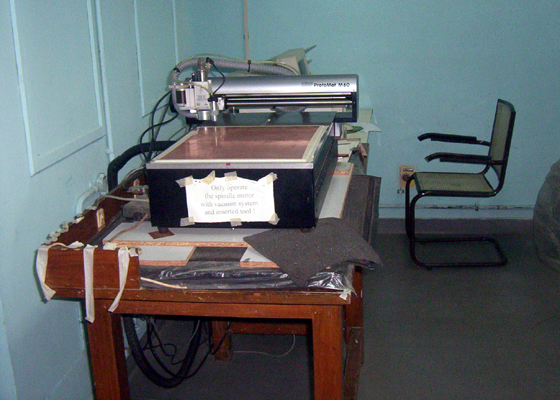
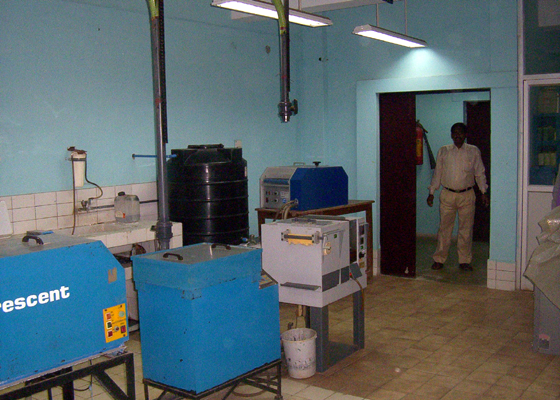
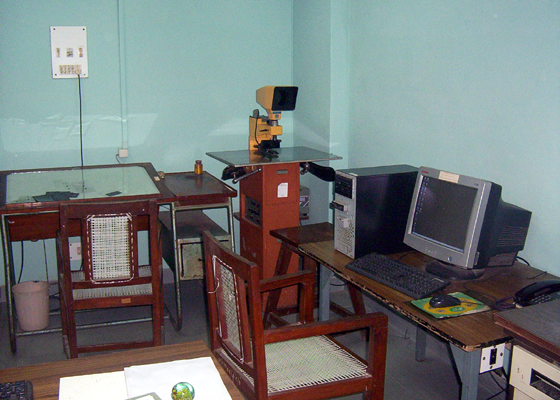
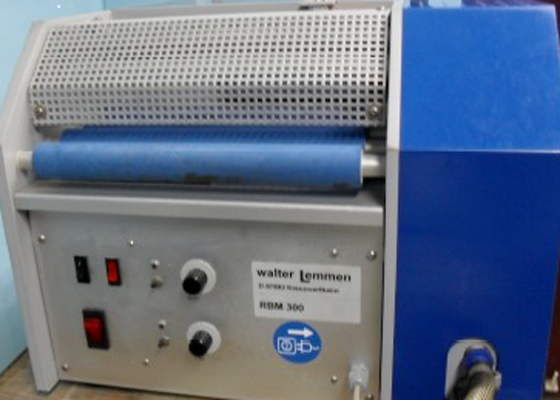
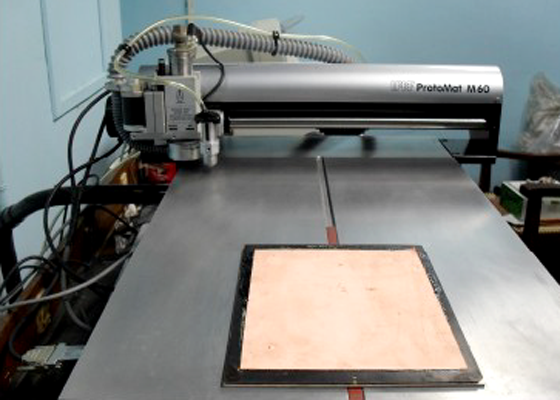
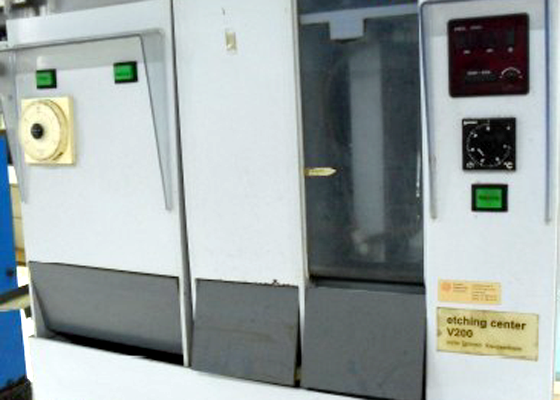
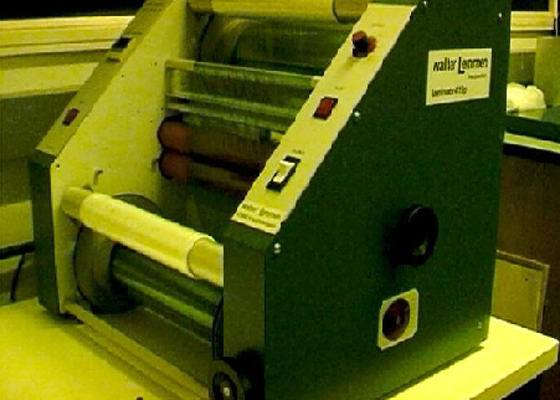
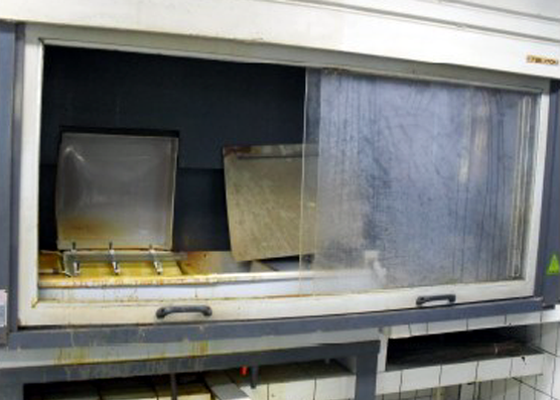
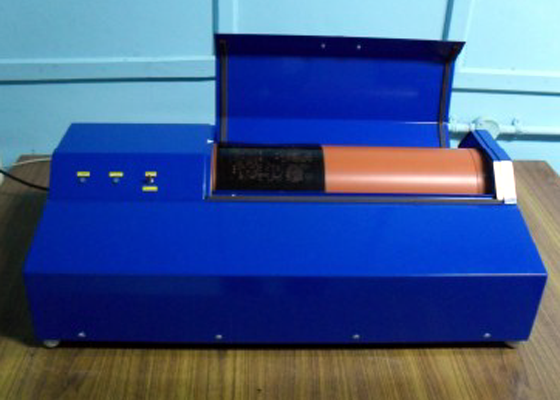
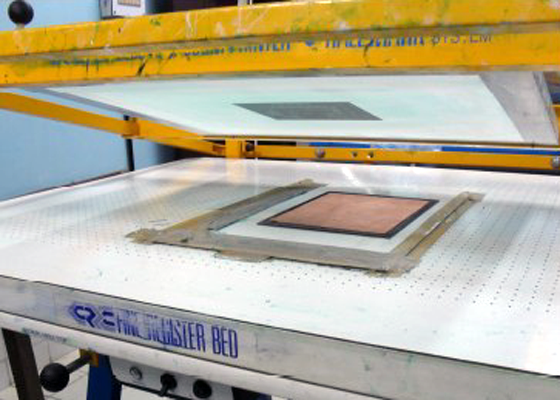
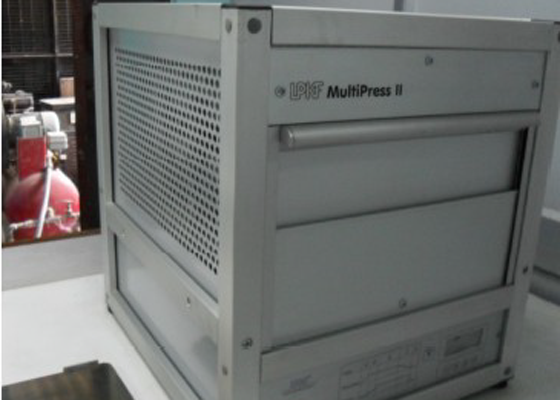
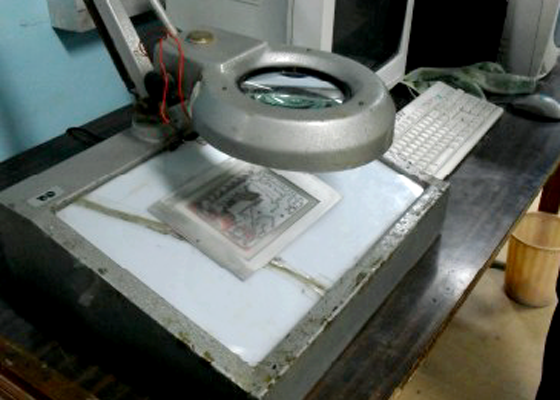
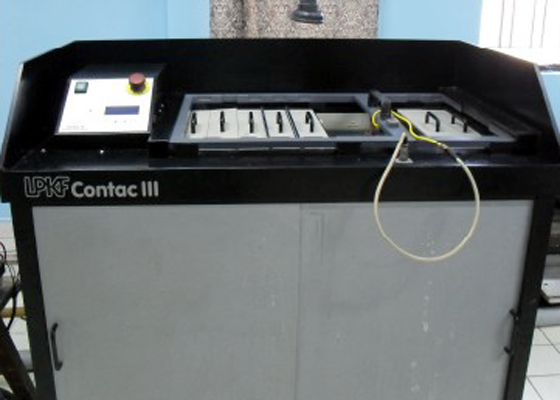
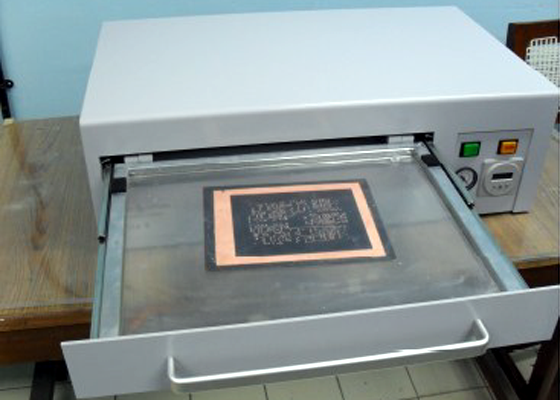
Printed Circuit Board (PCB) Fabrication Laboratory
 This lab mainly includes equipments and machines to produce multi layer plated-through Printed circuit boards (PCBs), to insert leaded and surface mounted devices.
Printed circuit boards are electronic circuits boards created for mounting electronic components on a nonconductive board, and creating conductive connections between them. The creation of circuit patterns is accomplished by using both additive and subtractive methods. The conductive circuit is generally copper, although aluminum, nickel, chrome, and other metals are sometimes used. There are three basic varieties of printed circuit boards: single-sided, double-sided, and multi-layered.
Single sided PCB:Conductors on only one side of a dielectric base
Double sided PCB:Conductors on both sides of a dielectric base, usually interconnected (the two layers) with plated-through-holes (PTHs).
Multi-layer:Conductors on 3 or more layers separated by dielectric material and interconnected by PTH or pads
- Dr. Raghvendra Kumar Chaudhary (Co-Coordinator)
- Mrs. Sangita Singh (In-charge)
- Mr. Anil Kumar
- Mr.Jashpal Singh
ACES 125, IIT Kanpur
Phone: 0512-259-7628/6660
- Details
- Last Updated: Friday, 16 February 2024 14:47
- EE 200 SIGNALS, SYSTEMS AND NETWORKS
Continuous and discrete time signals; Fourier series, Fourier, Laplace and Z tr\ansform techniques; DFT. Sampling Theorem. LTI systems: I/O description, impulse response and system functions, pole/ zero plots, FIR and IIR systems. Analog and digital filters. Networks: topological description, network theorems,Two port analysis. - EE 301 DIGITAL SIGNAL PROCESSING
Review of discrete time signals and systems. Sampling of CT signals: aliasing, prefiltering, decimation and interpolation, A/D and D/A conversion, quantization noise. Filter design techniques. DFT Computation. Fourier analysis of signals using DFT. Finite register length effects. DSP hardware. Applications. . - EE 320 PRINCIPLES OF COMMUNICATION
Communication problem and system models. Representation of deterministic and stochastic signals. Analog and digital modulation systems, Receiver structures, SNR and error probability calculations, Frequency and time division multiplexing. Digital encoding of analog signals. Elements of information theory, Multiple access techniques and ISDN. - EE 321 COMMUNICATION SYSTEMS
Information measures. Source coding. ISI & channel equalization, partial response signalling. M-ary modulation systems, error probability calculations. PLLs and FM threshold extension. Error control coding, block and convolution codes. Combined modulation and coding, trellis coded modulation. Spread spectrum systems. - EE390 COMMUNICATION SKILLS
- EE 403 ADVANCED DIGITAL SIGNAL PROCESSING
Review of linear algebra; functional analysis, time-frequency representation; frequency scale and resolution; uncertainity principle, short-time Fourier transform, Multi-resolution concept and analysis, Wavelet transforms. Wigner-ville distributions. Multi-rate signal processing; discrete-time bases and filter banks; 2D signals and systems, 2D sampling in arbitrary lattices, 2D-linear transforms, 1D/2D signal compression; introduction to DSP architecture. - EE 422 COMMUNICATION SYSTEM ENGINEERING
Baseband signal characterisation-telegraphy, telephony, television and data; message channel objective; voice frequency transmission, radio wave propagation methods: random noise characterization in communication systems, intermodulation distortion : line of sight systems description and design; troposcattrer systems.
- EE 600 MATHEMATICAL STRUCTURES OF SIGNALS & SYSTEMS
Nature of definitions; Theory of measurement and scales; Symmetry, invariance and groups; Groups in signals and systems; Algebraic and relational structures of signal spaces and convolutional systems; Representation theory of groups, harmonic analysis and spectral theory for convolutional systems. - EE 601 MATHEMATICAL METHODS IN SIGNAL PROCESSING
Generalized inverses, regularization of ill-posed problems. Eigen and singular value decompositions, generalized problems. Interpolation and approximation by least squares and minimax error criteria. Optimization techniques for linear and nonlinear problems. Applications in various areas of signal processing. - EE 602 STATISTICAL SIGNAL PROCESSING I
Power Spectrum Estimation-Parametric and Maximum Entropy Methods, Wiener, Kalman Filtering, Levinson-Durban Algorithms Least Square Method, Adaptive Filtering, Nonstationary Signal Analysis, Wigner-Ville Distribution, Wavelet Analysis. - EE 603 ADVANCED TOPICS IN DIGITAL FILTERING
Multirate Processing of discrete Time Signals; Orthogonal Digital Filter Systems. Two-Dimensional Discrete Time Filters. VLSI Computing structures for Signal Processing. - EE 604 IMAGE PROCESSING
Human visual system and image perception, monochrome & colour vision models, colour representation ; image sampling & quantization; 2-D systems; image transforms; image coding; stochastic models for image representation; image enhancement, restoration & reconstruction. Image analysis using multiresolution techniques. - EE 605 INTRODUCTION TO SIGNAL ANALYSIS
Discrete and Continuous time signals and systems, LTI systems, Convolution, Difference equations. Frequency domain representation: Fourier transform and its properties. Random discrete signals. Sampling and reconstruction: Change of sampling rate. Normed vector spaces, basis, linear independence, orthogonality. Linear systems of equations. Over- and Underdetermined systems. Row- and Column spaces, Null spaces. Least square and minimum norm solutions. Inverse and pseudo inverse, Symmetry transformations. Eigenvectors and eigenvalues. Hilbert transforms, band pass representations and complex envelope. Base band pulse transmission, matched filtering, ISI, equalization. Coherent and noncoherent detection. - EE 606 ARCHITECTURE AND APPLICATIONS OF DIGITAL SIGNAL PROCESSORS
Review of DSP fundamentals. Issues involved in DSP processor design - speed, cost, accuracy, pipelining, parallelism, quantization error, etc. Key DSP hardware elements - Multiplier, ALU, Shifter, Address Generator, etc. TMS 320C55 X and TM 320C6X and 21000 family architecture and instruction set. Software development tools - assembler, linker and simulator. Applications using DSP Processor - spectral analysis, FIR/IIR filter, linear-predictive coding, etc. - EE 607 WAVELET TRANSFORMS FOR SIGNAL AND IMAGE PROCESSING
Basics of functional Analysis; Basics of Fourier Analysis; Spectral Theory; Time- Frequency representations; Nonstationary Processes; Continuous Wavelet Transforms; Discrete Time-Frequency Transforms; Multi resolution Analysis; Time-Frequency Localization; Signal Processing Applications; Image Processing Applications - EE 608 VIDEO PROCESSING
- EE 609 BASICS OF BIOMEDICAL SIGNAL AND IMAGE PROCESSING
Speech and pathology of vocal tract/ cords, Perpetual coding of audio signal and data compression, Spatio-temporal nature of bioelectric signals, cardiac generator and its models, Specific digital technique for bioelectric signals, Modes of medical imaging. - EE 621 REPRESENTATION AND ANALYSIS OF RANDOM SIGNALS
Review of probability, random variables, random processes; representation of narrow band signals. Transmission of signals through LTI systems; Estimation and detection with random sequences; BAYES, MMSE, MAP, ML schemes. KL and sampling theorem representations, matched filter, ambiguity functions, Markov sequences, linear stochastic dynamical systems. - EE 622 COMMUNICATION THEORY
Rate Distortion Theory, Channel Coding Theorems, Digital Modulation Schemes, Trellis Coded Modulation, Digital Transmission over Bandlimited Channels, Fading Multipath Channels, Synchronization. Analog Modulation Schemes, Optimum/ Suboptimum Receivers; Diversity Combining; Cellular Mobile Communciation; Equalization. - EE 623 DETECTION AND ESTIMATION THEORY
Classical Detection and Estimation Theory, Signal Representation, Detection of signals in Gaussian noise, Waveform estimation, Linear estimation problems, Wiener filtering, Kalman filtering. - EE 624 INFORMATION AND CODING THEORY
Entropy and mutual information, rate distortion function, source coding, variable length coding, discrete memoryless channels, capacity cost functions, channel coding, linear block codes, cyclic codes. Convolutional codes, sequential and probabilistic decoding, majority logic decoding, burst error-correcting codes. - EE 625 SATELLITE COMMUNICATION
Introduction. Historical background and overall perspective; Satellite network modeling ; Link calculations; FM analysis; TV Transmission; Digital modulation; Error control; Multiple access; FDMA, TDMA, CDMA. Orbital considerations; Launching; Atmospheric effects; Transponders; Earth Stations; VSATs. - EE 627 SPEECH SIGNAL PROCESSING
Spectral and non-spectral analysis techniques; Model-based coding techniques; Noise reduction and echo cancellation; Synthetic and coded speech quality assessment; Selection of recognition unit; Model-based recognition; Language modelling; Speaker Identification; Text analysis and text-to-speech synthesis. - EE 628 TOPICS IN CRYPTOGRAPY AND CODING
Cryptography and error control coding in communication and computing systems. Stream and block ciphers; DES; public-key cryptosystems; key management, authentication and digital signatures. Codes as ideals in finite commutative rings and group algebras. Joint coding and cryptography. - EE 629 DIGITAL SWITCHING
Network Architecture; time division multiplexing; digital switching; space & time division switching, cross point and memory requirements; blocking probabilities. traffic Analysis, models for circuit and packet switched systems, performance comparison; ISDN. - EE 658 FUZZYSET,LOGIC & SYSTEMS AND APPLICATIONS
Introduction, Uncertainity, Imprecision and Vagueness, Fuzzy systems, Brief history of Fuzzy logic, Foundation of Fuzzy Theory, Fuzzy Sets and Systems, Fuzzy Systems in Commercial Products, Research Fields in Fuzzy Theory, Classical sets and Fuzzy sets, Classical Relations, Fuzzy relations, Membership Functions, Fuzzy to crisp conversions, Fuzzy arithmetic, Numbers, Vectors and the extension principle, Classical logic and Fuzzy logic, Mathematical background of Fuzzy Systems, Classical (Crisp) vs, Fuzzy sets, Representation of Fuzzy sets, Types of Membership Functions, Basic Concepts (support, singleton, height, a-cut projections), Fuzzy set operations, S-and T- Norms, Properties of Fuzzy sets, Sets as Points in Hypercube, Cartesian Product, Crisp and Fuzzy Relations, Examples, Liguistic variables and hedges, Membership function design. Basic Principles of Inference in Fuzzy Logic, Fuzzy IF-THEN Rules, Canonical Form, Fuzzy Systems and Algorithms, Approximate Reasoning, Forms of Fuzzy Implication, Fuzzy Inference Engines, Graphical Techniques of Inference, Fuzzyifications/ DeFuzzification, Fuzzy System Design and its Elements, Design options. Fuzzy Events, Fuzzy Measures, Possibility Distributions as Fuzzy Sets, Possibility vs, Probability, Fuzzy Systems as Universal Approximators, Additive Fuzzy Systems (standard additive model). - EE 671 NEURAL NETWORKS
Theory of representation; Two computational paradigms; Multi-layer networks; Auto-associative and hetero-associative nets; Learning in neural nets: Supervised and unsupervised learning; Application of neural nets; Neural network simulators. - EE 672 COMPUTER VISION AND DOCUMENT PROCESSING
Human and computer vision, Image representation and modelling, Line and edge detection, Labeling, Image segmentation, Pattern recognition, Statistical, structural neural and hybrid techniques, Training & classification, Document analysis and optical character recognition, object recognition, Scene matching & analysis, Robotic version, Role of knowledge. - EE 673 DIGITAL COMMUNICATION NETWORKS
OSI model, queueing theory, physical layer, error detection and correction, data link layer, ARQ strategies, framing, media access layer, modelling and analysis of important media access control protocols, FDDI and DQDB MAC protocols for LANs and MANs, network layer, flow control & routing, TCP/IP protocols, ATM. - EE 676 DIGITAL MOBILE RADIO SYSTEM
Introduction to Mobile Radio networks, channel description and analysis, Propagation Effects, Technologies, TDMA/CDMA Techniques, Architectures, Cellular Systems, GSM Systems, Mobile Satellite Communication, Wireless ATM, Third Generation Cellular, Universal Mobile Telecommunication Systems (UMTS). - EE 678 NEURAL SYSTEMS AND NETWORKS
Memory: Eric Kandel's memory and its physiological basis, Explicit and Implicit memories, Short Term and Long Term potentiation (STP and LTP), Hopfield's Model of Associative Memories, its comparison with Kandel's model, Stability of Hopefield net, its use as CAM, Hamming's Model and comparision of number of weights, Learning: Supervised and Unsupervised nets, Learning Methods, Neural systems: Different types of neurons, dendrites, axons, role of Na+ K+ AT Pase and resting potentials, synaptic junctions and transmission of action potentials, Consciousness and its correlation with respiratory sinus arrythmia, a bioinstrumentation scheme for its measurement; Neural nets for technical applications: Bidirectional Associative Memories, (SAMs), Radial Basic, Function nets. Boltzmann machine, Wavelet nets, Cellular Neural Nets and Fuzzy nets.
Courses Offered to PG Students
- EE 601 MATHEMATICAL METHODS IN SIGNAL PROCESSING
Generalized inverses, regularization of ill-posed problems. Eigen and singular value decompositions, generalized problems. Interpolation and approximation by least squares and minimax error criteria. Optimization techniques for linear and nonlinear problems. Applications in various areas of signal processing. - EE 604 IMAGE PROCESSING
Human visual system and image perception, monochrome & colour vision models, colour representation ; image sampling & quantization; 2-D systems; image transforms; image coding; stochastic models for image representation; image enhancement, restoration & reconstruction. Image analysis using multiresolution techniques. - EE 605 INTRODUCTION TO SIGNAL ANALYSIS
Discrete and Continuous time signals and systems, LTI systems, Convolution, Difference equations. Frequency domain representation: Fourier transform and its properties. Random discrete signals. Sampling and reconstruction: Change of sampling rate. Normed vector spaces, basis, linear independence, orthogonality. Linear systems of equations. Over- and Underdetermined systems. Row- and Column spaces, Null spaces. Least square and minimum norm solutions. Inverse and pseudo inverse, Symmetry transformations. Eigenvectors and eigenvalues. Hilbert transforms, band pass representations and complex envelope. Base band pulse transmission, matched filtering, ISI, equalization. Coherent and noncoherent detection. - EE 621 REPRESENTATION AND ANALYSIS OF RANDOM SIGNALS
Review of probability, random variables, random processes; representation of narrow band signals. Transmission of signals through LTI systems; Estimation and detection with random sequences; BAYES, MMSE, MAP, ML schemes. KL and sampling theorem representations, matched filter, ambiguity functions, Markov sequences, linear stochastic dynamical systems. - EE624 INFORMATION AND CODING THEORY
- EE 627 SPEECH SIGNAL PROCESSING
Spectral and non-spectral analysis techniques; Model-based coding techniques; Noise reduction and echo cancellation; Synthetic and coded speech quality assessment; Selection of recognition unit; Model-based recognition; Language modelling; Speaker Identification; Text analysis and text-to-speech synthesis. - EE 673 DIGITAL COMMUNICATION NETWORKS
OSI model, queueing theory, physical layer, error detection and correction, data link layer, ARQ strategies, framing, media access layer, modelling and analysis of important media access control protocols, FDDI and DQDB MAC protocols for LANs and MANs, network layer, flow control & routing, TCP/IP protocols, ATM. - EE680 INTELLIGENT INSTRUMENTATION
- EE 600 MATHEMATICAL STRUCTURES OF SIGNALS & SYSTEMS
Nature of definitions; Theory of measurement and scales; Symmetry, invariance and groups; Groups in signals and systems; Algebraic and relational structures of signal spaces and convolutional systems; Representation theory of groups, harmonic analysis and spectral theory for convolutional systems. - EE 602 STATISTICAL SIGNAL PROCESSING I
Power Spectrum Estimation-Parametric and Maximum Entropy Methods, Wiener, Kalman Filtering, Levinson-Durban Algorithms Least Square Method, Adaptive Filtering, Nonstationary Signal Analysis, Wigner-Ville Distribution, Wavelet Analysis. - EE 608 VIDEO PROCESSING
- EE 622 COMMUNICATION THEORY
Rate Distortion Theory, Channel Coding Theorems, Digital Modulation Schemes, Trellis Coded Modulation, Digital Transmission over Bandlimited Channels, Fading Multipath Channels, Synchronization. Analog Modulation Schemes, Optimum/ Suboptimum Receivers; Diversity Combining; Cellular Mobile Communciation; Equalization. - EE 623 DETECTION AND ESTIMATION THEORY
Classical Detection and Estimation Theory, Signal Representation, Detection of signals in Gaussian noise, Waveform estimation, Linear estimation problems, Wiener filtering, Kalman filtering. - EE 628 TOPICS IN CRYPTOGRAPY AND CODING
Cryptography and error control coding in communication and computing systems. Stream and block ciphers; DES; public-key cryptosystems; key management, authentication and digital signatures. Codes as ideals in finite commutative rings and group algebras. Joint coding and cryptography. - EE 629 DIGITAL SWITCHING
Network Architecture; time division multiplexing; digital switching; space & time division switching, cross point and memory requirements; blocking probabilities. traffic Analysis, models for circuit and packet switched systems, performance comparison; ISDN. - EE 658 FUZZYSET,LOGIC & SYSTEMS AND APPLICATIONS
Introduction, Uncertainity, Imprecision and Vagueness, Fuzzy systems, Brief history of Fuzzy logic, Foundation of Fuzzy Theory, Fuzzy Sets and Systems, Fuzzy Systems in Commercial Products, Research Fields in Fuzzy Theory, Classical sets and Fuzzy sets, Classical Relations, Fuzzy relations, Membership Functions, Fuzzy to crisp conversions, Fuzzy arithmetic, Numbers, Vectors and the extension principle, Classical logic and Fuzzy logic, Mathematical background of Fuzzy Systems, Classical (Crisp) vs, Fuzzy sets, Representation of Fuzzy sets, Types of Membership Functions, Basic Concepts (support, singleton, height, a-cut projections), Fuzzy set operations, S-and T- Norms, Properties of Fuzzy sets, Sets as Points in Hypercube, Cartesian Product, Crisp and Fuzzy Relations, Examples, Liguistic variables and hedges, Membership function design. Basic Principles of Inference in Fuzzy Logic, Fuzzy IF-THEN Rules, Canonical Form, Fuzzy Systems and Algorithms, Approximate Reasoning, Forms of Fuzzy Implication, Fuzzy Inference Engines, Graphical Techniques of Inference, Fuzzyifications/ DeFuzzification, Fuzzy System Design and its Elements, Design options. Fuzzy Events, Fuzzy Measures, Possibility Distributions as Fuzzy Sets, Possibility vs, Probability, Fuzzy Systems as Universal Approximators, Additive Fuzzy Systems (standard additive model). - EE 670 WIRELESS COMMUNICATION
- EE679 QUEUEING SYSTEMS
- EE 671 NEURAL NETWORKS
Theory of representation; Two computational paradigms; Multi-layer networks; Auto-associative and hetero-associative nets; Learning in neural nets: Supervised and unsupervised learning; Application of neural nets; Neural network simulators. - EE698D UNIVERSAL COMPRESSION ALGORITHMS & ENTROPY RATE
- EE 601 MATHEMATICAL METHODS IN SIGNAL PROCESSING
Generalized inverses, regularization of ill-posed problems. Eigen and singular value decompositions, generalized problems. Interpolation and approximation by least squares and minimax error criteria. Optimization techniques for linear and nonlinear problems. Applications in various areas of signal processing - EE 604 IMAGE PROCESSING
Human visual system and image perception, monochrome & colour vision models, colour representation ; image sampling & quantization; 2-D systems; image transforms; image coding; stochastic models for image representation; image enhancement, restoration & reconstruction. Image analysis using multiresolution techniques. - EE 605 INTRODUCTION TO SIGNAL ANALYSIS
Discrete and Continuous time signals and systems, LTI systems, Convolution, Difference equations. Frequency domain representation: Fourier transform and its properties. Random discrete signals. Sampling and reconstruction: Change of sampling rate. Normed vector spaces, basis, linear independence, orthogonality. Linear systems of equations. Over- and Underdetermined systems. Row- and Column spaces, Null spaces. Least square and minimum norm solutions. Inverse and pseudo inverse, Symmetry transformations. Eigenvectors and eigenvalues. Hilbert transforms, band pass representations and complex envelope. Base band pulse transmission, matched filtering, ISI, equalization. Coherent and noncoherent detection. - EE607 WAVELET TRANSFORMS FOR SIGNAL AND IMAGE PROCESSING
- EE 621 REPRESENTATION AND ANALYSIS OF RANDOM SIGNALS
Review of probability, random variables, random processes; representation of narrow band signals. Transmission of signals through LTI systems; Estimation and detection with random sequences; BAYES, MMSE, MAP, ML schemes. KL and sampling theorem representations, matched filter, ambiguity functions, Markov sequences, linear stochastic dynamical systems. - EE 624 INFORMATION AND CODING THEORY
Entropy and mutual information, rate distortion function, source coding, variable length coding, discrete memoryless channels, capacity cost functions, channel coding, linear block codes, cyclic codes. Convolutional codes, sequential and probabilistic decoding, majority logic decoding, burst error-correcting codes. - EE 627 SPEECH SIGNAL PROCESSING
Spectral and non-spectral analysis techniques; Model-based coding techniques; Noise reduction and echo cancellation; Synthetic and coded speech quality assessment; Selection of recognition unit; Model-based recognition; Language modelling; Speaker Identification; Text analysis and text-to-speech synthesis. - EE 658 FUZZYSET,LOGIC & SYSTEMS AND APPLICATIONS
Introduction, Uncertainity, Imprecision and Vagueness, Fuzzy systems, Brief history of Fuzzy logic, Foundation of Fuzzy Theory, Fuzzy Sets and Systems, Fuzzy Systems in Commercial Products, Research Fields in Fuzzy Theory, Classical sets and Fuzzy sets, Classical Relations, Fuzzy relations, Membership Functions, Fuzzy to crisp conversions, Fuzzy arithmetic, Numbers, Vectors and the extension principle, Classical logic and Fuzzy logic, Mathematical background of Fuzzy Systems, Classical (Crisp) vs, Fuzzy sets, Representation of Fuzzy sets, Types of Membership Functions, Basic Concepts (support, singleton, height, a-cut projections), Fuzzy set operations, S-and T- Norms, Properties of Fuzzy sets, Sets as Points in Hypercube, Cartesian Product, Crisp and Fuzzy Relations, Examples, Liguistic variables and hedges, Membership function design. Basic Principles of Inference in Fuzzy Logic, Fuzzy IF-THEN Rules, Canonical Form, Fuzzy Systems and Algorithms, Approximate Reasoning, Forms of Fuzzy Implication, Fuzzy Inference Engines, Graphical Techniques of Inference, Fuzzyifications/ DeFuzzification, Fuzzy System Design and its Elements, Design options. Fuzzy Events, Fuzzy Measures, Possibility Distributions as Fuzzy Sets, Possibility vs, Probability, Fuzzy Systems as Universal Approximators, Additive Fuzzy Systems (standard additive model). - EE 673 DIGITAL COMMUNICATION NETWORKS
OSI model, queueing theory, physical layer, error detection and correction, data link layer, ARQ strategies, framing, media access layer, modelling and analysis of important media access control protocols, FDDI and DQDB MAC protocols for LANs and MANs, network layer, flow control & routing, TCP/IP protocols, ATM.
- EE600 MATHEMATICAL STRUCTURES OF SIGNALS & SYSTEMS
- EE602 STATISTICAL SIGNAL PROCESSING
- EE608 VIDEO SIGNAL PROCESSING
- EE698V SIMULATION OF COMMUNICATION SYSTEMS
- EE 622 COMMUNICATION THEORY
Rate Distortion Theory, Channel Coding Theorems, Digital Modulation Schemes, Trellis Coded Modulation, Digital Transmission over Bandlimited Channels, Fading Multipath Channels, Synchronization. Analog Modulation Schemes, Optimum/ Suboptimum Receivers; Diversity Combining; Cellular Mobile Communciation; Equalization. - EE 623 DETECTION AND ESTIMATION THEORY
Classical Detection and Estimation Theory, Signal Representation, Detection of signals in Gaussian noise, Waveform estimation, Linear estimation problems, Wiener filtering, Kalman filtering. - EE 646 PHOTONICS AND SWITCHING NETWORKS
- EE 670 WIRELESS COMMUNICATION
- EE 671 NEURAL NETWORKS
Theory of representation; Two computational paradigms; Multi-layer networks; Auto-associative and hetero-associative nets; Learning in neural nets: Supervised and unsupervised learning; Application of neural nets; Neural network simulators.
- EE 601 MATHEMATICAL METHODS IN SIGNAL PROCESSING
Generalized inverses, regularization of ill-posed problems. Eigen and singular value decompositions, generalized problems. Interpolation and approximation by least squares and minimax error criteria. Optimization techniques for linear and nonlinear problems. Applications in various areas of signal processing - EE 604 IMAGE PROCESSING
Human visual system and image perception, monochrome & colour vision models, colour representation ; image sampling & quantization; 2-D systems; image transforms; image coding; stochastic models for image representation; image enhancement, restoration & reconstruction. Image analysis using multiresolution techniques. - EE 605 INTRODUCTION TO SIGNAL ANALYSIS
Discrete and Continuous time signals and systems, LTI systems, Convolution, Difference equations. Frequency domain representation: Fourier transform and its properties. Random discrete signals. Sampling and reconstruction: Change of sampling rate. Normed vector spaces, basis, linear independence, orthogonality. Linear systems of equations. Over- and Underdetermined systems. Row- and Column spaces, Null spaces. Least square and minimum norm solutions. Inverse and pseudo inverse, Symmetry transformations. Eigenvectors and eigenvalues. Hilbert transforms, band pass representations and complex envelope. Base band pulse transmission, matched filtering, ISI, equalization. Coherent and noncoherent detection. - EE 607 WAVELET TRANSFORMS FOR SIGNAL AND IMAGE PROCESSING
Basics of functional Analysis; Basics of Fourier Analysis; Spectral Theory; Time- Frequency representations; Nonstationary Processes; Continuous Wavelet Transforms; Discrete Time-Frequency Transforms; Multi resolution Analysis; Time-Frequency Localization; Signal Processing Applications; Image Processing Applications - EE 621 REPRESENTATION AND ANALYSIS OF RANDOM SIGNALS
Review of probability, random variables, random processes; representation of narrow band signals. Transmission of signals through LTI systems; Estimation and detection with random sequences; BAYES, MMSE, MAP, ML schemes. KL and sampling theorem representations, matched filter, ambiguity functions, Markov sequences, linear stochastic dynamical systems. - EE 624 INFORMATION AND CODING THEORY
Entropy and mutual information, rate distortion function, source coding, variable length coding, discrete memoryless channels, capacity cost functions, channel coding, linear block codes, cyclic codes. Convolutional codes, sequential and probabilistic decoding, majority logic decoding, burst error-correcting codes. - EE 627 SPEECH SIGNAL PROCESSING
Spectral and non-spectral analysis techniques; Model-based coding techniques; Noise reduction and echo cancellation; Synthetic and coded speech quality assessment; Selection of recognition unit; Model-based recognition; Language modelling; Speaker Identification; Text analysis and text-to-speech synthesis. - EE 629 DIGITAL SWITCHING
Network Architecture; time division multiplexing; digital switching; space & time division switching, cross point and memory requirements; blocking probabilities. traffic Analysis, models for circuit and packet switched systems, performance comparison; ISDN. - EE 658 FUZZYSET,LOGIC & SYSTEMS AND APPLICATIONS
Introduction, Uncertainity, Imprecision and Vagueness, Fuzzy systems, Brief history of Fuzzy logic, Foundation of Fuzzy Theory, Fuzzy Sets and Systems, Fuzzy Systems in Commercial Products, Research Fields in Fuzzy Theory, Classical sets and Fuzzy sets, Classical Relations, Fuzzy relations, Membership Functions, Fuzzy to crisp conversions, Fuzzy arithmetic, Numbers, Vectors and the extension principle, Classical logic and Fuzzy logic, Mathematical background of Fuzzy Systems, Classical (Crisp) vs, Fuzzy sets, Representation of Fuzzy sets, Types of Membership Functions, Basic Concepts (support, singleton, height, a-cut projections), Fuzzy set operations, S-and T- Norms, Properties of Fuzzy sets, Sets as Points in Hypercube, Cartesian Product, Crisp and Fuzzy Relations, Examples, Liguistic variables and hedges, Membership function design. Basic Principles of Inference in Fuzzy Logic, Fuzzy IF-THEN Rules, Canonical Form, Fuzzy Systems and Algorithms, Approximate Reasoning, Forms of Fuzzy Implication, Fuzzy Inference Engines, Graphical Techniques of Inference, Fuzzyifications/ DeFuzzification, Fuzzy System Design and its Elements, Design options. Fuzzy Events, Fuzzy Measures, Possibility Distributions as Fuzzy Sets, Possibility vs, Probability, Fuzzy Systems as Universal Approximators, Additive Fuzzy Systems (standard additive model). - EE 673 DIGITAL COMMUNICATION NETWORKS
OSI model, queueing theory, physical layer, error detection and correction, data link layer, ARQ strategies, framing, media access layer, modelling and analysis of important media access control protocols, FDDI and DQDB MAC protocols for LANs and MANs, network layer, flow control & routing, TCP/IP protocols, ATM.
- EE 600 MATHEMATICAL STRUCTURES OF SIGNALS & SYSTEMS
Nature of definitions; Theory of measurement and scales; Symmetry, invariance and groups; Groups in signals and systems; Algebraic and relational structures of signal spaces and convolutional systems; Representation theory of groups, harmonic analysis and spectral theory for convolutional systems. - EE 608 VIDEO PROCESSING
- EE 622 COMMUNICATION THEORY
Rate Distortion Theory, Channel Coding Theorems, Digital Modulation Schemes, Trellis Coded Modulation, Digital Transmission over Bandlimited Channels, Fading Multipath Channels, Synchronization. Analog Modulation Schemes, Optimum/ Suboptimum Receivers; Diversity Combining; Cellular Mobile Communciation; Equalization. - EE 623 DETECTION AND ESTIMATION THEORY
Classical Detection and Estimation Theory, Signal Representation, Detection of signals in Gaussian noise, Waveform estimation, Linear estimation problems, Wiener filtering, Kalman filtering. - EE 628 TOPICS IN CRYPTOGRAPY AND CODING
Cryptography and error control coding in communication and computing systems. Stream and block ciphers; DES; public-key cryptosystems; key management, authentication and digital signatures. Codes as ideals in finite commutative rings and group algebras. Joint coding and cryptography. - EE 629 PHOTONICS AND SWITCHING NETWORKS
- EE 658 FUZZYSET,LOGIC & SYSTEMS AND APPLICATIONS
Introduction, Uncertainity, Imprecision and Vagueness, Fuzzy systems, Brief history of Fuzzy logic, Foundation of Fuzzy Theory, Fuzzy Sets and Systems, Fuzzy Systems in Commercial Products, Research Fields in Fuzzy Theory, Classical sets and Fuzzy sets, Classical Relations, Fuzzy relations, Membership Functions, Fuzzy to crisp conversions, Fuzzy arithmetic, Numbers, Vectors and the extension principle, Classical logic and Fuzzy logic, Mathematical background of Fuzzy Systems, Classical (Crisp) vs, Fuzzy sets, Representation of Fuzzy sets, Types of Membership Functions, Basic Concepts (support, singleton, height, a-cut projections), Fuzzy set operations, S-and T- Norms, Properties of Fuzzy sets, Sets as Points in Hypercube, Cartesian Product, Crisp and Fuzzy Relations, Examples, Liguistic variables and hedges, Membership function design. Basic Principles of Inference in Fuzzy Logic, Fuzzy IF-THEN Rules, Canonical Form, Fuzzy Systems and Algorithms, Approximate Reasoning, Forms of Fuzzy Implication, Fuzzy Inference Engines, Graphical Techniques of Inference, Fuzzyifications/ DeFuzzification, Fuzzy System Design and its Elements, Design options. Fuzzy Events, Fuzzy Measures, Possibility Distributions as Fuzzy Sets, Possibility vs, Probability, Fuzzy Systems as Universal Approximators, Additive Fuzzy Systems (standard additive model). - EE 670 WIRELESS COMMUNICATION
- EE 676 DIGITAL, MOBILE RADIO SYSTEMS
- EE 671 NEURAL NETWORKS
Theory of representation; Two computational paradigms; Multi-layer networks; Auto-associative and hetero-associative nets; Learning in neural nets: Supervised and unsupervised learning; Application of neural nets; Neural network simulators.
- EE 602 STATISTICAL SIGNAL PROCESSING I
Power Spectrum Estimation-Parametric and Maximum Entropy Methods, Wiener, Kalman Filtering, Levinson-Durban Algorithms Least Square Method, Adaptive Filtering, Nonstationary Signal Analysis, Wigner-Ville Distribution, Wavelet Analysis. - EE 604 IMAGE PROCESSING
Human visual system and image perception, monochrome & colour vision models, colour representation ; image sampling & quantization; 2-D systems; image transforms; image coding; stochastic models for image representation; image enhancement, restoration & reconstruction. Image analysis using multiresolution techniques. - EE 605 INTRODUCTION TO SIGNAL ANALYSIS
Discrete and Continuous time signals and systems, LTI systems, Convolution, Difference equations. Frequency domain representation: Fourier transform and its properties. Random discrete signals. Sampling and reconstruction: Change of sampling rate. Normed vector spaces, basis, linear independence, orthogonality. Linear systems of equations. Over- and Underdetermined systems. Row- and Column spaces, Null spaces. Least square and minimum norm solutions. Inverse and pseudo inverse, Symmetry transformations. Eigenvectors and eigenvalues. Hilbert transforms, band pass representations and complex envelope. Base band pulse transmission, matched filtering, ISI, equalization. Coherent and noncoherent detection. - EE 621 REPRESENTATION AND ANALYSIS OF RANDOM SIGNALS
Review of probability, random variables, random processes; representation of narrow band signals. Transmission of signals through LTI systems; Estimation and detection with random sequences; BAYES, MMSE, MAP, ML schemes. KL and sampling theorem representations, matched filter, ambiguity functions, Markov sequences, linear stochastic dynamical systems. - EE 624 INFORMATION AND CODING THEORY
Entropy and mutual information, rate distortion function, source coding, variable length coding, discrete memoryless channels, capacity cost functions, channel coding, linear block codes, cyclic codes. Convolutional codes, sequential and probabilistic decoding, majority logic decoding, burst error-correcting codes. - EE 627 SPEECH SIGNAL PROCESSING
Spectral and non-spectral analysis techniques; Model-based coding techniques; Noise reduction and echo cancellation; Synthetic and coded speech quality assessment; Selection of recognition unit; Model-based recognition; Language modelling; Speaker Identification; Text analysis and text-to-speech synthesis. - EE 658 FUZZYSET,LOGIC & SYSTEMS AND APPLICATIONS
Introduction, Uncertainity, Imprecision and Vagueness, Fuzzy systems, Brief history of Fuzzy logic, Foundation of Fuzzy Theory, Fuzzy Sets and Systems, Fuzzy Systems in Commercial Products, Research Fields in Fuzzy Theory, Classical sets and Fuzzy sets, Classical Relations, Fuzzy relations, Membership Functions, Fuzzy to crisp conversions, Fuzzy arithmetic, Numbers, Vectors and the extension principle, Classical logic and Fuzzy logic, Mathematical background of Fuzzy Systems, Classical (Crisp) vs, Fuzzy sets, Representation of Fuzzy sets, Types of Membership Functions, Basic Concepts (support, singleton, height, a-cut projections), Fuzzy set operations, S-and T- Norms, Properties of Fuzzy sets, Sets as Points in Hypercube, Cartesian Product, Crisp and Fuzzy Relations, Examples, Liguistic variables and hedges, Membership function design. Basic Principles of Inference in Fuzzy Logic, Fuzzy IF-THEN Rules, Canonical Form, Fuzzy Systems and Algorithms, Approximate Reasoning, Forms of Fuzzy Implication, Fuzzy Inference Engines, Graphical Techniques of Inference, Fuzzyifications/ DeFuzzification, Fuzzy System Design and its Elements, Design options. Fuzzy Events, Fuzzy Measures, Possibility Distributions as Fuzzy Sets, Possibility vs, Probability, Fuzzy Systems as Universal Approximators, Additive Fuzzy Systems (standard additive model). - EE 673 DIGITAL COMMUNICATION NETWORKS
OSI model, queueing theory, physical layer, error detection and correction, data link layer, ARQ strategies, framing, media access layer, modelling and analysis of important media access control protocols, FDDI and DQDB MAC protocols for LANs and MANs, network layer, flow control & routing, TCP/IP protocols, ATM.
- EE 600 MATHEMATICAL STRUCTURES OF SIGNALS SYSTEMS
Nature of definitions; Theory of measurement and scales; Symmetry, invariance and groups; Groups in signals and systems; Algebraic and relational structures of signal spaces and convolutional systems; Representation theory of groups, harmonic analysis and spectral theory for convolutional systems. - EE 608 VIDEO PROCESSING
- EE 622 COMMUNICATION THEORY
Rate Distortion Theory, Channel Coding Theorems, Digital Modulation Schemes, Trellis Coded Modulation, Digital Transmission over Band limited Channels, Fading Multipath Channels, Synchronization. Analog Modulation Schemes, Optimum/ Suboptimum Receivers; Diversity Combining; Cellular Mobile Communication; Equalization. - EE 623 DETECTION AND ESTIMATION THEORY
Classical Detection and Estimation Theory, Signal Representation, Detection of signals in Gaussian noise, Waveform estimation, Linear estimation problems, Wiener filtering, Kalman filtering. - EE 628 TOPICS IN CRYPTOGRAPY AND CODING
Cryptography and error control coding in communication and computing systems. Stream and block ciphers; DES; public-key cryptosystems; key management, authentication and digital signatures. Codes as ideals in finite commutative rings and group algebras. Joint coding and cryptography. - EE 658 FUZZYSET,LOGIC & SYSTEMS AND APPLICATIONS
Introduction, Uncertainty, Imprecision and Vagueness, Fuzzy systems, Brief history of Fuzzy logic, Foundation of Fuzzy Theory, Fuzzy Sets and Systems, Fuzzy Systems in Commercial Products, Research Fields in Fuzzy Theory, Classical sets and Fuzzy sets, Classical Relations, Fuzzy relations, Membership Functions, Fuzzy to crisp conversions, Fuzzy arithmetic, Numbers, Vectors and the extension principle, Classical logic and Fuzzy logic, Mathematical background of Fuzzy Systems, Classical (Crisp) vs, Fuzzy sets, Representation of Fuzzy sets, Types of Membership Functions, Basic Concepts (support, singleton, height, a-cut projections), Fuzzy set operations, S-and T- Norms, Properties of Fuzzy sets, Sets as Points in Hypercube, Cartesian Product, Crisp and Fuzzy Relations, Examples, Liguistic variables and hedges, Membership function design. Basic Principles of Inference in Fuzzy Logic, Fuzzy IF-THEN Rules, Canonical Form, Fuzzy Systems and Algorithms, Approximate Reasoning, Forms of Fuzzy Implication, Fuzzy Inference Engines, Graphical Techniques of Inference, Fuzzyifications/ DeFuzzification, Fuzzy System Design and its Elements, Design options. Fuzzy Events, Fuzzy Measures, Possibility Distributions as Fuzzy Sets, Possibility vs, Probability, Fuzzy Systems as Universal Approximators, Additive Fuzzy Systems (standard additive model). - EE 629 DIGITAL SWITCHING
- EE 643 SMART ANTENNA FOR MOBILE COMMUNICATION
- EE 670 WIRELESS COMMUNICATION
- EE679 QUEUEING THEORY
- EE698V SIMULATION OF COMMUNICATION SYSTEM
- EE698W CONVEX OPTIMIZATION IN SP/COM
- EE 601 MATHEMATICAL METHODS IN SIGNAL PROCESSING
Generalized inverses, regularization of ill-posed problems. Eigen and singular value decompositions, generalized problems. Interpolation and approximation by least squares and minimax error criteria. Optimization techniques for linear and nonlinear problems. Applications in various areas of signal processing. - EE602 STATISTICAL SIGNAL PROCESSING
- EE 604 IMAGE PROCESSING
Human visual system and image perception, monochrome & colour vision models, colour representation ; image sampling & quantization; 2-D systems; image transforms; image coding; stochastic models for image representation; image enhancement, restoration & reconstruction. Image analysis using multiresolution techniques. - EE 605 INTRODUCTION TO SIGNAL ANALYSIS
Discrete and Continuous time signals and systems, LTI systems, Convolution, Difference equations. Frequency domain representation: Fourier transform and its properties. Random discrete signals. Sampling and reconstruction: Change of sampling rate. Normed vector spaces, basis, linear independence, orthogonality. Linear systems of equations. Over- and Underdetermined systems. Row- and Column spaces, Null spaces. Least square and minimum norm solutions. Inverse and pseudo inverse, Symmetry transformations. Eigenvectors and eigenvalues. Hilbert transforms, band pass representations and complex envelope. Base band pulse transmission, matched filtering, ISI, equalization. Coherent and noncoherent detection. - EE 607 WAVELET TRANSFORMS FOR SIGNAL AND IMAGE PROCESSING
Basics of functional Analysis; Basics of Fourier Analysis; Spectral Theory; Time- Frequency representations; Nonstationary Processes; Continuous Wavelet Transforms; Discrete Time-Frequency Transforms; Multi resolution Analysis; Time-Frequency Localization; Signal Processing Applications; Image Processing Applications. - EE 621 REPRESENTATION AND ANALYSIS OF RANDOM SIGNALS
Review of probability, random variables, random processes; representation of narrow band signals. Transmission of signals through LTI systems; Estimation and detection with random sequences; BAYES, MMSE, MAP, ML schemes. KL and sampling theorem representations, matched filter, ambiguity functions, Markov sequences, linear stochastic dynamical systems. - EE 624 INFORMATION AND CODING THEORY
Entropy and mutual information, rate distortion function, source coding, variable length coding, discrete memoryless channels, capacity cost functions, channel coding, linear block codes, cyclic codes. Convolutional codes, sequential and probabilistic decoding, majority logic decoding, burst error-correcting codes. - EE627 SPEECH SIGNAL PROCESSING
- EE 673 DIGITAL COMMUNICATION NETWORKS
OSI model, queueing theory, physical layer, error detection and correction, data link layer, ARQ strategies, framing, media access layer, modelling and analysis of important media access control protocols, FDDI and DQDB MAC protocols for LANs and MANs, network layer, flow control & routing, TCP/IP protocols, ATM. - EE698C PEER TO PEER NETWORKS
- EE 600 MATHEMATICAL STRUCTURES OF SIGNALS SYSTEMS
Nature of definitions; Theory of measurement and scales; Symmetry, invariance and groups; Groups in signals and systems; Algebraic and relational structures of signal spaces and convolutional systems; Representation theory of groups, harmonic analysis and spectral theory for convolutional systems. - EE 608 DIGITAL VIDEO PROCESSING
- EE 622 COMMUNICATION THEORY
Rate Distortion Theory, Channel Coding Theorems, Digital Modulation Schemes, Trellis Coded Modulation, Digital Transmission over Band limited Channels, Fading Multipath Channels, Synchronization. Analog Modulation Schemes, Optimum/ Suboptimum Receivers; Diversity Combining; Cellular Mobile Communication; Equalization. - EE 623 DETECTION AND ESTIMATION THEORY
Classical Detection and Estimation Theory, Signal Representation, Detection of signals in Gaussian noise, Waveform estimation, Linear estimation problems, Wiener filtering, Kalman filtering. - EE626 TOPICS IN STOCHASTIC PROCESSES
- EE 629 DIGITAL SWITCHING
- EE 643 SMART ANTENNA FOR MOBILE COMMUNICATION
- EE 670 WIRELESS COMMUNICATION
- EE698V SIMULATION OF COMMUNICATION SYSTEM
- EE698W CONVEX OPTIMIZATION IN SP/COM
- EE 601 MATHEMATICAL METHODS IN SIGNAL PROCESSING
Generalized inverses, regularization of ill-posed problems. Eigen and singular value decompositions, generalized problems. Interpolation and approximation by least squares and minimax error criteria. Optimization techniques for linear and nonlinear problems. Applications in various areas of signal processing. - EE 604 IMAGE PROCESSING
Human visual system and image perception, monochrome & colour vision models, colour representation ; image sampling & quantization; 2-D systems; image transforms; image coding; stochastic models for image representation; image enhancement, restoration & reconstruction. Image analysis using multiresolution techniques. - EE 605 INTRODUCTION TO SIGNAL ANALYSIS
Discrete and Continuous time signals and systems, LTI systems, Convolution, Difference equations. Frequency domain representation: Fourier transform and its properties. Random discrete signals. Sampling and reconstruction: Change of sampling rate. Normed vector spaces, basis, linear independence, orthogonality. Linear systems of equations. Over- and Underdetermined systems. Row- and Column spaces, Null spaces. Least square and minimum norm solutions. Inverse and pseudo inverse, Symmetry transformations. Eigenvectors and eigenvalues. Hilbert transforms, band pass representations and complex envelope. Base band pulse transmission, matched filtering, ISI, equalization. Coherent and noncoherent detection. - EE 607 WAVELET TRANSFORMS FOR SIGNAL AND IMAGE PROCESSING
Basics of functional Analysis; Basics of Fourier Analysis; Spectral Theory; Time- Frequency representations; Nonstationary Processes; Continuous Wavelet Transforms; Discrete Time-Frequency Transforms; Multi resolution Analysis; Time-Frequency Localization; Signal Processing Applications; Image Processing Applications. - EE 621 REPRESENTATION AND ANALYSIS OF RANDOM SIGNALS
Review of probability, random variables, random processes; representation of narrow band signals. Transmission of signals through LTI systems; Estimation and detection with random sequences; BAYES, MMSE, MAP, ML schemes. KL and sampling theorem representations, matched filter, ambiguity functions, Markov sequences, linear stochastic dynamical systems. - EE 624 INFORMATION AND CODING THEORY
Entropy and mutual information, rate distortion function, source coding, variable length coding, discrete memoryless channels, capacity cost functions, channel coding, linear block codes, cyclic codes. Convolutional codes, sequential and probabilistic decoding, majority logic decoding, burst error-correcting codes. - EE 673 DIGITAL COMMUNICATION NETWORKS
OSI model, queueing theory, physical layer, error detection and correction, data link layer, ARQ strategies, framing, media access layer, modelling and analysis of important media access control protocols, FDDI and DQDB MAC protocols for LANs and MANs, network layer, flow control & routing, TCP/IP protocols, ATM.
- EE 600 MATHEMATICAL STRUCTURES OF SIGNALS SYSTEMS
Nature of definitions; Theory of measurement and scales; Symmetry, invariance and groups; Groups in signals and systems; Algebraic and relational structures of signal spaces and convolutional systems; Representation theory of groups, harmonic analysis and spectral theory for convolutional systems. - EE 608 DIGITAL VIDEO PROCESSING
- EE 622 COMMUNICATION THEORY
Rate Distortion Theory, Channel Coding Theorems, Digital Modulation Schemes, Trellis Coded Modulation, Digital Transmission over Band limited Channels, Fading Multipath Channels, Synchronization. Analog Modulation Schemes, Optimum/ Suboptimum Receivers; Diversity Combining; Cellular Mobile Communication; Equalization. - EE 623 DETECTION AND ESTIMATION THEORY
Classical Detection and Estimation Theory, Signal Representation, Detection of signals in Gaussian noise, Waveform estimation, Linear estimation problems, Wiener filtering, Kalman filtering. - EE 627 SPEECH SIGNAL PROCESSING
Spectral and non-spectral analysis techniques; Model-based coding techniques; Noise reduction and echo cancellation; Synthetic and coded speech quality assessment; Selection of recognition unit; Model-based recognition; Language modelling; Speaker Identification; Text analysis and text-to-speech synthesis. - EE 643 SMART ANTENNA FOR MOBILE COMMUNICATION
- EE 609 CONVEX OPTIMIZATION IN SIGNAL PROCESSING AND COMMUNICATION
- EE 629 DIGITAL SWITCHING
- Details
- Last Updated: Friday, 14 July 2023 10:38
- EE 340 ELECTROMAGNETIC THEORY
Basics of Static electric and magnetic fields, Energy in fields, Maxwell’s equations, plane EM waves, Propagation in free space and in matter, Reflection and refraction, Guided EM waves, Transmission lines, Radiation of EM waves. - EE 416 OPTO-ELECTRONICS
LEDs, semiconductor lasers, modulation of laser sources. Avalanche and PIN photodetectors and their characteristics. Solar cells. Optical fibers and their characteristics. Integrated optics. Fiber optic communication systems, system design consideration.. - EE 441 MICROWAVES
Active devices: LHTs, klystrons, magnetrons, TWTs, BWOs, microwave transistors; point contact, tunnel, PIN, and GUNN diodes; Parametric amplifier masers. Microwave circuits-theory of guiding systems, scattering matrix impedance transformation and matching. Passive devices: ferrites & ferrite devices, microwave cavity. - EE 442 ANTENNAS AND PROPAGATION
Retarded potential, radiation from current element and dipole, radiation patterns, impedance, reciprocity. Various types of antennas, interferometers and multi-element arrays, Antenna Measurements. Ground wave propagation, terrain and earth curvature effects. Tropospheric propagation; fading, diffraction and scattering; Ionospheric Propagation-refractive index, critical frequencies, effects of magnetic field. - EE 443 RADAR SYSTEMS
Radar equation, CW and Frequency Modulated Radars, MTI and pulse Doppler radar, MTI delay line cancellors. MTI from moving platform, Tracking radars. Mono-pulse tracking in range/Doppler; Electronic scanning radars, Beam forming and Steering methods, Noise and Clutter; Ambiguity function; Radar signal processing; SAR. - EE 444 RADIO ASTRONOMY
Fundamentals of astronomy, Co-ordinate systems, Structure of the universe, Radio astronomy fundamentals, Electromagnetic wave propagation, Radio telescope Antennas, Reflector Antennas, Antenna arrays, Interferometry and aperture synthesis. Radio astronomy receivers, General principles, low noise amplifiers, digital auto-correlation receivers, Description of radio sources.
- EE 612 FIBER OPTIC SYSTEMS I
Review of semiconductor physics - radiative recombination. LEDs, optical cavity, DH and other lasers. P-I-N and APD detectors, detector noise. Optical fibers - ray and mode theories, multimode and single-mode fibers, attenuation, dispersion. Gaussian beams. Power coupling, splices and connectors. - EE 640 COMPUTATIONAL ELECTRO-MAGNETICS
Review of complex variables, conformal mappings, matrix calculus; Sturm Liouville equation; Eigenvalue problem; Guiding structures; Scattering media; Green’s function approach; Variational formulation, FEM, Generalized scattering matrix and planar circuit approach. - EE 641 ADVANCED ENGINEERING ELECTRO MAGNETICS
Transmission line theory; Green’s function and integral transform techniques; Wave propagation and polarization parameters; reflection and transmission across an interface; waveguides, cavity resonators, scattering by cylinders, wedges, spheres etc. Geometric theory of diffraction. - EE 642 ANTENNA ANALYSIS & SYNTHESIS
Vector potential; antenna theorems and definitions; dipole, loop, slot radiators; aperture antennas; array theorems; pattern synthesis; self and mutual impedances; scanning antennas; signal processing antennas, travelling wave antennas; antenna measurements. - EE 643 SMART ANTENNAS FOR MOBILE COMMUNICATIONS
Statistical signal processing concepts, Basics of mobile wireless communications. Radio-frequency signal modeling and channel characterization. Smart antennas and generalized array signal processing. Source localization problem. Joint angle and delay estimation. Smart antenna array configurations. Mobile communication systems with smart antennas. - EE 644 OE1 OPTICAL COMMUNICATION
- EE 645 MONOLITHIC MICROWAVE ICS
Scattering parameters of n-ports, Conductor and dielectric losses in planar transmission lines, coupled lines, multi-conductor lines, discontinuities, GaAs MESFET fabrication devices, High electron mobility transistor, Heterojunction bipolar transistor fabrication and modeling, NMIC technology and design. - EE 646 PHOTONIC NETWORKS AND SWITCHING
Optical communications: Introduction to basic optical communications and devices. Optical multiplexing techniques - Wavelength division multiplexing, Optical frequency division multiplexing, time division multiplexing, code division multiplexing. Optical Networks: Conventional optical networks, SONET / SDH, FDDI, IEEE 802.3, DQDB, FCS, HIPPI etc. Multiple access optical networks, Topologies, Single channel networks, Multichannel networks, FTFR, FTTR, TTFR and TTTR, Single hop networks, Multihop networks, Multiaccess protocols for WDM networks, Switched optical networks. Optical amplification in all-optical networks. All-optical subscriber access networks. Design issues. Optical switching: Motivation, Spatial light modulator, Relational and non-relational switching devices, Fundamental limits on optical switching elements, Switching architectures, Free-space optical switching. Wavelength routed networks and other special topics. Soliton based networks, Optical networks management issues. - EE 647 MICROWAVE MEASUREMENTS AND DESIGN
Experiments in basic microwave measurements; passive and active circuit characterization using network analyzer, spectrum analyzer and noise figure meter; PC based automated microwave measurements; integration of measurement and design of microwave circuits. - EE 648 MICROWAVE CIRCUITS
Transmission lines for microwave circuits; waveguides, stripline, microstrip, slot line; microwave circuit design principles; passive circuits; impedance transformers, filters, hybrids, isolators etc., active circuits using semiconductor devices and tubes, detection and measurement of microwave signals. - EE 649 THE FINITE ELEMENT METHOD FOR ELECTRIC AND MAGNETIC FIELDS
Introduction: Review of Electromagnetic Theory. Introduction to the Finite Element Method using electrostatic fields: Galerkin‘s method of weighted residuals, Minimum energy principle, Calculation of capacitance, electric field, electric forces from the potential solutions. Finite Element Concepts: Pre- processing, shape functions, isoparametric elements, meshing, solvers, post- processing. finite Element Modeling: Conductive media, steady currents; Magnetostatic fields, permanent Magnest, scalar and vector potentials; Electromagnetic fields. eddy current problems, modeling of moving parts; modeling of electrical circuits. Laboratory: Matlab and Femlab simulation - EE 673 DIGITAL COMMUNICATION NETWORKS
OSI model, queueing theory, physical layer, error detection and correction, data link layer, ARQ strategies, framing, media access layer, modeling and analysis of important media access control protocols, FDDI and DQDB MAC protocols for LANs and MANs, network layer, flow control & routing, TCP/IP protocols, ATM. - EE 698E QUANTUM INFORMATICS
Courses Offered to PG Students
- EE 641 ADVANCED ENGINEERING ELECTRO MAGNETICS
Transmission line theory; Green’s function and integral transform techniques; Wave propagation and polarization parameters; reflection and transmission across an interface; waveguides, cavity resonators, scattering by cylinders, wedges, spheres etc. Geometric theory of diffraction. - EE 645 MONOLITHIC MICROWAVE ICS
Scattering parameters of n-ports, Conductor and dielectric losses in planar transmission lines, coupled lines, multi-conductor lines, discontinuities, GaAs MESFET fabrication devices, High electron mobility transistor, Heterojunction bipolar transistor fabrication and modeling, NMIC technology and design. - EE 646 PHOTONIC NETWORKS AND SWITCHING
Optical communications: Introduction to basic optical communications and devices. Optical multiplexing techniques - Wavelength division multiplexing, Optical frequency division multiplexing, time division multiplexing, code division multiplexing. Optical Networks: Conventional optical networks, SONET / SDH, FDDI, IEEE 802.3, DQDB, FCS, HIPPI etc. Multiple access optical networks, Topologies, Single channel networks, Multichannel networks, FTFR, FTTR, TTFR and TTTR, Single hop networks, Multihop networks, Multiaccess protocols for WDM networks, Switched optical networks. Optical amplification in all-optical networks. All-optical subscriber access networks. Design issues. Optical switching: Motivation, Spatial light modulator, Relational and non-relational switching devices, Fundamental limits on optical switching elements, Switching architectures, Free-space optical switching. Wavelength routed networks and other special topics. Soliton based networks, Optical networks management issues. - EE 647 MICROWAVE MEASUREMENTS AND DESIGN
Experiments in basic microwave measurements; passive and active circuit characterization using network analyzer, spectrum analyzer and noise figure meter; PC based automated microwave measurements; integration of measurement and design of microwave circuits.
- EE 642 ANTENNA ANALYSIS & SYNTHESIS
Vector potential; antenna theorems and definitions; dipole, loop, slot radiators; aperture antennas; array theorems; pattern synthesis; self and mutual impedances; scanning antennas; signal processing antennas, travelling wave antennas; antenna measurements. - EE 648 MICROWAVE CIRCUITS
Transmission lines for microwave circuits; waveguides, stripline, microstrip, slot line; microwave circuit design principles; passive circuits; impedance transformers, filters, hybrids, isolators etc., active circuits using semiconductor devices and tubes, detection and measurement of microwave signals. - EE 649 THE FINITE ELEMENT METHOD FOR ELECTRIC AND MAGNETIC FIELDS
Introduction: Review of Electromagnetic Theory. Introduction to the Finite Element Method using electrostatic fields: Galerkin‘s method of weighted residuals, Minimum energy principle, Calculation of capacitance, electric field, electric forces from the potential solutions. Finite Element Concepts: Pre- processing, shape functions, isoparametric elements, meshing, solvers, post- processing. finite Element Modeling: Conductive media, steady currents; Magnetostatic fields, permanent Magnest, scalar and vector potentials; Electromagnetic fields. eddy current problems, modeling of moving parts; modeling of electrical circuits. Laboratory: Matlab and Femlab simulation.
- EE 641 ADVANCED ENGINEERING ELECTRO MAGNETICS
Transmission line theory; Green’s function and integral transform techniques; Wave propagation and polarization parameters; reflection and transmission across an interface; waveguides, cavity resonators, scattering by cylinders, wedges, spheres etc. Geometric theory of diffraction. - EE 645 MONOLITHIC MICROWAVE ICS
Scattering parameters of n-ports, Conductor and dielectric losses in planar transmission lines, coupled lines, multi-conductor lines, discontinuities, GaAs MESFET fabrication devices, High electron mobility transistor, Heterojunction bipolar transistor fabrication and modeling, NMIC technology and design. - EE 647 MICROWAVE MEASUREMENTS AND DESIGN
Experiments in basic microwave measurements; passive and active circuit characterization using network analyzer, spectrum analyzer and noise figure meter; PC based automated microwave measurements; integration of measurement and design of microwave circuits.
- EE 640 COMPUTATIONAL ELECTRO-MAGNETICS
Review of complex variables, conformal mappings, matrix calculus; Sturm Liouville equation; Eigenvalue problem; Guiding structures; Scattering media; Green’s function approach; Variational formulation, FEM, Generalized scattering matrix and planar circuit approach. - EE 642 ANTENNA ANALYSIS & SYNTHESIS
Vector potential; antenna theorems and definitions; dipole, loop, slot radiators; aperture antennas; array theorems; pattern synthesis; self and mutual impedances; scanning antennas; signal processing antennas, travelling wave antennas; antenna measurements. - EE 643 SMART ANTENNAS FOR MOBILE COMMUNICATIONS
Statistical signal processing concepts, Basics of mobile wireless communications. Radio-frequency signal modeling and channel characterization. Smart antennas and generalized array signal processing. Source localization problem. Joint angle and delay estimation. Smart antenna array configurations. Mobile communication systems with smart antennas. - EE 646 PHOTONIC NETWORKS AND SWITCHING
Optical communications: Introduction to basic optical communications and devices. Optical multiplexing techniques - Wavelength division multiplexing, Optical frequency division multiplexing, time division multiplexing, code division multiplexing. Optical Networks: Conventional optical networks, SONET / SDH, FDDI, IEEE 802.3, DQDB, FCS, HIPPI etc. Multiple access optical networks, Topologies, Single channel networks, Multichannel networks, FTFR, FTTR, TTFR and TTTR, Single hop networks, Multihop networks, Multiaccess protocols for WDM networks, Switched optical networks. Optical amplification in all-optical networks. All-optical subscriber access networks. Design issues. Optical switching: Motivation, Spatial light modulator, Relational and non-relational switching devices, Fundamental limits on optical switching elements, Switching architectures, Free-space optical switching. Wavelength routed networks and other special topics. Soliton based networks, Optical networks management issues. - EE 648 MICROWAVE CIRCUITS
Transmission lines for microwave circuits; waveguides, stripline, microstrip, slot line; microwave circuit design principles; passive circuits; impedance transformers, filters, hybrids, isolators etc., active circuits using semiconductor devices and tubes, detection and measurement of microwave signals. - EE 649 THE FINITE ELEMENT METHOD FOR ELECTRIC AND MAGNETIC FIELDS
Introduction: Review of Electromagnetic Theory. Introduction to the Finite Element Method using electrostatic fields: Galerkin‘s method of weighted residuals, Minimum energy principle, Calculation of capacitance, electric field, electric forces from the potential solutions. Finite Element Concepts: Pre- processing, shape functions, isoparametric elements, meshing, solvers, post- processing. finite Element Modeling: Conductive media, steady currents; Magnetostatic fields, permanent Magnest, scalar and vector potentials; Electromagnetic fields. eddy current problems, modeling of moving parts; modeling of electrical circuits. Laboratory: Matlab and Femlab simulation
- EE 641 ADVANCED ENGINEERING ELECTRO MAGNETICS
Transmission line theory; Green’s function and integral transform techniques; Wave propagation and polarization parameters; reflection and transmission across an interface; waveguides, cavity resonators, scattering by cylinders, wedges, spheres etc. Geometric theory of diffraction. - EE 645 MONOLITHIC MICROWAVE ICS
Scattering parameters of n-ports, Conductor and dielectric losses in planar transmission lines, coupled lines, multi-conductor lines, discontinuities, GaAs MESFET fabrication devices, High electron mobility transistor, Heterojunction bipolar transistor fabrication and modeling, NMIC technology and design. - EE 647 MICROWAVE MEASUREMENTS AND DESIGN
Experiments in basic microwave measurements; passive and active circuit characterization using network analyzer, spectrum analyzer and noise figure meter; PC based automated microwave measurements; integration of measurement and design of microwave circuits.
- EE 642 ANTENNA ANALYSIS & SYNTHESIS
Vector potential; antenna theorems and definitions; dipole, loop, slot radiators; aperture antennas; array theorems; pattern synthesis; self and mutual impedances; scanning antennas; signal processing antennas, travelling wave antennas; antenna measurements. - EE 643 SMART ANTENNAS FOR MOBILE COMMUNICATIONS
Statistical signal processing concepts, Basics of mobile wireless communications. Radio-frequency signal modeling and channel characterization. Smart antennas and generalized array signal processing. Source localization problem. Joint angle and delay estimation. Smart antenna array configurations. Mobile communication systems with smart antennas. - EE 646 PHOTONIC NETWORKS AND SWITCHING
Optical communications: Introduction to basic optical communications and devices. Optical multiplexing techniques - Wavelength division multiplexing, Optical frequency division multiplexing, time division multiplexing, code division multiplexing. Optical Networks: Conventional optical networks, SONET / SDH, FDDI, IEEE 802.3, DQDB, FCS, HIPPI etc. Multiple access optical networks, Topologies, Single channel networks, Multichannel networks, FTFR, FTTR, TTFR and TTTR, Single hop networks, Multihop networks, Multiaccess protocols for WDM networks, Switched optical networks. Optical amplification in all-optical networks. All-optical subscriber access networks. Design issues. Optical switching: Motivation, Spatial light modulator, Relational and non-relational switching devices, Fundamental limits on optical switching elements, Switching architectures, Free-space optical switching. Wavelength routed networks and other special topics. Soliton based networks, Optical networks management issues. - EE 648 MICROWAVE CIRCUITS
Transmission lines for microwave circuits; waveguides, stripline, microstrip, slot line; microwave circuit design principles; passive circuits; impedance transformers, filters, hybrids, isolators etc., active circuits using semiconductor devices and tubes, detection and measurement of microwave signals. - EE 649 THE FINITE ELEMENT METHOD FOR ELECTRIC AND MAGNETIC FIELDS
Introduction: Review of Electromagnetic Theory. Introduction to the Finite Element Method using electrostatic fields: Galerkin‘s method of weighted residuals, Minimum energy principle, Calculation of capacitance, electric field, electric forces from the potential solutions. Finite Element Concepts: Pre- processing, shape functions, isoparametric elements, meshing, solvers, post- processing. finite Element Modeling: Conductive media, steady currents; Magnetostatic fields, permanent Magnest, scalar and vector potentials; Electromagnetic fields. eddy current problems, modeling of moving parts; modeling of electrical circuits. Laboratory: Matlab and Femlab simulation
- EE 612 FIBER OPTIC SYSTEMS I
Review of semiconductor physics - radiative recombination. LEDs, optical cavity, DH and other lasers. P-I-N and APD detectors, detector noise. Optical fibers - ray and mode theories, multimode and single-mode fibers, attenuation, dispersion. Gaussian beams. Power coupling, splices and connectors. - EE 641 ADVANCED ENGINEERING ELECTRO MAGNETICS
Transmission line theory; Green’s function and integral transform techniques; Wave propagation and polarization parameters; reflection and transmission across an interface; waveguides, cavity resonators, scattering by cylinders, wedges, spheres etc. Geometric theory of diffraction. - EE 644 OE1 OPTICAL COMMUNICATION
- EE 647 MICROWAVE MEASUREMENTS AND DESIGN
Experiments in basic microwave measurements; passive and active circuit characterization using network analyzer, spectrum analyzer and noise figure meter; PC based automated microwave measurements; integration of measurement and design of microwave circuits. - EE 673 DIGITAL COMMUNICATION NETWORKS
OSI model, queueing theory, physical layer, error detection and correction, data link layer, ARQ strategies, framing, media access layer, modeling and analysis of important media access control protocols, FDDI and DQDB MAC protocols for LANs and MANs, network layer, flow control & routing, TCP/IP protocols, ATM. - EE 698E QUANTUM INFORMATICS
- EE 642 ANTENNA ANALYSIS & SYNTHESIS
Vector potential; antenna theorems and definitions; dipole, loop, slot radiators; aperture antennas; array theorems; pattern synthesis; self and mutual impedances; scanning antennas; signal processing antennas, travelling wave antennas; antenna measurements. - EE 640 COMPUTATIONAL ELECTRO-MAGNETICS
Review of complex variables, conformal mappings, matrix calculus; Sturm Liouville equation; Eigenvalue problem; Guiding structures; Scattering media; Green’s function approach; Variational formulation, FEM, Generalized scattering matrix and planar circuit approach. - EE 648 MICROWAVE CIRCUITS
Transmission lines for microwave circuits; waveguides, stripline, microstrip, slot line; microwave circuit design principles; passive circuits; impedance transformers, filters, hybrids, isolators etc., active circuits using semiconductor devices and tubes, detection and measurement of microwave signals. - EE 649 THE FINITE ELEMENT METHOD FOR ELECTRIC AND MAGNETIC FIELDS
Introduction: Review of Electromagnetic Theory. Introduction to the Finite Element Method using electrostatic fields: Galerkin‘s method of weighted residuals, Minimum energy principle, Calculation of capacitance, electric field, electric forces from the potential solutions. Finite Element Concepts: Pre- processing, shape functions, isoparametric elements, meshing, solvers, post- processing. finite Element Modeling: Conductive media, steady currents; Magnetostatic fields, permanent Magnest, scalar and vector potentials; Electromagnetic fields. eddy current problems, modeling of moving parts; modeling of electrical circuits. Laboratory: Matlab and Femlab simulation - EE686 MICROWAVE IMAGING AND NONDESTRUCTIVE TESTING
- EE698X ADVANCED MOSFET MODELING
- EE 612 FIBER OPTIC SYSTEMS I
Review of semiconductor physics - radiative recombination. LEDs, optical cavity, DH and other lasers. P-I-N and APD detectors, detector noise. Optical fibers - ray and mode theories, multimode and single-mode fibers, attenuation, dispersion. Gaussian beams. Power coupling, splices and connectors. - EE 641 ADVANCED ENGINEERING ELECTRO MAGNETICS
Transmission line theory; Green’s function and integral transform techniques; Wave propagation and polarization parameters; reflection and transmission across an interface; waveguides, cavity resonators, scattering by cylinders, wedges, spheres etc. Geometric theory of diffraction. - EE 647 MICROWAVE MEASUREMENTS AND DESIGN
Experiments in basic microwave measurements; passive and active circuit characterization using network analyzer, spectrum analyzer and noise figure meter; PC based automated microwave measurements; integration of measurement and design of microwave circuits. - EE 645 MONOLITHIC MICROWAVE ICS
Scattering parameters of n-ports, Conductor and dielectric losses in planar transmission lines, coupled lines, multi-conductor lines, discontinuities, GaAs MESFET fabrication devices, High electron mobility transistor, Heterojunction bipolar transistor fabrication and modeling, NMIC technology and design. - EE 646 PHOTONIC NETWORKS AND SWITCHING
Optical communications: Introduction to basic optical communications and devices. Optical multiplexing techniques - Wavelength division multiplexing, Optical frequency division multiplexing, time division multiplexing, code division multiplexing. Optical Networks: Conventional optical networks, SONET / SDH, FDDI, IEEE 802.3, DQDB, FCS, HIPPI etc. Multiple access optical networks, Topologies, Single channel networks, Multichannel networks, FTFR, FTTR, TTFR and TTTR, Single hop networks, Multihop networks, Multiaccess protocols for WDM networks, Switched optical networks. Optical amplification in all-optical networks. All-optical subscriber access networks. Design issues. Optical switching: Motivation, Spatial light modulator, Relational and non-relational switching devices, Fundamental limits on optical switching elements, Switching architectures, Free-space optical switching. Wavelength routed networks and other special topics. Soliton based networks, Optical networks management issues. - EE 698E QUANTUM INFORMATICS
- EE 642 ANTENNA ANALYSIS & SYNTHESIS
Vector potential; antenna theorems and definitions; dipole, loop, slot radiators; aperture antennas; array theorems; pattern synthesis; self and mutual impedances; scanning antennas; signal processing antennas, travelling wave antennas; antenna measurements. - EE 640 COMPUTATIONAL ELECTRO-MAGNETICS
Review of complex variables, conformal mappings, matrix calculus; Sturm Liouville equation; Eigenvalue problem; Guiding structures; Scattering media; Green’s function approach; Variational formulation, FEM, Generalized scattering matrix and planar circuit approach. - EE 648 MICROWAVE CIRCUITS
Transmission lines for microwave circuits; waveguides, stripline, microstrip, slot line; microwave circuit design principles; passive circuits; impedance transformers, filters, hybrids, isolators etc., active circuits using semiconductor devices and tubes, detection and measurement of microwave signals. - EE 649 THE FINITE ELEMENT METHOD FOR ELECTRIC AND MAGNETIC FIELDS
Introduction: Review of Electromagnetic Theory. Introduction to the Finite Element Method using electrostatic fields: Galerkin‘s method of weighted residuals, Minimum energy principle, Calculation of capacitance, electric field, electric forces from the potential solutions. Finite Element Concepts: Pre- processing, shape functions, isoparametric elements, meshing, solvers, post- processing. finite Element Modeling: Conductive media, steady currents; Magnetostatic fields, permanent Magnest, scalar and vector potentials; Electromagnetic fields. eddy current problems, modeling of moving parts; modeling of electrical circuits. Laboratory: Matlab and Femlab simulation - EE686 MICROWAVE IMAGING, CHARACTERIZATION AND NONDESTRUCTIVE TESTING
- EE 612 FIBER OPTIC SYSTEMS I
Review of semiconductor physics - radiative recombination. LEDs, optical cavity, DH and other lasers. P-I-N and APD detectors, detector noise. Optical fibers - ray and mode theories, multimode and single-mode fibers, attenuation, dispersion. Gaussian beams. Power coupling, splices and connectors. - EE 641 ADVANCED ENGINEERING ELECTRO MAGNETICS
Transmission line theory; Green’s function and integral transform techniques; Wave propagation and polarization parameters; reflection and transmission across an interface; waveguides, cavity resonators, scattering by cylinders, wedges, spheres etc. Geometric theory of diffraction. - EE 647 MICROWAVE MEASUREMENTS AND DESIGN
Experiments in basic microwave measurements; passive and active circuit characterization using network analyzer, spectrum analyzer and noise figure meter; PC based automated microwave measurements; integration of measurement and design of microwave circuits. - EE 645 MONOLITHIC MICROWAVE ICS
Scattering parameters of n-ports, Conductor and dielectric losses in planar transmission lines, coupled lines, multi-conductor lines, discontinuities, GaAs MESFET fabrication devices, High electron mobility transistor, Heterojunction bipolar transistor fabrication and modeling, NMIC technology and design. - EE 646 PHOTONIC NETWORKS AND SWITCHING
Optical communications: Introduction to basic optical communications and devices. Optical multiplexing techniques - Wavelength division multiplexing, Optical frequency division multiplexing, time division multiplexing, code division multiplexing. Optical Networks: Conventional optical networks, SONET / SDH, FDDI, IEEE 802.3, DQDB, FCS, HIPPI etc. Multiple access optical networks, Topologies, Single channel networks, Multichannel networks, FTFR, FTTR, TTFR and TTTR, Single hop networks, Multihop networks, Multiaccess protocols for WDM networks, Switched optical networks. Optical amplification in all-optical networks. All-optical subscriber access networks. Design issues. Optical switching: Motivation, Spatial light modulator, Relational and non-relational switching devices, Fundamental limits on optical switching elements, Switching architectures, Free-space optical switching. Wavelength routed networks and other special topics. Soliton based networks, Optical networks management issues. - EE 698E QUANTUM INFORMATICS
- EE 642 ANTENNA ANALYSIS & SYNTHESIS
Vector potential; antenna theorems and definitions; dipole, loop, slot radiators; aperture antennas; array theorems; pattern synthesis; self and mutual impedances; scanning antennas; signal processing antennas, travelling wave antennas; antenna measurements. - EE 640 COMPUTATIONAL ELECTRO-MAGNETICS
Review of complex variables, conformal mappings, matrix calculus; Sturm Liouville equation; Eigenvalue problem; Guiding structures; Scattering media; Green’s function approach; Variational formulation, FEM, Generalized scattering matrix and planar circuit approach. - EE 648 MICROWAVE CIRCUITS
Transmission lines for microwave circuits; waveguides, stripline, microstrip, slot line; microwave circuit design principles; passive circuits; impedance transformers, filters, hybrids, isolators etc., active circuits using semiconductor devices and tubes, detection and measurement of microwave signals. - EE 649 THE FINITE ELEMENT METHOD FOR ELECTRIC AND MAGNETIC FIELDS
Introduction: Review of Electromagnetic Theory. Introduction to the Finite Element Method using electrostatic fields: Galerkin‘s method of weighted residuals, Minimum energy principle, Calculation of capacitance, electric field, electric forces from the potential solutions. Finite Element Concepts: Pre- processing, shape functions, isoparametric elements, meshing, solvers, post- processing. finite Element Modeling: Conductive media, steady currents; Magnetostatic fields, permanent Magnest, scalar and vector potentials; Electromagnetic fields. eddy current problems, modeling of moving parts; modeling of electrical circuits. Laboratory: Matlab and Femlab simulation
- Details
- Last Updated: Friday, 14 July 2023 10:34
- EE 200 CONTROL SYSTEM ANALYSIS
Continuous and discrete time signals, Fourier series, Fourier, Laplace and Z transform techniques; DFT. Sampling Theorem. LTI systems: I/O description, impulse response and system functions, pole/ zero plots, FIR and IIR systems. Analog and digital filters. Networks: topological description, network theorems, Two port analysis. - EE330 POWER SYSTEMS
- EE 360 POWER ELECTRONICS
Power semiconductor devices: structure and characteristics; snubber circuits, switching loss. Controlled rectifiers: full/half controlled converters, dual converters, sequence control. AC regulator circuits, reactive power compensators. dc-dc converters, switching dc power supplies. Inverters: square wave and pwm types, filters, inverters for induction heating and UPS. - EE 431 ELECTRICAL MACHINES
Active devices: LHTs, klystrons, magnetrons, TWTs, BWOs, microwave transistors; point contact, tunnel, PIN, and GUNN diodes; Parametric amplifier masers. Microwave circuits-theory of guiding systems, scattering matrix impedance transformation and matching. Passive devices: ferrites & ferrite devices, microwave cavity. - EE 432 POWER GENERATION.
Power generation from conventional sources; thermal, hydro, nuclear and gas power plants - their functions and control; types of prime movers, generators and excitation systems; Economic considerations in power systems. Alternate sources of power generation - solar, wind, geo-thermal, ocean-thermal, tidal, wave and MHD. - EE 437 FUNDAMENTALS OF HV ENGG & LABORATORY TECHNIQUES
Electromagnetic fields, field control, Dielectrics used in HV and their properties, Standard voltage wave-forms, Generation and measurement of HV ac, dc and impulse voltages, Non-destructive testing, HV bushings & insulators, Overvoltage phenomena & insulation coordination - EE 451 ADVANCED CONTROL SYSTEMS
Modeling of physical systems, Concepts of state, state-space, Controllability and observability. Sensitivity and error analysis. Nonlinear systems, singular points, phase plane analysis, Lyapunov stability, describing functions, on-off and dual mode systems. Sampled Data Systems. Computer control system. - EE 455 TRANSDUCERS AND INSTRUMENTATION
Measurement process; scales of measurement; configuration and functional description of measurement systems; performance characteristics; sensing elements and transducers for measurement of motion, force, pressure, flow, temperature, light, vacuum, etc.; transducer interfacing; signal conditioning, transmission and recording; microprocessor based instrumentation
- EE 630 SIMULATION OF MODERN POWER SYSTEMS
Modern power systems operation and control, Power system deregulation; static and dynamic modeling; Load flow and stability studies; Electromagnetic phenomenon; Insulation and partial discharge. - EE 631 ADVANCED POWER SYSTEM STABILITY.
Detailed machine modeling, Modeling of turbine-generator and associated systems, excitation systems and PSS, Transient stability and small signal stability for large systems, SSR and system modeling for SSR studies, Voltage stability: P-V and Q-V curves, static analysis, sensitivity and continuation method; Dynamic analysis, local and global bifurcations, Control area, Margin prediction, Stability of AC-DC systems. - EE 632 ECONOMIC OPERATION & CONTROL OF POWER SYSTEMS.
Economic load dispatch, loss formula, introduction to mathematical programming, hydrothermal scheduling systems, power system security, optimal real and reactive power dispatch, state estimation, load frequency control, energy control center. - EE 633 ELECTRIC POWER SYSTEM OPERATION AND MANAGEMENT.
Fundamentals of deregulation: Privatization and deregulation, Motivations for Restructuring the Power industry; Restructuring models and Trading Arrangements: Components of restructured systems, Independent System Operator (ISO): Functions and responsibilities, Trading arrangements (Pool, bilateral & multilateral), Open Access Transmission Systems; Different models of deregulation: U K Model, California model, Australian and New Zealand models, Deregulation in Asia including India, Bidding strategies, Forward and Future market; Operation and control: Old vs New, Available Transfer Capability, Congestion management, Ancillary services; Wheeling charges and pricing: Wheeling methodologies, pricing strategies. - EE 634 ELECTRICAL INSULATION IN POWER APPARATUS AND SYSTEMS.
Properties of dielectrics and breakdown mechanisms; composites and novel materials; insulators for outdoor applications; Issues in design of insulators and insulator systems; Overvoltages and insulation coordination in transmission networks; Generation and measurement of testing Voltages DC, AC, impulse and pulsed; Testing and Evaluation: Procedures and standards, ageing studies; On- line and off- line condition monitoring of sub-station equipment; Advances in measurement and diagnostic technologies: partial discharge monitoring, space charge charge measurements, dielectric spectroscopy, etc; Lab demonstrations. - EE 635 HVDC TRANSMISSION AND FLEXIBLE AC TRANSMISSION SYSTEMS.
General aspects of DC transmission, converter circuits and their analysis, DC link controls, faults and abnormal operation and protection; Mechanism of active and reactive power flow contro; Basic FACTS controllers: SVC, STATCOM, TCSC, TCPAR, UPFC; Modeling of FACTS Controllers; System static performance improvement with FACTS controllers; System dynamic performance improvement with FACTS controllers. - EE 636 ADVANCED PROTECTIVE RELAYING.
Advanced protective relaying, basic protection schemes, relay terminology, relays as comparators, static relays, application of solid state devices, differential relaying systems, distance relaying schemes, protection of multiterminal lines, new types of relaying criteria, special problems, digital protection. - EE 638 HIGH VOLTAGE ENGINEERING BEHAVIOUR OF DIELECTRICS.
Electric fields and their numerical estimation; avalanche, streamer and leader processes; breakdown mechanisms, arcs, breakdown characteristics of gases, liquids and solids; intrinsic and practical strengths of dielectrics; ageing of solids, liquids and gases; gas insulated systems; effects of corona. - EE 650 BASICS OF MODERN CONTROL SYSTEMS
Advanced protective relaying, basic protection schemes, relay terminology, Vector spaces, Linear systems, similarity transformations, Canonical forms, Controllability, Observability, Realisability etc. Minimal realization, Digital systems, Nonlinear systems, Phase-plane analysis, Poincare theorems, Lyapunov theorem, Circle and Popov criterion; Robust control, Linear Quadratic Regulator (LQR), Linear Quadratic Gaussian (LQG) control, Loop Transfer Recovery (LTR), Hinfinity control. - EE 651 NONLINEAR SYSTEMS.
Describing function, phase-plane analysis. Poincare's Index, Bendixson's theorem. Linearization. Lyapunov stability, stability theorems, variable-gradient technique, and Krasovskii's method for generating Lyapunov functions, statement of Lure problem, circle criterion, Popov criterion, input-output stability. - EE 652 LINEAR STOCHASTIC DYNAMI-CAL SYSTEMS.
Wiener processes; Markov chains & processes; Filtering, prediction & smoothing. Least squares, Minimum variance, ML and Minimax estimates, error bounds. Kalman and Wiener filters. Optimal control in presence of uncertainty, Synthesis of regulators and terminal controllers, Effect of noisy components on optimal control law. Partially characterised systems. - EE 653 DIGITAL CONTROL.
Discrete-time signals and systems, Z-transform, pulse transfer functions. Compensator design by root locus, error coefficients and frequency response. State-space models of discrete time systems, controllability, observability, stability, state estimation, Kalman filtering. Linear regulation. Parameter estimation. - EE 654 ROBUST CONTROL SYSTEMS.
Linear Quadratic Regulators: return ratio & difference, sensitivity function. Kalman's optimality condition. Gain/phase margins, robustness to time delay and nonlinearity. Characterization of sensitivity. Kharitonov theorem robustness. Singular values - properties, application in stability, robustness and sensitivity. Robustness of discrete time LQR systems. - EE 655 OPTIMAL CONTROL.
Basic mathematical concepts. Conditions for optimality, variational calculus approach, Pontryagin's maximum principle and Hamilton Jacobi-Bellman theory. Structures and properties of optimal systems. Various types of constraints; singular solutions. Minimum time problems. - EE 656 CONTROL SYSTEM DESIGN.
Linear multivariable control systems. Equivalence of internal and external stability of feedback control systems and the stabilization problem. Stable factorization approach for solving stabilization problem. Feedback system design. Solutions of H2 and Ha problems. Robust stabilization, graph topology and graph metric. - EE 657 MATHEMATICAL METHODS IN CONTROL SYSTEMS.
Real and complex Euclidean spaces, Infinite dimensional inner product, complete spaces, Linear functionals and operators, Eigenvalues and eigen vectors, complete, orthogonal representations, Errors solutions to systems of linear equations, Matrix inversion, pivoting eigenvalue and eigen vector calculations, SVD, Non linear equations, probability theory, concepts, random variables, distribution functions, moments and statistics of multiple variables, MS estimations, stochastic processes. - EE 658 FUZZY SET, LOGIC & SYSTEMS AND APPLICATIONS.
Introduction, Uncertainty, Imprecision and Vagueness, Fuzzy systems, Brief history of Fuzzy logic, Foundation of Fuzzy Theory, Fuzzy Sets and Systems, Fuzzy Systems in Commercial Products, Research Fields in Fuzzy Theory, Classical sets and Fuzzy sets, Classical Relations, Fuzzy relations, Membership Functions, Fuzzy to crisp conversions, Fuzzy arithmetic, Numbers, Vectors and the extension principle, Classical logic and Fuzzy logic, Mathematical background of Fuzzy Systems, Classical (Crisp) vs, Fuzzy sets, Representation of Fuzzy sets, Types of Membership Functions, Basic Concepts (support, singleton, height, a-cut projections), Fuzzy set operations, S-and T- Norms, Properties of Fuzzy sets, Sets as Points in Hypercube, Cartesian Product, Crisp and Fuzzy Relations, Examples, Liguistic variables and hedges, Membership function design. Basic Principles of Inference in Fuzzy Logic, Fuzzy IF-THEN Rules, Canonical Form, Fuzzy Systems and Algorithms, Approximate Reasoning, Forms of Fuzzy Implication, Fuzzy Inference Engines, Graphical Techniques of Inference, Fuzzyifications/ DeFuzzification, Fuzzy System Design and its Elements, Design options. Fuzzy Events, Fuzzy Measures, Possibility Distributions as Fuzzy Sets, Possibility vs, Probability, Fuzzy Systems as Universal Approximators, Additive Fuzzy Systems (standard additive model). - EE 660 BASICS OF POWER ELECTRONICS CONVERTERS.
Power semiconductor devices, BJT, MOSFET, IGBT, GTO and MCT: AC-DC Converters; Forced communication; synchronous link converters, DC-AC converters, buck, boost, buck-boost, cuk, flyback configuration, resonant converters, PWM inverters; active filters. - EE 661 POWER ELECTRONICS APPLICATIONS IN POWER SYSTEMS.
Basics of flexible AC transmission systems, Controlled rectifier and energy storage plants, Tap changers and phase shifters, Thyristor controlled VAR compensation and series compensation, Modern (synchronous link converter) VAR compensators, Unified power flow controller (UPFC) and Interline power flow controller, Power quality conditioners, Power electronics in power generation. - EE 662 CONTROL TECHNIQUES IN POWER ELECTRONICS.
State space modeling and simulation of linear systems, Discrete time models, conventional controllers using small signal models, Fuzzy control, Variable, structure control, Hysteresis controllers, Output and state feedback switching controllers. - EE 663 MODELING AND SIMULATION OF POWER ELECTRONIC SYSTEMS.
Machine modeling, DC, induction motor and synchronous machines; simulation of transients; simulation tools: SABER, PSPICE, and MATLAB-SIMULINK; Simulations of converters, inverters and cyclo-converters etc. - EE 664 FUNDAMENTALS OF ELECTRIC DRIVES.
Motor load dynamics, starting, braking & speed control of dc and ac motors. DC drives: converter and chopper control. AC Drives: Operation of induction and synchronous motors from voltage and current inverters, slip power recovery, pump drives using ac line controller and self-controlled synchronous motor drives. - EE 665 ADVANCED ELECTRIC DRIVES.
Closed loop control of solid state DC drives, Scalar and vector control of induction motor, Direct torque and flux control of induction motor, Self controlled synchronous motor drive, Vector control of synchronous motor, Switched reluctance motor drive, Brushless DC motor drive, Permanent magnet drives, Industrial drives - EE 666 SPECIAL TOPICS IN POWER ELECTRONICS.
PWM inverters, Multilevel inverters, Neutral point controlled inverters, Soft switching converters: DC-DC resonant link inverters, Hybrid resonant link inverters, Quasi resonant link converters, Switched mode rectifiers, Synchronous link converters. - EE 678 NEURAL SYSTEMS AND NETWORKS.
Theory of representation; Two computational paradigms; Multi-layer networks; Auto-associative and hetero-associative nets; Learning in neural nets: Supervised and unsupervised learning; Application of neural nets; Neural network simulators.
Courses Offered to PG Students
- EE 630 SIMULATION OF MODERN POWER SYSTEMS
Modern power systems operation and control, Power system deregulation; static and dynamic modeling; Load flow and stability studies; Electromagnetic phenomenon; Insulation and partial discharge. - EE 634 ELECTRICAL INSULATION IN POWER APPARATUS AND SYSTEMS.
Properties of dielectrics and breakdown mechanisms; composites and novel materials; insulators for outdoor applications; Issues in design of insulators and insulator systems; Overvoltages and insulation coordination in transmission networks; Generation and measurement of testing Voltages DC, AC, impulse and pulsed; Testing and Evaluation: Procedures and standards, ageing studies; On- line and off- line condition monitoring of sub-station equipment; Advances in measurement and diagnostic technologies: partial discharge monitoring, space charge charge measurements, dielectric spectroscopy, etc; Lab demonstrations. - EE 650 BASICS OF MODERN CONTROL SYSTEMS
Advanced protective relaying, basic protection schemes, relay terminology, Vector spaces, Linear systems, similarity transformations, Canonical forms, Controllability, Observability, Realisability etc. Minimal realization, Digital systems, Nonlinear systems, Phase-plane analysis, Poincare theorems, Lyapunov theorem, Circle and Popov criterion; Robust control, Linear Quadratic Regulator (LQR), Linear Quadratic Gaussian (LQG) control, Loop Transfer Recovery (LTR), Hinfinity control. - EE 660 BASICS OF POWER ELECTRONICS CONVERTERS.
Power semiconductor devices, BJT, MOSFET, IGBT, GTO and MCT: AC-DC Converters; Forced communication; synchronous link converters, DC-AC converters, buck, boost, buck-boost, cuk, flyback configuration, resonant converters, PWM inverters; active filters. - EE 664 FUNDAMENTALS OF ELECTRIC DRIVES.
Motor load dynamics, starting, braking & speed control of dc and ac motors. DC drives: converter and chopper control. AC Drives: Operation of induction and synchronous motors from voltage and current inverters, slip power recovery, pump drives using ac line controller and self-controlled synchronous motor drives. - EE698 SPECIAL TOPICS IN POWER ELECTRONICS
- EE 632 ECONOMIC OPERATION & CONTROL OF POWER SYSTEMS.
Economic load dispatch, loss formula, introduction to mathematical programming, hydrothermal scheduling systems, power system security, optimal real and reactive power dispatch, state estimation, load frequency control, energy control center. - EE 658 FUZZY SET, LOGIC & SYSTEMS AND APPLICATIONS.
Introduction, Uncertainty, Imprecision and Vagueness, Fuzzy systems, Brief history of Fuzzy logic, Foundation of Fuzzy Theory, Fuzzy Sets and Systems, Fuzzy Systems in Commercial Products, Research Fields in Fuzzy Theory, Classical sets and Fuzzy sets, Classical Relations, Fuzzy relations, Membership Functions, Fuzzy to crisp conversions, Fuzzy arithmetic, Numbers, Vectors and the extension principle, Classical logic and Fuzzy logic, Mathematical background of Fuzzy Systems, Classical (Crisp) vs, Fuzzy sets, Representation of Fuzzy sets, Types of Membership Functions, Basic Concepts (support, singleton, height, a-cut projections), Fuzzy set operations, S-and T- Norms, Properties of Fuzzy sets, Sets as Points in Hypercube, Cartesian Product, Crisp and Fuzzy Relations, Examples, Liguistic variables and hedges, Membership function design. Basic Principles of Inference in Fuzzy Logic, Fuzzy IF-THEN Rules, Canonical Form, Fuzzy Systems and Algorithms, Approximate Reasoning, Forms of Fuzzy Implication, Fuzzy Inference Engines, Graphical Techniques of Inference, Fuzzyifications/ DeFuzzification, Fuzzy System Design and its Elements, Design options. Fuzzy Events, Fuzzy Measures, Possibility Distributions as Fuzzy Sets, Possibility vs, Probability, Fuzzy Systems as Universal Approximators, Additive Fuzzy Systems (standard additive model). - EE 661 POWER ELECTRONICS APPLICATIONS IN POWER SYSTEMS.
Basics of flexible AC transmission systems, Controlled rectifier and energy storage plants, Tap changers and phase shifters, Thyristor controlled VAR compensation and series compensation, Modern (synchronous link converter) VAR compensators, Unified power flow controller (UPFC) and Interline power flow controller, Power quality conditioners, Power electronics in power generation. - EE 662 CONTROL TECHNIQUES IN POWER ELECTRONICS.
State space modeling and simulation of linear systems, Discrete time models, conventional controllers using small signal models, Fuzzy control, Variable, structure control, Hysteresis controllers, Output and state feedback switching controllers. - EE 665 ADVANCED ELECTRIC DRIVES.
Closed loop control of solid state DC drives, Scalar and vector control of induction motor, Direct torque and flux control of induction motor, Self controlled synchronous motor drive, Vector control of synchronous motor, Switched reluctance motor drive, Brushless DC motor drive, Permanent magnet drives, Industrial drives
- EE 630 SIMULATION OF MODERN POWER SYSTEMS
Modern power systems operation and control, Power system deregulation; static and dynamic modeling; Load flow and stability studies; Electromagnetic phenomenon; Insulation and partial discharge. - EE 632 ECONOMIC OPERATION & CONTROL OF POWER SYSTEMS.
Economic load dispatch, loss formula, introduction to mathematical programming, hydrothermal scheduling systems, power system security, optimal real and reactive power dispatch, state estimation, load frequency control, energy control center. - EE 635 HVDC TRANSMISSION AND FLEXIBLE AC TRANSMISSION SYSTEMS.
General aspects of DC transmission, converter circuits and their analysis, DC link controls, faults and abnormal operation and protection; Mechanism of active and reactive power flow contro; Basic FACTS controllers: SVC, STATCOM, TCSC, TCPAR, UPFC; Modeling of FACTS Controllers; System static performance improvement with FACTS controllers; System dynamic performance improvement with FACTS controller - EE 650 BASICS OF MODERN CONTROL SYSTEMS
Advanced protective relaying, basic protection schemes, relay terminology, Vector spaces, Linear systems, similarity transformations, Canonical forms, Controllability, Observability, Realisability etc. Minimal realization, Digital systems, Nonlinear systems, Phase-plane analysis, Poincare theorems, Lyapunov theorem, Circle and Popov criterion; Robust control, Linear Quadratic Regulator (LQR), Linear Quadratic Gaussian (LQG) control, Loop Transfer Recovery (LTR), Hinfinity control. - EE 658 FUZZY SET, LOGIC & SYSTEMS AND APPLICATIONS.
Introduction, Uncertainty, Imprecision and Vagueness, Fuzzy systems, Brief history of Fuzzy logic, Foundation of Fuzzy Theory, Fuzzy Sets and Systems, Fuzzy Systems in Commercial Products, Research Fields in Fuzzy Theory, Classical sets and Fuzzy sets, Classical Relations, Fuzzy relations, Membership Functions, Fuzzy to crisp conversions, Fuzzy arithmetic, Numbers, Vectors and the extension principle, Classical logic and Fuzzy logic, Mathematical background of Fuzzy Systems, Classical (Crisp) vs, Fuzzy sets, Representation of Fuzzy sets, Types of Membership Functions, Basic Concepts (support, singleton, height, a-cut projections), Fuzzy set operations, S-and T- Norms, Properties of Fuzzy sets, Sets as Points in Hypercube, Cartesian Product, Crisp and Fuzzy Relations, Examples, Liguistic variables and hedges, Membership function design. Basic Principles of Inference in Fuzzy Logic, Fuzzy IF-THEN Rules, Canonical Form, Fuzzy Systems and Algorithms, Approximate Reasoning, Forms of Fuzzy Implication, Fuzzy Inference Engines, Graphical Techniques of Inference, Fuzzyifications/ DeFuzzification, Fuzzy System Design and its Elements, Design options. Fuzzy Events, Fuzzy Measures, Possibility Distributions as Fuzzy Sets, Possibility vs, Probability, Fuzzy Systems as Universal Approximators, Additive Fuzzy Systems (standard additive model). - EE 660 BASICS OF POWER ELECTRONICS CONVERTERS.
Power semiconductor devices, BJT, MOSFET, IGBT, GTO and MCT: AC-DC Converters; Forced communication; synchronous link converters, DC-AC converters, buck, boost, buck-boost, cuk, flyback configuration, resonant converters, PWM inverters; active filters. - EE 664 FUNDAMENTALS OF ELECTRIC DRIVES.
Motor load dynamics, starting, braking & speed control of dc and ac motors. DC drives: converter and chopper control. AC Drives: Operation of induction and synchronous motors from voltage and current inverters, slip power recovery, pump drives using ac line controller and self-controlled synchronous motor drives. - EE698D INTELLIGENT SYSTEMS AND CONTROL
- EE 631 ADVANCED POWER SYSTEM STABILITY.
Detailed machine modeling, Modeling of turbine-generator and associated systems, excitation systems and PSS, Transient stability and small signal stability for large systems, SSR and system modeling for SSR studies, Voltage stability: P-V and Q-V curves, static analysis, sensitivity and continuation method; Dynamic analysis, local and global bifurcations, Control area, Margin prediction, Stability of AC-DC systems. - EE 633 ELECTRIC POWER SYSTEM OPERATION AND MANAGEMENT.
Fundamentals of deregulation: Privatization and deregulation, Motivations for Restructuring the Power industry; Restructuring models and Trading Arrangements: Components of restructured systems, Independent System Operator (ISO): Functions and responsibilities, Trading arrangements (Pool, bilateral & multilateral), Open Access Transmission Systems; Different models of deregulation: U K Model, California model, Australian and New Zealand models, Deregulation in Asia including India, Bidding strategies, Forward and Future market; Operation and control: Old vs New, Available Transfer Capability, Congestion management, Ancillary services; Wheeling charges and pricing: Wheeling methodologies, pricing strategies. - EE 662 CONTROL TECHNIQUES IN POWER ELECTRONICS.
State space modeling and simulation of linear systems, Discrete time models, conventional controllers using small signal models, Fuzzy control, Variable,structure control, Hysteresis controllers, Output and state feedback switching controllers. - EE 665 ADVANCED ELECTRIC DRIVES.
Closed loop control of solid state DC drives, Scalar and vector control of induction motor, Direct torque and flux control of induction motor, Self controlled synchronous motor drive, Vector control of synchronous motor, Switched reluctance motor drive, Brushless DC motor drive, Permanent magnet drives, Industrial drives
- EE 630 SIMULATION OF MODERN POWER SYSTEMS
Modern power systems operation and control, Power system deregulation; static and dynamic modeling; Load flow and stability studies; Electromagnetic phenomenon; Insulation and partial discharge. - EE 632 ECONOMIC OPERATION & CONTROL OF POWER SYSTEMS.
Modern power systems operation and control, Power system deregulation; static and dynamic modeling; Load flow and stability studies; Electromagnetic phenomenon; Insulation and partial discharge. - EE 634 ELECTRICAL INSULATION IN POWER APPARATUS AND SYSTEMS.
Properties of dielectrics and breakdown mechanisms; composites and novel materials; insulators for outdoor applications; Issues in design of insulators and insulator systems; Overvoltages and insulation coordination in transmission networks; Generation and measurement of testing Voltages DC, AC, impulse and pulsed; Testing and Evaluation: Procedures and standards, ageing studies; On- line and off- line condition monitoring of sub-station equipment; Advances in measurement and diagnostic technologies: partial discharge monitoring, space charge charge measurements, dielectric spectroscopy, etc; Lab demonstrations. - EE 650 BASICS OF MODERN CONTROL SYSTEMS
Advanced protective relaying, basic protection schemes, relay terminology, Vector spaces, Linear systems, similarity transformations, Canonical forms, Controllability, Observability, Realisability etc. Minimal realization, Digital systems, Nonlinear systems, Phase-plane analysis, Poincare theorems, Lyapunov theorem, Circle and Popov criterion; Robust control, Linear Quadratic Regulator (LQR), Linear Quadratic Gaussian (LQG) control, Loop Transfer Recovery (LTR), Hinfinity control. - EE 658 FUZZY SET, LOGIC & SYSTEMS AND APPLICATIONS.
Introduction, Uncertainty, Imprecision and Vagueness, Fuzzy systems, Brief history of Fuzzy logic, Foundation of Fuzzy Theory, Fuzzy Sets and Systems, Fuzzy Systems in Commercial Products, Research Fields in Fuzzy Theory, Classical sets and Fuzzy sets, Classical Relations, Fuzzy relations, Membership Functions, Fuzzy to crisp conversions, Fuzzy arithmetic, Numbers, Vectors and the extension principle, Classical logic and Fuzzy logic, Mathematical background of Fuzzy Systems, Classical (Crisp) vs, Fuzzy sets, Representation of Fuzzy sets, Types of Membership Functions, Basic Concepts (support, singleton, height, a-cut projections), Fuzzy set operations, S-and T- Norms, Properties of Fuzzy sets, Sets as Points in Hypercube, Cartesian Product, Crisp and Fuzzy Relations, Examples, Liguistic variables and hedges, Membership function design. Basic Principles of Inference in Fuzzy Logic, Fuzzy IF-THEN Rules, Canonical Form, Fuzzy Systems and Algorithms, Approximate Reasoning, Forms of Fuzzy Implication, Fuzzy Inference Engines, Graphical Techniques of Inference, Fuzzyifications/ DeFuzzification, Fuzzy System Design and its Elements, Design options. Fuzzy Events, Fuzzy Measures, Possibility Distributions as Fuzzy Sets, Possibility vs, Probability, Fuzzy Systems as Universal Approximators, Additive Fuzzy Systems (standard additive model). - EE 660 BASICS OF POWER ELECTRONICS CONVERTERS.
Power semiconductor devices, BJT, MOSFET, IGBT, GTO and MCT: AC-DC Converters; Forced communication; synchronous link converters, DC-AC converters, buck, boost, buck-boost, cuk, flyback configuration, resonant converters, PWM inverters; active filters. - EE 664 FUNDAMENTALS OF ELECTRIC DRIVES.
Motor load dynamics, starting, braking & speed control of dc and ac motors. DC drives: converter and chopper control. AC Drives: Operation of induction and synchronous motors from voltage and current inverters, slip power recovery, pump drives using ac line controller and self-controlled synchronous motor drives. - EE671 NEURAL NETWORKS
- EE698G SYNCHROPHASOR TECHNOLOGY & ITS APPLICATIONS
- EE 633 ELECTRIC POWER SYSTEM OPERATION AND MANAGEMENT.
Fundamentals of deregulation: Privatization and deregulation, Motivations for Restructuring the Power industry; Restructuring models and Trading Arrangements: Components of restructured systems, Independent System Operator (ISO): Functions and responsibilities, Trading arrangements (Pool, bilateral & multilateral), Open Access Transmission Systems; Different models of deregulation: U K Model, California model, Australian and New Zealand models, Deregulation in Asia including India, Bidding strategies, Forward and Future market; Operation and control: Old vs New, Available Transfer Capability, Congestion management, Ancillary services; Wheeling charges and pricing: Wheeling methodologies, pricing strategies. - EE 635 HVDC TRANSMISSION AND FLEXIBLE AC TRANSMISSION SYSTEMS.
General aspects of DC transmission, converter circuits and their analysis, DC link controls, faults and abnormal operation and protection; Mechanism of active and reactive power flow contro; Basic FACTS controllers: SVC, STATCOM, TCSC, TCPAR, UPFC; Modeling of FACTS Controllers; System static performance improvement with FACTS controllers; System dynamic performance improvement with FACTS controllers. - EE 662 CONTROL TECHNIQUES IN POWER ELECTRONICS.
State space modeling and simulation of linear systems, Discrete time models, conventional controllers using small signal models, Fuzzy control, Variable, structure control, Hysteresis controllers, Output and state feedback switching controllers. - EE 665 ADVANCED ELECTRIC DRIVES.
Closed loop control of solid state DC drives, Scalar and vector control of induction motor, Direct torque and flux control of induction motor, Self controlled synchronous motor drive, Vector control of synchronous motor, Switched reluctance motor drive, Brushless DC motor drive, Permanent magnet drives, Industrial drives - EE698Z SYNCHROPHASOR TECHNOLOGY & ITS APPLICATIONS
- EE 630 SIMULATION OF MODERN POWER SYSTEMS
Modern power systems operation and control, Power system deregulation; static and dynamic modeling; Load flow and stability studies; Electromagnetic phenomenon; Insulation and partial discharge. - EE 634 ELECTRICAL INSULATION IN POWER APPARATUS AND SYSTEMS
Properties of dielectrics and breakdown mechanisms; composites and novel materials; insulators for outdoor applications; Issues in design of insulators and insulator systems; Overvoltages and insulation coordination in transmission networks; Generation and measurement of testing Voltages DC, AC, impulse and pulsed; Testing and Evaluation: Procedures and standards, ageing studies; On- line and off- line condition monitoring of sub-station equipment; Advances in measurement and diagnostic technologies: partial discharge monitoring, space charge charge measurements, dielectric spectroscopy, etc; Lab demonstrations. - EE 650 BASICS OF MODERN CONTROL SYSTEMS
Advanced protective relaying, basic protection schemes, relay terminology, Vector spaces, Linear systems, similarity transformations, Canonical forms, Controllability, Observability, Realisability etc. Minimal realization, Digital systems, Nonlinear systems, Phase-plane analysis, Poincare theorems, Lyapunov theorem, Circle and Popov criterion; Robust control, Linear Quadratic Regulator (LQR), Linear Quadratic Gaussian (LQG) control, Loop Transfer Recovery (LTR), Hinfinity control. - EE 658 FUZZY SET, LOGIC & SYSTEMS AND APPLICATIONS
Introduction, Uncertainty, Imprecision and Vagueness, Fuzzy systems, Brief history of Fuzzy logic, Foundation of Fuzzy Theory, Fuzzy Sets and Systems, Fuzzy Systems in Commercial Products, Research Fields in Fuzzy Theory, Classical sets and Fuzzy sets, Classical Relations, Fuzzy relations, Membership Functions, Fuzzy to crisp conversions, Fuzzy arithmetic, Numbers, Vectors and the extension principle, Classical logic and Fuzzy logic, Mathematical background of Fuzzy Systems, Classical (Crisp) vs, Fuzzy sets, Representation of Fuzzy sets, Types of Membership Functions, Basic Concepts (support, singleton, height, a-cut projections), Fuzzy set operations, S-and T- Norms, Properties of Fuzzy sets, Sets as Points in Hypercube, Cartesian Product, Crisp and Fuzzy Relations, Examples, Liguistic variables and hedges, Membership function design. Basic Principles of Inference in Fuzzy Logic, Fuzzy IF-THEN Rules, Canonical Form, Fuzzy Systems and Algorithms, Approximate Reasoning, Forms of Fuzzy Implication, Fuzzy Inference Engines, Graphical Techniques of Inference, Fuzzyifications/ DeFuzzification, Fuzzy System Design and its Elements, Design options. Fuzzy Events, Fuzzy Measures, Possibility Distributions as Fuzzy Sets, Possibility vs, Probability, Fuzzy Systems as Universal Approximators, Additive Fuzzy Systems (standard additive model). - EE 660 BASICS OF POWER ELECTRONICS CONVERTERS
Power semiconductor devices, BJT, MOSFET, IGBT, GTO and MCT: AC-DC Converters; Forced communication; synchronous link converters, DC-AC converters, buck, boost, buck-boost, cuk, flyback configuration, resonant converters, PWM inverters; active filters. - EE 664 FUNDAMENTALS OF ELECTRIC DRIVES
Motor load dynamics, starting, braking & speed control of dc and ac motors. DC drives: converter and chopper control. AC Drives: Operation of induction and synchronous motors from voltage and current inverters, slip power recovery, pump drives using ac line controller and self-controlled synchronous motor drives. - EE 698 SPECIAL TOPICS IN POWER MANAGEMENT CIRCUITS
- EE 698B INTELLIGENT SYSTEMS AND CONTROL
- EE 633 ELECTRIC POWER SYSTEM OPERATION AND MANAGEMENT.
Fundamentals of deregulation: Privatization and deregulation, Motivations for Restructuring the Power industry; Restructuring models and Trading Arrangements: Components of restructured systems, Independent System Operator (ISO): Functions and responsibilities, Trading arrangements (Pool, bilateral & multilateral), Open Access Transmission Systems; Different models of deregulation: U K Model, California model, Australian and New Zealand models, Deregulation in Asia including India, Bidding strategies, Forward and Future market; Operation and control: Old vs New, Available Transfer Capability, Congestion management, Ancillary services; Wheeling charges and pricing: Wheeling methodologies, pricing strategies. - EE 666 SPECIAL TOPICS IN POWER ELECTRONICS
PWM inverters, Multilevel inverters, Neutral point controlled inverters, Soft switching converters: DC-DC resonant link inverters, Hybrid resonant link inverters, Quasi resonant link converters, Switched mode rectifiers, Synchronous link converters. - EE 662 CONTROL TECHNIQUES IN POWER ELECTRONICS.
State space modeling and simulation of linear systems, Discrete time models, conventional controllers using small signal models, Fuzzy control, Variable, structure control, Hysteresis controllers, Output and state feedback switching controllers. - EE 665 ADVANCED ELECTRIC DRIVES.
Closed loop control of solid state DC drives, Scalar and vector control of induction motor, Direct torque and flux control of induction motor, Self controlled synchronous motor drive, Vector control of synchronous motor, Switched reluctance motor drive, Brushless DC motor drive, Permanent magnet drives, Industrial drives - EE 661 POWER ELECTRONICS APPLICATIONS IN POWER SYSTEMS
Basics of flexible AC transmission systems, Controlled rectifier and energy storage plants, Tap changers and phase shifters, Thyristor controlled VAR compensation and series compensation, Modern (synchronous link converter) VAR compensators, Unified power flow controller (UPFC) and Interline power flow controller, Power quality conditioners, Power electronics in power generation. - EE632 ECONOMIC OPERATION AND CONTROL OF POWER SYSTEMS
- EE698Z SYNCHROPHASOR TECHNOLOGY & ITS APPLICATIONS
- EE 630 SIMULATION OF MODERN POWER SYSTEMS
Modern power systems operation and control, Power system deregulation; static and dynamic modeling; Load flow and stability studies; Electromagnetic phenomenon; Insulation and partial discharge. - EE 634 ELECTRICAL INSULATION IN POWER APPARATUS AND SYSTEMS
Properties of dielectrics and breakdown mechanisms; composites and novel materials; insulators for outdoor applications; Issues in design of insulators and insulator systems; Overvoltages and insulation coordination in transmission networks; Generation and measurement of testing Voltages DC, AC, impulse and pulsed; Testing and Evaluation: Procedures and standards, ageing studies; On- line and off- line condition monitoring of sub-station equipment; Advances in measurement and diagnostic technologies: partial discharge monitoring, space charge charge measurements, dielectric spectroscopy, etc; Lab demonstrations. - EE 650 BASICS OF MODERN CONTROL SYSTEMS
Advanced protective relaying, basic protection schemes, relay terminology, Vector spaces, Linear systems, similarity transformations, Canonical forms, Controllability, Observability, Realisability etc. Minimal realization, Digital systems, Nonlinear systems, Phase-plane analysis, Poincare theorems, Lyapunov theorem, Circle and Popov criterion; Robust control, Linear Quadratic Regulator (LQR), Linear Quadratic Gaussian (LQG) control, Loop Transfer Recovery (LTR), Hinfinity control. - EE 658 FUZZY SET, LOGIC & SYSTEMS AND APPLICATIONS
Introduction, Uncertainty, Imprecision and Vagueness, Fuzzy systems, Brief history of Fuzzy logic, Foundation of Fuzzy Theory, Fuzzy Sets and Systems, Fuzzy Systems in Commercial Products, Research Fields in Fuzzy Theory, Classical sets and Fuzzy sets, Classical Relations, Fuzzy relations, Membership Functions, Fuzzy to crisp conversions, Fuzzy arithmetic, Numbers, Vectors and the extension principle, Classical logic and Fuzzy logic, Mathematical background of Fuzzy Systems, Classical (Crisp) vs, Fuzzy sets, Representation of Fuzzy sets, Types of Membership Functions, Basic Concepts (support, singleton, height, a-cut projections), Fuzzy set operations, S-and T- Norms, Properties of Fuzzy sets, Sets as Points in Hypercube, Cartesian Product, Crisp and Fuzzy Relations, Examples, Liguistic variables and hedges, Membership function design. Basic Principles of Inference in Fuzzy Logic, Fuzzy IF-THEN Rules, Canonical Form, Fuzzy Systems and Algorithms, Approximate Reasoning, Forms of Fuzzy Implication, Fuzzy Inference Engines, Graphical Techniques of Inference, Fuzzyifications/ DeFuzzification, Fuzzy System Design and its Elements, Design options. Fuzzy Events, Fuzzy Measures, Possibility Distributions as Fuzzy Sets, Possibility vs, Probability, Fuzzy Systems as Universal Approximators, Additive Fuzzy Systems (standard additive model). - EE 660 BASICS OF POWER ELECTRONICS CONVERTERS
Power semiconductor devices, BJT, MOSFET, IGBT, GTO and MCT: AC-DC Converters; Forced communication; synchronous link converters, DC-AC converters, buck, boost, buck-boost, cuk, flyback configuration, resonant converters, PWM inverters; active filters. - EE 664 FUNDAMENTALS OF ELECTRIC DRIVES
Motor load dynamics, starting, braking & speed control of dc and ac motors. DC drives: converter and chopper control. AC Drives: Operation of induction and synchronous motors from voltage and current inverters, slip power recovery, pump drives using ac line controller and self-controlled synchronous motor drives. - EE 698B SOLAR PHOTOVOLTAIC CELLS
- EE698D POWER ELECTRONICS IN SOLAR PHOTOVOLTAIC SYSTEMS
- EE631 ADVANCE POWER SYSTEM STABILITY
- EE635 HV DC & FACT
- EE 633 ELECTRIC POWER SYSTEM OPERATION AND MANAGEMENT.
Fundamentals of deregulation: Privatization and deregulation, Motivations for Restructuring the Power industry; Restructuring models and Trading Arrangements: Components of restructured systems, Independent System Operator (ISO): Functions and responsibilities, Trading arrangements (Pool, bilateral & multilateral), Open Access Transmission Systems; Different models of deregulation: U K Model, California model, Australian and New Zealand models, Deregulation in Asia including India, Bidding strategies, Forward and Future market; Operation and control: Old vs New, Available Transfer Capability, Congestion management, Ancillary services; Wheeling charges and pricing: Wheeling methodologies, pricing strategies. - EE 666 SPECIAL TOPICS IN POWER ELECTRONICS
PWM inverters, Multilevel inverters, Neutral point controlled inverters, Soft switching converters: DC-DC resonant link inverters, Hybrid resonant link inverters, Quasi resonant link converters, Switched mode rectifiers, Synchronous link converters. - EE 662 CONTROL TECHNIQUES IN POWER ELECTRONICS.
State space modeling and simulation of linear systems, Discrete time models, conventional controllers using small signal models, Fuzzy control, Variable, structure control, Hysteresis controllers, Output and state feedback switching controllers. - EE 665 ADVANCED ELECTRIC DRIVES.
Closed loop control of solid state DC drives, Scalar and vector control of induction motor, Direct torque and flux control of induction motor, Self controlled synchronous motor drive, Vector control of synchronous motor, Switched reluctance motor drive, Brushless DC motor drive, Permanent magnet drives, Industrial drives - EE 661 POWER ELECTRONICS APPLICATIONS IN POWER SYSTEMS
Basics of flexible AC transmission systems, Controlled rectifier and energy storage plants, Tap changers and phase shifters, Thyristor controlled VAR compensation and series compensation, Modern (synchronous link converter) VAR compensators, Unified power flow controller (UPFC) and Interline power flow controller, Power quality conditioners, Power electronics in power generation. - EE698I PHOTOVOLTAIC TECHNOLOGY
- EE 630 SIMULATION OF MODERN POWER SYSTEMS
Modern power systems operation and control, Power system deregulation; static and dynamic modeling; Load flow and stability studies; Electromagnetic phenomenon; Insulation and partial discharge. - EE 634 ELECTRICAL INSULATION IN POWER APPARATUS AND SYSTEMS
Properties of dielectrics and breakdown mechanisms; composites and novel materials; insulators for outdoor applications; Issues in design of insulators and insulator systems; Overvoltages and insulation coordination in transmission networks; Generation and measurement of testing Voltages DC, AC, impulse and pulsed; Testing and Evaluation: Procedures and standards, ageing studies; On- line and off- line condition monitoring of sub-station equipment; Advances in measurement and diagnostic technologies: partial discharge monitoring, space charge charge measurements, dielectric spectroscopy, etc; Lab demonstrations. - EE 650 BASICS OF MODERN CONTROL SYSTEMS
Advanced protective relaying, basic protection schemes, relay terminology, Vector spaces, Linear systems, similarity transformations, Canonical forms, Controllability, Observability, Realisability etc. Minimal realization, Digital systems, Nonlinear systems, Phase-plane analysis, Poincare theorems, Lyapunov theorem, Circle and Popov criterion; Robust control, Linear Quadratic Regulator (LQR), Linear Quadratic Gaussian (LQG) control, Loop Transfer Recovery (LTR), Hinfinity control. - EE 658 FUZZY SET, LOGIC & SYSTEMS AND APPLICATIONS
Introduction, Uncertainty, Imprecision and Vagueness, Fuzzy systems, Brief history of Fuzzy logic, Foundation of Fuzzy Theory, Fuzzy Sets and Systems, Fuzzy Systems in Commercial Products, Research Fields in Fuzzy Theory, Classical sets and Fuzzy sets, Classical Relations, Fuzzy relations, Membership Functions, Fuzzy to crisp conversions, Fuzzy arithmetic, Numbers, Vectors and the extension principle, Classical logic and Fuzzy logic, Mathematical background of Fuzzy Systems, Classical (Crisp) vs, Fuzzy sets, Representation of Fuzzy sets, Types of Membership Functions, Basic Concepts (support, singleton, height, a-cut projections), Fuzzy set operations, S-and T- Norms, Properties of Fuzzy sets, Sets as Points in Hypercube, Cartesian Product, Crisp and Fuzzy Relations, Examples, Liguistic variables and hedges, Membership function design. Basic Principles of Inference in Fuzzy Logic, Fuzzy IF-THEN Rules, Canonical Form, Fuzzy Systems and Algorithms, Approximate Reasoning, Forms of Fuzzy Implication, Fuzzy Inference Engines, Graphical Techniques of Inference, Fuzzyifications/ DeFuzzification, Fuzzy System Design and its Elements, Design options. Fuzzy Events, Fuzzy Measures, Possibility Distributions as Fuzzy Sets, Possibility vs, Probability, Fuzzy Systems as Universal Approximators, Additive Fuzzy Systems (standard additive model). - EE 660 BASICS OF POWER ELECTRONICS CONVERTERS
Power semiconductor devices, BJT, MOSFET, IGBT, GTO and MCT: AC-DC Converters; Forced communication; synchronous link converters, DC-AC converters, buck, boost, buck-boost, cuk, flyback configuration, resonant converters, PWM inverters; active filters. - EE 664 FUNDAMENTALS OF ELECTRIC DRIVES
Motor load dynamics, starting, braking & speed control of dc and ac motors. DC drives: converter and chopper control. AC Drives: Operation of induction and synchronous motors from voltage and current inverters, slip power recovery, pump drives using ac line controller and self-controlled synchronous motor drives. - EE 698B SOLAR PHOTOVOLTAIC CELLS
- EE 633 ELECTRIC POWER SYSTEM OPERATION AND MANAGEMENT.
Fundamentals of deregulation: Privatization and deregulation, Motivations for Restructuring the Power industry; Restructuring models and Trading Arrangements: Components of restructured systems, Independent System Operator (ISO): Functions and responsibilities, Trading arrangements (Pool, bilateral & multilateral), Open Access Transmission Systems; Different models of deregulation: U K Model, California model, Australian and New Zealand models, Deregulation in Asia including India, Bidding strategies, Forward and Future market; Operation and control: Old vs New, Available Transfer Capability, Congestion management, Ancillary services; Wheeling charges and pricing: Wheeling methodologies, pricing strategies. - EE 666 SPECIAL TOPICS IN POWER ELECTRONICS
PWM inverters, Multilevel inverters, Neutral point controlled inverters, Soft switching converters: DC-DC resonant link inverters, Hybrid resonant link inverters, Quasi resonant link converters, Switched mode rectifiers, Synchronous link converters. - EE 662 CONTROL TECHNIQUES IN POWER ELECTRONICS.
State space modeling and simulation of linear systems, Discrete time models, conventional controllers using small signal models, Fuzzy control, Variable, structure control, Hysteresis controllers, Output and state feedback switching controllers. - EE 665 ADVANCED ELECTRIC DRIVES.
Closed loop control of solid state DC drives, Scalar and vector control of induction motor, Direct torque and flux control of induction motor, Self controlled synchronous motor drive, Vector control of synchronous motor, Switched reluctance motor drive, Brushless DC motor drive, Permanent magnet drives, Industrial drives - EE 661 POWER ELECTRONICS APPLICATIONS IN POWER SYSTEMS
Basics of flexible AC transmission systems, Controlled rectifier and energy storage plants, Tap changers and phase shifters, Thyristor controlled VAR compensation and series compensation, Modern (synchronous link converter) VAR compensators, Unified power flow controller (UPFC) and Interline power flow controller, Power quality conditioners, Power electronics in power generation.
- Details
- Last Updated: Friday, 14 July 2023 10:31