
+91-512-259-7629
+91-512-259-7629
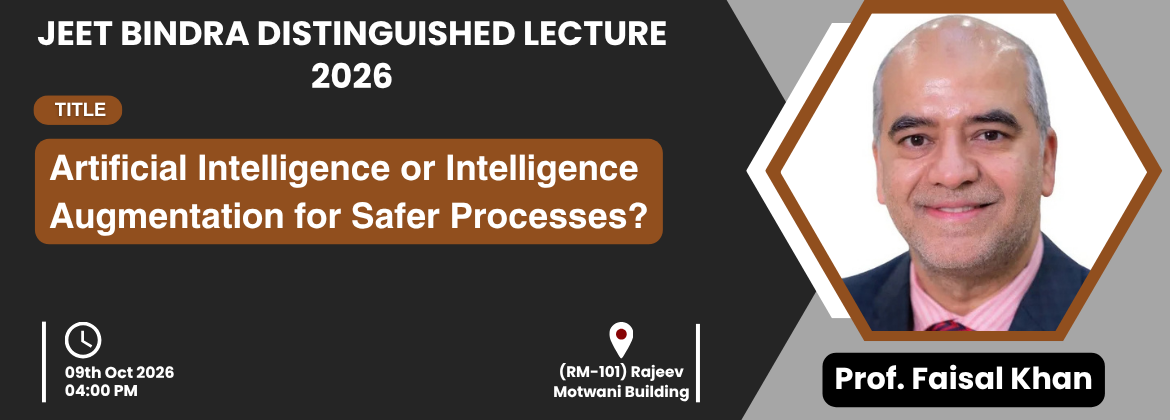
Digital automated processing systems use shared operations and control systems with two intelligent decision-makers: humans and automated machines (artificial intelligence, AI). Besides the well-known challenges of AI systems [data quality and quantity; and reliability], another serious, less known and understood challenge emerges at this early stage of AI applications. It is AI-human conflicts. Contradictory observations, states, goals, and actions may cause conflict between decision-makers [humans and AI]. The definitions, cause(s), and path(s) of such a conflict from the safety perspective have not been explored and assessed. This presentation introduces an evolutionary framework showing how conflict between Human Intelligence and Artificial Intelligence can lead to accidents. It presents a compelling argument for a Safety-centered design, which is crucial for preventing accidents stemming from disputes in AI-driven digitalized processing systems.
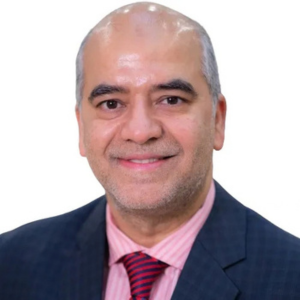 Prof. Faisal Khan is an internationally recognized leader in process safety and risk engineering. He serves as the Mike O'Connor II Chair Professor and Head of the Artie McFerrin Department of Chemical Engineering at Texas A&M University. He also serves as Director of the Mary Kay O'Connor Process Safety Center and the Department of Energy (DoE) and Department of the Interior (DoI) funded Ocean Energy Safety Institute (OESI).
Previously, he held the prestigious Canada Research Chair (Tier 1) at Memorial University of Newfoundland. Prof. Khan advises multinational corporations and governments worldwide on safety, security, and risk management. His extensive academic contributions include over 700 research articles; this work has earned him many national and international awards, including the ASME Risk Analysis Award, the CSCHE PSM Award, the IChemE Award, the SPE HSE Award, the AIChE Award, and the Kletz Award. He has mentored over 200 graduate students, including 101 PhD theses. He serves as Editor-in-Chief for the Journal of Process Safety & Environmental Protection (Elsevier).
Prof. Faisal Khan is an internationally recognized leader in process safety and risk engineering. He serves as the Mike O'Connor II Chair Professor and Head of the Artie McFerrin Department of Chemical Engineering at Texas A&M University. He also serves as Director of the Mary Kay O'Connor Process Safety Center and the Department of Energy (DoE) and Department of the Interior (DoI) funded Ocean Energy Safety Institute (OESI).
Previously, he held the prestigious Canada Research Chair (Tier 1) at Memorial University of Newfoundland. Prof. Khan advises multinational corporations and governments worldwide on safety, security, and risk management. His extensive academic contributions include over 700 research articles; this work has earned him many national and international awards, including the ASME Risk Analysis Award, the CSCHE PSM Award, the IChemE Award, the SPE HSE Award, the AIChE Award, and the Kletz Award. He has mentored over 200 graduate students, including 101 PhD theses. He serves as Editor-in-Chief for the Journal of Process Safety & Environmental Protection (Elsevier).
 Mr. Jagjeet Singh Bindra did his B.Tech in Chemical Engineering from IIT Kanpur in 1969. He earned his master's
degree in Chemical Engineering from the University of Washington in Seattle, WA in 1970. Mr. Bindra also has an
M.B.A. (honors) from St. Mary's College in Moraga, California. He is a "Distinguished Alumnus" of the University of
Washington, College of Engineering, as well as of Indian Institute of Technology, Kanpur. He was awarded Institute
Fellow of IIT Kanpur in the year 2021.
Mr. Jagjeet Singh Bindra is on the board of Lyondell Basell Industries NV and HPCL-Mittal Energy Ltd. He is also the
director of Edison International and Southern California Edison- one of the United States' largest electric utilities.
Before joining Edison, Mr. Bindra served as president of Chevron Global Manufacturing from 2004 - 2009, where
he was instrumental in leading the company's worldwide manufacturing operations, including those of 19
refineries
His entire career at Chevron spanned more than three decades, and he started with his work there as a research engineer and attained a series of
promotions with increasing levels of leadership. Apart from his positions with Edison, Mr. Bindra is on the board of directors of Larsen & Toubro
Limited, India; Transfield Services Limited, Australia and Sriya Innovations Inc., Kennesaw, Georgia; and has chaired the board of directors at the IIT
Kanpur Foundation.
Mr. Jagjeet Singh Bindra did his B.Tech in Chemical Engineering from IIT Kanpur in 1969. He earned his master's
degree in Chemical Engineering from the University of Washington in Seattle, WA in 1970. Mr. Bindra also has an
M.B.A. (honors) from St. Mary's College in Moraga, California. He is a "Distinguished Alumnus" of the University of
Washington, College of Engineering, as well as of Indian Institute of Technology, Kanpur. He was awarded Institute
Fellow of IIT Kanpur in the year 2021.
Mr. Jagjeet Singh Bindra is on the board of Lyondell Basell Industries NV and HPCL-Mittal Energy Ltd. He is also the
director of Edison International and Southern California Edison- one of the United States' largest electric utilities.
Before joining Edison, Mr. Bindra served as president of Chevron Global Manufacturing from 2004 - 2009, where
he was instrumental in leading the company's worldwide manufacturing operations, including those of 19
refineries
His entire career at Chevron spanned more than three decades, and he started with his work there as a research engineer and attained a series of
promotions with increasing levels of leadership. Apart from his positions with Edison, Mr. Bindra is on the board of directors of Larsen & Toubro
Limited, India; Transfield Services Limited, Australia and Sriya Innovations Inc., Kennesaw, Georgia; and has chaired the board of directors at the IIT
Kanpur Foundation.