
+91-512-259-7629
+91-512-259-7629
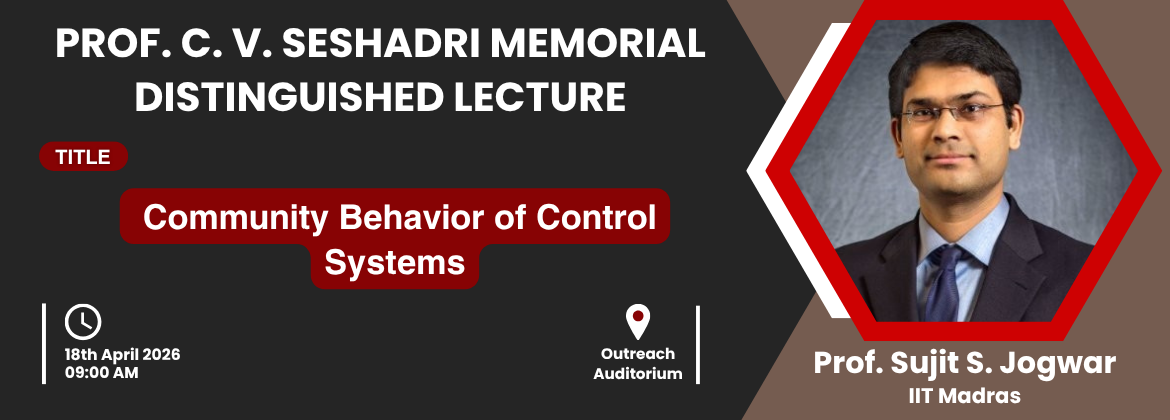
Integrated chemical plants with material recycle and energy integration are a rule rather than exception in modern manufacturing complexes due to their sustainability (economic and environmental) benefits. However, the tight interconnections introduced by such integration lead to challenges in operation and control. In this context, distributed control offers a practical trade-off between globally (plant-wide) optimal but computationally expensive centralized and locally effective but sub-optimal decentralized architectures. Even though the performance of distributed control strongly depends on the selected decomposition (classification of controller variables into sub-controllers), optimal synthesis of distributed structure has not received much attention. Decomposition of a large interconnected network into a number of communities (with strong intra-community interactions and weak inter-community interactions) has seen tremendous success in the analysis of networks observed in social, ecological, biological and information systems. Motivated by this, our research contribution attempts at developing a novel strategy for distributed architecture synthesis by identifying communities of control relevant variables. Accordingly, key issues addressed include abstraction of the control problem into a meaningful graph and establishing a connection between properties of distributed architecture (inter-controller communication, input-output strength, robustness, etc.) and community detection on the abstracted graph. Our framework has many advantages (e.g. possibility of non-square controllers, provision to ensure controllability and observability, scalability to large networks, etc.) over existing approaches. The effectiveness is illustrated via several industrially relevant examples through rigorous simulations and lab-scale experiments. This work has also opened up a path for the synthesis of distributed architectures in allied areas like estimation, fault detection and optimization.
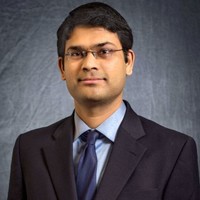 Dr. Sujit Jogwar is currently an Associate Professor
in the Department of Chemical Engineering at IIT
Bombay. He received his undergraduate degree
(Bachelor of Chemical Engineering) from the In-
stitute of Chemical Technology, Mumbai (formerly
UDCT) and his Ph.D. in Chemical Engineering
from the University of Minnesota, USA.
Dr. Sujit Jogwar is currently an Associate Professor
in the Department of Chemical Engineering at IIT
Bombay. He received his undergraduate degree
(Bachelor of Chemical Engineering) from the In-
stitute of Chemical Technology, Mumbai (formerly
UDCT) and his Ph.D. in Chemical Engineering
from the University of Minnesota, USA.
He has 19 years of research experience split between industrial R & D
and academia. His research aims at developing systems engineering
(modelling, design, control, scheduling and optimization) tools for
sustainable processes, with special emphasis on energy integration.
Dr. Jogwar is a recipient of the Dr. G. P. Kane Mumbai University
Gold Medal (2006), the Doctoral Dissertation Fellowship from the
University of Minnesota (2010–11), Prof. Krithi Ramamritham Award
for Creative Research (2018), Journal of Process Control Best Paper
Award (2017) and Smt. Padma Kelkar Endowment Award (2014). He
is an Associate Editor for the Journal of Process Control and Journal of
Digital Chemical Engineering.
 The late Prof. C. V. Seshadri (CVS) was a distinguished
Chemical Engineer. He did his Ph.D. with Professor Her-
bert L. Toor of Carnegie Mellon University, Pittsburgh,
followed by a Research Associateship at MIT. He joined
IIT Kanpur as an Assistant Professor in 1965, and later
became a Professor and Head of the Chemical Engineer-
ing Department, and finally Dean of Students Affairs,
IITK.
While here, he wrote the famous best-selling textbook:
C. V. Seshadri and S. V. Patankar, Elements of Fluid Mechanics, Prentice Hall of
India, New Delhi, 1971.
CVS left IITK in 1974 to join Kasturi Paper Food and Chemicals Ltd., Ban-
galore, where he set up India’s first fodder-yeast plant. In 1976, he joined
the Shri A. M. M. Murugappa Chettiar Research Center in Chennai as its
founder Director, an institute emphasising appropriate technology. It was
here that CVS really blossomed and helped develop several appropriate
technologies, including Spirulina Algae. For his efforts, CVS received the
prestigious Jamnalal Bajaj award for S & T for rural development (1981).
As Rajni Bakshi sums up 1 “CVS’s youthful zest and enormous energy made
it easy to forget the linear dimension of this mortal frame. Yet this is all the
sea snatched away. The man’s bequest remains, awaiting the nurturing care
of fellow travellers in this and other times.”
The late Prof. C. V. Seshadri (CVS) was a distinguished
Chemical Engineer. He did his Ph.D. with Professor Her-
bert L. Toor of Carnegie Mellon University, Pittsburgh,
followed by a Research Associateship at MIT. He joined
IIT Kanpur as an Assistant Professor in 1965, and later
became a Professor and Head of the Chemical Engineer-
ing Department, and finally Dean of Students Affairs,
IITK.
While here, he wrote the famous best-selling textbook:
C. V. Seshadri and S. V. Patankar, Elements of Fluid Mechanics, Prentice Hall of
India, New Delhi, 1971.
CVS left IITK in 1974 to join Kasturi Paper Food and Chemicals Ltd., Ban-
galore, where he set up India’s first fodder-yeast plant. In 1976, he joined
the Shri A. M. M. Murugappa Chettiar Research Center in Chennai as its
founder Director, an institute emphasising appropriate technology. It was
here that CVS really blossomed and helped develop several appropriate
technologies, including Spirulina Algae. For his efforts, CVS received the
prestigious Jamnalal Bajaj award for S & T for rural development (1981).
As Rajni Bakshi sums up 1 “CVS’s youthful zest and enormous energy made
it easy to forget the linear dimension of this mortal frame. Yet this is all the
sea snatched away. The man’s bequest remains, awaiting the nurturing care
of fellow travellers in this and other times.”